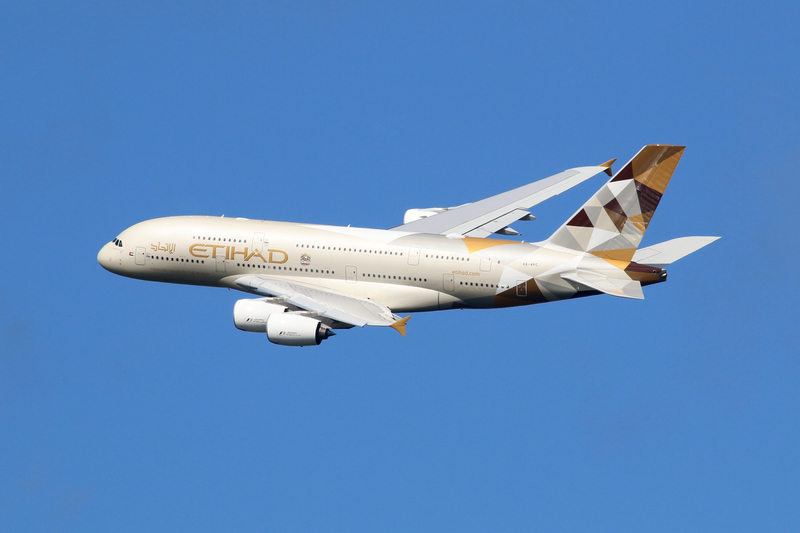
Etihad Airways is making a major statement in one of its strongest European markets by doubling Airbus A380 service to Paris Charles de Gaulle Airport (CDG) this summer.

From July 1 through October 24, 2026, the airline will operate two daily A380 flights between Zayed International Airport (AUH) and Paris, alongside a third daily Boeing 787-9 service. For Etihad, this is not just a capacity increase. It is a clear signal that Paris remains one of the few markets where the airline believes it can profitably deploy its most premium-heavy aircraft at very high frequency.
For aviation readers, that is the real takeaway. The A380 is no longer a fleet type airlines use casually. When an airline adds more of it, especially twice daily on one city pair, it is making a very deliberate bet.
Read our stories in your inbox
Two aviation newsletters. Zero fluff.
Paris Becomes One Of Etihad’s Most Important A380 Markets
The first thing to understand is scale.
Double-daily A380 service is not common. It immediately puts Paris into a very select group of Etihad destinations important enough to justify that level of flagship widebody deployment. That matters because the A380 is not simply a larger aircraft. It is also the airline’s clearest premium product platform, the place where Etihad can showcase its most distinctive onboard features most effectively.
So this is not only about more seats. It is about more premium seats, more product visibility, and more emphasis on a market the airline clearly values highly.
The Premium Push Is The Core Of The Strategy
The biggest impact of the move is in the front of the aircraft.
Adding a second daily A380 significantly increases the number of premium seats Etihad can sell into Paris, including access to products such as The Residence, First Apartments, and the airline’s high-end Business Class offering. That matters because a route like Paris is not just a volume market. It is one where premium demand, corporate traffic, and high-spend leisure travelers can all support a stronger revenue mix than many other long-haul destinations.
That is likely why Etihad is making this move now. The airline is not just adding capacity where demand is strongest. It is adding the kind of capacity that can generate the best returns.
The 787-9 Stays In The Mix
Another important detail is that Etihad is not replacing its existing Paris service pattern with only A380s.
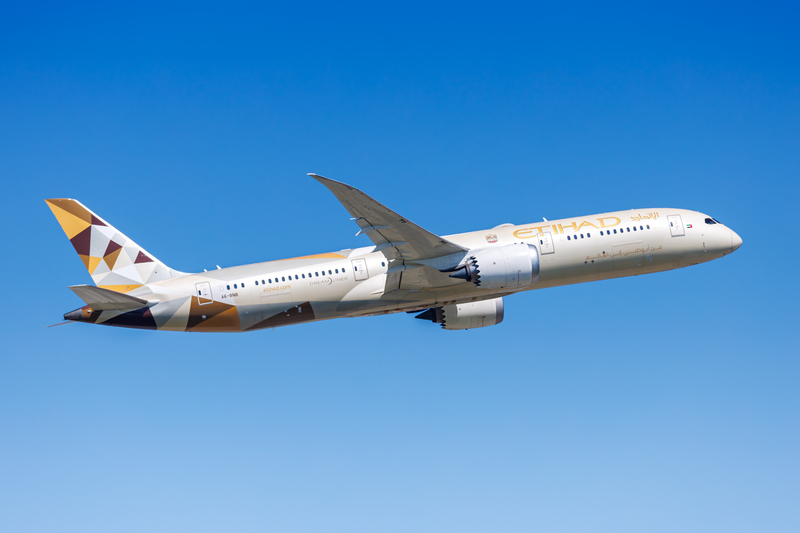
The route will also continue to see a third daily Boeing 787-9. That gives the airline a more layered schedule, with the A380 handling the heaviest premium and capacity demand while the 787-9 provides additional flexibility and a lower-trip-cost complement.
This matters because it shows the Paris build-up is not a blunt increase. It is a carefully structured one. Etihad is creating a three-flight daily pattern that combines flagship product with fleet efficiency.
Paris Is Exactly The Kind Of Market Where The A380 Still Makes Sense
One of the more interesting things about the announcement is what it says about the A380 itself.
The aircraft no longer works everywhere. Airlines have become much more selective about where they use it, and many now reserve it only for routes with exceptional premium demand, strong local traffic, or slot constraints that favor large-gauge aircraft. Paris fits that profile well. It is a major global business city, a premium leisure destination, and a market with strong links to the Middle East and beyond.
In other words, if the A380 still has natural homes in 2026, Paris is one of them.
Abu Dhabi’s Hub Strategy Also Benefits
The increase is not only about France.
Etihad is also clearly using Paris to strengthen feed into Abu Dhabi (AUH) and beyond. More flights and more seats on a market like Paris improve connection opportunities to Asia, the Indian subcontinent, and other parts of the airline’s long-haul network. That makes the route more than just a local France–UAE link. It becomes a stronger hub-building tool.
This is especially important for Etihad as it continues shaping Abu Dhabi as a more effective connecting point rather than relying only on local traffic.
This Is A Confidence Signal In A Competitive Market
Paris is not a market where an airline can hide weak strategy.
It is heavily contested, premium-sensitive, and important enough that every capacity decision is meaningful. By choosing to double A380 flying there, Etihad is effectively saying it sees enough strength in the market to justify one of the boldest aircraft-allocation moves in its European network this summer.
That is a confidence signal, and a pretty strong one.
Bottom Line
Etihad’s move to operate two daily A380 flights and one daily 787-9 flight to Paris this summer is much more than a schedule update. It is a statement about premium demand, network confidence, and the continuing role of the A380 in markets where the economics still support it.
Paris is now one of Etihad’s clearest flagship destinations in Europe, and the airline’s decision to double A380 service there shows exactly where it still believes large premium capacity can win.
Keep reading FlyMag
Get the Daily Brief in the morning or the Route Watch weekly recap on Fridays. Or both.