United Airlines is pushing back the start of six planned regional routes from Chicago O’Hare International Airport (ORD), a clear sign that the carrier’s aggressive 2026 growth plan is running into the hard limits of O’Hare’s operating reality.

That matters because these were not marginal additions. They were part of United’s broader effort to deepen its Midwest feed from ORD, reinforce its hometown hub, and turn Chicago into the airline’s busiest summer operation on record. Instead, the rollout is now being staggered deeper into late spring and early summer as federal pressure on the airport’s schedule intensifies.
For industry readers, the significance is straightforward. This is what happens when a carrier tries to grow quickly at a hub whose runway system, terminal flows, and air traffic control environment are already under stress. The routes themselves may be small, but the underlying issue is not.
Read our stories in your inbox
Two aviation newsletters. Zero fluff.
Smaller Midwest Cities Are the Ones Feeling the Delay
The affected markets include Bloomington/Normal Central Illinois Regional Airport (BMI), University of Illinois Willard Airport (CMI), Kalamazoo/Battle Creek International Airport (AZO), La Crosse Regional Airport (LSE), Capital Region International Airport (LAN), and Rochester International Airport (RST).
These are precisely the kinds of routes that make a hub stronger without attracting the same level of public attention as a new transatlantic flight or a major sun-market expansion. They are regional feed routes, designed to pull passengers from smaller communities into ORD for onward domestic and international connections.
That is also why they are vulnerable when capacity gets tight. In a constrained environment, airlines often protect the largest and highest-yield parts of the network first. Thin regional flying may still be strategically useful, but it is often easier to defer than a long-haul bank or a major trunk market.
United’s Original Plan Was Much More Aggressive
United had laid out an unusually ambitious summer for ORD. In January, the airline said it expected to operate up to 750 daily flights from Chicago, the largest summer schedule ever flown by a single carrier at the airport. The new Midwest services were part of that push, with CMI and AZO initially scheduled for April 30 launches, while BMI, LAN, and LSE were due to follow on May 7. Rochester (RST) was also part of the wider ORD regional buildout.
Those routes were meant to reinforce ORD’s role as a connecting machine. That was the commercial logic. More small-city feed means more network breadth, more connection opportunities, and more resilience in the battle for hub dominance against American Airlines, which is also heavily invested at ORD.
But that sort of expansion only works if the airport can absorb it.
O’Hare’s Capacity Problem Is the Real Story
The FAA has made clear that it does not believe the originally published Summer 2026 schedules at O’Hare are manageable in their current form. The agency warned that peak-day plans would have pushed total daily operations above 3,080, far above what it considers realistic given current runway, terminal, and staffing constraints.
Earlier in the process, the FAA described roughly 2,800 daily operations as the level ORD could manage under current conditions. It later moved toward an even tighter framework, seeking cuts that would reduce the daily total further and spread operations more carefully across peak periods.
That broader context matters because it shifts this story out of the realm of simple airline scheduling. United is not delaying these launches because the markets disappeared. It is delaying them because the airport environment has become less permissive.

The Aircraft Economics Are Part of the Equation
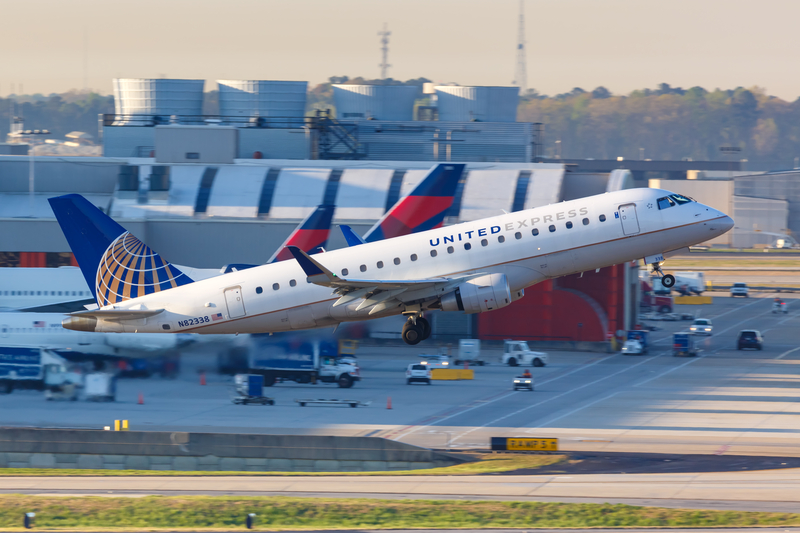
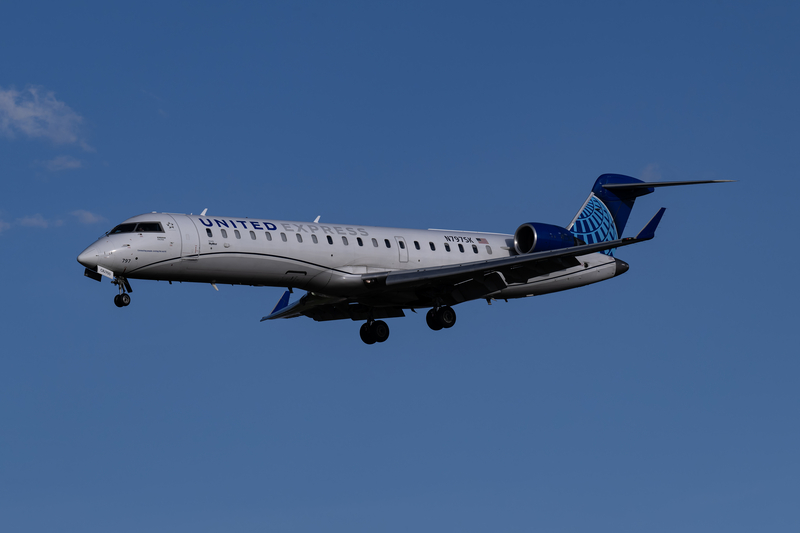
Regional route launches like these are usually built around smaller aircraft flown by United’s regional partners, not by mainline Boeing 737s or Airbus A320-family aircraft. That makes them useful for network development, but it also means they compete for scarce slots and schedule space with flights that often produce more total revenue per movement.
Rochester’s announced service, for example, has been tied to the CRJ-550, United’s premium-focused 50-seat regional jet. Other affected Midwest routes were introduced as four-times-daily services and are likely to rely on the usual mix of regional equipment in United’s feeder operation.
That is where constrained hub economics become very visible. If peak-hour movements are capped, airlines inevitably make harder choices about which flights deserve those movements. In that environment, launching multiple thin regional routes at once becomes much more difficult.
This Is a Hub Discipline Story as Much as a Regional Story
For United, the bigger issue is not the delay itself. It is what the delay says about ORD.
Chicago remains one of the airline’s most important hubs and one of the most strategically contested airports in the United States. United wants to keep growing there, and the airline has made that ambition very public. But the FAA’s intervention is a reminder that growth at a congested hub is never dictated by network planning alone. It is also shaped by airport capacity, staffing levels, and the ability of the system to absorb more movements without cascading delays.
That is why the regional launches matter. They are a small but useful test case. If a carrier cannot roll out short-haul feeder routes on its preferred timeline, it tells you a great deal about how tightly constrained the hub has become.
The Revised Timeline Is More Phased Than Neat
One of the challenges in reading the current situation is that the revised timing is not perfectly uniform across all public sources. Some airport channels now show June 1 as the expected start date for their United service, while others still display earlier dates that may not yet reflect the latest schedule adjustments.
That makes it safer to describe the change as a phased delay affecting six planned routes rather than pretending every airport is now on exactly the same revised timetable. What is clear is that the original late-April and early-May rollout has slipped, and that United is easing these services into the schedule more slowly than first planned.
For readers in the affected communities, that distinction matters. The routes have not been abandoned. But they are no longer arriving on the timeline first promised.
Bottom Line
United’s decision to delay six regional launches from Chicago O’Hare Airport (ORD) is a reminder that even the largest network carriers cannot outgrow the physical and operational limits of a constrained hub.
The airline still wants the feed, and the smaller cities involved still matter to the broader ORD system. But when the FAA is actively forcing schedule discipline at Chicago, regional growth is often the first place where timing gives way.
For aviation professionals, the main takeaway is clear. This is not really a story about Bloomington, Champaign, Kalamazoo, La Crosse, Lansing, or Rochester alone. It is a story about how much growth O’Hare can realistically absorb, and how even a giant like United has to recalibrate when the answer is less than it hoped.
Keep reading FlyMag
Get the Daily Brief in the morning or the Route Watch weekly recap on Fridays. Or both.