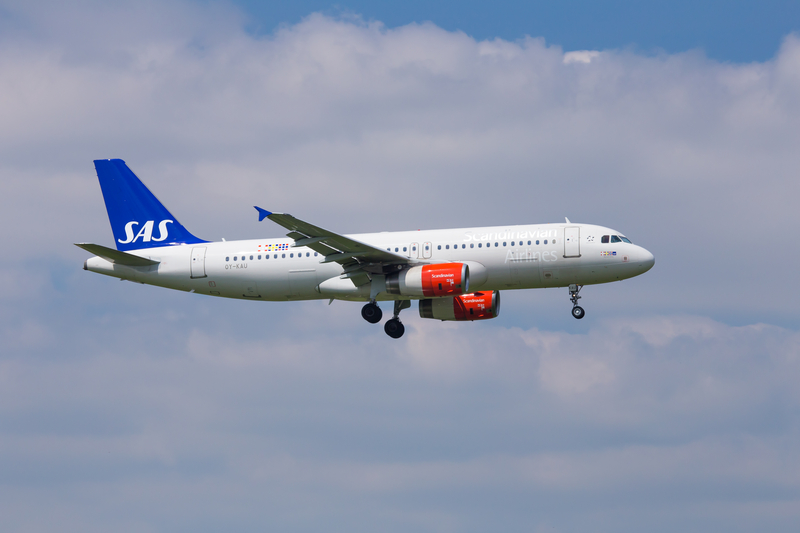
A SAS Scandinavian Airlines Airbus A320 operating flight SK2590 from Brussels Airport to Copenhagen Airport was forced to abort its departure on the night of February 5, 2026, after lining up on a taxiway instead of the assigned runway.

Key Takeaways:
-
The aircraft began a takeoff roll on a taxiway, then rejected the takeoff at high speed.
Read our stories in your inbox
Two aviation newsletters. Zero fluff.
-
Passengers were later deboarded and transported by bus; no injuries were reported.
-
The cause is not yet clear, and the sequence will likely be reviewed by investigators and airport authorities.
What happened
Shortly before 22:00 local time, the A320 (registration SE-ROM) taxied toward Runway 07R but turned onto Taxiway E1 instead. Flight-tracking data and witness accounts indicate the aircraft accelerated into a takeoff roll, then the crew rejected the takeoff before liftoff.
The aircraft came to a stop near the C1–E1 area, with reports indicating it ended up off the paved surface in the adjacent grass.
Passenger handling and disruption
After the rejected takeoff, passengers were kept onboard for a period before being deboarded via buses, with airport emergency services and police present as a precaution.
The flight did not depart as planned. SAS said passengers were moved to a later flight.

Why a taxiway takeoff attempt is taken seriously
Taxiways are not designed for takeoff performance margins. Compared with runways, they can involve:
-
narrower paved width and tighter geometry,
-
different lighting/signage cues,
-
limited margins for high-speed aborts,
-
higher risk of runway/taxiway excursions.
Even when an aircraft stops safely, the event typically triggers operational checks (crew reports, ATC review, and technical inspections of tires/brakes) before the aircraft returns to service.
What happens next
With no official root-cause statement yet, the key unanswered questions are:
-
whether the clearance/instructions were misunderstood or miscommunicated,
-
whether signage/lighting or surface routing contributed,
-
what cockpit and ATC recordings show about the alignment and takeoff clearance.
Expect additional detail only after airlines, the airport, and relevant safety bodies complete initial fact-finding.
Bottom Line
This was a high-stakes wrong-surface event that ended without injuries, but it’s the kind of occurrence that prompts immediate scrutiny because it can erode the safety margins built into normal runway operations.
Keep reading FlyMag
Get the Daily Brief in the morning or the Route Watch weekly recap on Fridays. Or both.