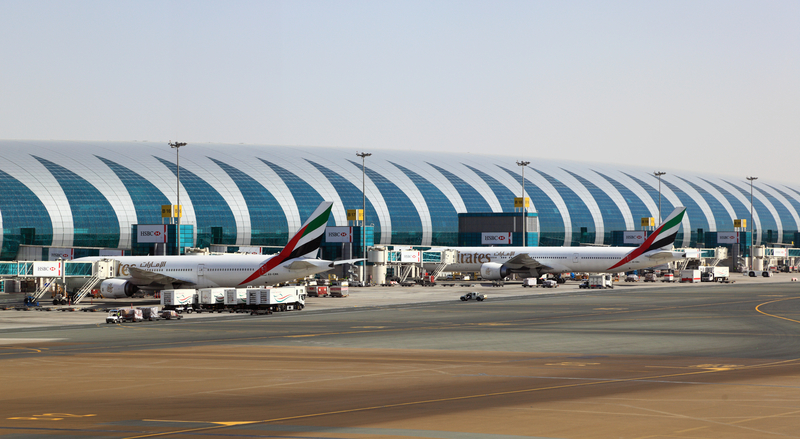
Dubai has imposed one of the most restrictive airport recovery measures seen in the region since the Iran conflict disrupted aviation across the Gulf, limiting foreign airlines to one daily rotation to the city’s airports through May 31.
That matters because this is not a simple continuation of wartime closures. Dubai International Airport (DXB) and Al Maktoum International Airport (DWC) are open, but they are reopening under a tightly managed capacity regime. In practical terms, foreign carriers can return, though only in highly reduced form.
The distinction is important. This is no longer a full ban. It is a controlled reopening, and one that is already creating serious friction among airlines that rely heavily on Dubai access.
Read our stories in your inbox
Two aviation newsletters. Zero fluff.
Why Indian Airlines Are the Hardest Hit
The impact is especially severe for Indian carriers.
Before the conflict, airlines from India operated some of the densest foreign schedules into Dubai of any country in the world. For a carrier with one daily flight, the new cap is inconvenient but manageable. For airlines that normally run multiple daily services, the same rule represents a dramatic reduction in capacity and revenue.

That is why the pushback has been so sharp. From the Indian side, the policy looks disproportionately damaging because it cuts every foreign airline down to the same single-daily level regardless of how large its Dubai operation was before the crisis.
From an airline-planning perspective, that is the real problem. Capacity restraint is understandable in a fragile operating environment. Applying it without regard to previous scale is what has turned the measure into a diplomatic and commercial flashpoint.
Dubai Says the Issue Is Capacity
Dubai Airports’ explanation is narrower than many critics would like. The airport operator has told airlines that foreign carriers will remain limited to one rotation per day until capacity allows more to be facilitated, with additional slots to be allocated if and when conditions improve.
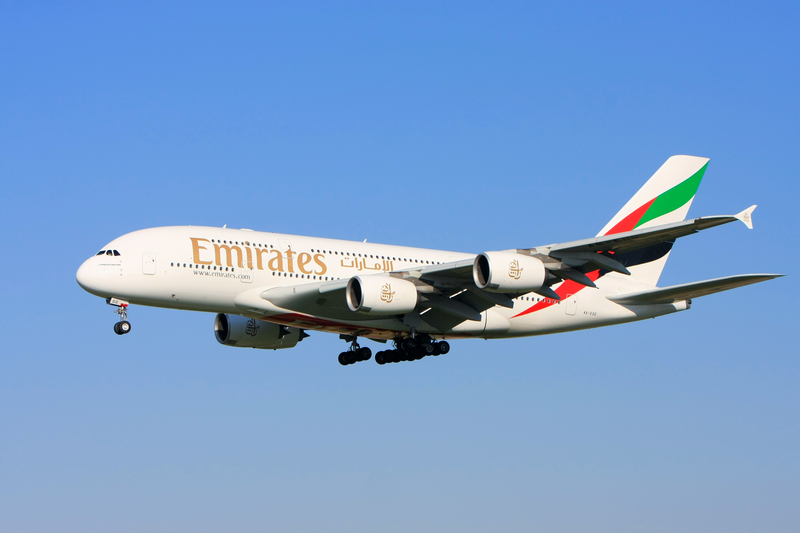
That wording matters. It frames the decision as an operational-capacity issue rather than an explicit political or protectionist one. In other words, Dubai is not publicly saying foreign airlines are being held back to protect Emirates or flydubai. It is saying the airport system cannot yet absorb a normal schedule safely and reliably.
Whether airlines accept that argument is another matter.
Why the Policy Has Triggered Protectionism Claims
The backlash is not hard to understand.
If all foreign carriers are capped at one daily service while Dubai-based airlines retain much broader freedom within their own networks, the commercial effect can look highly uneven even if the official reasoning is operational. This is especially true in markets such as India, where Emirates and flydubai have an enormous footprint and where reciprocity is always a sensitive issue.

That is why Indian airline groups have reportedly urged their government to consider reciprocal restrictions on Dubai-based carriers. Such a move would be extremely serious. Emirates alone depends heavily on the India market, and any attempt to restrict it to one daily service per point would have major consequences for traffic flows between South Asia and the Gulf.
At that stage, what began as a temporary airport-capacity measure could start to look more like a bilateral aviation dispute.
The Policy Makes Sense Operationally, but the Design Is Crude
There is a reasonable case for limiting capacity during a phased recovery. Dubai is one of the world’s largest international hubs, and bringing traffic back too quickly after a regional conflict would risk congestion, slot disorder, and operational instability.
But the design of the current rule is blunt. It treats a foreign airline that previously flew once a day the same way it treats one that flew ten times a day. That may be easy to administer, but it is not especially refined.
A more proportionate system would likely have reduced carriers according to pre-conflict scale, rather than imposing a flat one-rotation cap across the board. The current approach is simpler, but it also guarantees that the biggest foreign operators take the biggest relative hit.
What This Means for Travelers
For passengers, the practical effect is reduced choice, higher pressure on fares, and more difficulty finding direct seats into Dubai through the end of May.
That is especially true on short-haul and regional corridors where airlines had built frequency-heavy schedules. Travelers who once had multiple daily options may now find only one. In some markets, they may be pushed toward Dubai-based carriers by default simply because those are the flights still widely available.
So even if the rule is temporary, it changes market behavior immediately.
Bottom Line
Dubai’s decision to cap foreign airlines at one daily rotation to DXB and DWC through May 31 is not a renewed shutdown, but it is one of the most aggressive phased-reopening measures the region has seen since the conflict began.
The official explanation is capacity, and that may well be genuine. But the way the rule has been designed is what is causing the uproar. By applying the same cap to airlines with vastly different pre-crisis schedules, Dubai has created a policy that feels operationally understandable but commercially uneven.
For now, the key takeaway is simple: Dubai is open again, but not on anything close to normal terms for foreign airlines.
Keep reading FlyMag
Get the Daily Brief in the morning or the Route Watch weekly recap on Fridays. Or both.