Florida Keys Marathon International Airport is pursuing the return of scheduled passenger service after a 17-year absence, with Monroe County offering a multimillion-dollar incentive package intended to attract American Airlines, Delta Air Lines, or United Airlines.

The county applied in May for $1 million through the U.S. Department of Transportation’s Small Community Air Service Development Program. The federal funding would support a proposed minimum revenue guarantee worth approximately $2.5 million for an airline willing to open service at Florida Keys Marathon International Airport (MTH).
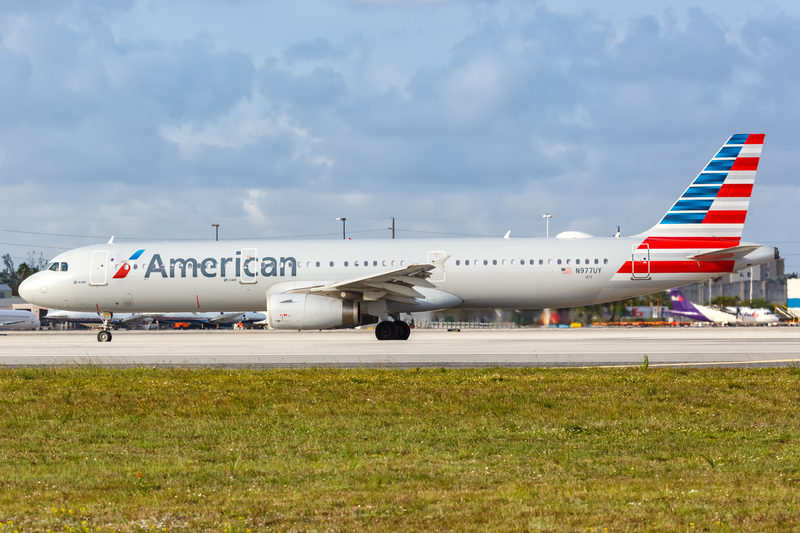
Although Monroe County has identified potential routes for each of the three largest U.S. network airlines, American appears to be the most advanced opportunity. The carrier submitted a letter supporting continued discussions about connecting Marathon (MTH) with its large hub at Miami International Airport (MIA).
Read our stories in your inbox
Two aviation newsletters. Zero fluff.
No airline has committed to operating the route, and the federal grant has not yet been awarded. County officials nevertheless believe the airport’s terminal could be prepared for scheduled flights by early 2027 if funding, infrastructure work, airline negotiations, and regulatory approvals proceed as planned.
A $2.5 Million Incentive to Reduce an Airline’s Risk
Monroe County’s proposal centers on a minimum revenue guarantee, commonly called an MRG.
Under that arrangement, an airline agrees to operate a new route based on a negotiated revenue target. If ticket sales and other eligible revenue fall below that target during the guarantee period, the airport or community uses the MRG fund to cover some or all of the difference.
The airline does not necessarily receive the entire $2.5 million. If the route performs well and reaches the agreed revenue level, considerably less public and community funding may be required.
Revenue guarantees are frequently used when communities are attempting to restore airline service after a long absence. Airlines have little recent booking history on which to forecast demand, making a new route more difficult to justify against other opportunities in their networks.
The SCASDP program can support revenue guarantees, marketing, startup expenses, and air-service studies. It differs from the Essential Air Service program because it does not provide a permanent direct operating subsidy to an airline. SCASDP grants are competitive, temporary, and intended to help a community establish service that can eventually survive without continued assistance.
Monroe County’s application requests $1 million in federal funding, with the remaining approximately $1.5 million expected from local, tourism, and private-sector sources. The Monroe County Tourist Development Council has already approved $500,000 toward the effort, while additional participation is expected from community organizations, hospitality businesses, and other Florida tourism interests.
The county’s earlier planning estimate placed the revenue guarantee closer to $1.7 million. The final SCASDP application increased the proposed incentive to approximately $2.5 million, giving Marathon a more competitive package as it seeks attention from airlines evaluating numerous small-airport proposals.
American, Delta, and United Offer Three Different Hub Strategies
Monroe County has identified one potential route for each of the Big Three U.S. network carriers.
| Airline | Proposed route | Strategic purpose |
|---|---|---|
| American Airlines | Marathon (MTH)-Miami (MIA) | Feed American’s domestic, Caribbean, and Latin American network |
| Delta Air Lines | Marathon (MTH)-Atlanta (ATL) | Restore the airport’s former nonstop link to Delta’s largest hub |
| United Airlines | Marathon (MTH)-Washington-Dulles (IAD) | Connect the Middle Keys with the Washington and Baltimore travel market |
The routes are concepts contained in the county’s air-service strategy, not announced airline schedules.

American’s Miami option would be the shortest flight but potentially the most useful for connecting traffic. Delta’s Atlanta proposal would restore the type of hub service the airline briefly operated in 2007. United’s Washington-Dulles route would be the longest of the three and is based partly on the Washington-Baltimore region’s importance as a source of Florida Keys visitors.
If none of those hub routes becomes viable, the county has also identified possible service to Boston Logan International Airport (BOS), Chicago O’Hare International Airport (ORD), Cincinnati/Northern Kentucky International Airport (CVG), Indianapolis International Airport (IND), Pittsburgh International Airport (PIT), Orlando International Airport (MCO), Raleigh-Durham International Airport (RDU), and Nashville International Airport (BNA).
Those alternatives would represent a different strategy. Rather than providing broad connectivity through a major hub, an airline might operate limited seasonal flights from cities that generate substantial leisure demand to the Florida Keys.
American’s Miami Proposal Is the Most Tangible Option
American Airlines has not announced service to Marathon, but it has provided the strongest indication of interest from any carrier.
Jason Reisinger, American’s managing director of global network planning, submitted a letter supporting Monroe County’s SCASDP application. He wrote that Marathon’s plan to establish service to Miami fits American’s network because MIA is one of the company’s largest hubs.
Reisinger stopped short of committing the airline to the route. He said grant funding could significantly strengthen the commercial case and that American would continue discussions with the community.
That distinction is important. Airlines frequently provide support letters for airport grant applications without guaranteeing that they will ultimately launch service. Fleet availability, expected fares, operating costs, airport facilities, crew resources, and the final terms of the revenue guarantee will all influence the decision.
Miami nevertheless offers a compelling network argument.
American operates approximately 400 peak-day departures from Miami International Airport (MIA) and serves around 170 destinations across 46 countries and territories. The hub is especially strong in Florida, the Caribbean, Mexico, Central America, and South America, while also offering connections to major cities throughout the United States and Europe.
A Marathon-Miami flight would not depend primarily on passengers traveling only between the two South Florida communities. Its purpose would be to connect visitors from Boston, New York, Chicago, Washington, Philadelphia, Dallas, and international markets with the Middle Keys on one American itinerary.
Passengers could check baggage at their origin and receive boarding passes through to Marathon (MTH), avoiding a rental car, shuttle, or lengthy drive from Miami (MIA), Fort Lauderdale-Hollywood International Airport (FLL), or Key West International Airport (EYW).
The short segment would also allow American to feed MIA with passengers beginning their trips in the Middle Keys. That could be particularly valuable for international travelers, cruise passengers, business customers, and residents connecting to destinations beyond South Florida.
Regional Jets Would Be the Likely Aircraft
Monroe County expects the initial service to use regional jets rather than larger Boeing 737 or Airbus A320-family aircraft.
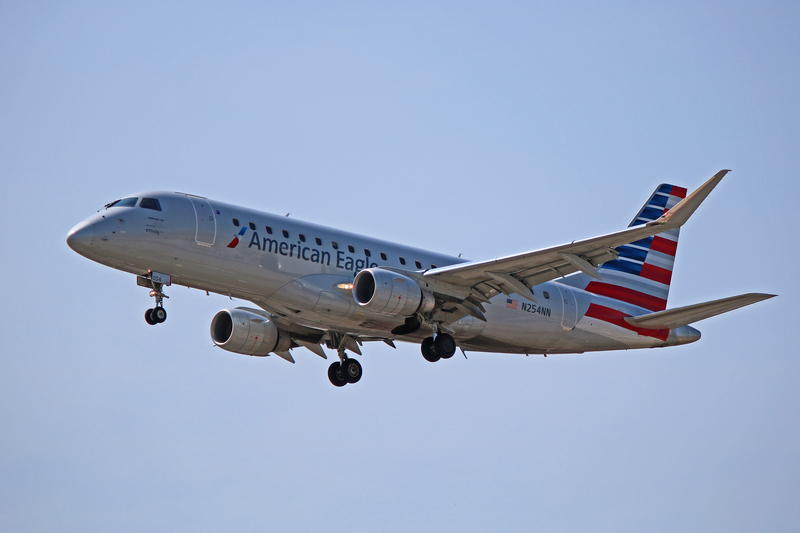
No carrier has selected an aircraft type, but American could potentially use an Embraer regional jet operated by one of its American Eagle partners. The airline’s regional fleet includes the 50-seat Embraer ERJ-145 and larger Embraer 175 variants seating approximately 76 to 79 passengers.
American already uses the Embraer 175 on routes from Miami (MIA), including domestic and short international services. The aircraft provides a two-class cabin, larger overhead bins, and substantially more passenger capacity than the nine-seat aircraft that operated Marathon’s final scheduled service in 2009.
The Embraer 175 would not automatically be suitable under every operating condition at Marathon. Airline performance engineers would need to evaluate runway length, pavement strength, temperatures, winds, wet-runway requirements, baggage loads, fuel requirements, and obstacle-clearance margins.
Florida Keys Marathon International Airport has one runway, designated 7/25, measuring approximately 5,000 feet. That is sufficient for many regional-jet operations at sea level, but it provides less margin than the longer runways available at most major commercial airports.
A Miami flight would require relatively little fuel, potentially making it less performance-sensitive than a nonstop service to Atlanta (ATL) or Washington-Dulles (IAD). Longer routes would require the aircraft to depart with more fuel, increasing takeoff weight and potentially creating passenger or baggage limitations during hot or wet conditions.
Marathon’s Previous Jet Service Exposed the Runway Challenge
Aircraft performance played a major role during Delta’s previous attempt to serve Marathon.
Delta Connection launched daily service between Atlanta (ATL) and Marathon (MTH) in February 2007. Atlantic Southeast Airlines initially operated the route with specially configured 40-seat Bombardier regional jets, bringing scheduled pure-jet service to Marathon for the first time.
The airline later switched to a 50-seat Embraer ERJ-145 operated by Freedom Airlines because the type offered more favorable short-runway performance. Even with smaller regional aircraft, the route reportedly faced significant payload restrictions during warmer conditions.
Delta withdrew from Marathon in September 2007 after less than seven months. The long sector to Atlanta, limited number of sellable seats, seasonal demand, and operating costs made the route difficult to sustain.
The experience does not mean an Atlanta route would fail today. Regional aircraft have improved, the Middle Keys hotel market has grown, airport infrastructure has been upgraded, and the county is proposing a larger financial guarantee.
It does demonstrate why the airport cannot evaluate a route based solely on the aircraft’s published maximum range or nominal seating capacity. The number of passengers an airplane can safely depart with under real-world conditions will be central to the economics.
The Runway Is Ready, but the Terminal Still Needs Work
Monroe County has invested heavily in preparing Marathon for larger aircraft and future commercial service.
A $30.1 million runway relocation project was completed in October 2025. The work increased separation between Runway 7/25 and the parallel taxiway, bringing the airfield into better alignment with FAA standards and providing additional wingtip clearance when larger aircraft pass each other.
The county has also completed or advanced several related projects:
The passenger terminal received a $2.2 million roof replacement designed to improve hurricane resistance, along with approximately $1 million in impact-resistant windows and doors. Million Air completed a new fuel farm containing two 30,000-gallon jet-fuel tanks, and FedEx improved its cargo access and aircraft service area. County officials estimated that roughly $40 million had recently been invested in the airport, with most of the cost covered by grants or outside funding.
Those projects improved the airfield, but the airport is not yet prepared to process scheduled airline passengers.
County planning documents identify approximately $8.4 million in terminal modifications, an estimated $800,000 airport access-control system, and additional aircraft rescue and firefighting requirements. Two 1,500-gallon fire vehicles could initially be transferred from Key West International Airport (EYW), although the Marathon fire station would eventually need another bay to accommodate the equipment.
The access-control system is particularly important. A March 2026 county tourism packet described it as a necessary component of meeting federal security requirements and requested conditional authorization of as much as $800,000 for the project.
Scheduled service would also require TSA passenger screening, secure baggage handling, airline ticket and operations areas, boarding procedures, employee credentialing, and separation between screened passengers and the airport’s general aviation activity.
The county believes those improvements could be completed by early 2027. That date should be viewed as an infrastructure target rather than an announced airline launch date.
Why “International” Does Not Mean Scheduled Overseas Flights
Florida Keys Marathon International Airport already carries the international designation despite having no scheduled airline service.
The name reflects the availability of U.S. Customs and Border Protection services for qualifying international general aviation arrivals. A permanent customs facility opened at the airport in 2016, allowing private and charter aircraft to clear U.S. entry requirements in Marathon rather than first landing at another designated airport.
That facility does not mean the airport is preparing for scheduled international airline flights. The current airline-development effort is focused on domestic routes that connect Marathon (MTH) with a major U.S. hub.
Any future international scheduled service would require a separate commercial and regulatory case, along with facilities capable of processing larger groups of arriving passengers.
The Last Scheduled Airline Left in 2009
Marathon has not had scheduled passenger service since Cape Air ended its operation on April 29, 2009.
Cape Air flew three daily round trips between Marathon (MTH) and Southwest Florida International Airport in Fort Myers (RSW) under the Continental Connection brand. The route used nine-passenger Cessna 402 twin-engine piston aircraft and was designed primarily to connect passengers with Continental’s broader network.
The service reportedly averaged fewer than four passengers per flight during its best month and was not renewed after the initial contract period.
Before Cape Air, Delta Connection operated the short-lived Atlanta route in 2007. American Eagle had been a major presence at Marathon during the 1990s, operating multiple daily flights to Miami with aircraft including the ATR 42, Jetstream 31, and Shorts 360. American Eagle left in 2000 as regional airlines increasingly moved away from smaller turboprops.
The phrase “17-year gap” is accurate in 2026 because scheduled service ended in 2009. If flights do not begin until early 2027, the actual interval between scheduled airline operations will be closer to 18 years.
The Middle Keys Market Is Larger Than It Was in 2009
Marathon’s tourism and lodging market has changed considerably since the final Cape Air flight.
New and expanded resorts, vacation rentals, and other accommodations have increased the number of visitors who can remain in the Middle Keys. Local tourism officials argue that the airport can now support a larger base of passengers than existed during Delta’s 2007 experiment.
Visit Florida Keys estimates that even one daily airline flight could generate approximately 20,400 hotel room nights annually for the Middle Keys. That figure is an economic-impact estimate rather than a guaranteed outcome, but it illustrates why tourism organizations are willing to contribute to the revenue guarantee.
Marathon’s central location also gives it a distinct catchment area.
The airport can serve Marathon, Key Colony Beach, Duck Key, the Lower Keys, and communities around Islamorada. Visitors staying in those areas may find MTH more convenient than flying to Key West International Airport (EYW) and driving north or arriving at Miami (MIA) or Fort Lauderdale (FLL) and traveling south along the Overseas Highway.
Scheduled flights could also provide an alternative when accidents, construction, or heavy holiday traffic disrupt U.S. Route 1, the only continuous highway connecting the Keys with mainland Florida.
Securing an Airline Is Only the First Challenge
A revenue guarantee can persuade an airline to test a route, but it cannot ensure that the service survives once the incentive expires.
The chosen carrier will need to generate sufficient fares, passenger volume, connecting traffic, and ancillary revenue to cover the route’s long-term operating cost.
Marathon presents several challenges:
Demand is highly seasonal, with winter and holiday periods considerably stronger than parts of the late summer and early fall. The airport competes with Key West (EYW), Miami (MIA), Fort Lauderdale (FLL), and road transportation. Regional jets and qualified crews are valuable resources that airlines can deploy in numerous competing markets.
A short route to Miami could also face an unusual competitive problem. Some passengers may prefer driving directly to MIA rather than arriving early at Marathon, completing security screening, taking a short flight, and connecting. The airline must therefore attract customers who place a high value on convenience, through-checked baggage, protected connections, and avoiding the Overseas Highway.
Atlanta and Washington-Dulles would eliminate the Miami connection but require longer flights, more fuel, and a stronger local passenger base. Those routes could produce higher fares while creating greater aircraft-performance and financial exposure.
The best route is not necessarily the one with the largest local market. It is the one that combines reliable aircraft performance, strong hub connectivity, reasonable fares, and enough year-round demand to remain viable after the guarantee ends.
Bottom Line
Monroe County is making its most substantial effort in years to restore scheduled passenger service at Florida Keys Marathon International Airport (MTH).
The county has applied for $1 million through the Small Community Air Service Development Program as part of an approximately $2.5 million minimum revenue guarantee. The funding would reduce the financial risk for an airline willing to become Marathon’s first scheduled operator since Cape Air left in 2009.
American Airlines appears to be the leading candidate. The carrier has supplied a letter supporting continued discussions about service between Marathon (MTH) and its Miami International Airport (MIA) hub, but it has not committed to launching the route.
Delta service to Atlanta (ATL) and United flights to Washington-Dulles (IAD) remain county proposals rather than announced plans.
The airport has completed major airfield investments, including a $30.1 million runway relocation, terminal weather-hardening projects, and a new jet-fuel facility. It still needs commercial-terminal renovations, an access-control system, TSA arrangements, and additional firefighting capabilities before flights can begin.
Early 2027 is possible as a readiness target, but several significant steps remain. Monroe County must win the federal grant, complete the security and terminal work, negotiate an acceptable revenue guarantee, secure an airline, and obtain a schedule that works with the airport’s approximately 5,000-foot runway.
The American-Miami proposal offers the clearest network logic because it would connect the Middle Keys with hundreds of destinations through one of the country’s largest airline hubs. Its short distance would also reduce fuel and runway-performance demands compared with Atlanta or Washington.
A support letter is not a route announcement, however. Until an airline signs an agreement and places Marathon flights on sale, the return of scheduled service remains an ambitious air-service development project rather than a confirmed 2027 launch.