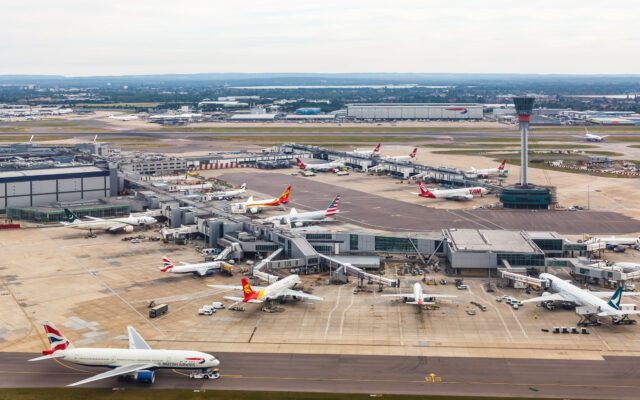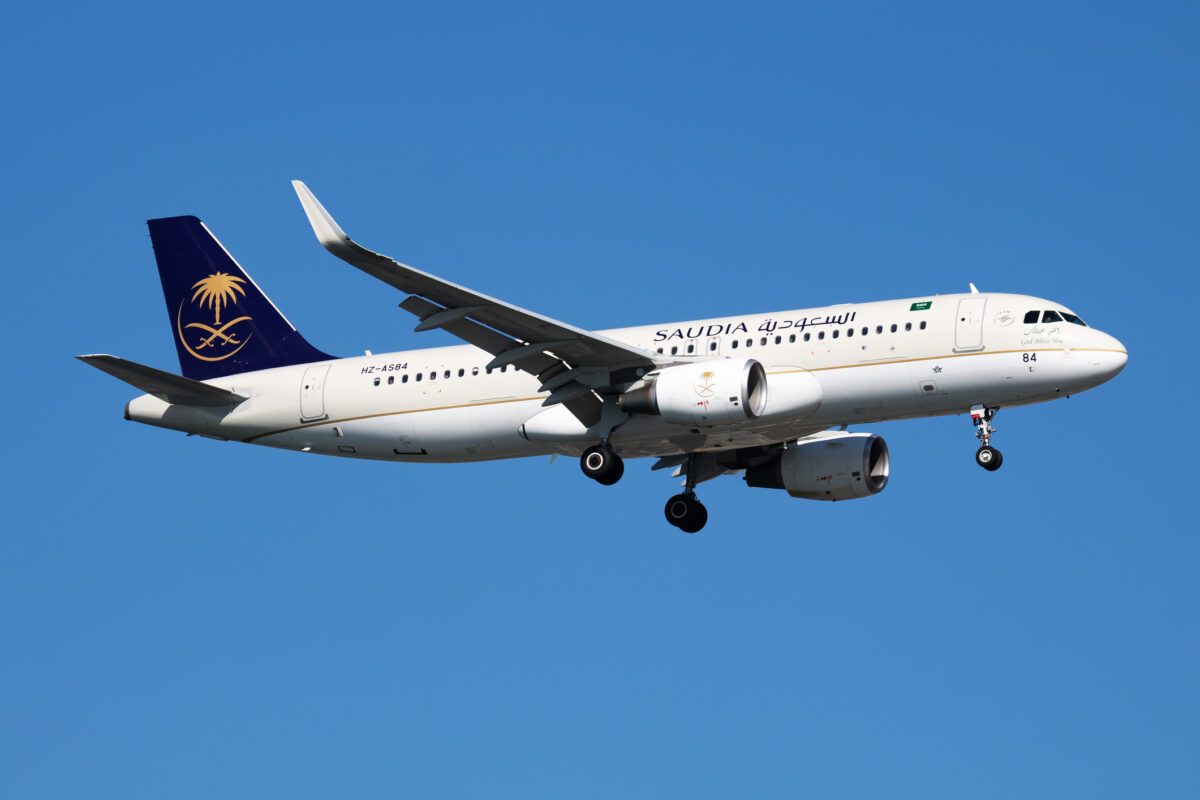
A missile and drone attack targeting Abha International Airport (AHB) forced Saudi authorities to suspend operations at the southern Saudi airport, disrupting domestic and international flights operated by at least nine airlines.
The attack occurred on July 13, 2026, after Yemen’s Houthi movement accused Saudi Arabia of striking the runway at Sana’a International Airport (SAH). Saudi air defenses intercepted ballistic missiles launched toward the country’s southern region, while the Houthis said Abha International Airport (AHB) had been targeted with both missiles and drones.
No casualties were reported, and public statements did not confirm significant damage at Abha International Airport (AHB). The operational impact was nevertheless substantial, with airport closures and flight cancellations continuing for several days.
Read our stories in your inbox
Two aviation newsletters. Zero fluff.
Abha Was One of Four Southern Saudi Airports Closed
The disruption extended beyond Abha International Airport (AHB).
Operational notices reviewed by OPSGROUP showed that Saudi authorities temporarily closed four airports in the country’s south:
Abha International Airport (AHB), King Abdullah bin Abdulaziz International Airport in Jizan (GIZ), Najran Regional Airport (EAM) and Sharurah Domestic Airport (SHW).
The closures were issued through Notices to Air Missions, or NOTAMs, shortly after the Houthi attack. Replacement NOTAMs subsequently extended the restrictions until at least 1500 UTC on July 16.
Abha International Airport (AHB) experienced the most visible airline disruption because it has a larger scheduled network than the other affected airports. Selected international services remained canceled even after the initial NOTAM period, including flights from Dubai International Airport (DXB) and Sharjah International Airport (SHJ).
At Least Nine Airlines Canceled Abha Flights
A review of ADS-B flight-tracking data identified eight airlines that canceled flights to or from Abha International Airport (AHB) between July 14 and July 16.
Saudia canceled services connecting Abha International Airport (AHB) with King Abdulaziz International Airport in Jeddah (JED) and King Khalid International Airport in Riyadh (RUH).
Saudi low-cost carriers flynas and flyadeal also canceled flights between Abha International Airport (AHB) and Jeddah Airport (JED).
Internationally, flydubai canceled services from Dubai International Airport (DXB), while Air Arabia canceled flights from Sharjah International Airport (SHJ).
Air Arabia Egypt and Nile Air canceled services between Cairo International Airport (CAI) and Abha International Airport (AHB). Qatar Airways also canceled its service from Hamad International Airport in Doha (DOH).
However, the total number of affected airlines was at least nine rather than eight.
Air Cairo separately confirmed the cancellation of its Abha flights on July 14. The Egyptian carrier advised passengers to contact its call center or travel agents for rebooking and refund assistance.
The number may have been higher if charter flights, irregular operations or cancellations made before an aircraft appeared in public ADS-B data are included.
The Disruption Was Primarily a Narrowbody Event
Nearly all scheduled flights serving Abha International Airport (AHB) use narrowbody aircraft.
Saudia generally deploys members of the Airbus A320 family on its routes from Jeddah Airport (JED) and Riyadh Airport (RUH). Flynas and flyadeal also center their operations on Airbus A320ceo and A320neo-family aircraft.
Air Arabia and Air Arabia Egypt operate Airbus A320-family fleets, while Nile Air uses Airbus A320 and A321 aircraft. Air Cairo also operates a predominantly Airbus A320-family fleet.
Flydubai serves Abha International Airport (AHB) with Boeing 737 aircraft. Depending on the rotation, the carrier can use either the Boeing 737-800 or newer 737 MAX 8. Flight-tracking information for the route showed both variants assigned during July.
Qatar Airways’ Doha Airport (DOH)-Abha Airport (AHB) service is operated with the Airbus A320. The approximately 756-mile route has a scheduled block time of around two hours and 30 minutes.
The widespread use of common narrowbody aircraft should simplify schedule recovery once the airport remains consistently available. Airlines can substitute aircraft more easily than on a long-haul route requiring a specialized widebody and dedicated crew complement.
The greater challenge is repositioning aircraft and crews after several consecutive days of cancellations. A flight between Jeddah Airport (JED) and Abha Airport (AHB), for example, may form only one sector in a longer aircraft rotation. Canceling that sector can affect subsequent flights even after the airport reopens.
Abha Is a Challenging but Important Regional Airport
Abha International Airport (AHB) serves Abha, Khamis Mushait and the wider Aseer region of southwestern Saudi Arabia.
The airport sits at an elevation of approximately 6,858 feet above sea level and has a single 10,991-foot runway, designated 13/31. Its high elevation and mountainous surroundings make aircraft performance, weather and operational planning particularly important.
High-elevation airports produce lower air density, especially during warm conditions. That can increase takeoff distances and reduce climb performance, although Abha’s relatively long runway provides operators with additional margin.
Abha International Airport (AHB) is also an important domestic tourism gateway. The Aseer region’s cooler summer climate attracts travelers from other parts of Saudi Arabia, producing significant seasonal demand from Jeddah Airport (JED), Riyadh Airport (RUH) and other Saudi cities.
International connectivity has also expanded.
Qatar Airways resumed service to Abha in January 2025 with two weekly Airbus A320 flights from Hamad International Airport (DOH). At the time, Abha became Qatar Airways’ 11th destination in Saudi Arabia.
The route gives passengers from the Aseer region access to Qatar Airways’ global connecting network through Doha Airport (DOH), making its cancellation more consequential than the loss of a purely point-to-point service.
Why the Houthis Targeted Abha
The attack followed a strike on the runway at Sana’a International Airport (SAH), the principal airport serving Yemen’s Houthi-controlled capital.
The Houthis blamed Saudi Arabia for the Sana’a Airport (SAH) strike and described the subsequent attack on Abha Airport (AHB) as retaliation. They also warned airlines against operating through Saudi airspace until restrictions on Sana’a Airport (SAH) were lifted.
However, Yemen’s internationally recognized government later said that its own forces had carried out the runway strike. The government is based primarily in Aden and receives substantial support from Saudi Arabia, but it explicitly claimed responsibility for the operation.
According to the Yemeni government, the objective was to prevent an Iranian aircraft from landing without authorization. Saudi Arabia did not publicly confirm that its forces carried out the strike.
That distinction matters. Describing the Sana’a strike simply as a Saudi attack repeats the Houthi allegation while omitting the Yemeni government’s direct claim of responsibility.
The Aircraft at the Center of the Escalation
The disputed flight was operated by Mahan Air using an Airbus A340-300.
Flight-tracking data identified the aircraft as an Airbus A340-313 registered EP-MMC. Operating as flight IRM1199, also marketed under Mahan Air’s W51199 flight number, it departed Tehran Imam Khomeini International Airport (IKA) and initially approached Sana’a International Airport (SAH).
The four-engine Airbus A340-300 was reportedly carrying a Houthi delegation returning from Iran. Yemen’s Presidential Leadership Council said Iran had requested permission to operate the flight, but the request was rejected.
As the aircraft approached Sana’a Airport (SAH), the runway was struck. The Mahan Air crew discontinued the approach and diverted west to Hodeidah International Airport (HOD), which is also under Houthi control.
The aircraft landed safely at Hodeidah Airport (HOD) before later returning to Tehran Imam Khomeini International Airport (IKA). Publicly available flight data showed that the A340 had descended to less than 2,500 feet above its recorded reference level before changing course.
The Airbus A340-300 is an unusually large aircraft for current operations into Yemen. The type was developed for long-range routes and typically seats approximately 250 to 300 passengers, depending on configuration.
Its four-engine design allows substantial range, but the aircraft is expensive to operate compared with newer twin-engine widebodies such as the Boeing 787 or Airbus A350. Mahan Air remains one of the few airlines still using the A340-300 in regular passenger service.
EASA’s Warning Did Not Cover Saudi Airspace
The European Union Aviation Safety Agency issued a new Conflict Zone Information Bulletin on July 14, one day after the Abha attack.
The bulletin recommended that affected operators avoid the airspace of Bahrain, Kuwait, Qatar and the United Arab Emirates. It also covered the portion of the Gulf of Oman within the Muscat Flight Information Region west of 58 degrees east longitude.
The advisory applies at all altitudes and was initially valid through July 29, unless reviewed earlier.
Importantly, the EASA bulletin did not tell airlines to avoid Saudi Arabian airspace. Saudi Arabia was addressed separately through risk information advising operators to consider current threats and maintain contingency plans.
The EASA warning was also driven primarily by the wider conflict involving the United States and Iran, missile and drone activity around the Persian Gulf, and increased activation of regional air-defense systems. It was not issued solely because of the attack on Abha International Airport (AHB).
That distinction is operationally significant because Saudi airspace remains an important corridor for flights between Europe, the Gulf, South Asia and Southeast Asia. With several surrounding flight information regions restricted or considered high risk, additional limitations over Saudi Arabia could force major detours.
KLM, Lufthansa and British Airways Suspensions Were Separate
The temporary closure of Abha International Airport (AHB) directly affected airlines serving Abha. It did not directly cause the broader Middle East suspensions announced by KLM, Lufthansa Group or British Airways.
KLM had suspended flights from Amsterdam Schiphol Airport (AMS) to Dubai Airport (DXB), King Khalid International Airport in Riyadh (RUH) and King Fahd International Airport in Dammam (DMM) through July 15.
British Airways delayed the planned return of London Heathrow Airport (LHR)-Riyadh Airport (RUH) service until August 8. Its services to several other Middle Eastern destinations remained suspended for longer periods.
Lufthansa Group had also canceled numerous Middle East routes, but the situation changed after the original report was published. Lufthansa subsequently announced that service from Frankfurt Airport (FRA) to Riyadh Airport (RUH) would resume on September 10 with three weekly flights. ITA Airways, which is part of Lufthansa Group, plans to restart Rome Fiumicino Airport (FCO)-Riyadh Airport (RUH) flights on September 15.
Those decisions were responses to the broader regional security environment following conflict involving Iran, not the localized closure of Abha International Airport (AHB).
The Attack Ends a Long Period of Relative Calm
The July 13 attack was the first Houthi-claimed strike against Saudi Arabia since an informal truce took hold in 2022.
Abha International Airport (AHB) had been targeted repeatedly before that de-escalation. Previous Houthi missile and drone attacks caused injuries, damaged airport infrastructure and, in one 2021 incident, damaged a flyadeal Airbus A320 parked at the airport.
The renewed targeting of AHB therefore carries greater significance than a temporary cluster of flight cancellations. It raises the possibility that airports, energy infrastructure and other civilian transportation facilities in southern Saudi Arabia could again become exposed to sustained missile and drone threats.
For airlines, the risk is not limited to a direct strike on an aircraft. Interceptions, falling debris, rapidly issued NOTAMs, GPS interference and short-notice airspace closures can all create hazards and operational disruption.
Bottom Line
The Houthi missile and drone attack targeting Abha International Airport (AHB) caused several days of disruption at one of southern Saudi Arabia’s most important aviation gateways.
ADS-B data identified eight affected carriers, but Air Cairo’s separately confirmed cancellations bring the publicly documented total to at least nine airlines.
The disruption affected domestic flights to Jeddah Airport (JED) and Riyadh Airport (RUH), regional services from Cairo Airport (CAI), Dubai Airport (DXB), Sharjah Airport (SHJ) and Doha Airport (DOH), and a largely narrowbody operation built around Airbus A320-family and Boeing 737 aircraft.
The incident also requires careful separation from the broader Middle East aviation crisis. EASA’s July 14 warning did not advise airlines to avoid Saudi airspace, while the KLM, Lufthansa and British Airways suspensions cited in related reports were primarily connected to the wider regional conflict rather than the closure of Abha Airport (AHB).
The immediate operational disruption may prove temporary. The more serious concern is that the attack ended nearly four years without a Houthi-claimed strike against Saudi Arabia and placed commercial airports back at the center of the confrontation.
Keep reading FlyMag
Get the Daily Brief in the morning or the Route Watch weekly recap on Fridays. Or both.