The Transportation Security Administration is taking a major step toward making biometric airport screening easier to use, expanding TSA PreCheck Touchless ID through a new integration with Google Wallet.
The move makes Google Wallet the first digital wallet to support TSA PreCheck Touchless ID opt-in, giving eligible travelers a more centralized way to access the program without repeatedly setting up enrollment through individual airline profiles. For frequent flyers who move between American Airlines, Delta Air Lines, United Airlines, Southwest Airlines, Alaska Airlines, Hawaiian Airlines, and other carriers, that is the real improvement.
TSA PreCheck Touchless ID is now available at 65 airports nationwide and supports more than 100 TSA PreCheck participating airlines. The Google Wallet rollout is taking place over the coming weeks, with TSA positioning it as part of a broader modernization push ahead of heavy summer travel volumes.
Read our stories in your inbox
Two aviation newsletters. Zero fluff.
This is not a new security program replacing TSA PreCheck. It is a new access path into one of TSA PreCheck’s fastest identity-verification options.
What Is TSA PreCheck Touchless ID?
TSA PreCheck Touchless ID allows eligible travelers to verify their identity at selected airport checkpoints using facial comparison technology rather than routinely presenting a physical ID and boarding pass to a Transportation Security Officer.
The process is designed for designated TSA PreCheck lanes at participating airports. Travelers still go through the standard TSA PreCheck screening process, but the identity-check step can be faster because the system compares the live image captured at the checkpoint with the traveler’s enrolled identity information.
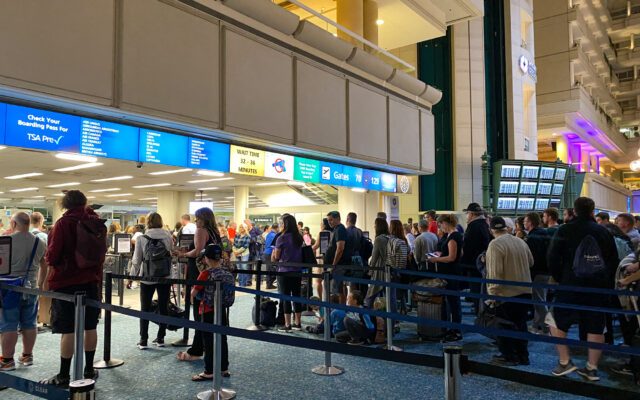
For airports such as Atlanta (ATL), Los Angeles (LAX), New York JFK (JFK), LaGuardia (LGA), Denver (DEN), Miami (MIA), Orlando (MCO), Boston (BOS), and other high-volume checkpoints, shaving time from the document-check stage can matter. The first bottleneck at airport security is often not the X-ray machine. It is the line of passengers waiting to have IDs and boarding passes checked.
Touchless ID is meant to reduce that friction.
Why Google Wallet Changes The Program
Before the Google Wallet integration, TSA PreCheck Touchless ID was more fragmented.
A traveler generally needed to enroll through a participating airline by adding passport information to that airline’s profile and opting in for an eligible trip. That worked reasonably well for travelers loyal to one airline, but it was less convenient for passengers who regularly flew multiple carriers.
TSA’s prior airline-profile option remains available through six airlines: Alaska Airlines, American Airlines, Delta Air Lines, Hawaiian Airlines, Southwest Airlines, and United Airlines. The Google Wallet integration adds a broader path.
Now, eligible travelers can create a digital ID in Google Wallet using passport information. After checking in for a flight with a participating airline, the traveler saves the boarding pass to Google Wallet. If eligible, a “Get started” prompt appears on the boarding pass, taking the traveler to a TSA consent page. After the traveler authorizes sharing the digital ID and boarding pass information, TSA confirms enrollment and Google Wallet updates the boarding pass with a TSA PreCheck Touchless ID indicator.
That indicator is what tells the airport checkpoint that the traveler is eligible to use the Touchless ID lane for that trip.
The Big Operational Improvement: One Wallet, More Airlines
The biggest advantage is not simply that the process is digital. The advantage is that it can reduce airline-by-airline repetition.
For regular flyers, the old system created a familiar problem: one airline had the right information, another did not. A traveler might have passport information and Touchless ID permissions set up with Delta but not with American, or with United but not Southwest. That made the experience inconsistent.
Google Wallet gives TSA a more flexible enrollment path that can work across any TSA PreCheck participating airline, assuming the airport and itinerary support Touchless ID.
That is a meaningful change for business travelers, consultants, aviation professionals, government travelers, airline employees traveling personally, and frequent leisure travelers who choose flights based on schedule and fare rather than loyalty alone.
It also helps airlines. If TSA can make Touchless ID enrollment less dependent on each airline’s own profile setup, adoption can grow without requiring every carrier to create the same level of front-end customer education.
Who Can Use It?
The Google Wallet option is not available to every passenger walking into an airport.
Travelers need to be enrolled in TSA PreCheck, have a valid U.S. passport, create an eligible digital ID in Google Wallet, check in with a participating airline, and fly through an airport where TSA PreCheck Touchless ID is available. They also need to opt in for the trip.
That last point matters. Participation is voluntary. The traveler must actively approve the sharing of digital ID and boarding pass information with TSA. Google also says the traveler must authenticate the request by unlocking the device using biometrics, a PIN, or a pattern.
The system does not mean that everyone with Google Wallet can suddenly bypass the normal ID-check process. It means eligible TSA PreCheck members have a simpler way to activate Touchless ID for supported trips.
Travelers Still Need To Carry Physical ID
The new process does not eliminate the need to carry acceptable identification.
TSA continues to advise travelers to bring a physical ID, such as a REAL ID-compliant driver’s license, passport, or another acceptable document. A TSA officer may still request physical identification if the system is unavailable, if the traveler is not eligible for Touchless ID on that trip, if the boarding pass does not show the correct indicator, or if additional verification is required.
That backup requirement is important for passengers to understand. Touchless ID is a convenience layer, not a guarantee that a traveler can leave all documents at home.
For aviation and airport professionals, this is also a key operational distinction. TSA is not removing officer discretion or eliminating fallback procedures. It is adding a faster identity-verification option for a subset of travelers who have already passed through TSA PreCheck enrollment.
What Happens At The Checkpoint
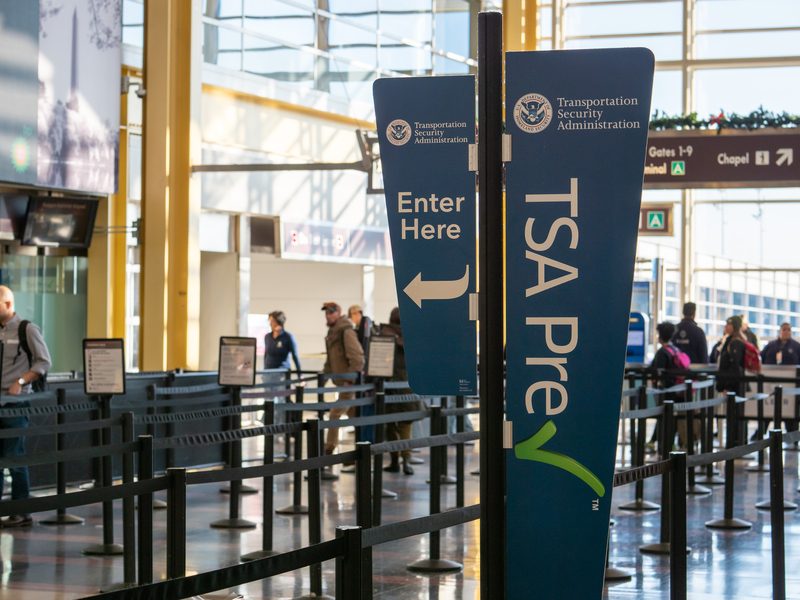
At a participating airport, the traveler uses the designated TSA PreCheck Touchless ID lane or area.
Instead of presenting a physical ID as the default step, the traveler approaches the camera, and TSA’s system performs a facial comparison. If the identity verification succeeds, the traveler proceeds through the TSA PreCheck screening process.
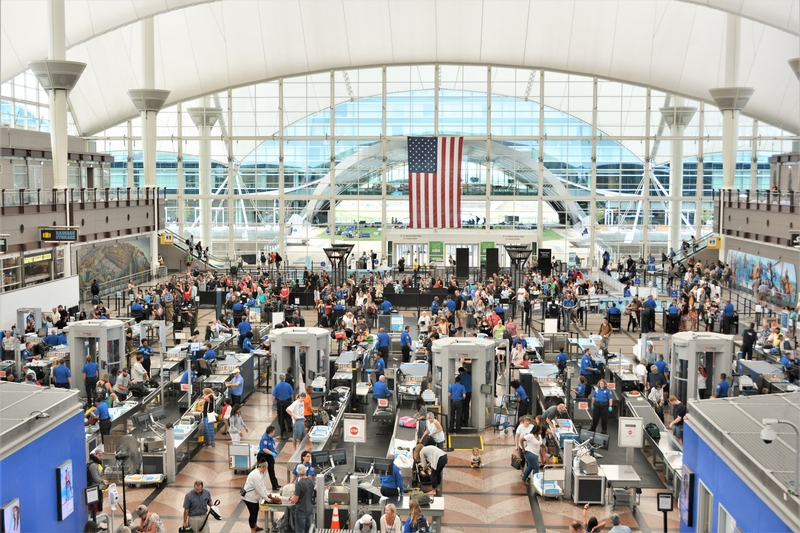
The technology does not change the basic purpose of the checkpoint. Passengers and bags are still screened. Liquids, laptops, shoes, belts, and jackets follow TSA PreCheck rules. The difference is at the identity-verification stage, where the system is designed to confirm the traveler more quickly.
From a throughput perspective, the value is clear. Airports do not need every passenger to use Touchless ID for the program to help. Even a modest percentage of trusted travelers moving through faster identity verification can reduce pressure in TSA PreCheck lanes during peak bank times.
That is especially relevant at hub airports where passenger waves are driven by banked airline schedules. At airports such as Atlanta (ATL), Dallas/Fort Worth (DFW), Chicago O’Hare (ORD), Denver (DEN), Charlotte (CLT), Seattle (SEA), New York JFK (JFK), Los Angeles (LAX), and Washington Dulles (IAD), checkpoint congestion can build quickly when several large departure banks overlap.
Privacy Remains The Central Question
Biometric airport programs always raise privacy concerns, and TSA’s Google Wallet expansion will be no exception.
TSA and Google are emphasizing that the program is voluntary, that the traveler must opt in, and that information is shared only after device authentication. Google says digital IDs in Google Wallet are encrypted and stored on the phone, giving the traveler control over when the credential is shared.
TSA says photo and personal data associated with Touchless ID are deleted within 24 hours of the scheduled flight departure. TSA also states that the images are used to verify identity and are not used for law enforcement or surveillance purposes.
That language is important because public acceptance of airport biometrics depends on trust. Travelers may like speed, but many remain cautious about facial recognition. The success of Touchless ID will depend not only on whether it works quickly, but whether passengers believe the data practices are limited, transparent, and consistently enforced.
For now, the program remains opt-in. Travelers who do not want to use facial comparison can continue using traditional identity verification.
Why Airlines And Airports Want This To Work
Airlines and airports have a strong interest in faster identity verification.
At busy airports, security lines affect the entire passenger journey. If TSA PreCheck lines back up, passengers arrive at gates later, lounge dwell time falls, boarding can become more chaotic, and missed flights become more likely. For airlines, that can translate into customer dissatisfaction and irregular-operation pressure.
Touchless ID is attractive because it targets one of the few parts of the airport journey where technology can improve speed without changing aircraft, gates, runways, or staffing levels. It is not a solution to every checkpoint problem, but it can make the front end of the process more efficient.
Airlines also benefit when trusted travelers have a more predictable journey. Premium customers, frequent flyers, and corporate travelers tend to value consistency as much as raw speed. A security process that works the same way across more airlines and airports is easier to trust and easier to use.
That is why the Google Wallet integration matters. It makes Touchless ID feel less like a carrier-specific perk and more like a scalable national screening option.
The Airline Profile Method Is Not Going Away
TSA is not eliminating the existing airline enrollment option.
Travelers can still save passport information to participating airline profiles and opt in through those airlines where supported. That means customers who already use Touchless ID through Delta, United, American, Alaska, Southwest, or Hawaiian do not necessarily need to change anything immediately.
Google Wallet simply adds another path. For some travelers, especially those already using Android and Google Wallet for boarding passes, it may become the easier method. For others, airline-profile enrollment may remain the familiar option.
The likely result is a hybrid period. Some passengers will continue through airline accounts. Others will use Google Wallet. Airports and TSA officers will need to support both, which makes clear signage and consistent boarding-pass indicators important.
What This Means For Airport Operations
For airports, the expansion could make Touchless ID lanes more useful.
A biometric lane only helps if enough eligible travelers use it. If enrollment is too complicated or fragmented, adoption stays low and the lane becomes underutilized. By lowering the enrollment friction, TSA and Google may increase the number of passengers who actually show up ready to use the Touchless ID option.
That could improve the business case for airports and TSA to expand dedicated Touchless ID capacity. More users can justify better lane staffing, signage, checkpoint layout changes, and additional cameras.
The key will be reliability. If passengers save a boarding pass to Google Wallet, opt in, receive the indicator, and then move through the lane quickly, adoption should grow. If the process is inconsistent or eligibility is unclear, travelers may fall back to traditional TSA PreCheck.
For airport professionals, the rollout will be worth watching not for the announcement itself, but for lane performance during peak travel periods.
What Passengers Should Know Before Trying It
The process is simple, but travelers should not assume it will work automatically on every trip.
A passenger needs to create the digital ID in Google Wallet before travel, check in with a participating airline, save the boarding pass to Google Wallet, follow the opt-in prompt, and confirm that the boarding pass shows the TSA PreCheck Touchless ID indicator. Without that indicator, the traveler should not assume access to the Touchless ID lane.
Passengers should also keep their physical ID available. Even when the technology works, TSA can request additional verification.
The best way to think about the feature is as a faster lane for eligible, prepared travelers — not as a replacement for TSA PreCheck enrollment, not as a substitute for a passport or REAL ID, and not as universal airport access.
A Step Toward A More Digital Airport
The Google Wallet expansion fits into a larger shift across the passenger journey.
Airlines already use mobile boarding passes, biometric boarding, app-based bag tracking, digital passport verification, automated bag drops, and self-service disruption tools. Airports are investing in facial comparison, credential authentication, and automated identity systems. TSA’s challenge is to modernize security while preserving trust, resilience, and passenger choice.
Touchless ID sits directly in that transition. It is not about aircraft, routes, or airport terminals, but it affects how efficiently passengers reach the aircraft. For airlines, that matters. For airports, it matters. For passengers, it may be the difference between a stressful checkpoint and a smooth one.
Google Wallet’s role could accelerate adoption because it moves the program into a tool many travelers already use. If the process becomes part of the normal check-in and boarding-pass flow, Touchless ID will feel less like a pilot program and more like a standard premium-traveler feature.
Bottom Line
TSA’s Google Wallet integration is one of the most important expansions yet for TSA PreCheck Touchless ID.
The program is already available at 65 airports, but access had been limited by airline-by-airline enrollment. By allowing eligible travelers to opt in through Google Wallet, TSA is making the feature easier to use across more than 100 participating TSA PreCheck airlines.
The benefit is straightforward: faster identity verification in dedicated TSA PreCheck Touchless ID lanes, with fewer repeated setup steps for travelers who fly multiple airlines. The limitations are just as important: passengers still need TSA PreCheck, a valid U.S. passport-based digital ID in Google Wallet, an eligible itinerary, and a participating airport. They should also continue carrying physical ID.
For the aviation industry, the bigger story is scalability. Touchless ID is moving from a carrier-specific convenience toward a broader airport-security platform. If the rollout performs well, Google Wallet could help turn biometric identity verification from a niche PreCheck feature into a more common part of the U.S. airport experience.
Keep reading FlyMag
Get the Daily Brief in the morning or the Route Watch weekly recap on Fridays. Or both.