Iberia is stepping away from Cuba for the summer, suspending its direct service between Adolfo Suárez Madrid-Barajas Airport (MAD) and José Martí International Airport in Havana (HAV) from June through late October. The airline is still holding November on sale, but only on the assumption that conditions on the island improve enough to make the route workable again.

This is not an abrupt exit. It is a controlled wind-down. Iberia will operate three weekly flights between Madrid (MAD) and Havana (HAV) in April, then cut that back to two weekly flights in May before pausing the route altogether. For aviation readers, that kind of taper usually says the same thing: the route had already become difficult to defend commercially before the suspension was announced.
A Havana suspension, not a broader Iberia retreat
The important nuance is that this is a Cuba-specific move, not a wider rollback across Iberia’s long-haul network. Havana (HAV) is the point being pulled, and the airline has made clear that the disruption is tied to the exceptional operating environment on the island rather than to any broader weakness in Iberia’s Latin American strategy.
Read our stories in your inbox
Two aviation newsletters. Zero fluff.
That matters because Madrid-Barajas (MAD) remains one of Europe’s strongest gateways into Latin America, and Iberia is not short of demand elsewhere in the region. Havana (HAV), however, has become a different kind of market in 2026: one where the commercial side and the operational side have both been moving in the wrong direction at the same time.
The fuel stop changed the economics of the route
The biggest operational problem has been fuel.
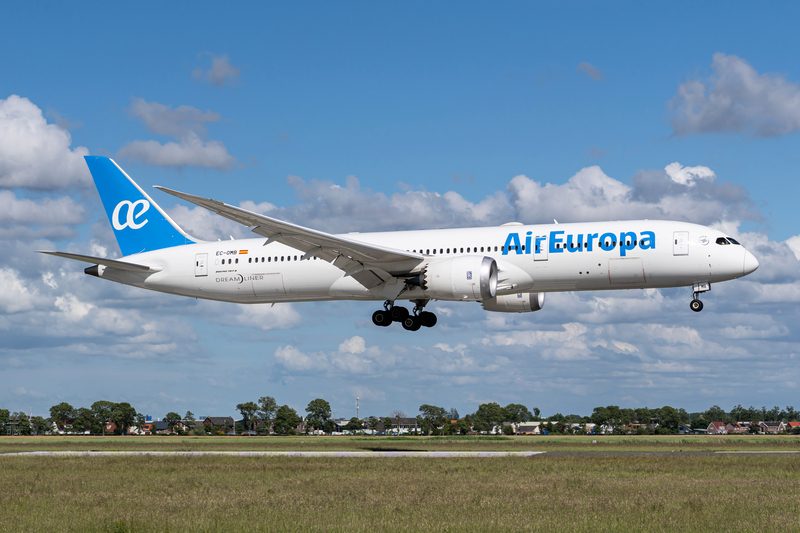
Since February, Iberia’s return flights from Havana (HAV) to Madrid (MAD) have required a technical refueling stop in Santo Domingo at Las Américas International Airport (SDQ). That is the kind of detail that looks minor in a customer update and major in an airline planning office. A long-haul flight that was designed to operate nonstop loses much of its efficiency once an intermediate stop is inserted into the return leg. Block time stretches, aircraft utilization falls, and the cost base rises at exactly the moment reliability becomes harder to protect.
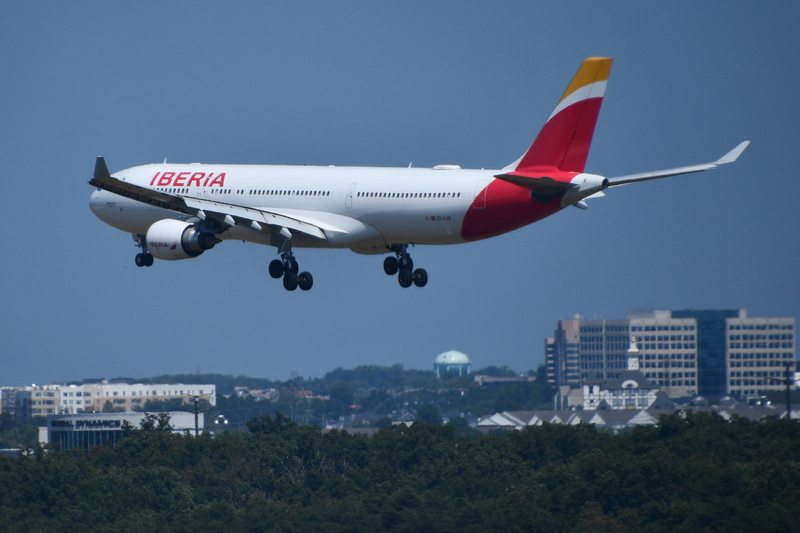
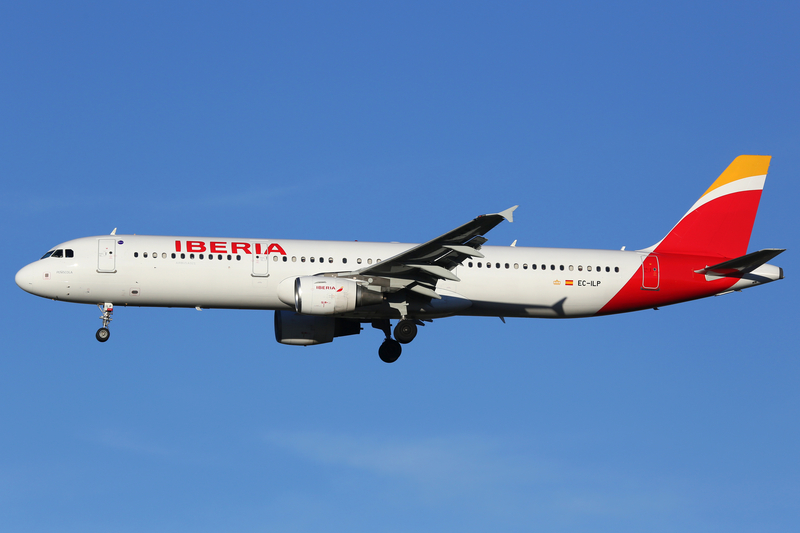
On a route like Madrid (MAD) to Havana (HAV), that matters even more because Iberia has typically been using the Airbus A330-200. In Iberia’s fleet, the A330-200 is a long-haul twin-aisle aircraft with 288 seats and a published range of 11,500 kilometers. It is a solid fit for medium-density transatlantic sectors, but like any widebody, it works best when it can operate the mission it was scheduled for. Add a technical stop, and the aircraft is no longer delivering the same economics, the same productivity, or the same passenger proposition.
For airline professionals, that is really the story here. The route was not only seeing softer demand. It was also becoming operationally clumsy.
Weak demand made the decision easier
Iberia has also pointed to declining demand, and that part of the picture should not be underestimated.
A fuel shortage by itself creates disruption. A fuel shortage combined with weaker market demand creates a route review. Once the aircraft is taking longer to complete the rotation and the local environment is already depressing bookings, the threshold for suspension gets much lower. At that point, the decision is no longer just about whether a flight can operate. It is about whether it still makes sense to keep operating it.
That distinction is important. Airlines can often absorb short-term disruption on strategically important routes. What becomes much harder to absorb is a prolonged period in which the route is both operationally compromised and commercially softer than expected. That is where Madrid (MAD) to Havana (HAV) appears to have landed.
Panama keeps Cuba reachable, but not nonstop
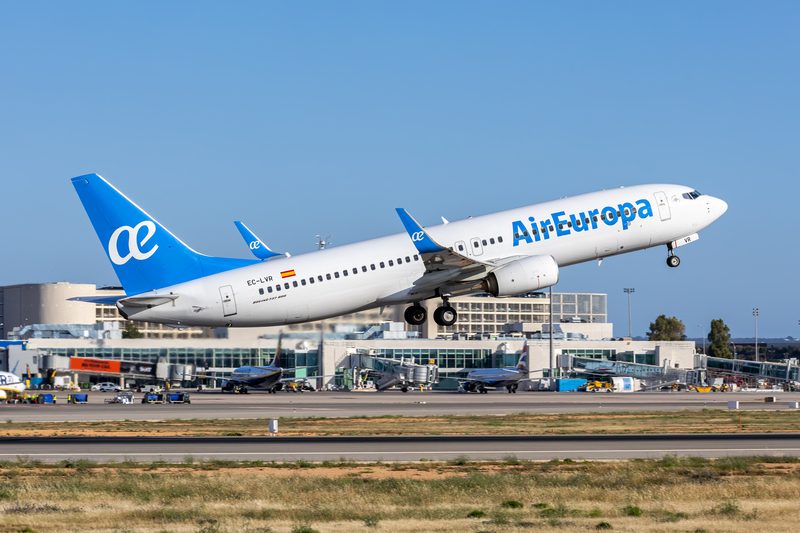
Iberia is not disappearing from the market entirely. During the suspension, customers will still be able to travel via Panama City’s Tocumen International Airport (PTY) using the airline’s codeshare agreement with Copa Airlines.
That gives Iberia a workable bridge until the nonstop returns, if it does return on schedule in November. But from a network perspective, a one-stop option via Panama City (PTY) is not a like-for-like substitute for a nonstop Madrid (MAD) to Havana (HAV) service. Travel time rises, itinerary simplicity falls, and the route moves from a nonstop long-haul product to a connecting proposition. That may preserve presence, but it does not preserve the same competitive position.
Bottom Line
Iberia’s suspension of Havana is a reminder that long-haul routes can unravel without ever producing a dramatic headline cancellation. Sometimes the damage is gradual. Demand weakens. Fuel becomes unreliable. A technical stop appears. The aircraft stops working as efficiently as it was meant to. Then the schedule is cut back, and eventually the route comes off sale.
That is what has happened between Adolfo Suárez Madrid-Barajas Airport (MAD) and José Martí International Airport (HAV). Iberia’s Airbus A330-200 may still be the right size for the market in normal conditions, but these are not normal conditions. Until Havana (HAV) can support reliable fueling and a more stable demand environment, the nonstop no longer looks like a clean long-haul operation. It looks like a compromised one.
Keep reading FlyMag
Get the Daily Brief in the morning or the Route Watch weekly recap on Fridays. Or both.