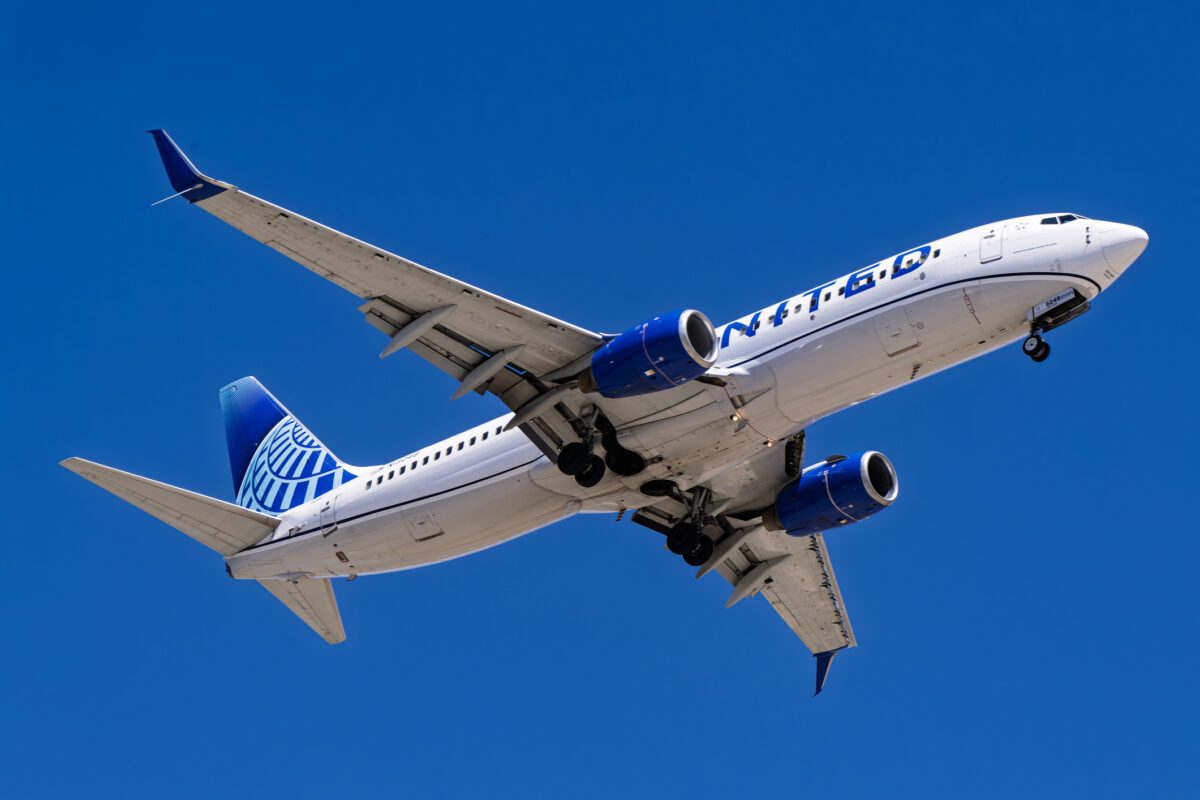
The Federal Aviation Administration has proposed a $255,000 civil penalty against United Airlines after alleging that the carrier allowed a previously dismissed flight attendant to work 47 flights without completing the federal return-to-duty process required after refusing a drug test.

According to the FAA, United terminated the flight attendant in 2021 after the employee refused to submit to a required drug test. The airline subsequently rehired the individual and allowed the employee to perform safety-sensitive duties between May 2024 and July 2025.
The agency alleges that the flight attendant returned to work without being evaluated by a qualified substance abuse professional, without producing a verified negative return-to-duty drug test, and without entering the mandatory follow-up testing program.
Read our stories in your inbox
Two aviation newsletters. Zero fluff.
United has 30 days after receiving the enforcement letter to respond to the proposed penalty. The $255,000 amount has not yet been finally assessed, and the airline can dispute the allegations, present mitigating evidence, seek a reduction, negotiate a settlement, or request further administrative proceedings.
What the FAA Alleges United Did Wrong
The FAA’s July 16 enforcement announcement centers on one flight attendant and three alleged compliance failures.
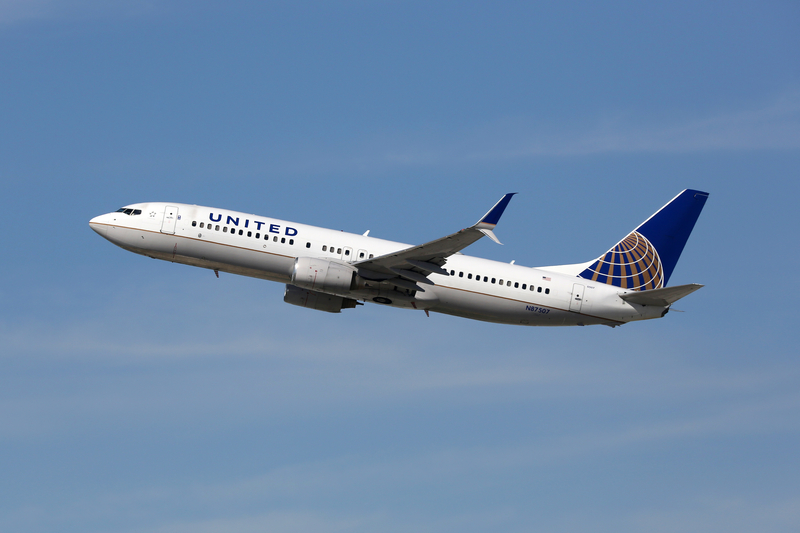
The employee was reportedly dismissed in 2021 for refusing a drug test. After being rehired, the flight attendant allegedly:
- Did not receive the required evaluation from a substance abuse professional
- Did not complete a verified negative return-to-duty drug test
- Was not placed into the required unannounced follow-up testing program
The FAA says the employee nevertheless worked as a flight attendant on 47 United flights between May 2024 and July 2025.
The regulator has not disclosed the flight numbers, routes, airports, aircraft registrations, or aircraft types involved. It has also not identified the employee or explained when the flight attendant was rehired.
That means it is not possible to determine whether the flights involved United’s Boeing 737s, Airbus A319s and A320s, Boeing 757s, widebody aircraft, or regional aircraft operated under the United Express brand.
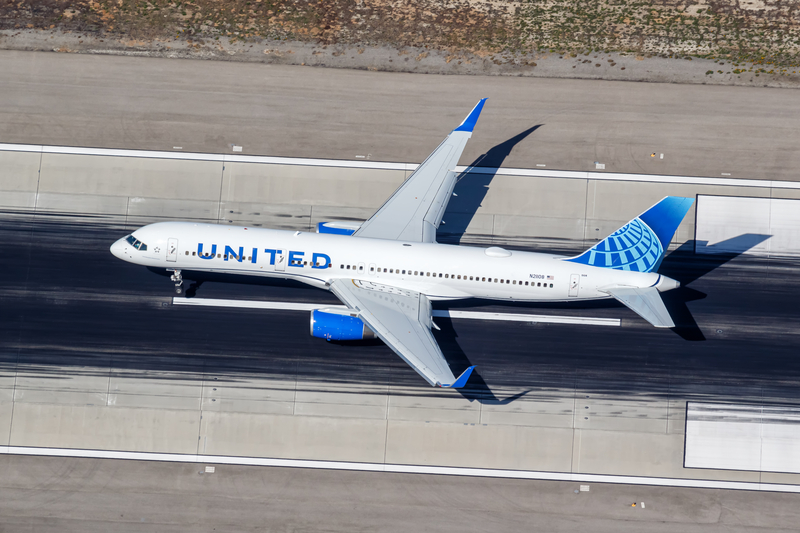
The FAA announcement refers specifically to flights on which the individual performed flight-attendant duties, but it does not provide enough information to reconstruct the employee’s schedule.
A Test Refusal Is Treated as a Federal Violation
The case does not involve an FAA allegation that the flight attendant tested positive for drugs in 2021.
Instead, the employee allegedly refused to submit to the test.
That distinction is important, but it does not eliminate the return-to-duty requirements. Under Department of Transportation rules, refusing a required test is itself treated as a drug-and-alcohol program violation for the purpose of removing an employee from safety-sensitive duties and triggering the return-to-duty process.
The relevant rules state that an employee who violates DOT drug or alcohol regulations cannot resume any DOT-regulated safety-sensitive work until completing the substance abuse professional evaluation, referral, and education or treatment process.
The regulation specifically includes a test refusal—along with a verified positive drug test or an alcohol concentration of 0.04 or greater—among the events that trigger those requirements.
A test refusal is not necessarily proof that the employee had used a prohibited substance. It does mean the employer cannot simply treat the individual as though the required test had produced a negative result.
The Required Return-to-Duty Process
The federal process is more extensive than taking a single drug test before returning to work.
An employee who has refused a DOT test must first be removed from safety-sensitive duties. The individual must then be evaluated by a qualified substance abuse professional, commonly known as a SAP.
The SAP is not employed to represent either the airline or the employee. The Department of Transportation describes the SAP’s role as protecting the public interest by evaluating the employee and recommending appropriate education, treatment, follow-up testing, and aftercare.
The normal process includes several separate stages:
| Stage | Federal Requirement |
|---|---|
| Removal from duty | The employee cannot continue performing safety-sensitive work |
| Initial SAP evaluation | A qualified professional assesses the violation and the employee |
| Education or treatment | The employee completes the program prescribed by the SAP |
| SAP follow-up evaluation | The SAP determines whether the employee complied with the recommendations |
| Return-to-duty test | The employer must receive a verified negative drug result before restoring safety-sensitive duties |
| Follow-up testing | The employee enters an unannounced testing plan directed by the SAP |
The employer retains the ultimate discretion over whether to rehire or return the employee to a safety-sensitive position. Completing the process makes the employee legally eligible to return; it does not require the airline to reinstate that person.
However, an employer that chooses to return the individual must ensure the requirements have been satisfied. DOT rules prohibit an employer from restoring safety-sensitive duties before receiving a verified negative return-to-duty drug test conducted after the SAP has confirmed successful compliance with the required education or treatment.
The FAA alleges that United bypassed all three central protections in this case: the professional evaluation, the negative return-to-duty test, and the follow-up testing program.
Follow-Up Testing Must Be Unannounced
Completing a negative return-to-duty test is not the end of the process.
The substance abuse professional must create a written follow-up testing plan for any employee returning to regulated safety-sensitive work. The plan must require at least six unannounced tests during the employee’s first 12 months back on duty.
The SAP may require more than six tests and can extend follow-up testing for as long as 60 months. The employer selects the actual testing dates so that the employee cannot predict when a test will occur.
Federal rules also state that the testing obligation “follows the employee.” It remains in effect if the individual changes employers or experiences a break in service.
That provision is particularly relevant to the United case. Terminating the flight attendant in 2021 did not erase the regulatory consequences of the alleged test refusal. If United later chose to rehire the employee into another safety-sensitive position, the airline was responsible for verifying that the return-to-duty process had been completed.
The same principle would generally apply if an employee committed a testing violation at one airline and later sought safety-sensitive work with another DOT-regulated employer.
Why Flight Attendants Are Considered Safety-Sensitive Employees
Flight attendants are sometimes viewed primarily through the lens of passenger service, but their regulatory role is fundamentally related to safety.
Under 14 CFR Part 120, flight-attendant duties are expressly classified as safety-sensitive functions. Pilots, aircraft dispatchers, aircraft maintenance personnel, flight instructors, ground-security coordinators, aviation screeners, and certain operations-control personnel are also covered.
Flight attendants are trained to manage evacuations, cabin fires, smoke events, decompression, turbulence injuries, medical emergencies, disruptive passengers, security threats, and emergency landings.
Their responsibilities include checking emergency equipment, confirming that exits and evacuation paths are usable, enforcing cabin-safety rules, coordinating with the flight deck, and directing passengers during an evacuation.
Those duties apply regardless of aircraft size. A flight attendant aboard a United Boeing 737 MAX 9, Airbus A320, Boeing 757-200, Boeing 777-300ER, or Boeing 787-9 may be required to respond immediately to an emergency affecting hundreds of passengers.
The drug-and-alcohol rules therefore apply to the employee’s safety role, not merely to the amount of customer contact involved.
The FAA Has Not Alleged Impairment on the 47 Flights
The language of the FAA notice should be interpreted carefully.
The agency has not alleged that the flight attendant used drugs while working, reported for duty while impaired, or caused a safety incident aboard any of the 47 flights.
It has also not said that the employee failed a drug test after being rehired.
The allegation is that United allowed the flight attendant to perform regulated duties without first satisfying the administrative and testing safeguards that federal rules require after a previous test refusal.
That remains a serious regulatory allegation because the entire purpose of the return-to-duty system is to establish that an employee has been professionally evaluated, has completed any necessary intervention, has received a verified negative test result, and will remain subject to additional monitoring.
It would nevertheless be inaccurate to characterize the 47 flights as having been staffed by a flight attendant known to be under the influence of drugs. The FAA has made no such claim.
Why 47 Flights Can Produce a Substantial Fine
The proposed penalty is much larger than a simple administrative filing fee because the FAA can evaluate the conduct as repeated noncompliance involving multiple performances of safety-sensitive duties.
The regulator has not published its precise calculation for the $255,000 amount. Its brief announcement does not state whether the FAA counted each flight, each day of work, each omitted testing requirement, or a combination of violations when developing the proposed assessment.
FAA civil penalties depend on the regulations involved, the number and duration of alleged violations, the regulated entity’s size, the seriousness of the conduct, compliance history, and other aggravating or mitigating factors.
The agency says the penalty for an individual regulatory violation generally ranges from $1,100 to $75,000 before inflation adjustments, depending on the provision and type of alleged violator. The FAA has authority to assess penalties of up to $1.2 million against companies that are not individuals or small-business concerns.
The proposed $255,000 amount therefore falls within the FAA’s administrative assessment authority for a major airline such as United.
A Proposed Civil Penalty Is Not a Final Finding
United has not yet been ordered to pay the money.
The enforcement letter begins a process during which the airline can submit evidence, challenge the factual allegations, argue that the regulations were applied incorrectly, request a lower penalty, or seek an informal conference with FAA attorneys.
The airline and FAA may also negotiate a settlement. FAA guidance notes that settlements can result in reduced penalties, withdrawn charges, or a compromise order under which a company pays an agreed amount without an adjudicated violation becoming part of its enforcement record.
If the dispute is not resolved informally, the case can proceed to an administrative hearing. Decisions can be appealed within the agency and, ultimately, to a federal court of appeals.
The FAA’s announcement says United has 30 days from its receipt of the enforcement letter to respond. Because the deadline runs from receipt rather than the July 16 publication date, the exact response deadline is not publicly known.
United’s response could provide additional context about how the employee was rehired, whether the airline believed the required steps had been completed, and how the alleged compliance gap remained undetected for more than a year.
The FAA Did Not Identify How It Discovered the Case
The FAA has not explained whether the alleged violation was uncovered during a routine inspection, an audit of United’s drug-and-alcohol testing records, an employee complaint, or another enforcement investigation.
Airlines subject to Part 120 must maintain extensive records covering testing results, random-selection pools, substance abuse professional documentation, return-to-duty tests, and follow-up testing requirements.
For large carriers, compliance requires coordination among human resources, labor relations, medical departments, outside testing providers, scheduling systems, and managers responsible for determining whether an employee is eligible to perform regulated duties.
A rehired employee can present a particular compliance risk if records from the earlier period of employment are not properly carried into the new employment file.
The United allegation suggests a possible breakdown between the employee’s 2021 testing history and the systems used to clear the individual for active flight-attendant service in 2024. That is an inference from the FAA’s allegations; the agency has not identified the specific internal failure.
United’s Rehiring Decision Is Not Itself the Alleged Violation
Federal regulations do not necessarily impose a lifetime ban on an employee who refuses a drug test.
An airline can decide to rehire that individual, provided the employee completes the required return-to-duty process before performing safety-sensitive work.
The employer is also not required to return someone to duty merely because that person completes the SAP process and passes the required test. Reinstatement remains a company personnel decision, subject to labor agreements and other applicable laws.
The enforcement case is therefore not based simply on United giving the flight attendant a second opportunity.
The FAA’s allegation is that United placed the employee back into a regulated cabin-safety position without first establishing compliance with the conditions required for that return.
American and Southwest Faced Similar FAA Actions
The United case follows two other major airline enforcement announcements involving drug-and-alcohol testing during 2026.
In April, the FAA proposed a separate $255,000 penalty against American Airlines. The agency alleged that American allowed 12 flight attendants who had previously tested positive for drugs or alcohol to resume safety-sensitive duties without completing all required follow-up tests.
Those employees had reportedly tested positive for substances including alcohol, amphetamines, cocaine, marijuana, and methamphetamine between May 2019 and December 2023.
The FAA also proposed $304,272 in penalties against Southwest Airlines. That case involved 11 pilots, flight attendants, and aircraft mechanics whom the agency said performed safety-sensitive functions without all required follow-up drug or alcohol testing during periods between August 2021 and July 2024.
The three cases are not identical.
The American and Southwest allegations involved multiple employees and failures associated primarily with follow-up testing after positive results. The United case involves one flight attendant whom the FAA says was returned to duty without any of the three principal steps following a refusal: SAP evaluation, negative return-to-duty testing, or follow-up monitoring.
Taken together, the enforcement actions indicate that the FAA is paying close attention not only to whether airlines initially conduct drug and alcohol tests, but also to how they manage employees for months or years after a violation.
The Case Is About Compliance Systems as Much as One Employee
For United, the financial amount is relatively small compared with the airline’s annual revenue and operating expenses.
The larger issue is whether its employment and testing systems reliably prevent an ineligible employee from being assigned to a flight.
Airline crew scheduling is highly automated. Once a flight attendant is listed as active and qualified, the employee can be assigned across a large number of flights, aircraft, and destinations in a relatively short period.
A single incorrect eligibility status can therefore spread through dozens of crew pairings before the underlying issue is discovered.
Effective compliance requires more than conducting tests. An airline must maintain a clear electronic or administrative barrier preventing an employee from being placed on active duty until every required approval has been documented.
That barrier must remain effective through termination, leave, transfer, rehire, changes in testing vendors, and movement between company departments.
The FAA’s allegation that one flight attendant completed 47 flights over approximately 15 months suggests that the issue was not identified during ordinary monthly scheduling, recurrent qualification checks, or the employee’s return-to-work processing.
United may provide a different account when it formally responds.
Bottom Line
The FAA is proposing a $255,000 civil penalty against United Airlines for allegedly allowing a flight attendant to perform safety-sensitive duties on 47 flights between May 2024 and July 2025 without completing the federally mandated return-to-duty process.
The employee had been dismissed in 2021 for refusing a drug test and was later rehired. According to the FAA, the flight attendant returned without a substance abuse professional evaluation, a verified negative return-to-duty test, or mandatory unannounced follow-up testing.
The allegation does not mean the FAA believes the employee was impaired on the 47 flights. No onboard incident, positive post-rehire drug test, route, airport, flight number, or aircraft type has been identified.
The case instead concerns United’s alleged failure to maintain the compliance controls designed to prevent an employee with an unresolved testing violation from returning to a safety-sensitive position.
United now has 30 days after receiving the enforcement letter to respond. Until the airline answers the allegations or the enforcement process concludes, the $255,000 amount remains a proposed penalty rather than a final finding against the carrier.
Keep reading FlyMag
Get the Daily Brief in the morning or the Route Watch weekly recap on Fridays. Or both.