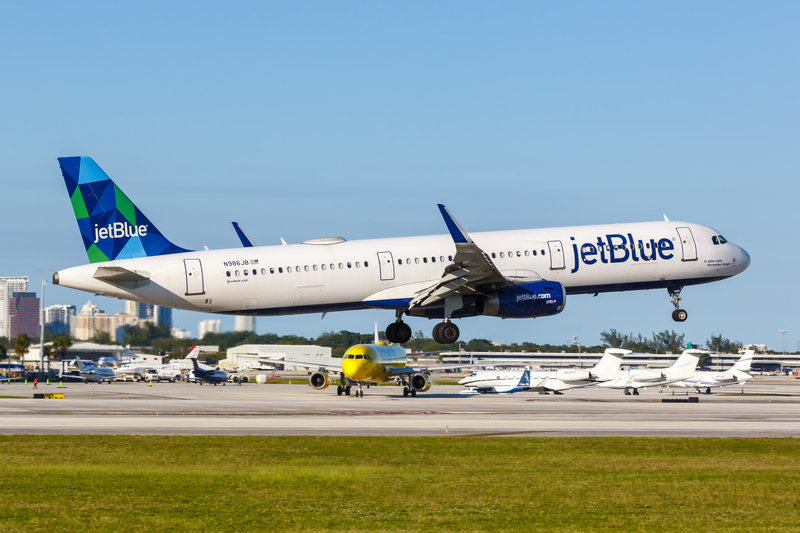
JetBlue’s coast-to-coast service turned into a textbook demonstration of jet stream physics on February 17, 2026, when flight B6 524 from Los Angeles (LAX) to New York–JFK (JFK) briefly recorded a ground speed of 755 mph (656 knots) over New Mexico.

The aircraft, an Airbus A321neo, arrived at JFK roughly 39 minutes ahead of schedule, completing the transcontinental journey in just over four hours—an unusually quick block time for a route that typically pushes closer to five hours eastbound, depending on winds and traffic flow.
Ground Speed vs. Airspeed: Why 755 mph Isn’t a Structural Concern
The headline number sounds dramatic, but it’s critical to understand what it represents.
Read our stories in your inbox
Two aviation newsletters. Zero fluff.
Aircraft performance is governed by airspeed—the speed of the airplane relative to the surrounding air mass—not ground speed. The jet stream is essentially a fast-moving “river of air” at cruising altitude. When an aircraft flies eastbound within a strong tailwind component, its true airspeed remains normal, but the moving air mass adds velocity relative to the ground.
In simple terms:
-
The A321neo may be cruising at a typical long-range Mach setting (around Mach 0.78–0.80).
-
Add a powerful tailwind of well over 150 knots.
-
The result is an exceptionally high ground speed.
From the aircraft’s structural standpoint, nothing abnormal occurs. There is no added aerodynamic stress, no extra engine strain, and no increased wing loading. The aircraft is simply being carried forward faster by the atmosphere.
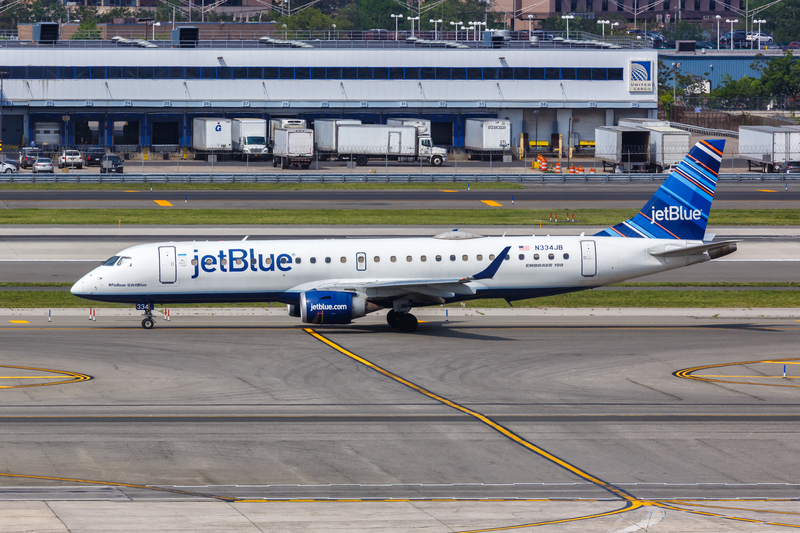
Why Eastbound Transcons Benefit the Most
Routes like LAX–JFK are particularly susceptible to dramatic jet stream effects in winter. The North American polar jet tends to strengthen and shift south during colder months, placing much of the continental U.S. beneath powerful upper-level winds.
Eastbound flights frequently gain 20–40 minutes from strong tailwinds. Occasionally, under ideal alignment, they gain much more—producing the kind of block time seen on B6 524.
The opposite is true westbound. Flights from JFK to LAX can face significant headwinds, extending block times and increasing fuel burn. That directional asymmetry is factored into airline scheduling and fuel planning year-round.
The Aircraft: Airbus A321neo on Long Domestic Missions
JetBlue’s Airbus A321neo is well suited to long domestic missions like LAX–JFK. The aircraft’s new-generation engines and aerodynamic improvements deliver better fuel efficiency than earlier A321 variants, making high-frequency transcontinental service economically viable.
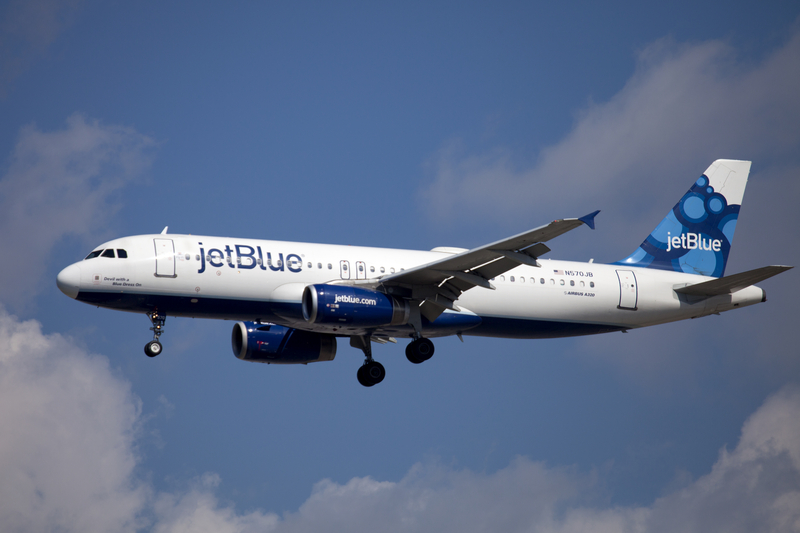
On a day with strong tailwinds:
-
Fuel burn can decrease, since time aloft is shorter.
-
Crew duty margins improve, thanks to earlier arrival.
-
Operational resilience increases, particularly if there is downstream schedule pressure.
In this case, the aircraft completed the mission with a block time just over four hours—placing it among the fastest recent LAX–JFK crossings for a subsonic airliner.
The Trade-Off: Clear Air Turbulence Risk
Strong jet streams can come with a trade-off: clear air turbulence (CAT). Turbulence often develops at the edges of jet streams where wind speed and direction shift sharply.
Flight crews continuously monitor ride quality and may adjust altitude to find smoother air. If turbulence becomes significant, aircraft reduce speed to turbulence penetration settings—not because of structural danger at cruise, but to enhance passenger comfort and limit stress from vertical accelerations.
In this instance, no abnormal turbulence reports were associated with the flight.
Operational Reality: Early Arrival Doesn’t Always Mean Early Gate
Even when a flight arrives significantly ahead of schedule, operational factors at JFK—gate availability, ramp congestion, arrival sequencing—can moderate how quickly passengers disembark. Major hubs operate within tight gate assignments, and arriving early can occasionally mean waiting for parking availability.
That said, the unusually short flight time demonstrates how powerful atmospheric conditions can materially affect real-world airline operations.
Bottom Line
JetBlue flight B6 524 from Los Angeles (LAX) to New York–JFK (JFK) rode an exceptionally strong jet stream, briefly reaching a ground speed of 755 mph and arriving nearly 40 minutes early. The aircraft, an Airbus A321neo, experienced no added structural stress—its airspeed remained within normal cruise parameters. The event serves as a reminder that, in winter, the jet stream can dramatically reshape transcontinental flight times—offering airlines occasional “free speed” without burning extra fuel.
Keep reading FlyMag
Get the Daily Brief in the morning or the Route Watch weekly recap on Fridays. Or both.