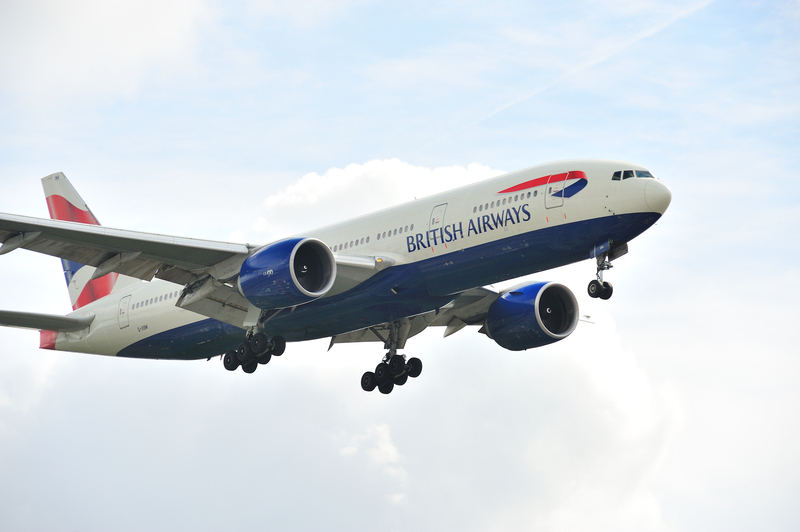
Two British Airways Boeing 777-200ERs operating separate U.S.-bound flights returned to London Heathrow Airport (LHR) on consecutive days after their crews identified technical issues during the early stages of their transatlantic journeys.

Flight BA229 to Baltimore returned to London Heathrow (LHR) on July 9, 2026, while BA183 to New York turned back the following evening. Both flights were subsequently canceled, disrupting travel plans and forcing British Airways to rebook passengers.
The aircraft involved—G-YMMH and G-RAES—are among the oldest widebodies in the British Airways fleet. G-YMMH is nearly 26 years old, while G-RAES entered service more than 29 years ago.
Read our stories in your inbox
Two aviation newsletters. Zero fluff.
Their ages make the incidents noteworthy, particularly as British Airways prepares for a major long-haul fleet renewal. However, there is no publicly available evidence that aircraft age caused either technical problem, nor is there evidence that the two events were connected.
Flight-tracking records also show that both Boeing 777s returned to passenger service shortly after being inspected, suggesting that neither problem required an extended grounding.
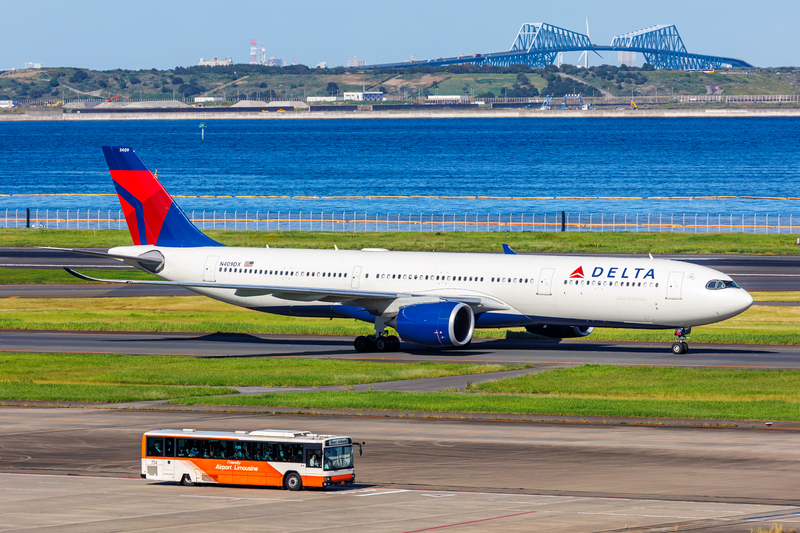
BA229 Returns to Heathrow During Baltimore Flight
British Airways flight BA229 departed London Heathrow Airport (LHR) for Baltimore/Washington International Thurgood Marshall Airport (BWI) on Thursday, July 9.
The flight was scheduled to leave London Heathrow (LHR) at 3:25 p.m. but departed at 4:26 p.m., approximately one hour behind schedule. The aircraft assigned to the service was Boeing 777-236ER G-YMMH.
After proceeding northwest from London and continuing toward Ireland, the flight crew received an indication of an unspecified technical problem. Rather than continue across the North Atlantic, the pilots discontinued the journey and returned to British Airways’ main engineering base at London Heathrow (LHR).

Available flight data lists BA229 as having diverted back to London Heathrow (LHR). British Airways later canceled the service to Baltimore (BWI), with passengers reportedly offered alternative flights or overnight accommodations when same-day rebooking was unavailable.
Early reports said the aircraft spent time reducing its weight before landing. A Boeing 777 departing on a transatlantic mission carries considerably more fuel than it normally has remaining at arrival, and an immediate return can leave the airplane above its maximum structural landing weight.
In that situation, the crew can remain airborne to burn fuel, use the aircraft’s fuel-jettison system when operationally appropriate, or conduct an overweight landing under approved procedures. British Airways has not publicly confirmed whether G-YMMH jettisoned fuel or disclosed the technical fault that prompted the return.
The crew’s decision to return did not necessarily mean that the aircraft had become uncontrollable or immediately unsafe. It meant that continuing several hours across the Atlantic—with fewer diversion airports, limited engineering support and potentially worsening system indications—was not considered the most prudent option.
G-YMMH Returned to Long-Haul Service the Following Evening
Although the Baltimore flight was canceled, G-YMMH was not out of service for an extended period.
Flight-tracking records show that the aircraft departed London Heathrow (LHR) at 8:01 p.m. on July 10 as BA63 to Jomo Kenyatta International Airport in Nairobi (NBO). It completed the approximately eight-and-a-half-hour flight and subsequently operated BA62 from Nairobi (NBO) back to London Heathrow (LHR) on July 11.
That rapid return to service is operationally significant. It indicates that British Airways engineers inspected the aircraft, addressed or cleared the reported defect and released G-YMMH for another long-haul assignment.
It does not reveal what failed aboard BA229, but it suggests that the issue did not require a major structural repair, engine replacement or prolonged troubleshooting period.
The cancellation of BA229 also resulted in the associated BA228 departure from Baltimore (BWI) to London Heathrow (LHR) being canceled on July 10 because the operating aircraft never reached Baltimore. This illustrates how a single technical return can disrupt both directions of a long-haul rotation.
BA183 Turns Back During New York Flight
A similar disruption occurred on Friday, July 10, when British Airways flight BA183 departed London Heathrow (LHR) for John F. Kennedy International Airport (JFK) in New York.
BA183 was scheduled to leave London Heathrow (LHR) at 6:25 p.m. but departed at 7:26 p.m. The aircraft was G-RAES, another Boeing 777-236ER and one of the oldest active aircraft in the British Airways fleet.
According to initial reports, the aircraft stopped its normal climb at approximately 20,000 feet before later climbing to around 25,000 feet. The flight continued toward Ireland, but the crew ultimately decided to return to London Heathrow (LHR).
G-RAES landed safely approximately two hours after its initial departure. British Airways canceled BA183 and began rebooking passengers onto other New York-area services. No passenger or crew injuries were reported in available accounts.
British Airways has not disclosed the technical indication that prompted the return. Without information from the aircraft’s technical log or a statement from the airline’s engineering department, it would be speculative to connect the BA183 problem with the previous day’s BA229 incident.
The two aircraft share the same basic model designation, but that alone does not indicate a common mechanical fault. Modern airliners contain thousands of components and numerous independent electrical, hydraulic, environmental, navigational and flight-control systems capable of generating a technical return.
G-RAES Was Back in Service the Next Morning
Like G-YMMH, G-RAES quickly returned to commercial operation.
Flight data shows that the aircraft departed London Heathrow (LHR) at 10:51 a.m. on July 11 as BA185 to Newark Liberty International Airport (EWR). It landed at Newark (EWR) after a flight of seven hours and 16 minutes, then operated BA184 back to London Heathrow (LHR) later that evening.
The aircraft therefore resumed transatlantic flying roughly 15 hours after returning to London Heathrow (LHR) on BA183.
British Airways’ engineering team would have been required to diagnose the reported defect, complete any necessary maintenance, perform applicable operational checks and formally release the aircraft before it could carry passengers to Newark (EWR).
The canceled BA183 also affected the following day’s schedule. BA178 from New York-JFK (JFK) to London Heathrow (LHR), which would normally have used the aircraft arriving as BA183, was canceled because the airplane never reached New York.
The Two Boeing 777s Involved
Both aircraft are Boeing 777-236ERs. In Boeing’s former customer-code system, the “36” in the model designation identified British Airways as the original customer, while “ER” stands for Extended Range.
The Boeing 777-200ER was developed as a longer-range version of the original 777-200. Its combination of twin-engine efficiency, long-range capability and widebody capacity made it particularly important to the growth of transatlantic flying during the late 1990s and early 2000s.
British Airways participated in the original 777 design process and became one of the aircraft family’s earliest operators. The airline’s first Boeing 777 entered service in November 1995, powered by General Electric GE90 engines. The GE90’s first commercial service was a British Airways flight between London Heathrow (LHR) and Dubai International Airport (DX).
The two aircraft involved can be compared as follows:
| Detail | G-YMMH | G-RAES |
|---|---|---|
| Flight affected | BA229 | BA183 |
| Incident date | July 9, 2026 | July 10, 2026 |
| Intended route | London (LHR)-Baltimore (BWI) | London (LHR)-New York (JFK) |
| Aircraft type | Boeing 777-236ER | Boeing 777-236ER |
| Manufacturer serial number | 30309 | 27491 |
| First flight | September 27, 2000 | May 30, 1997 |
| Delivery to British Airways | October 14, 2000 | June 10, 1997 |
| Approximate age | 25 years, 9 months | 29 years, 1 month |
| Cabin arrangement | Three classes | Four classes |
| Next recorded service | BA63 to Nairobi (NBO) | BA185 to Newark (EWR) |
G-YMMH is configured with the newer Club Suite business-class product and is generally listed with 48 Club World seats, 40 World Traveller Plus premium-economy seats and 184 World Traveller economy seats. That produces a total capacity of 272 passengers—not the 262 seats implied by reports listing only 38 Club World seats.
G-RAES offers four classes, including eight First suites, 49 Club World seats, 40 World Traveller Plus seats and approximately 138 to 140 World Traveller seats, depending on the seat-map source and current cabin assignment. The aircraft is powered by two General Electric GE90-85B turbofans.
Aircraft Age Is Not a Diagnosis
The age of G-YMMH and G-RAES is relevant to British Airways’ fleet-planning strategy, but it should not be treated as proof that either aircraft is unsafe or unreliable.
Commercial airplanes do not automatically become unairworthy when they reach a particular age. They remain in service only while operators continue completing required inspections, scheduled maintenance, component replacements, structural checks and airworthiness directives.
Many important aircraft components are replaced or overhauled several times during an airframe’s life. Engines, landing gear, flight-control actuators, avionics, pumps, valves and cabin systems may be substantially newer than the fuselage itself.
Older aircraft can require more maintenance because components experience additional cycles, hours, corrosion exposure and age-related wear. They may also become less economical as fuel consumption and maintenance costs rise relative to newer designs.
However, determining whether age contributed to a particular incident requires knowing which component failed, its maintenance history and the cause of the defect. British Airways has not released that information for either BA229 or BA183.
The fact that both aircraft were cleared for further long-haul service within a relatively short period is also important context. Neither G-YMMH nor G-RAES remained grounded while British Airways pursued an extensive investigation or major repair.
Why Returning to Heathrow Made Operational Sense
Continuing westbound across the North Atlantic would have taken both aircraft progressively farther from British Airways’ main engineering facilities at London Heathrow (LHR).
A technical problem that can be monitored safely near the departure airport may become more consequential if the flight continues several hours over the ocean. Even when an aircraft remains fully controllable, crews must consider whether the condition could deteriorate, affect redundant systems or restrict the available diversion choices later in the flight.
Returning to London Heathrow (LHR) also allowed British Airways to use its own maintenance personnel, tooling, spare-parts inventory and operational control resources. Diverting to an airport in Ireland, Iceland, Canada or the northeastern United States could have left the aircraft away from the airline’s primary engineering base.
Passenger recovery is also generally easier at the airline’s home hub. British Airways operates numerous daily services from London Heathrow (LHR) to New York-JFK (JFK), Newark (EWR) and other U.S. gateways, providing more rebooking options than would have been available at a smaller diversion airport.
Baltimore (BWI) presents a greater recovery challenge because British Airways operates fewer flights there. Passengers may need to be rerouted through cities such as Washington-Dulles (IAD), Philadelphia (PHL) or New York (JFK), or accommodated until the next Baltimore departure.
Two Returns Do Not Establish a Fleet-Wide Problem
The timing of the two incidents naturally attracts attention. Two U.S.-bound Boeing 777-200ERs returned to the same airport on consecutive days, and both aircraft are more than 25 years old.
Nevertheless, there is currently no evidence of a common technical cause or a broader problem affecting British Airways’ Boeing 777 fleet.
Neither flight appears to have resulted in an extended aircraft grounding. G-YMMH operated to Nairobi (NBO) the following evening, while G-RAES departed for Newark (EWR) the morning after its return.
British Airways currently lists 43 Boeing 777-200 aircraft in its fleet. The type is offered in several three- and four-class configurations with capacities of up to 336 passengers. The airline uses a mixture of General Electric GE90- and Rolls-Royce Trent 800-powered aircraft.
With a fleet of that size operating long-haul sectors every day, occasional technical returns are inevitable. What matters operationally is the nature of each defect, whether crews respond appropriately, how quickly engineers can resolve the issue and whether maintenance data reveals a recurring trend.
On the presently available evidence, the incidents are best described as two separate technical returns rather than the beginning of a confirmed pattern.
British Airways Is Preparing to Replace Its Oldest Widebodies
The incidents come as British Airways prepares for one of the largest long-haul fleet-renewal programs in its history.
The airline has commitments for new Boeing 777-9 aircraft, additional Airbus A350-1000s and a substantial fleet of Boeing 787-10 Dreamliners. These aircraft will provide lower fuel consumption, newer cabin products and reduced maintenance requirements compared with the oldest 777-200ERs.
International Airlines Group initially ordered 18 Boeing 777-9s for British Airways in 2019. It later exercised options for six additional aircraft, bringing the firm commitment to 24. In 2025, IAG also announced an order for 32 additional Boeing 787-10s for British Airways and disclosed six more Airbus A350-1000 commitments.
The incoming aircraft will eventually allow British Airways to retire older Boeing 777-200ERs, but replacement will not happen immediately. Widebody delivery schedules extend over several years, and continuing production and supply-chain constraints have delayed aircraft programs across the industry.
British Airways has not published a registration-by-registration retirement schedule for G-YMMH, G-RAES or the rest of its early-build 777 fleet. Individual aircraft may remain active based on maintenance condition, lease or ownership status, cabin configuration and the availability of replacement capacity.
G-RAES is an obvious long-term retirement candidate because of its age, but its operation to Newark (EWR) immediately after the BA183 incident demonstrates that British Airways still considers the aircraft serviceable and useful within its current network.
Bottom Line
British Airways experienced two highly visible operational disruptions when separate Boeing 777-200ERs returned to London Heathrow Airport (LHR) during U.S.-bound flights on July 9 and July 10.
G-YMMH returned while operating BA229 to Baltimore/Washington International Airport (BWI), while G-RAES turned back the following day during BA183 to New York-JFK (JFK). Both services were canceled, and the corresponding eastbound flights were also disrupted because the aircraft never reached the United States.
The aircraft are unquestionably old by current long-haul fleet standards. G-YMMH is nearly 26 years old, and G-RAES has been flying for British Airways for more than 29 years.
However, age alone does not explain either return. British Airways has not disclosed the specific faults, and no evidence has emerged that the incidents were connected or represented a fleet-wide Boeing 777 problem.
The strongest indication of the apparent severity is what happened afterward. G-YMMH operated from London Heathrow (LHR) to Nairobi (NBO) the following evening, while G-RAES returned to transatlantic service with a flight to Newark (EWR) the next morning.
For British Airways, the events underline the operational challenges of maintaining a large and increasingly mature Boeing 777-200ER fleet while waiting for new 787-10s, A350-1000s and 777-9s. They do not, on the available evidence, demonstrate that the aircraft were unsafe because of their age.