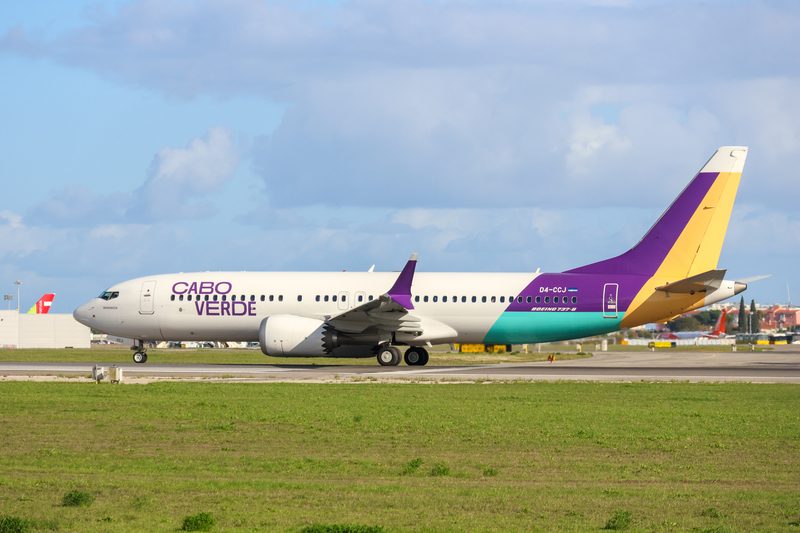
Cabo Verde Airlines (VR) is preparing to restart U.S. operations on March 31, 2026, bringing back a transatlantic link that has been missing since 2021 and reviving a corridor that matters far beyond tourism. The airline has filed plans to resume service to Rhode Island T. F. Green International Airport (PVD)—a familiar gateway for Cape Verde’s large New England diaspora—and will do it with a modern, twin-engine narrowbody: the Boeing 737-8 (737 MAX 8).
For a small island carrier rebuilding after years of restructuring, this is the kind of route that can’t be “nice to have.” It’s a visibility play, a revenue play, and—if executed reliably—a credibility play.
The route: a diaspora-driven transatlantic relaunch
Cabo Verde’s ties to the U.S. Northeast are deep, particularly in Rhode Island and Massachusetts, where Cape Verdean communities have supported direct service for decades. Historically, PVD has been a strong “community airport” for diaspora travel: smaller than Boston (BOS), but often easier for travelers living across Rhode Island and southeastern Massachusetts to access.
Read our stories in your inbox
Two aviation newsletters. Zero fluff.
Cabo Verde Airlines previously served Providence (PVD) until the route shifted to Boston Logan (BOS) in 2017. That Boston service ended in mid-2021 as the airline pulled back long-haul flying during restructuring. The March 31 relaunch to Providence (PVD) effectively reopens that “Cape Verde–New England” lane—with a smaller gauge aircraft and a very different operational toolbox than the airline had in the Boeing 757 era.
Note: Cabo Verde Airlines’ public filings focus on the restart to PVD. The exact Cape Verde origin airport has not been consistently published in the initial reporting available in English; historically, the Providence service was linked with Praia (RAI) on Santiago Island, and industry observers expect the relaunch to follow the same pattern.

Why the 737 MAX 8 changes the equation
The most important technical detail in this relaunch is not the destination—it’s the equipment.
Cabo Verde Airlines is no longer trying to sustain transatlantic flying with older mid-size widebody-like narrowbodies such as the Boeing 757-200. Instead, it’s using a next-generation narrowbody with:
-
materially improved fuel burn versus older 737NG aircraft,
-
strong dispatch reliability for long-stage operations,
-
and the range/performance envelope needed for “long and thin” intercontinental routes.
A 737 MAX 8 is typically configured anywhere from the mid-160s to 189 seats depending on airline strategy. Cabo Verde Airlines has not publicly detailed its exact cabin layout for the PVD operation, but the key strategic shift is already clear: the airline is aiming to right-size the market with narrowbody economics rather than trying to fill a larger aircraft year-round.
ETOPS: the certification that makes this possible
The other enabling detail is ETOPS—Extended-range Twin-engine Operational Performance Standards. For any twin-engine aircraft crossing large bodies of water where diversion airports are limited, ETOPS approval is not a “nice regulatory box.” It’s the operating license for long overwater segments.
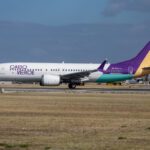
Cabo Verde Airlines recently secured ETOPS certification from Cape Verde’s civil aviation authority, which is what allows the carrier to operate a 737 MAX across the Atlantic with compliant diversion planning. In practical dispatch terms, ETOPS shapes:
-
the routing the aircraft can legally fly,
-
which alternates are planned (and how far apart they can be),
-
required fuel reserves and contingency planning,
-
and the maintenance program discipline required to keep ETOPS status.
For the North Atlantic, alternates and contingency planning can include a mix of island and coastal airports depending on weather and routing—part of why ETOPS approvals are as much about operator maturity (maintenance control, reliability monitoring, dispatch discipline) as they are about aircraft capability.
Providence (PVD) is a different kind of U.S. gateway—and that’s the point
Choosing Providence (PVD) over Boston (BOS) isn’t just nostalgia. It’s a practical strategy, especially for an airline entering the U.S. market with a single long-haul narrowbody:
-
Lower friction, often faster processing: PVD can be more manageable operationally than larger hubs when irregular operations occur and passengers need reaccommodation.
-
Catchment alignment: Rhode Island, southeastern Massachusetts, and parts of Connecticut sit naturally in PVD’s drive-time zone.
-
Airport growth momentum: PVD has been actively expanding its route network and has shown rising passenger volumes and stronger seat capacity growth in recent years—signals airlines look for when they’re testing international demand with limited frequency and limited fleet depth.
In other words, PVD doesn’t need to be a mega-hub to be valuable. It needs to be predictable, scalable, and aligned to where the demand actually lives.
Fleet reality: a small fleet makes reliability the real product
Cabo Verde Airlines is restarting the Atlantic with a fleet that is still compact by any major-airline standard:
-
1 Boeing 737 MAX 8
-
1 Boeing 737-700
-
2 ATR 72-600 turboprops
That fleet mix tells you what the airline is doing: concentrating long-haul flying into one capable airframe while keeping regional connectivity and domestic island flying on turboprops that match the short-stage economics of the archipelago.
But a small fleet also means the operation will be spare-sensitive. If the MAX 8 goes AOG, there’s no easy “swap in another widebody” solution. The airline’s operational resilience will depend on:
-
tight maintenance planning around the MAX,
-
disciplined aircraft utilization,
-
and contingency contracts or wet-lease options if disruption becomes prolonged.
This is why ETOPS certification is such a meaningful milestone. It signals the airline is building the procedural discipline that long-haul reliability requires—especially when your fleet doesn’t give you the luxury of spare aircraft.
Why this relaunch matters for Cabo Verde’s broader network rebuild
Cabo Verde Airlines has been rebuilding its international footprint largely through Europe—routes that connect the islands to key Portuguese and European markets, plus inter-island flying that supports local mobility and tourism.
A U.S. return adds something different:
-
Diversification: It reduces dependence on one region’s seasonality and fare dynamics.
-
Higher-value demand segments: Diaspora travel tends to be less purely price-driven than generic leisure, and it can be resilient even when tourism softens.
-
Brand and credibility: A stable transatlantic route is a reputational asset for a national carrier rebuilding trust.
If the PVD route proves durable, it opens the door to a second-stage U.S. strategy—either increased frequency, a second U.S. gateway, or seasonal expansion aligned with peak diaspora travel periods.
Bottom Line
Cabo Verde Airlines’ planned March 31 return to the United States via Providence (PVD) is a significant step for an airline rebuilding long-haul relevance with a small, carefully managed fleet. The choice of the Boeing 737 MAX 8—enabled by newly secured ETOPS approval—signals a modern “long and thin” strategy: right-size the market, control costs, and restore transatlantic connectivity without widebody exposure.
For New England travelers with ties to the islands, it’s the return of a direct bridge. For Cabo Verde Airlines, it’s a high-stakes test of operational maturity—because on a one-aircraft long-haul plan, reliability isn’t just a metric. It’s the product.
Keep reading FlyMag
Get the Daily Brief in the morning or the Route Watch weekly recap on Fridays. Or both.
Share this story
Composed for each network — click to share, or copy the composed text for your own timing.