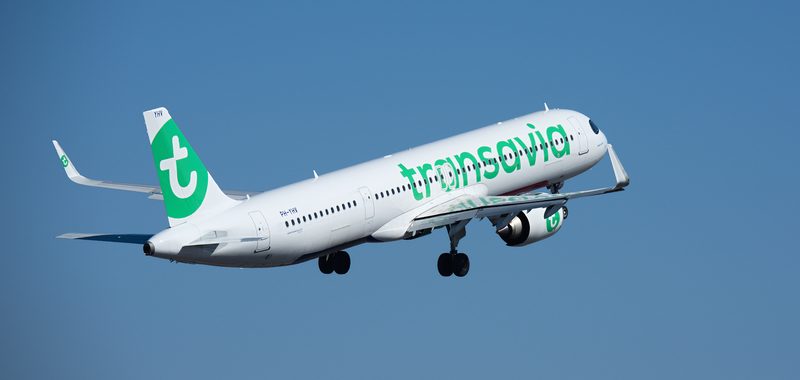
Transavia is expanding its Cape Verde network for the 2026/2027 winter season, adding Praia and increasing capacity to Sal as demand for Atlantic winter sun continues to build.

The airline will operate four weekly direct flights to Amílcar Cabral International Airport (SID) on Sal during the winter schedule. It will also add a weekly one-stop service to Nelson Mandela International Airport (RAI) in Praia, operating via Sal (SID).
During the Christmas holiday period and again in spring, Transavia will add a fifth weekly Cape Verde flight. That additional service will also continue to Praia (RAI), giving the capital more capacity during peak leisure periods.
Read our stories in your inbox
Two aviation newsletters. Zero fluff.
The expanded schedule will operate from October 2026 through the end of March 2027. Bookings for the additional Cape Verde flights open on June 24, 2026.
For Transavia, the move is a clear winter-leisure play. For Cape Verde, it brings more direct European air service to two of the country’s most important islands.

Sal Gets Four Weekly Direct Flights
Sal is the main focus of Transavia’s Cape Verde expansion.
The airline will fly directly to Sal (SID) four times per week during the winter season. That gives travelers a stronger schedule to one of Cape Verde’s best-known beach destinations.
Sal is especially attractive during the European winter. The island offers warm weather, beaches, water sports and a relatively short long-haul-style escape from Northern Europe.
Transavia’s own destination information describes Sal as a sun, sea and beach market, with attractions such as Santa Maria Beach, Pedra de Lume, Buracona and Espargos.

That profile fits the airline’s leisure model well.
Transavia has built its winter network around destinations that can attract price-sensitive travelers looking for sun outside the summer season. Sal (SID) is exactly that kind of market.
Praia Adds A New Capital-City Link
The more interesting addition is Praia.
Transavia will serve Praia (RAI) through Sal (SID), giving the airline a new link to Cape Verde’s capital on the island of Santiago.
That matters because Praia is a different kind of destination from Sal.
Sal is mainly a beach and resort market. Praia has a stronger mix of culture, history, government, business and visiting-friends-and-relatives traffic.
Transavia’s own Praia destination page highlights Santiago’s mountains, green valleys, beaches and cultural mix. It also points travelers toward Cidade Velha, the former capital and one of Cape Verde’s most important historic sites.
That gives Transavia a broader Cape Verde product.
The airline is not only adding more seats to a beach island. It is giving travelers access to the country’s political and cultural center.
Why The Via-Sal Routing Makes Sense
The Praia service will operate via Sal rather than nonstop.
That is a practical choice.
A one-stop routing allows Transavia to serve two Cape Verde markets with one aircraft rotation. It also reduces the commercial risk of launching a standalone Praia flight before demand is fully proven.
For passengers bound for Praia (RAI), the routing is still useful. It creates a scheduled Transavia option to Santiago without requiring a separate connection through another European or African hub.
For the airline, the setup is efficient.
Sal provides the stronger leisure base. Praia adds network depth. Combining both on one rotation helps balance demand and improves the aircraft-use case.
This is a common approach in leisure aviation. Airlines often use triangular or tag-on routings when two destinations can support service together but may be harder to justify separately.
Christmas And Spring Get Extra Capacity
Transavia will add a fifth weekly Cape Verde flight during the Christmas holiday period and in spring.
That extra flight will also continue to Praia (RAI).
The timing is logical. Christmas is one of the strongest periods for winter-sun travel from Europe. Spring also performs well as travelers look for warm-weather trips before the Mediterranean summer peak.
Cape Verde benefits from that pattern.
The islands offer warm weather when much of Europe is cold. They are also far enough south to feel like a true winter escape, but close enough to work as a one-week leisure trip.
By adding capacity only during stronger demand periods, Transavia can grow without overcommitting aircraft in weaker weeks.
Cape Verde Is Becoming A Stronger Winter Market
Cape Verde has become more visible in European airline networks.
The country offers a mix of beach, culture, nature and diaspora traffic. That combination makes it more resilient than a pure resort market.
Sal and Boa Vista are the best-known leisure islands. Praia and Santiago add a different travel profile. São Vicente and other islands also help diversify the country’s tourism offer.
This matters for airlines.
A winter-sun destination with only beach traffic can be vulnerable to price swings and tour-operator seasonality. Cape Verde has broader appeal. It can attract beach travelers, cultural tourists, family visitors and adventure-focused passengers.
Transavia’s decision to add Praia through Sal reflects that broader demand base.
Airport Investment Is Supporting Growth
Cape Verde’s airport system is also changing.
VINCI Airports took over Cape Verde’s airports in 2023 and has since worked to improve connectivity and airport infrastructure.
The airport operator said passenger traffic across the Cape Verde airport network increased by 60% between 2022 and 2025. It also said 35 new air routes were opened during that period.
That is important context for Transavia’s expansion.
Airlines are more likely to add capacity when airport infrastructure, commercial support and demand all move in the same direction.
Cape Verde is now seeing that combination. More routes are being added, airport facilities are being upgraded, and European airlines are treating the islands as a more serious winter leisure market.
The Aircraft: A Longer Narrowbody Leisure Mission
Transavia has not specified the exact aircraft type for each Cape Verde flight in its announcement.
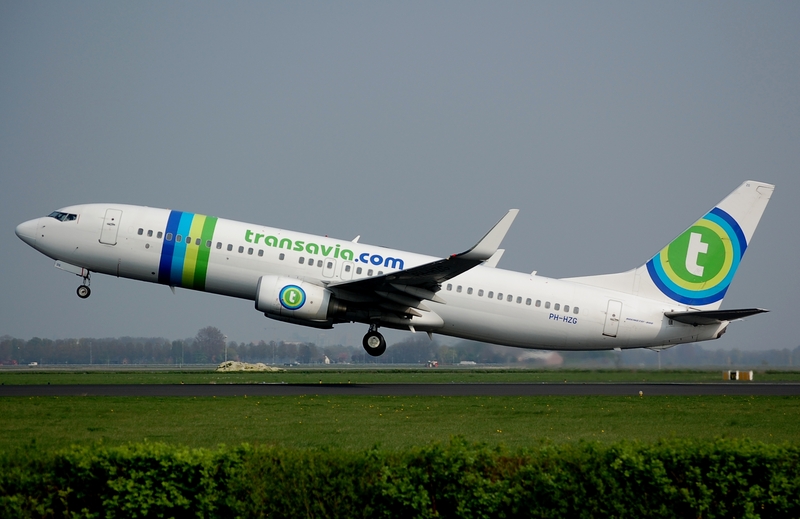
However, the routes will sit within the airline’s narrowbody fleet operation. Transavia has historically relied on the Boeing 737-800 and is now transitioning toward the Airbus A321neo.
That fleet shift is relevant.
Cape Verde is a longer leisure mission than most of Transavia’s European flying. It requires an aircraft with the range, economics and capacity to serve a warm-weather market from Northern Europe.
Transavia says its A321neo carries 43 more passengers than the Boeing 737 it is replacing. The airline also says the type produces more than 15% less CO₂ per passenger and reduces its noise footprint by about 50%.
For dense leisure routes, that combination matters.
The A321neo gives Transavia more seats, better per-seat economics and lower noise. The Boeing 737-800 remains a proven workhorse for the airline, but the Airbus transition gives Transavia more flexibility on longer sun routes over time.
Why This Works For Transavia
Transavia’s business is built around leisure demand, simple fares and high aircraft utilization.
Cape Verde fits that model.
The routes can attract direct bookers, package-holiday customers and travel-agency traffic. They also support winter demand when some Mediterranean markets are weaker.
That seasonality is useful for airlines.
Aircraft that might be heavily used on Mediterranean summer routes can be redeployed to warmer winter destinations. Cape Verde offers that opportunity.
The destination also gives Transavia a stronger non-European sun product. It is not as long-haul as the Caribbean or Indian Ocean. But it feels more exotic than traditional winter routes to Spain, Portugal or North Africa.
That gives the airline a useful middle ground.
Praia Makes The Network More Balanced
Adding Praia improves the Cape Verde program.
A Sal-only operation is mostly a resort play. Adding Praia brings a capital-city market into the schedule.
That helps in several ways.
First, it opens Santiago to Dutch and European travelers using Transavia. Second, it gives Cape Verdean diaspora passengers another travel option. Third, it gives tour operators more flexibility when building multi-island itineraries.
It also lets Transavia test Praia with limited risk.
If demand builds, the airline could add more frequency later. If demand remains seasonal, the via-Sal structure keeps the operation manageable.
That is a smart way to enter a new market.
More Choice For Winter Travelers
For passengers, the biggest benefit is choice.
Four weekly direct flights to Sal (SID) create more flexibility for holiday lengths and departure days. The Praia (RAI) extension adds access to a part of Cape Verde that is less focused on resorts and more connected to culture, history and local life.
That supports a broader type of travel.
Some passengers want a simple beach holiday on Sal. Others want to explore Santiago, visit Praia, or combine islands. Transavia’s expanded program can serve both.
It also gives travel agencies more inventory to package during winter, Christmas and spring.
For Cape Verde, that additional air access can help spread tourism demand beyond the most established resort areas.
Bottom Line
Transavia’s expanded Cape Verde schedule is a smart winter network move.
The airline will operate four weekly direct flights to Sal (SID) during the 2026/2027 winter season. It will also add a weekly Praia (RAI) service via Sal, with a fifth weekly Cape Verde flight operating during Christmas and spring peaks.
The expansion gives Transavia more winter-sun capacity and adds Cape Verde’s capital to its network.
It also shows how the country is becoming a stronger European leisure market. Sal brings beach demand. Praia adds culture, history and VFR traffic. Together, they create a more balanced Cape Verde program.
For Transavia, the strategy is practical: add capacity where winter demand is growing, use Sal as the anchor, and build Praia carefully through a one-stop routing.
For travelers, the result is simple. Cape Verde becomes easier to reach, with more flights, more flexibility and a broader choice of islands.