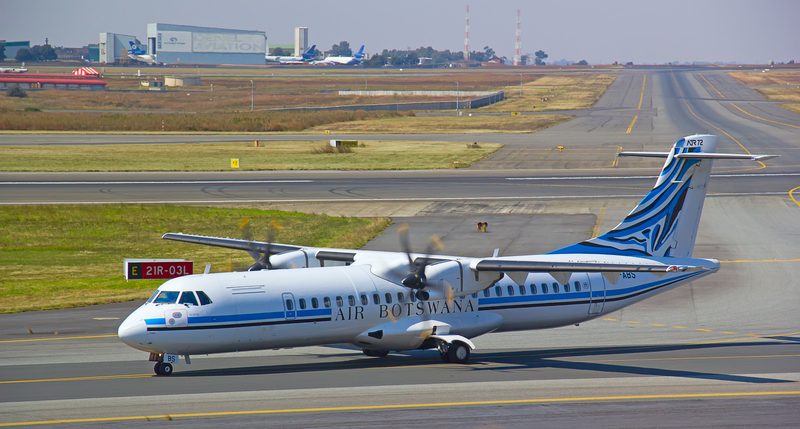
Air Botswana has scrapped three regional routes after they generated steep losses, a move that says a great deal about how urgently the airline is now trying to stabilize itself.

The suspended services are:
- Gaborone Sir Seretse Khama International Airport (GBE)–Durban King Shaka International Airport (DUR)
- Gaborone (GBE)–Windhoek Hosea Kutako International Airport (WDH)
- Maun Airport (MUB)–Cape Town International Airport (CPT)
Together, those three routes reportedly lost BWP44.5 million over a nine-month period. That is a serious number for a small state-owned airline with a limited fleet and very little room for prolonged experimentation. More importantly, it confirms that Air Botswana’s late-2024 regional expansion did not deliver the commercial boost the airline had hoped for.
Read our stories in your inbox
Two aviation newsletters. Zero fluff.
These Cuts Are About Survival, Not Fine-Tuning
The most important point here is that this is not a routine network adjustment.
Air Botswana is not quietly trimming weak routes from an otherwise healthy route map. It is cutting loss-making services while a newly appointed board tries to stop the airline’s financial deterioration. That changes the meaning of the move entirely.

When a small carrier withdraws from multiple regional routes at once and government officials frame the action as part of an urgent turnaround, it signals that the airline is no longer prioritizing growth or visibility. It is prioritizing cash preservation, operational focus, and basic viability.
That is exactly how these route cuts should be read.
The Failed Routes Reveal The Limits Of Air Botswana’s Expansion Ambition
On paper, the three routes made strategic sense.
Durban (DUR), Windhoek (WDH), and Cape Town (CPT) are all relevant regional markets for Botswana. They offer trade, tourism, and business links, and in a stronger commercial environment they could all be defensible destinations for a national carrier. The problem is that strategic logic on a map does not always translate into sustainable airline economics.

For Air Botswana, that gap has now become painfully clear.
A small airline with only a handful of aircraft cannot absorb prolonged underperformance the way a larger network carrier might. Thin routes become dangerous quickly when yields are weak, frequencies are limited, and the airline lacks the scale to spread risk. That appears to be what happened here.
Dane Kondić’s Arrival Signals A Harder Turnaround Approach
The governance angle matters too.
Botswana’s transport minister has placed the airline under a new board led by Dane Kondić, the former Air Serbia chief executive, while Bao Mosinyi has taken over as general manager. That combination is notable because it suggests the government wants a more commercially grounded and restructuring-minded leadership team in place rather than a symbolic administrative refresh.
That matters because turnaround plans only mean something if management is willing to make unpopular decisions. Cutting the three routes is the first visible sign that the new board is prepared to do that.
The New Strategy Looks Much More Defensive
The turnaround plan itself points in a much more defensive direction than the previous network expansion did.
Instead of talking mainly about new destinations and regional reach, the focus is now on charter flying, aircraft leasing, packaged travel products, maintenance expansion, cargo feasibility, and wider restructuring. That is a very different tone.
It suggests the airline is looking for revenue streams and business lines that may offer more stability than trying to force a fragile scheduled network to do all the work. For a carrier of Air Botswana’s size, that may be the only realistic path.
The Fleet Reality Explains A Lot
Air Botswana’s fleet helps explain why the airline has such little margin for error.
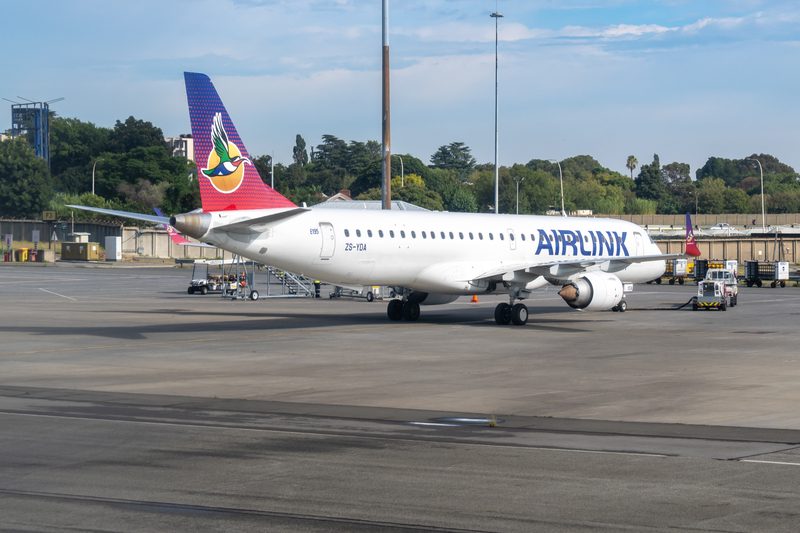
The carrier currently operates two ATR 72-600s and one Embraer E175 in active service, while its in-house Embraer E170 has not been flying for some time. That is a tiny fleet for an airline trying to cover domestic obligations, South African links, and wider regional destinations. It leaves almost no room to absorb weak route performance, technical disruption, or inconsistent demand.
That is why the route losses matter so much. At an airline this size, three weak regional routes can be more than a drag on profit. They can become a direct threat to the operating model.
The Debate Over Small Aircraft Versus Long-Haul Jets Shows A Split In Vision
There is also a revealing strategic divide emerging around what Air Botswana should become next.
The transport minister has floated the idea of using very small aircraft for thinner domestic sectors such as Ghanzi, which points toward a more pragmatic, utility-focused model. Some lawmakers, meanwhile, have urged the government to think bigger and acquire long-haul aircraft to support tourism, trade, and broader international reach.
Those are radically different visions.
One sees Air Botswana as a modest, right-sized national connector serving domestic and regional needs efficiently. The other sees it as a larger flag-carrier project with broader international ambitions. Right now, the route cuts strongly suggest the first view is winning — at least for the moment.
Bottom Line
Air Botswana’s suspension of Gaborone (GBE)–Durban (DUR), Gaborone (GBE)–Windhoek (WDH), and Maun (MUB)–Cape Town (CPT) is more than a route adjustment. It is a sign that the airline’s attempted regional expansion has run into financial reality.
The reported BWP44.5 million loss across the three services has pushed the carrier back into retrenchment mode, and the new board led by Dane Kondić appears to be taking a much tougher approach to fixing the business. For aviation readers, the key takeaway is clear: Air Botswana is no longer trying to prove it can grow. It is trying to prove it can survive.
Keep reading FlyMag
Get the Daily Brief in the morning or the Route Watch weekly recap on Fridays. Or both.