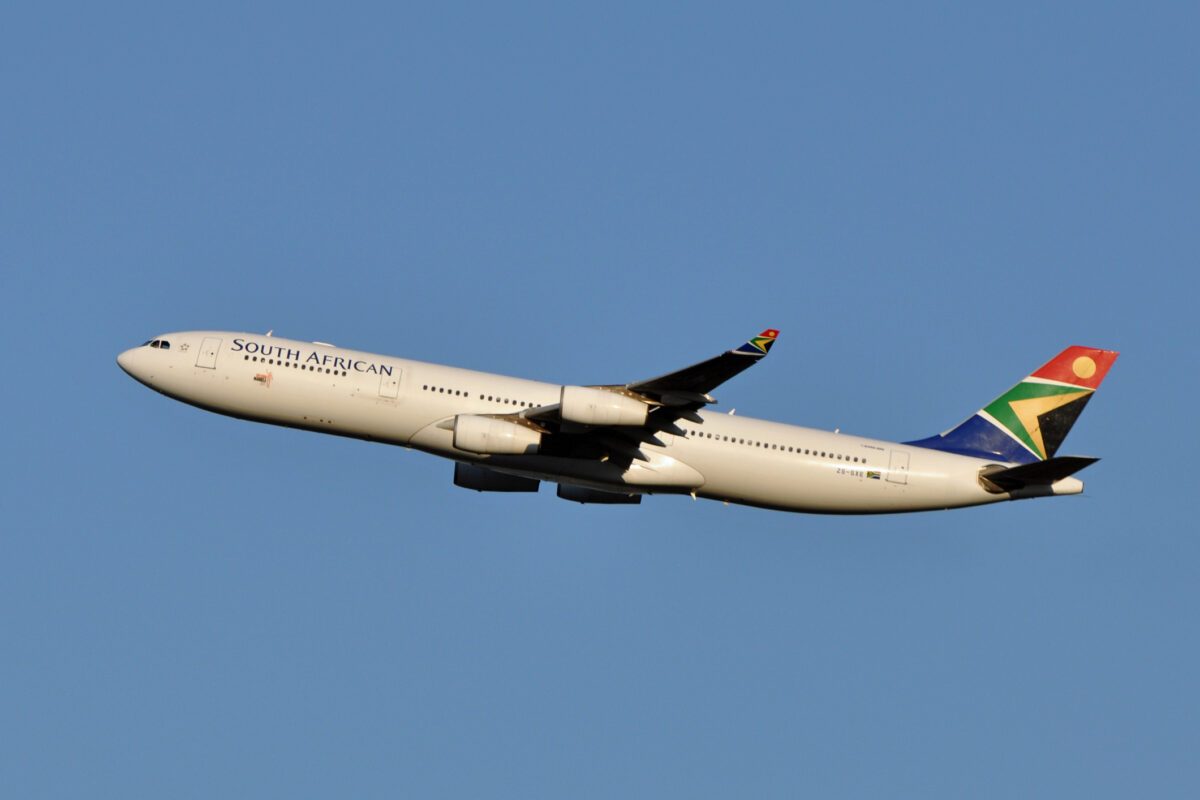
South African Airways and Turkish Airlines have activated a reciprocal codeshare partnership that significantly expands each carrier’s ability to sell connecting journeys between Southern Africa, Türkiye, and several major European markets.
Tickets carrying the new codes became available on July 15, 2026, with travel beginning on July 16. Under the arrangement, Turkish Airlines can market selected South African Airways flights from O.R. Tambo International Airport (JNB) under its TK code, while SAA can sell Turkish Airlines-operated services to Istanbul Airport (IST) and onward European destinations under an SA flight number.
The partnership does not add new aircraft or create additional flights by itself. Instead, it allows both airlines to place their flight codes on services operated by the other carrier, making connecting itineraries easier to sell through their respective reservation systems.
Read our stories in your inbox
Two aviation newsletters. Zero fluff.
For Turkish Airlines, the agreement provides access to important domestic and regional destinations beyond Johannesburg. For SAA, it creates additional SA-coded options to Istanbul, London, Paris, and Frankfurt without requiring the South African carrier to deploy its own long-haul aircraft to Europe.
The codeshare formally took effect on July 15, seven months after the two Star Alliance members signed the agreement in Geneva on December 4, 2025.
The Initial Codeshare Route Network
Turkish Airlines is placing its TK code on seven SAA-operated routes from O.R. Tambo International Airport (JNB).
| Operating Carrier | Codeshare Route | Marketing Code |
|---|---|---|
| South African Airways | Johannesburg (JNB)–Cape Town International Airport (CPT) | TK |
| South African Airways | Johannesburg (JNB)–King Shaka International Airport (DUR) | TK |
| South African Airways | Johannesburg (JNB)–Chief Dawid Stuurman International Airport (PLZ) | TK |
| South African Airways | Johannesburg (JNB)–Hosea Kutako International Airport (WDH) | TK |
| South African Airways | Johannesburg (JNB)–Robert Gabriel Mugabe International Airport (HRE) | TK |
| South African Airways | Johannesburg (JNB)–Victoria Falls International Airport (VFA) | TK |
| South African Airways | Johannesburg (JNB)–Sir Seewoosagur Ramgoolam International Airport (MRU) | TK |
Chief Dawid Stuurman International Airport (PLZ) serves Gqeberha, the city formerly known as Port Elizabeth. SAA’s announcement continues to use “Port Elizabeth” in describing the codeshare, but Gqeberha is the city’s current official name.
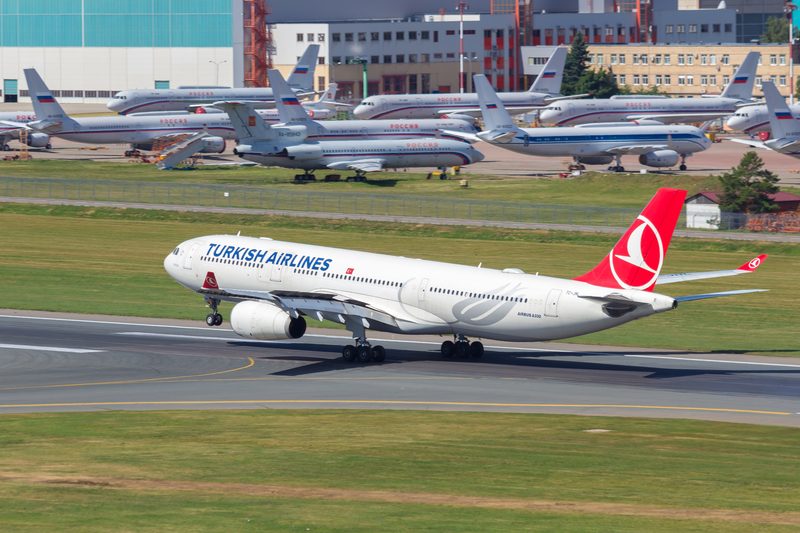
In the other direction, South African Airways is placing its SA code on selected Turkish Airlines flights connecting Istanbul Airport (IST) with South Africa and Europe.
| Operating Carrier | Codeshare Market | Marketing Code |
| Turkish Airlines | Istanbul Airport (IST)–O.R. Tambo International Airport (JNB) | SA |
| Turkish Airlines | Istanbul Airport (IST)–Cape Town International Airport (CPT) | SA |
| Turkish Airlines | Istanbul Airport (IST)–King Shaka International Airport (DUR) | SA |
| Turkish Airlines | Istanbul Airport (IST)–Frankfurt Airport (FRA) | SA |
| Turkish Airlines | Istanbul Airport (IST)–Paris Charles de Gaulle Airport (CDG) | SA |
| Turkish Airlines | Istanbul Airport (IST)–London | SA |
The airlines did not identify the specific London airport or airports included in the codeshare announcement. Turkish Airlines operates between Istanbul and London Heathrow Airport (LHR), London Gatwick Airport (LGW), and London Stansted Airport (STN), so passengers should verify which flights display an SA code when booking.
The official wording also confirms Johannesburg–Mauritius as part of the initial TK codeshare. Although SAA separately operates between Cape Town International Airport (CPT) and Mauritius Airport (MRU), that city pair was not specifically identified as part of the initial Turkish Airlines codeshare scope.
The Partnership Was Originally Expected to Begin in March
South African Airways and Turkish Airlines signed the agreement on December 4, 2025, during a Star Alliance Chief Executive Board meeting in Geneva.
At the time, both airlines said the agreement would take effect on March 1, 2026. SAA’s original announcement also indicated that ticket sales would begin on that date.
The operational launch ultimately occurred more than four months later. The airlines opened sales on July 15, with the first flights carrying the reciprocal codeshare designators scheduled for July 16.
Neither carrier explained the change in implementation date. Codeshare launches can require regulatory clearances, schedule mapping, fare filing, reservation-system integration, baggage agreements, and testing to ensure that each flight is displayed and ticketed correctly across both airlines’ sales channels.
The December announcement and July implementation notice contain essentially the same initial network, suggesting that the delay did not materially reduce the planned scope of the partnership.
Durban–Istanbul Is Not a Nonstop Flight
SAA’s announcement describes Turkish Airlines-operated service between King Shaka International Airport (DUR) and Istanbul Airport (IST). That wording should not be interpreted as confirmation of a nonstop route.
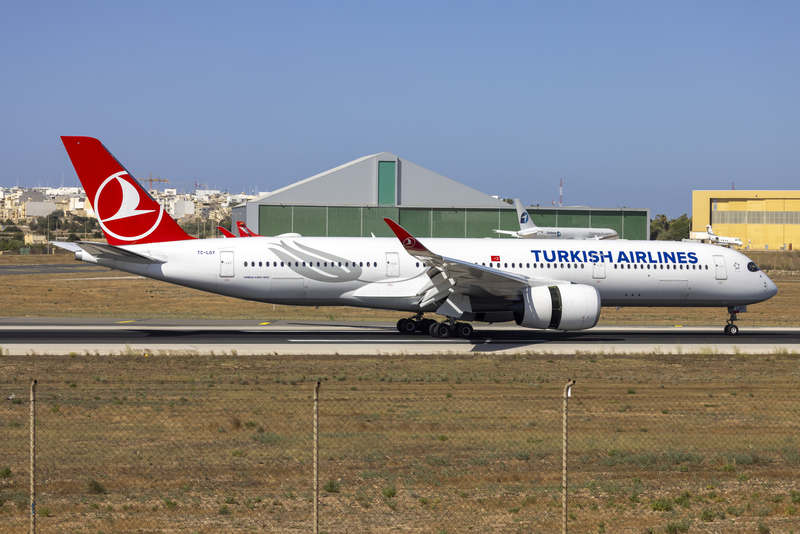
Turkish Airlines currently operates Durban as part of a through service via O.R. Tambo International Airport (JNB). Flight TK42 operates from Istanbul Airport (IST) to Johannesburg and then continues to Durban. The return flight, TK43, operates from Durban to Johannesburg before continuing to Istanbul.
Passengers traveling between Durban and Istanbul may be able to remain on the same aircraft at Johannesburg, depending on operating and security procedures, but the service includes an intermediate stop at O.R. Tambo International Airport (JNB).
This is considered a direct or through flight because it retains the same flight number, but it is not nonstop. A nonstop flight would operate from King Shaka International Airport (DUR) to Istanbul Airport (IST) without landing at another airport.
July 2026 schedules show Turkish Airlines using the Airbus A350-900 on TK42 and TK43. The same aircraft operates both the long-haul Istanbul–Johannesburg sector and the much shorter Johannesburg–Durban extension. Aircraft assignments remain subject to operational substitutions.
Turkish Airlines Is Using the Airbus A350 From South Africa
Turkish Airlines’ current South African operation is heavily centered on the Airbus A350-900, one of the airline’s newest-generation long-haul aircraft.
Flight-tracking records from July show the A350-900 operating both the Istanbul–Johannesburg–Durban service and the nonstop route between Istanbul Airport (IST) and Cape Town International Airport (CPT).
The A350-900 combines intercontinental range with lower fuel consumption and improved operating economics compared with older widebody aircraft. Turkish Airlines’ standard long-haul configuration includes Business Class and Economy Class, with direct aisle access and fully flat seating in Business Class on most of its purpose-built A350 interiors.
However, Turkish Airlines operates more than one A350 cabin configuration. Some aircraft acquired after originally being built for another airline have different seating layouts. Passengers should therefore consult the seat map attached to their individual flight rather than assuming every Turkish A350 is identical.
The aircraft’s cargo capability is also commercially important. Routes between South Africa and Istanbul carry more than leisure and connecting passengers; they support trade flows involving perishables, automotive parts, pharmaceuticals, textiles, and other time-sensitive cargo.
Turkish Airlines describes its Airbus A350-900 as a widebody designed for its longest flights, while recent operating data confirms its use on the Johannesburg and Cape Town routes.
SAA’s Airbus A320 Fleet Provides the Regional Feed
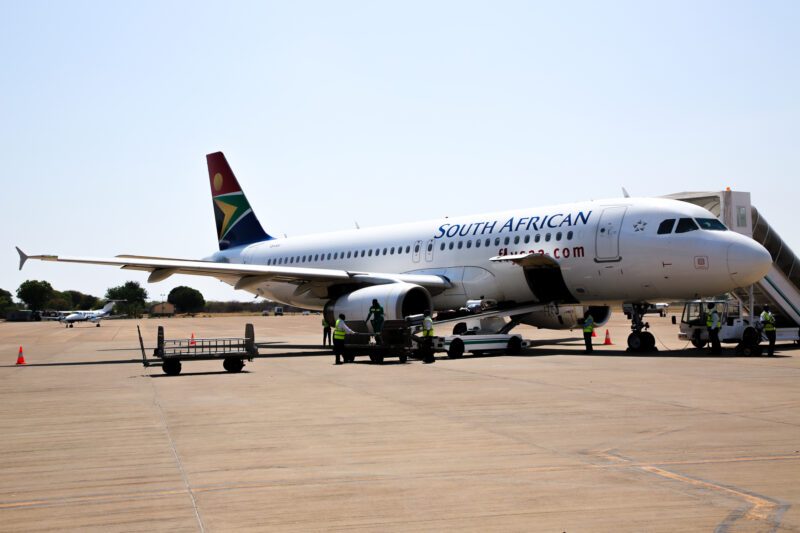
Most of the SAA-operated routes covered by the codeshare are short- or medium-haul sectors for which the Airbus A320 is the airline’s primary aircraft.
The A320 is regularly deployed between O.R. Tambo International Airport (JNB) and Cape Town International Airport (CPT), King Shaka International Airport (DUR), Chief Dawid Stuurman International Airport (PLZ), Robert Gabriel Mugabe International Airport (HRE), Victoria Falls International Airport (VFA), and Hosea Kutako International Airport (WDH).
SAA also uses the A320 between Johannesburg and Sir Seewoosagur Ramgoolam International Airport (MRU), although aircraft assignments can change according to demand and fleet availability.
The airline operates several A320 seating configurations, so capacity may vary by aircraft. Some offer a traditional two-class cabin with dedicated Business Class seating, while higher-density aircraft provide additional Economy Class capacity.
This makes the A320 a suitable feeder aircraft for Turkish Airlines’ long-haul flights. It provides enough capacity to carry both local passengers and international connecting traffic without requiring SAA to deploy one of its limited Airbus A330 or A340 widebodies on every regional route.
Current schedules and recent operating records show the A320 on the Johannesburg–Harare, Johannesburg–Victoria Falls, and Mauritius services included in the partnership.
Johannesburg Becomes the Partnership’s Main African Gateway
O.R. Tambo International Airport (JNB) is the center of the new codeshare.
A Turkish Airlines passenger arriving from Istanbul Airport (IST) can now purchase a TK-coded itinerary connecting in Johannesburg to Cape Town, Durban, Gqeberha, Windhoek, Harare, Victoria Falls, or Mauritius.
That is strategically valuable because Turkish Airlines’ own aircraft only serve three South African cities: Johannesburg, Cape Town, and Durban. The SAA partnership extends the Turkish carrier’s marketed network into Namibia, Zimbabwe, and Mauritius without Turkish Airlines having to open additional routes or base aircraft in Southern Africa.
The codeshare can also improve the economics of Turkish Airlines’ existing South African flights. Passengers originating in Harare, Windhoek, Victoria Falls, or Gqeberha can be fed onto the airline’s long-haul departures from Johannesburg.
Those connecting passengers supplement the local Johannesburg–Istanbul market and may help Turkish Airlines support additional frequencies or larger aircraft over time.
The partnership is particularly useful in thinner African markets where operating a dedicated Istanbul flight would be difficult. Turkish Airlines can gain access to those passengers through a single regional connection while SAA retains the operating revenue from the African flight.
SAA describes O.R. Tambo International Airport (JNB) as the central hub of its network, which currently reaches domestic, regional African, Australian, and South American destinations.
SAA Gains European Reach Without Adding Widebody Flights
The benefits are different for South African Airways.
SAA does not currently operate its own passenger flights to Europe. Its intercontinental network is concentrated on routes from South Africa to Perth Airport (PER) in Australia and São Paulo/Guarulhos International Airport (GRU) in Brazil.
The Turkish Airlines agreement allows SAA to sell SA-coded itineraries to Istanbul Airport (IST), Frankfurt Airport (FRA), Paris Charles de Gaulle Airport (CDG), and London through Turkish-operated flights.
That gives SAA a broader presence in corporate travel systems and travel-agency displays without requiring it to acquire more long-haul aircraft, secure European airport slots, establish overseas crew bases, or support additional ground operations.
For example, an SAA customer could travel from Cape Town International Airport (CPT) to Istanbul Airport (IST) on a Turkish Airlines A350 carrying an SA flight number, then continue on another SA-coded Turkish flight to Frankfurt Airport (FRA).
The operating carrier remains Turkish Airlines throughout that journey. SAA markets the seats and issues the itinerary, but it does not supply the aircraft or crew.
That distinction should be made clear to passengers, particularly when cabin products, baggage rules, seat selection, onboard service, and disruption handling may be based on the operating carrier’s procedures.
Istanbul Offers a Powerful Connecting Platform
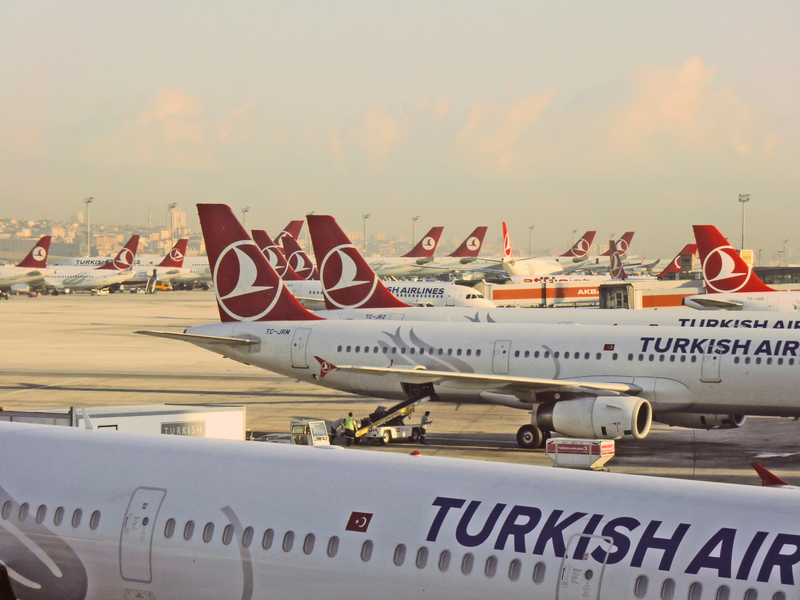
Istanbul Airport (IST) is one of the world’s largest connecting hubs and sits geographically between Africa, Europe, Asia, and the Middle East.
For South African travelers, an Istanbul connection can provide access to destinations that SAA cannot economically serve with its own aircraft. Turkish Airlines operates a particularly dense European network, including high-frequency service to Frankfurt Airport (FRA), Paris Charles de Gaulle Airport (CDG), and multiple London airports.
The schedule can also support connections beyond the cities included in the first stage of the codeshare. Passengers can still connect to other Turkish Airlines destinations using interline or Star Alliance itineraries, although those additional flights may not initially carry an SA code.
The inclusion of only three European markets suggests that the airlines are beginning with commercially important destinations before considering a wider rollout.
Frankfurt and London are major corporate and visiting-friends-and-relatives markets from South Africa, while Paris combines business, tourism, and onward connectivity. All three also have existing nonstop or one-stop competition from large European and Middle Eastern airlines.
The partnership therefore does not give SAA and Turkish Airlines an uncontested market. It provides another fare and schedule option through Istanbul Airport (IST), where Turkish Airlines can offer extensive onward frequency.
Both Airlines Were Already Star Alliance Partners
South African Airways and Turkish Airlines are both members of Star Alliance, meaning their passengers already had access to certain alliance-wide connections and frequent-flyer benefits.
Voyager members can earn qualifying miles on eligible Turkish Airlines flights, while Turkish Airlines Miles&Smiles members can earn miles when flying on qualifying SAA services. Star Alliance Gold passengers may also receive benefits such as priority check-in, additional baggage allowances, priority boarding, and lounge access, subject to the applicable rules.
The codeshare adds a deeper commercial layer.
A Star Alliance connection does not automatically mean that both airlines place their own flight numbers on each other’s services. The codeshare allows SAA and Turkish Airlines to market selected partner flights as if they were part of their own published networks.
That can make itineraries more visible in corporate booking systems, simplify fare construction, and allow passengers to purchase the complete journey from either airline.
When all flights are issued on one ticket, baggage can normally be checked through to the final destination, and the airlines have clearer responsibility for reaccommodating passengers when a delay causes a missed connection. Travelers should still verify baggage allowances because the applicable rule may depend on the marketing carrier, operating carrier, fare, and itinerary.
SAA’s Voyager and Star Alliance guidance confirms that members can earn Tier Miles across participating Star Alliance airlines and receive alliance recognition when traveling on qualifying itineraries.
This Is Not a Joint Venture
The new agreement should not be confused with a joint venture, merger, or equity investment.
South African Airways and Turkish Airlines remain separate companies. They continue to determine their own schedules, fares, fleet assignments, staffing, and commercial strategies.
A codeshare permits one airline to market seats on another airline’s flight. It does not necessarily involve coordinated pricing, shared profits, common revenue management, or antitrust immunity.
The two airlines have said they will explore deeper cooperation, including additional network integration and possible route development. That could lead to more codeshare destinations or closer schedule coordination, but no expanded arrangement has yet been announced.
Any future growth will likely depend on how much connecting traffic the partnership generates through O.R. Tambo International Airport (JNB) and Istanbul Airport (IST).
The Agreement Supports SAA’s Partnership-Led Recovery
Since emerging from business rescue, South African Airways has rebuilt a smaller network than it operated before the pandemic.
Rather than immediately restoring every former long-haul route with its own aircraft, SAA has increasingly relied on partnerships to expand the destinations it can offer customers.
The airline has codeshare or commercial relationships with carriers including Emirates, Lufthansa, SWISS, Kenya Airways, TAAG Angola Airlines, Air Mauritius, Singapore Airlines, and several other Star Alliance members.
This approach allows SAA to sell a much larger virtual network while concentrating its own aircraft on routes where it believes direct operation is commercially justified.
The Turkish Airlines partnership follows that strategy. It gives SAA access to another major intercontinental hub while providing Turkish Airlines with regional feed that would be difficult to reproduce independently.
It also gives SAA an additional counterbalance to its existing partnerships through Dubai International Airport (DXB), Frankfurt Airport (FRA), Zurich Airport (ZRH), and other connecting hubs.
Bottom Line
The new South African Airways–Turkish Airlines codeshare is primarily a network integration agreement rather than a capacity expansion.
Turkish Airlines is placing its TK code on SAA-operated flights from O.R. Tambo International Airport (JNB) to Cape Town (CPT), Durban (DUR), Gqeberha (PLZ), Windhoek (WDH), Harare (HRE), Victoria Falls (VFA), and Mauritius (MRU).
South African Airways is adding its SA code to Turkish Airlines-operated flights linking Istanbul Airport (IST) with Johannesburg (JNB), Cape Town (CPT), Durban (DUR), Frankfurt (FRA), Paris (CDG), and London.
The Durban service is a through flight operating via Johannesburg rather than a nonstop connection. Current Turkish Airlines schedules use the Airbus A350-900 on the Istanbul–Johannesburg–Durban routing and on nonstop Istanbul–Cape Town flights, while SAA’s Airbus A320 fleet supplies most of the regional feed at Johannesburg.
For Turkish Airlines, the deal adds access to seven important Southern African markets without opening new routes. For SAA, it delivers a wider SA-coded European network without the expense and risk of returning its own aircraft to London, Paris, or Frankfurt.
The real value will be determined by schedule quality. If SAA’s regional arrivals connect efficiently with Turkish Airlines’ long-haul departures at O.R. Tambo International Airport (JNB), and if Istanbul connections are competitive in both directions, the agreement could become considerably more important than its relatively limited initial route list suggests.
Keep reading FlyMag
Get the Daily Brief in the morning or the Route Watch weekly recap on Fridays. Or both.