Nearly twelve years after Malaysia Airlines flight MH370 vanished on a routine overnight run from Kuala Lumpur (KUL) to Beijing (PEK), Malaysian authorities have confirmed that the newest seabed search effort has not located the aircraft’s main wreckage.

The update, issued Sunday, March 8, 2026 by Malaysia’s Air Accident Investigation Bureau, is the latest in a long series of setbacks in what remains civil aviation’s most persistent modern mystery: a widebody jet disappearing without a crash site, with 239 people still unaccounted for and only scattered debris ever recovered.
The flight and the aircraft: what vanished in 2014
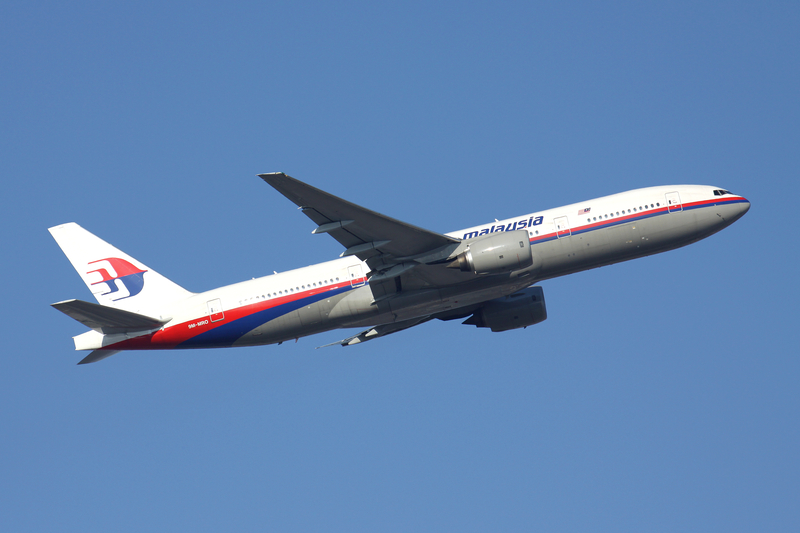
MH370 was operated by a Boeing 777-200ER (B77W-family, 777-2H6ER), registration 9M-MRO, powered by Rolls-Royce Trent 892 engines. The 777-200ER is built for long-range missions with ETOPS redundancy and robust systems architecture—an aircraft type that normally leaves a substantial forensic trail when it suffers a catastrophic event.
Read our stories in your inbox
Two aviation newsletters. Zero fluff.
MH370 did not.
The aircraft departed KUL shortly after midnight on March 8, 2014 for the roughly six-hour flight to PEK, and then dropped out of normal civilian radar coverage less than an hour later. Subsequent analyses incorporating military primary radar, satellite communications data, and drift modeling have consistently pointed investigators toward the southern Indian Ocean as the most likely crash region—yet the main wreckage field has never been confirmed.

The latest search: where Ocean Infinity looked and why it stopped
The newest campaign was run by Ocean Infinity, using autonomous underwater vehicles (AUVs) to scan a prioritized section of seabed that had not been exhaustively searched in earlier efforts.
Malaysia’s investigators say Ocean Infinity surveyed about 7,571 square kilometers of seabed during the most recent work, conducted in two phases totaling 28 days of search activity:
-
March 25–28, 2025
-
December 31, 2025 to January 23, 2026

Ocean Infinity departed the search area on January 23, 2026, consistent with the operational reality of deep-sea campaigns: weather windows narrow sharply in the southern Indian Ocean, and vessel time is finite.
The key point for aviation professionals is that “no results” does not mean “no effort.” It means the scanned areas produced no confirmed MH370 wreckage signature—no debris field, no identifiable large sections of airframe, no engine structures, and no flight recorder evidence.
The contract structure: “no find, no fee” changes the incentives
Malaysia’s arrangement with Ocean Infinity has been structured as a no-find, no-fee agreement—an increasingly common model in high-profile maritime searches where governments want capability without committing full payment upfront.
Under this framework, Ocean Infinity would receive up to $70 million only if it finds MH370’s wreckage within the contracted search area. That model helps keep the search alive politically, but it also affects operational behavior: the search operator must balance persistence against the economics of ship time, seasonal sea states, and the likelihood of success in a specific patch of ocean.
Why MH370 is still so hard to find, even with modern AUV technology
For readers who work around flight data, maintenance records, and accident investigation, MH370 is maddening because so much about it is plausible—and so little is provable.
The core obstacles haven’t changed, even as technology has improved:
The southern Indian Ocean is one of the worst places on Earth to search
The suspected region sits far from major ports, with frequent heavy seas, short weather windows, and deep water. Search vessels operate thousands of miles from support infrastructure, and each day of mapping is expensive in fuel, logistics, crew rotations, and equipment utilization.
The seabed is not flat
Even a “small” search box can hide wreckage in steep terrain. Subsea ridges, escarpments, and sediment features can obscure targets or generate false positives that must be re-examined.
AUVs are fast, but verification still takes time
AUV mapping can cover large areas with high-resolution sonar, but finding a target is only step one. Verification often requires additional passes, higher-resolution imaging, and sometimes remotely operated vehicle (ROV) confirmation. Every suspected contact adds time—and time is the limiting currency of deep-sea work.
The evidence chain is probabilistic
MH370’s likely impact corridor is derived from multiple layers of modeling—satellite handshake arcs, fuel endurance assumptions, drift analysis of recovered debris, and constrained flight-path hypotheses. Each layer can be robust on its own, but the combined solution space remains wide enough that even a high-tech search can miss the target if the real wreckage lies outside the prioritized box.
The bigger historical context: why repeated searches haven’t closed the case
The aviation community tends to remember MH370 as “the big one,” but it has also become a case study in what happens when a modern airliner is lost in remote oceanic airspace without immediate wreckage confirmation.
Over the past decade:
-
A multinational underwater search led by Australia’s ATSB scanned more than 120,000 square kilometers of seabed with no confirmed find.
-
Ocean Infinity conducted an earlier private search in 2018, also without success.
-
Debris linked to MH370 has washed ashore in the western Indian Ocean region—most famously a flaperon found on Réunion in 2015—supporting the Indian Ocean end-state theory, but not narrowing the wreckage location enough to produce a decisive search box.
Each failed campaign narrows some possibilities, but it also fuels a hard truth: the wreckage may be in a location that is technically within the “most likely” region yet practically difficult to detect—either due to terrain, fragmentation, or simply the curse of a still-too-large search area.
What this means for airlines, investigators, and families
For operators and regulators, MH370 remains an uncomfortable reference point in discussions about:
-
oceanic surveillance gaps,
-
aircraft tracking and satellite data usage,
-
distress beacon performance,
-
and the limits of post-event forensic reconstruction without physical wreckage.
For families, the impact is more direct: without the main wreckage, every technical theory remains unfinished, and every “possible explanation” remains contested. That is why advocacy groups continue to push for search extensions while there is still a viable contract structure and technical capability available.
Bottom Line
Malaysia has confirmed that Ocean Infinity’s latest deep-sea search for Malaysia Airlines MH370—the Boeing 777-200ER that disappeared on the KUL–PEK route in 2014—has not located the aircraft’s wreckage. The campaign scanned thousands of square kilometers in the southern Indian Ocean across two phases, ending on January 23, 2026, without a confirmed find.
The result doesn’t close the case—but it does underline the same operational reality that has haunted MH370 for twelve years: until the main wreckage is found, the investigation is constrained by probability rather than proof, and the world’s most advanced search tools are still fighting the scale and brutality of the southern Indian Ocean.
Keep reading FlyMag
Get the Daily Brief in the morning or the Route Watch weekly recap on Fridays. Or both.