A serious air traffic control error at Nashville International Airport (BNA) sent two Southwest Airlines Boeing 737s into immediate conflict on April 18, forcing both crews to react to onboard collision alerts rather than simply follow the plan the tower had just issued.

The incident involved Southwest flight WN507, arriving from Myrtle Beach International Airport (MYR), and Southwest flight WN1152, departing BNA for McGhee Tyson Airport (TYS) in Knoxville. WN507 discontinued its landing in gusty conditions and initiated a go-around. During that maneuver, the flight was instructed to turn in a way that placed it into the path of WN1152, which was departing from a parallel runway.
That is what makes this event so important. This was not a case of two aircraft converging because of weather alone or pilot error alone. It was an ATC sequencing failure at a major U.S. airport, and the final barrier that prevented a collision appears to have been the aircrafts’ own traffic alert and collision avoidance logic.
Read our stories in your inbox
Two aviation newsletters. Zero fluff.
The Conflict Developed During A Go-Around At BNA
Go-arounds are routine in commercial aviation. They are not failures. They are built into normal operations and are executed whenever a crew decides that landing conditions are not satisfactory.
That appears to be how this event began. Southwest said WN507 executed a precautionary go-around while approaching Nashville International Airport (BNA) in gusty wind conditions. The problem came next.
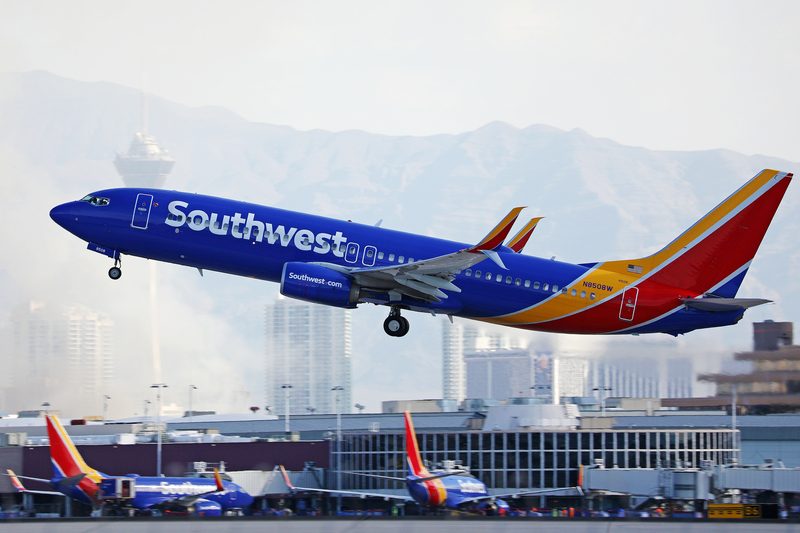
According to the FAA, the arriving aircraft then received instructions from air traffic control that put it in the path of another airplane departing from a parallel runway. At BNA, that runway layout matters. Nashville operates three parallel runways, including Runway 2L/20R and Runway 2R/20L, which means an arrival and a departure can be operating on closely spaced parallel tracks with very little room for a controller error.
At a field like BNA, sequencing on parallel runways demands precision. Once a go-around aircraft is mixed with a departure stream, timing and heading assignments have to be exact. If they are not, the geometry can deteriorate very quickly.
The Two Aircraft Were Different 737 Variants On Different Profiles
The two Southwest aircraft were both Boeing 737s, but not the same sub-type.
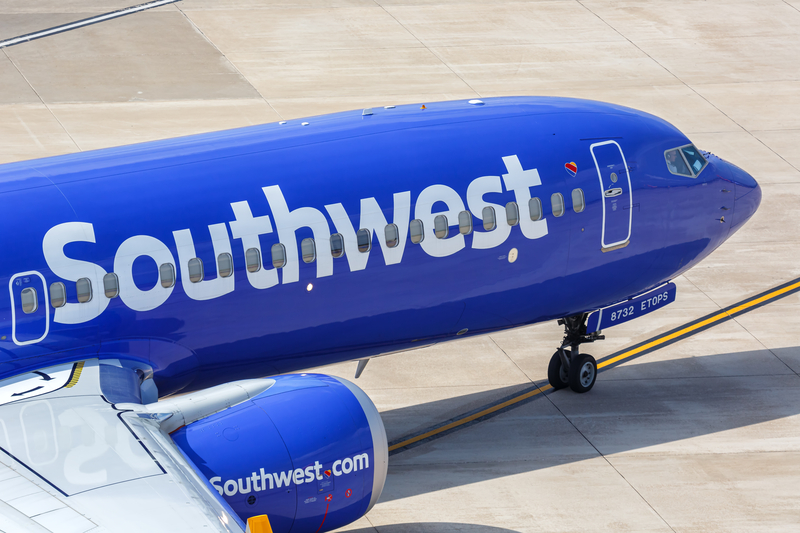
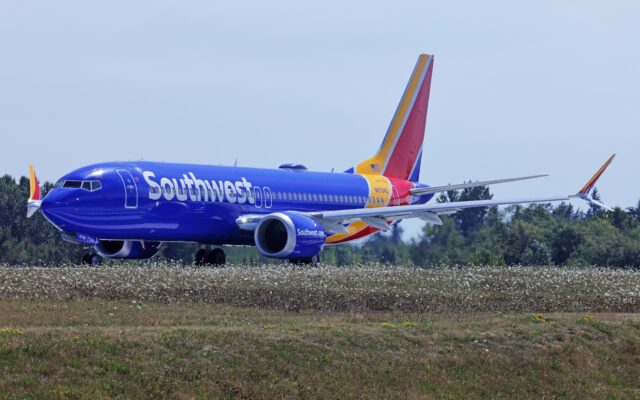
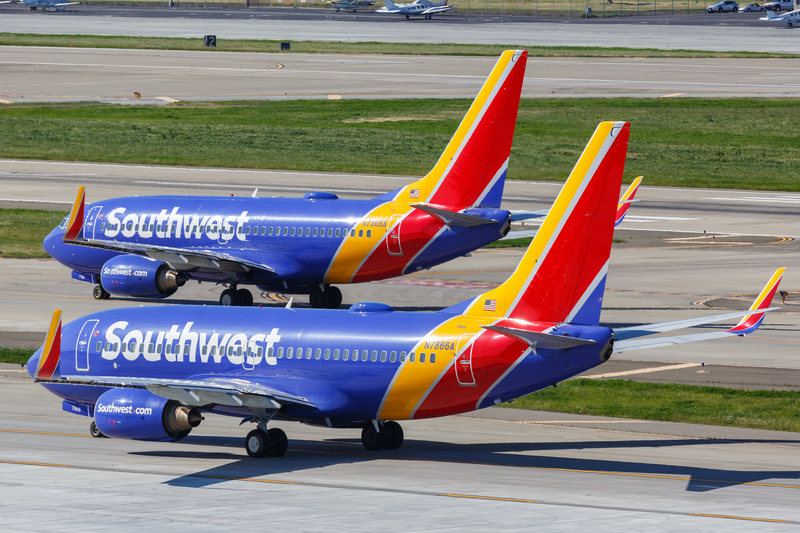
WN507, the arriving flight from Myrtle Beach International Airport (MYR), was operating as a Boeing 737 MAX 8. WN1152, the departure from Nashville International Airport (BNA) to McGhee Tyson Airport (TYS), was reported as a Boeing 737-700.
That detail matters less because of any major handling difference and more because it reinforces that these were standard, front-line Southwest narrowbody operations at a busy domestic airport. There was nothing unusual about the aircraft assignment itself. The hazard came from the traffic picture and the instructions being given, not from an exotic aircraft or an abnormal airport setup.
At the moment the two paths converged, one aircraft was in a missed-approach profile and the other was climbing out after departure. That is exactly the kind of crossing geometry TCAS is designed to detect when the procedural layers above it fail.
TCAS Became The Last Effective Safety Barrier
This incident is a reminder of what TCAS is for and why pilots are trained to obey it immediately.
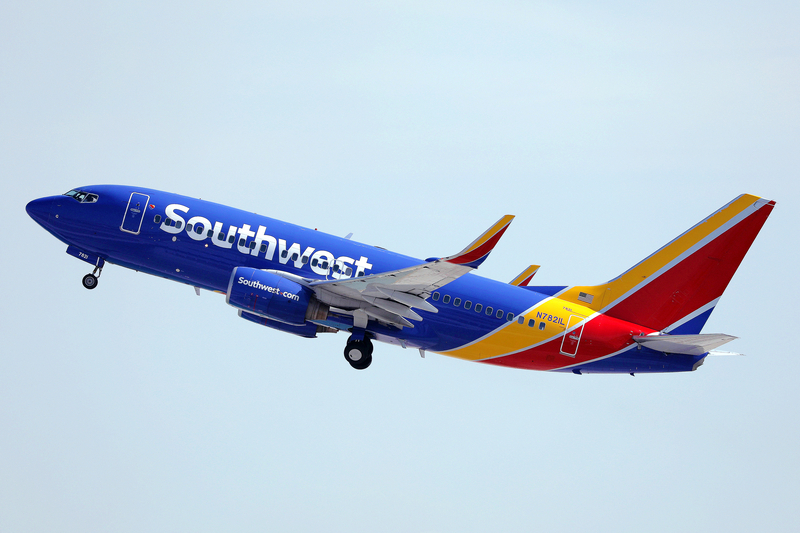
When the two Southwest Boeing 737s drew too close, cockpit alerts were triggered on both aircraft. Those alerts, known as resolution advisories, are designed to give pilots coordinated escape instructions, typically directing one aircraft to climb and the other to descend. In the hierarchy of cockpit decision-making, a TCAS resolution advisory takes priority over conflicting ATC instructions.
That is critical here. Once the RA is issued, the pilots are expected to follow TCAS first and sort out ATC second. Based on the available reporting and audio accounts, that is what happened. One crew climbed, the other descended, and the aircraft avoided occupying the same airspace at the same time.
This is exactly how the system is supposed to work when every earlier layer has already broken down. But that should not be mistaken for reassurance. TCAS is the last line of defense, not the preferred means of separation.
The Separation Was Alarmingly Tight, Even If The Exact Distance Remains Preliminary
Early flight-tracking analysis has suggested the aircraft may have come within about 500 feet vertically of one another. That figure has been widely cited, but it is important to treat it carefully.
The FAA has opened an investigation and has publicly described the event as a near midair collision, but it has not yet finalized the exact separation figures. Flight-tracking services can provide a useful approximation, though their readings are not the same as an official investigative determination.
Even with that caveat, the broad picture is clear. The aircraft came close enough to trigger collision-avoidance action and force immediate evasive maneuvering. In practical airline terms, that is serious enough on its own.
For professionals, the key point is not whether the final number proves to be exactly 500 feet or somewhat different. The key point is that normal procedural separation had already broken down to the point where onboard safety systems had to intervene.
Why BNA’s Parallel Runway Setup Matters
Nashville International Airport (BNA) is not a small outstation. It is a growing airport with complex traffic flows and three parallel runways, which can support efficient operations but also demand disciplined tower sequencing.
Parallel runway operations are common and safe when managed correctly. But they reduce tolerance for error during go-arounds and departures because aircraft can end up on nearly converging tracks within seconds if headings or altitude expectations are not managed precisely.
In this case, the arriving aircraft was going around from Runway 2L while the departure was leaving from the parallel runway to the east. That is exactly the sort of environment in which a controller must instantly think in three dimensions: runway assignment, turn direction, climb path, and missed-approach containment. A wrong turn instruction in that setting is not a minor correction. It can become an immediate conflict.
That is why this incident deserves attention beyond the headline value of a near miss. It illustrates how quickly a routine go-around can turn into a high-risk event when runway geometry and ATC judgment collide.
This Was A Controller Error, But The Broader Staffing Context Will Not Go Away
The FAA’s initial statement is unusually direct. It says the arriving Southwest crew received instructions from air traffic control that put the flight in the path of another aircraft. That places the controller action at the center of the event.
At the same time, this incident will inevitably be viewed against the wider U.S. ATC staffing problem. The FAA has acknowledged that it remains about 3,500 certified controllers below its staffing target, and the agency is seeking to accelerate hiring and training. That does not prove staffing caused what happened at BNA. Investigators still have to determine the precise operational circumstances in the tower that evening.
Still, staffing pressure is relevant context because heavy workloads, overtime, and thin operational margins increase the risk that a bad instruction gets issued at exactly the wrong moment. In aviation, many serious events are not caused by one grand failure. They emerge when a normal operation is being handled inside a system with less slack than it should have.
This Nashville event may ultimately be traced to one controller decision. But it happened inside a national system that has already been under growing scrutiny for capacity and staffing strain.
Southwest’s Pilots Did What The System Trains Them To Do
The encouraging part of the story is that the crews responded correctly.
Southwest said the pilots of WN507 complied with both ATC instructions and the onboard traffic alert, and both aircraft completed their flights safely. WN1152 continued on to McGhee Tyson Airport (TYS), while WN507 later landed safely at Nashville International Airport (BNA).
That outcome is not accidental. It reflects cockpit discipline, simulator training, standard operating procedures, and the basic professionalism expected of line crews when an event suddenly moves from routine to critical.
For all the attention rightly focused on ATC, this was also a reminder of why commercial airline crews train repeatedly for rare but high-consequence events. When the traffic picture collapsed, the pilots had only seconds to respond. They did.
Bottom Line
The near collision involving Southwest flights WN507 from Myrtle Beach International Airport (MYR) and WN1152 from Nashville International Airport (BNA) to McGhee Tyson Airport (TYS) was not just another unsettling close call. It was a serious ATC-driven conflict in parallel runway operations at a major U.S. airport, with two Boeing 737s forced to rely on TCAS to avoid disaster.
The investigation will determine the precise separation and the exact chain of instructions. But the essential lesson is already clear: the system failed high up the safety chain, and only the final defensive layers, onboard collision logic and disciplined pilot response, kept the event from becoming something much worse.
Keep reading FlyMag
Get the Daily Brief in the morning or the Route Watch weekly recap on Fridays. Or both.