Singapore Airlines is adding a second Sydney-area airport to its Australian map, confirming daily service between Singapore Changi Airport (SIN) and Western Sydney International Airport (WSI) from November 23, 2026. It is a significant move, not just because WSI will be a brand-new airport, but because it gives Singapore Airlines a very different kind of Sydney operation.

Unlike Sydney Kingsford Smith Airport (SYD), WSI will be a 24-hour airport. That changes the scheduling equation immediately. Singapore Airlines will be able to operate a late-night departure from Western Sydney that would not be possible under SYD’s curfew regime, creating a cleaner overnight bank into SIN and stronger onward connectivity across Asia, Europe, and beyond.
In other words, this is not simply an extra Sydney frequency. It is a structurally different one.
Read our stories in your inbox
Two aviation newsletters. Zero fluff.
The Aircraft Choice Tells You Exactly What Singapore Airlines Wants
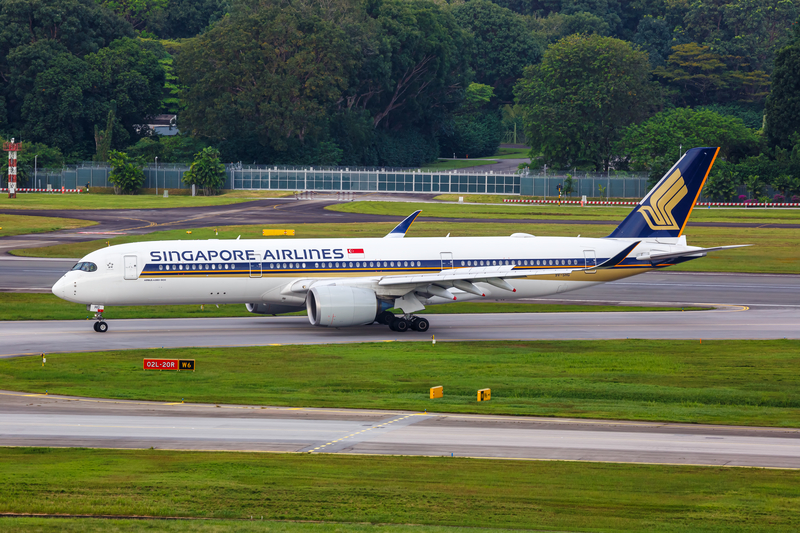
Singapore Airlines will deploy the Airbus A350-900 medium-haul variant on the SIN-WSI route. In the airline’s configuration, that aircraft seats 303 passengers, with 40 seats in Business Class and 263 in Economy.
That is a smart fit. The A350-900MH gives Singapore Airlines genuine widebody comfort and cargo capability, but without the size of the Airbus A380 or the premium-heavy structure of some long-haul aircraft. For a new airport, that matters. It gives the airline enough capacity to make the route commercially meaningful from day one, while still keeping the trip economics under control.
Operationally, the schedule is arguably the bigger story. The outbound service is timed to leave SIN at 11:30 a.m. and arrive at WSI at 10:20 p.m., while the return leaves WSI at 11:55 p.m. and gets back into SIN at 5:05 a.m. the next day. That late-night westbound departure is exactly the kind of slot pattern airlines value when they are trying to maximize connectivity through a hub bank.
For Singapore Airlines, the route is as much about timing quality as it is about adding another Australian point.
Sydney Becomes a Five-Daily Market for Singapore Airlines
With WSI entering the network, Singapore Airlines will operate five daily Sydney flights across the metropolitan area: four from SYD and one from WSI.
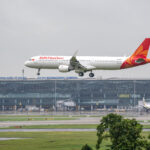
That gives the carrier a stronger position in a market it already treats as one of its most important in Australia. The SYD operation is itself a high-quality mix. Singapore Airlines currently serves SYD with the Boeing 777-300ER, Airbus A380, and Airbus A350-900 long-haul variant, giving it a blend of premium capacity, hub feed, and schedule spread across the day.
This matters because Sydney is not just a point-to-point market for Singapore Airlines. It is one of the carrier’s most valuable long-haul feeders in the South Pacific, carrying local traffic, premium business demand, and large volumes of connecting passengers through SIN.
Adding WSI therefore strengthens Singapore Airlines’ Sydney proposition in two different ways at once: more frequency overall, and a much more flexible departure profile.
Australia Is Now an Even More Important Part of the Network
The broader strategic point is that Australia remains one of Singapore Airlines’ most important long-haul regional markets. Once WSI starts, the airline will serve eight destinations in the country: Adelaide Airport (ADL), Brisbane Airport (BNE), Cairns Airport (CNS), Darwin International Airport (DRW), Melbourne Airport (MEL), Perth Airport (PER), Sydney Kingsford Smith Airport (SYD), and Western Sydney International Airport (WSI).
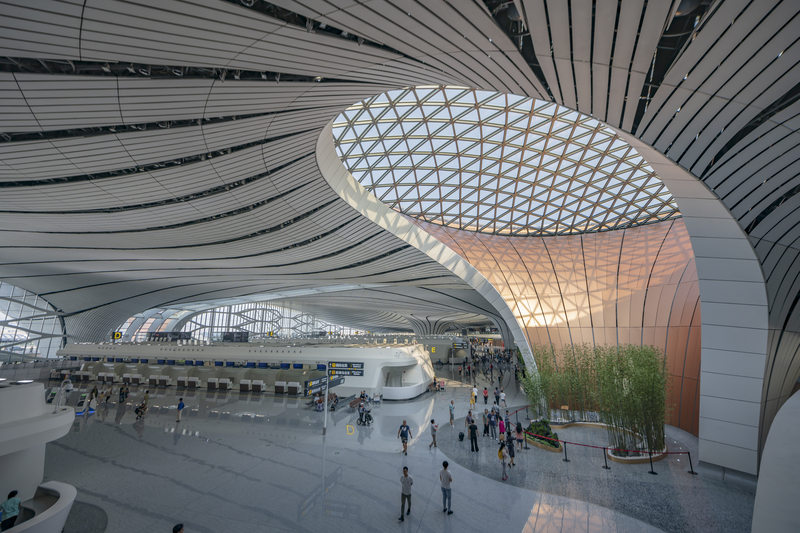
That breadth matters. Australia is one of the few markets where Singapore Airlines can combine strong local demand, high-value premium traffic, and powerful sixth-freedom flows through SIN. It is also a market where aircraft deployment is tailored very carefully by city.
Melbourne, for example, is one of the carrier’s densest Australian markets and is scheduled to see five daily services, including the return of the Airbus A380 alongside Airbus A350-900 and Boeing 777-300ER flying. Perth remains a core westbound gateway with four daily flights, while Brisbane has already been expanded to four daily services. Elsewhere, Adelaide, Darwin, and Cairns provide strong secondary-market coverage, with aircraft types and frequencies matched more tightly to local demand.
This is where Singapore Airlines’ Australian strategy stands out. It is not just adding capacity. It is segmenting the market properly.
Western Sydney Is About Catchment as Much as Capacity
WSI also gives Singapore Airlines access to a different demand profile from the one it already serves at SYD. Western Sydney is one of Australia’s fastest-growing population and economic zones, and it has long been under-served in long-haul terms because passengers have had to funnel through SYD.
A nonstop link from WSI to SIN changes that. It shortens the ground journey for a large catchment area, opens a new corporate and visiting-friends-and-relatives market, and gives Singapore Airlines early-mover advantage at a new airport that will inevitably become more contested over time.
Being the first international airline into a new airport is not always decisive on its own. But when the airport is 24-hour, sits in a large metropolitan area, and feeds into one of the world’s strongest hub systems, it becomes much more meaningful.
Singapore Airlines is not merely opening a route. It is shaping the commercial identity of WSI from the start.
The “23 Daily Flights” Framing Needs Care
There is no question that Singapore Airlines’ Australian operation is reaching new scale, but the popular “23 daily flights” framing should be handled carefully.
The more defensible and clearly supported takeaway is that the carrier is adding an eighth Australian destination and creating a fifth daily Sydney frequency. Beyond that, total daily flight counts can vary depending on season, day of week, and whether the count is based on peak filed schedules rather than a flat year-round average.
For airline readers, that distinction matters. Network scale is best measured by filed schedules and sustained frequencies, not just by the most eye-catching possible daily total.
Bottom Line
Singapore Airlines’ decision to launch Western Sydney International Airport (WSI) service is a strategically important Australian expansion. It gives the carrier a second Sydney gateway, unlocks the commercial value of a curfew-free airport, and adds a daily Airbus A350-900 widebody frequency that is designed as much around connectivity as local demand.
Just as importantly, it reinforces how central Australia remains to Singapore Airlines’ network planning. The carrier is not treating the market as a simple leisure play. It is using a mix of aircraft types, airport positioning, and schedule timing to build a deeper and more flexible operation across the country.
That is the real story here. Western Sydney is not just another route launch. It is a network-quality move.
Keep reading FlyMag
Get the Daily Brief in the morning or the Route Watch weekly recap on Fridays. Or both.