A serious close call at New York John F. Kennedy International Airport (JFK) has again highlighted how little margin for error exists in parallel runway operations at one of North America’s busiest and most complex airports.

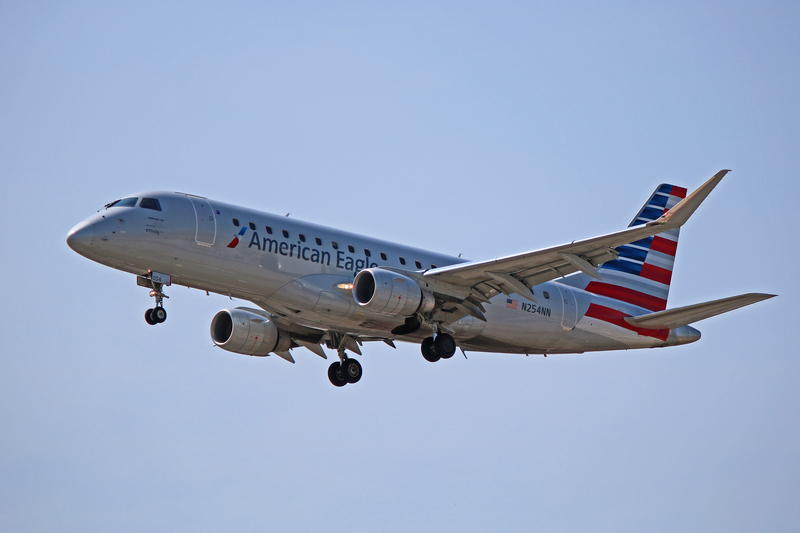
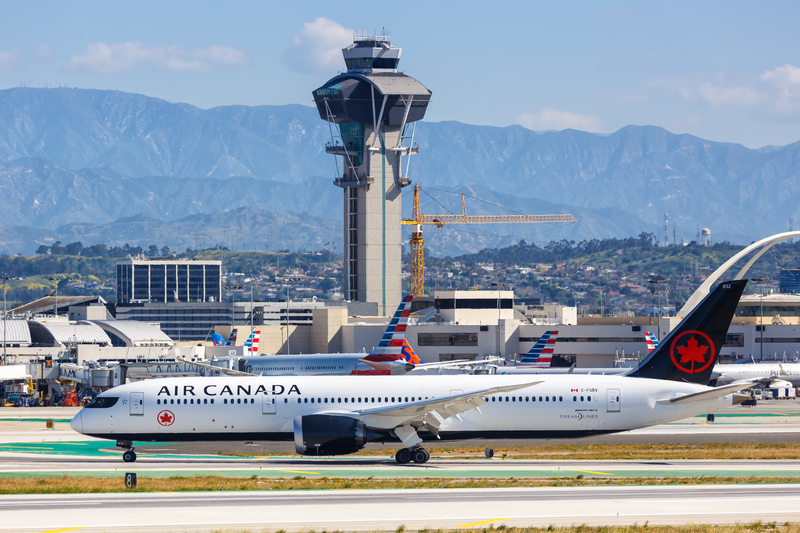
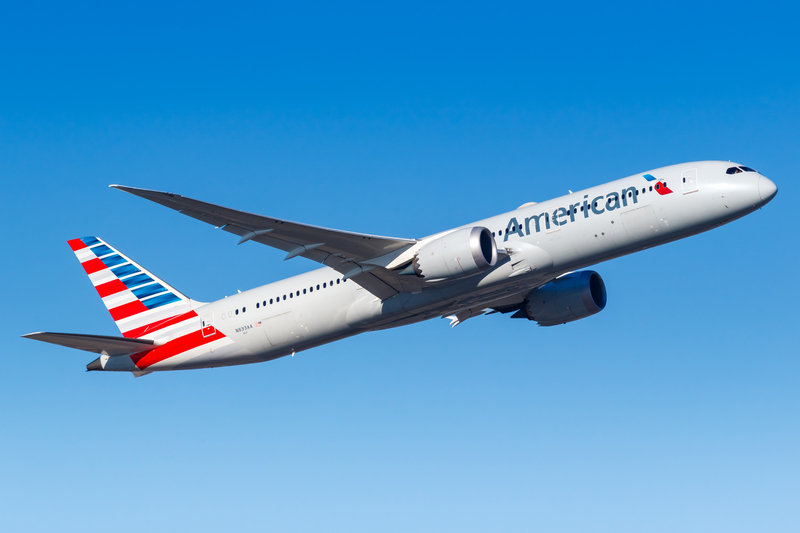
The incident involved a Republic Airways Embraer E175 operating as American Eagle and a Jazz Aviation Embraer E175 operating as Air Canada Express. As both aircraft approached parallel runways at JFK, the American Eagle-operated jet reportedly deviated from its intended approach path, drawing close enough to the Air Canada Express aircraft to trigger onboard collision warnings and force both crews to abandon their approaches.
For aviation professionals, that is the key point. This was not just a routine loss of spacing. It was an event serious enough that the final airborne safety barrier had to activate.
Read our stories in your inbox
Two aviation newsletters. Zero fluff.
The Aircraft Were Regional Jets, But The Risk Was No Less Serious
One detail worth getting right is that this did not involve a mainline American Airlines aircraft in the strict sense. The flight was being operated by Republic Airways on behalf of American Eagle, while the other aircraft was operated by Jazz Aviation for Air Canada Express.
Both aircraft were Embraer E175s, one of the most common regional jets in North American airline service. The E175 is widely used on hub-feeding and short-haul missions because it offers strong economics, good passenger comfort, and enough performance to operate efficiently in dense terminal environments such as New York John F. Kennedy International Airport (JFK).
That commonality actually makes the incident more revealing. This was not a conflict created by a large difference in aircraft size or approach performance. It was a path-discipline and separation event involving two very familiar regional jets operating in a routine arrival environment.
The Problem Developed On Parallel Approaches At JFK
Parallel runway operations are a normal part of life at JFK. They allow the airport to handle large arrival and departure volumes efficiently, but they also demand strict adherence to headings, descent profiles, and localizer or visual approach tracking.
In this case, the developing hazard appears to have begun when the Republic-operated American Eagle Embraer E175 drifted off its intended approach path while the Jazz-operated Air Canada Express E175 was simultaneously inbound on a neighboring parallel approach.
At that point, the geometry becomes dangerous quickly. Parallel approaches work because each aircraft remains precisely inside its protected corridor. Once one aircraft starts to wander toward the adjacent path, the distance between the two can collapse in seconds.
That is exactly why these operations are so proceduralized. Efficiency depends on precision.
The Reported Separation Was Alarmingly Tight
Preliminary reporting indicates the two Embraer E175s came within roughly 350 feet vertically and about 0.62 miles horizontally of one another.
Even allowing for the fact that these figures could be refined as the investigation progresses, the event is serious on any reading. Aircraft do not trigger onboard anti-collision responses and execute simultaneous go-arounds unless separation has already eroded to an unacceptable level.
For airline operations teams, the lesson is not tied to whether the final validated number remains exactly 350 feet. The lesson is that normal separation broke down far enough for both crews to receive urgent warnings and abandon the approach.
That is a serious near miss by any operational standard.
TCAS Was The Final Safety Barrier
As in many modern close calls, the last effective line of defense was the aircrafts’ own Traffic Collision Avoidance System, or TCAS.
When aircraft equipped with TCAS detect a conflict, the system can issue coordinated resolution advisories telling one crew to climb and the other to descend, or otherwise directing immediate vertical action to restore separation. Pilots are trained to obey these commands even if they conflict with ATC instructions, because TCAS is specifically designed to resolve imminent airborne conflicts faster than ground-based intervention can.
That is what makes this incident especially sobering. Once TCAS is driving the outcome, the earlier layers of defense have already failed to some degree.
The system did what it was designed to do. But it had to.
Why JFK Leaves So Little Room For Error
John F. Kennedy International Airport (JFK) is a uniquely demanding operating environment. It combines heavy international traffic, tightly managed arrival banks, closely spaced runway operations, and a highly compressed New York-area airspace structure.
That does not mean close calls are inevitable. But it does mean that when an aircraft strays from its expected path, the consequences can become serious very quickly. There is simply less spare room for correction than at a less congested airport with wider operational buffers.
At a place like JFK, a path deviation on final is not just a minor tracking issue. It can become an immediate traffic conflict.
That is why incidents like this attract so much attention across the industry. They expose the fragility of high-density arrival systems when precision slips, even briefly.
The Investigation Will Focus On Why The American Eagle Jet Drifted
At this stage, the most important unanswered question is why the Republic-operated American Eagle aircraft deviated from its intended approach path.
That answer could involve cockpit handling, approach execution, situational awareness, environmental factors, controller monitoring, or some combination of several of those elements. It is too early to state definitively which factor will prove most important.
What is already clear is that the deviation itself appears to have been the trigger that collapsed the spacing. That means investigators will likely look closely at flight path management, crew response, approach monitoring, and the timing of any controller intervention once the conflict began to develop.
Those details matter because they determine whether this was a singular error or a symptom of a wider procedural vulnerability.
This Incident Needs To Be Reported Carefully
A close call like this naturally draws dramatic coverage, but precision matters.
What is established so far is that a Republic Airways Embraer E175 flying for American Eagle and a Jazz Aviation Embraer E175 flying for Air Canada Express came dangerously close on parallel approaches at New York John F. Kennedy International Airport (JFK), that onboard anti-collision alerts were triggered, and that both crews carried out go-arounds before landing safely.
What is not yet fully established in public is the complete causal chain behind the path deviation or whether any broader systemic issue at JFK contributed beyond the immediate operational event.
That distinction is important. The event was serious enough on its own. It does not need exaggeration.
Bottom Line
The near miss at New York John F. Kennedy International Airport (JFK) was a serious breakdown in parallel-approach separation involving two Embraer E175 regional jets, one flying for American Eagle and the other for Air Canada Express. The aircraft came close enough to trigger onboard collision warnings and force both crews into go-arounds, with the American Eagle-operated jet’s path deviation appearing to be central to the conflict.
Both aircraft landed safely, and that is the most important outcome. But the bigger significance lies in what the incident reveals: at a high-density airport such as JFK, even a brief loss of approach precision can push two routine regional flights into an unsafe situation with remarkable speed.
Keep reading FlyMag
Get the Daily Brief in the morning or the Route Watch weekly recap on Fridays. Or both.