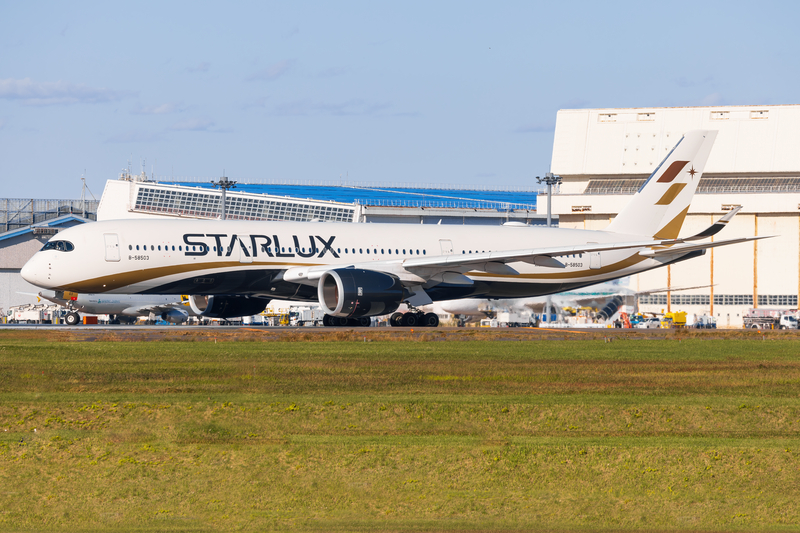
STARLUX Airlines is upgrading its Taipei Taoyuan International Airport (TPE) to Phoenix Sky Harbor International Airport (PHX) service from the Airbus A350-900 to the larger Airbus A350-1000, making Phoenix the carrier’s first long-haul destination to receive the bigger aircraft type.
The switch begins on July 2, 2026 and applies to the airline’s four-times-weekly service. For a route that only launched in January, that is a meaningful development. Airlines do not usually upgauge a new long-haul market this quickly unless they are seeing something encouraging in the booking profile.
For aviation readers, this is the important part: the Phoenix route appears to be performing well enough that STARLUX now wants more capacity on one of its newest U.S. long-haul links.
Read our stories in your inbox
Two aviation newsletters. Zero fluff.
The A350-1000 Brings More Than Just Extra Seats
The aircraft change is not minor.
STARLUX’s A350-1000 adds 44 seats compared with the A350-900, increasing capacity from 306 seats to 350 seats. That is a sizeable jump for a four-weekly intercontinental route, especially one that is still in its first year of operation.
What makes the upgauge more interesting is that the A350-1000 is not just a bigger airplane. It also carries a stronger premium proposition, including:
- 4 first-class suites
- 40 business class seats
- 36 premium economy seats
- 270 economy seats
That means this is not simply a volume play. It is also a premium-capacity play.
Phoenix Is Becoming More Important Than Many Expected
When STARLUX first announced Phoenix, it was already an unusual choice by U.S.–Asia route standards.
PHX is not Los Angeles, San Francisco, or Seattle. It is a large and growing U.S. market, but it is still a less conventional transpacific destination than the West Coast hubs most Asian carriers target first. That is exactly why this upgauge matters. It suggests Phoenix is proving stronger than some might have assumed, whether because of local demand, connecting traffic, business links, or a combination of all three.
This is no longer just an experimental route. It is becoming one of STARLUX’s more meaningful U.S. services.
The A350-1000 Choice Also Says Something About The Fleet
Another reason this matters is that STARLUX currently has only two A350-1000s in service.
That means assigning one of them to Phoenix is a genuine fleet-priority decision, not a casual equipment swap. The airline has many possible uses for its most premium and highest-capacity long-haul aircraft, and it is choosing to put one on Arizona.
That is a strong sign of confidence in the route’s revenue potential.
This Is Also A Competitive Statement
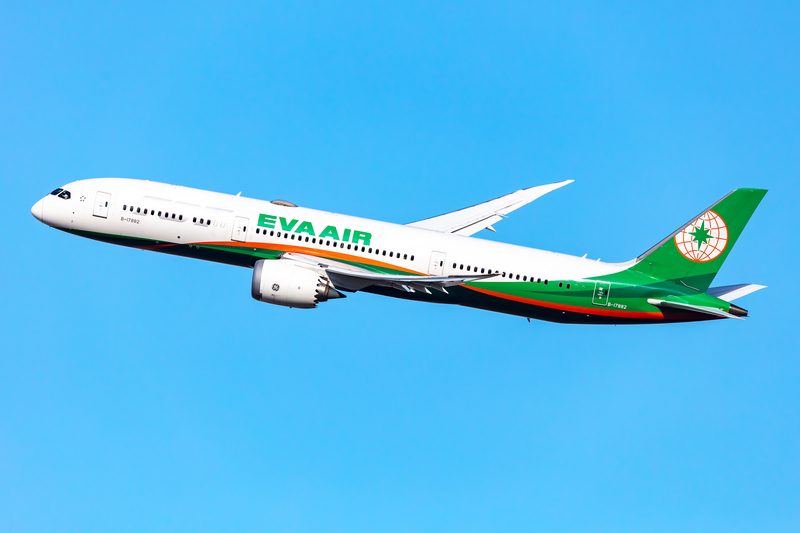
STARLUX is not alone on the Taipei–Phoenix market.
China Airlines also serves the route, which means STARLUX’s move is not just about internal capacity needs. It is also a competitive move in a market where another Taiwanese carrier is already present. By adding the A350-1000, STARLUX is not only giving itself more seats. It is also strengthening its premium offering and increasing the route’s visibility.
That matters because in head-to-head long-haul competition, product and aircraft type can shape customer perception as much as schedule does.
Phoenix Is Now Part Of A Bigger U.S. Strategy
This route upgrade also fits into STARLUX’s broader U.S. growth story.
The airline first entered the U.S. market in 2023 with Los Angeles, and has since added San Francisco, Ontario, and Phoenix. Those cities together show that STARLUX is not trying to build a conventional single-hub U.S. strategy. It is picking specific markets where it believes its product and Taipei hub can create an advantage.
Phoenix getting the first long-haul A350-1000 assignment reinforces that the airline is willing to make bold moves in the U.S. if the demand profile looks right.
This May Be A Preview Of What Comes Next
The route change also arrives as STARLUX talks more openly about additional long-haul expansion in Europe and Oceania.
That matters because it suggests the A350-1000 will become increasingly important to the airline’s network development. Phoenix is simply the first long-haul route to get it. It probably will not be the last. If the carrier continues to expand to cities such as Barcelona, Zurich, Sydney, and Auckland, the larger A350 variant is likely to play a central role.
That gives this aircraft swap a wider strategic meaning than the Phoenix route alone.
Bottom Line
STARLUX’s decision to upgrade Taipei–Phoenix to the Airbus A350-1000 from July 2, 2026 is one of the clearest signs yet that the route is performing well. Phoenix becomes the airline’s first long-haul destination to receive the larger A350 variant, bringing more total seats and a stronger premium cabin mix to a market that only launched a few months ago.
That is significant because it shows STARLUX is not treating Phoenix as a fringe experiment. It is treating it like a route worth backing with one of the most important aircraft in its fleet.