Etihad Airways is no longer treating mainland China as a one-route market centered on Beijing Daxing International Airport (PKX). With five additional routes now scheduled from Zayed International Airport in Abu Dhabi (AUH), the airline is building a far broader China platform that stretches from the Yangtze River Delta to the Pearl River Delta and deep into western China.
The headline number is substantial. By the time the rollout is complete, Etihad will operate 35 weekly mainland China services across six destinations. That includes the carrier’s existing daily service between Abu Dhabi (AUH) and Beijing Daxing (PKX), plus new flying to Shanghai Pudong International Airport (PVG), Guangzhou Baiyun International Airport (CAN), Chengdu Tianfu International Airport (TFU), Hangzhou Xiaoshan International Airport (HGH), and Shenzhen Bao’an International Airport (SZX). For Etihad, this is one of the clearest signals yet that China is moving back toward the center of its long-haul growth strategy.
The rollout is phased, but the intent is unmistakable
Etihad is not launching all five routes at once. The first move comes on October 1, 2026, when the airline restores daily service between Abu Dhabi (AUH) and Shanghai Pudong (PVG). The bigger March 2027 push then follows quickly: daily Guangzhou (CAN) and five-weekly Hangzhou (HGH) both begin on March 4, four-weekly Chengdu (TFU) follows on March 5, and five-weekly Shenzhen (SZX) starts on March 7.
Read our stories in your inbox
Two aviation newsletters. Zero fluff.
That sequencing matters. Shanghai Pudong (PVG) is the obvious first step because it gives Etihad an anchor in East China months before the rest of the network arrives. It also brings the airline back onto a route it previously dropped, which makes this more than a simple route-launch story. Guangzhou (CAN) and Chengdu (TFU) are also return markets for Etihad, while Hangzhou (HGH) and Shenzhen (SZX) represent the more strategic fresh additions. In practical terms, Etihad is not just adding dots to a map. It is rebuilding and widening its China portfolio in a more deliberate way.
The city mix is also telling. Beijing Daxing (PKX) and Shanghai Pudong (PVG) give the airline two flagship gateways. Guangzhou (CAN) and Shenzhen (SZX) push it deeper into southern China’s manufacturing and export belt. Hangzhou (HGH) adds exposure to one of the country’s most important digital economy and e-commerce centers. Chengdu Tianfu (TFU), meanwhile, gives Etihad stronger reach into western China, where technology, manufacturing and international business links have been growing steadily.
Why the Boeing 787-9 is the right tool for the job
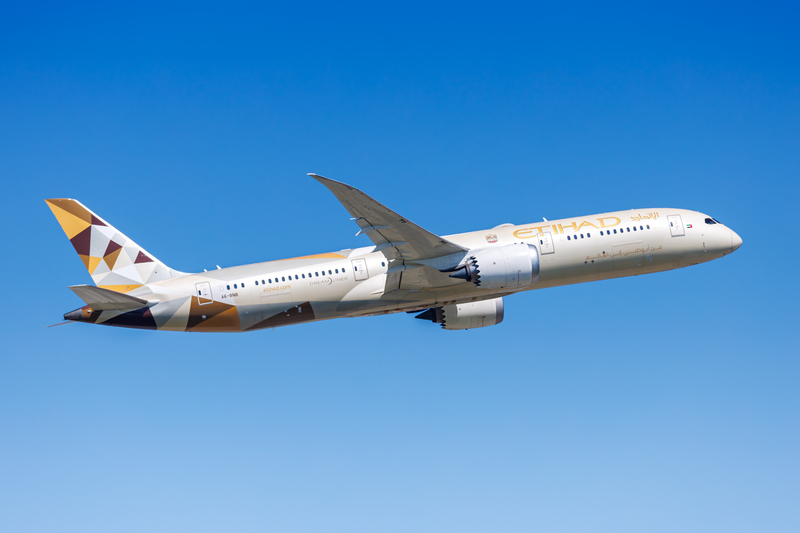
Every one of the new mainland China services is set to be operated by the Boeing 787-9. That is an important part of the story, not just a fleet footnote.
Etihad’s 787-9s on these routes are configured with 28 Business seats and 262 Economy seats, giving the airline a consistent 290-seat platform across the expanded China network. For a market as varied as China, that is a sensible choice. The 787-9 is large enough to support cargo-heavy and business-driven routes, but it avoids the risk of over-gauging markets that are still developing or rebuilding. From an airline planning standpoint, it offers Etihad a balance of range, capacity and operating efficiency that fits these sectors well.
There is also a product advantage in using a single aircraft type. Standardising the expansion around the 787-9 means Etihad can offer the same widebody onboard experience from Abu Dhabi (AUH) to Shanghai (PVG), Guangzhou (CAN), Chengdu (TFU), Hangzhou (HGH), Shenzhen (SZX) and Beijing Daxing (PKX), rather than mixing cabin products by route. For premium and corporate travellers, that consistency matters. For Etihad internally, it also simplifies crew planning, maintenance support and day-to-day network execution.
This is as much a trade and cargo story as a passenger one
Etihad is presenting the move as a passenger and cargo play, and that framing looks right. Shanghai Pudong (PVG) is one of Asia’s major international cargo gateways. Guangzhou (CAN) and Shenzhen (SZX) sit at the heart of southern China’s manufacturing and technology supply chains. Hangzhou (HGH) is tied closely to digital commerce. Chengdu Tianfu (TFU) gives access to western China’s growing industrial and innovation base. In other words, these are not leisure additions dressed up as strategy. They are business-led markets with real freight relevance.
That is also why Abu Dhabi (AUH) matters so much in this plan. Etihad is not only selling nonstop UAE-China demand. It is using Abu Dhabi as a transfer point between mainland China and onward markets across the Middle East, Africa, Europe and North America. The hub logic is straightforward: build enough depth in China, keep the aircraft type consistent, and let the network do the rest.
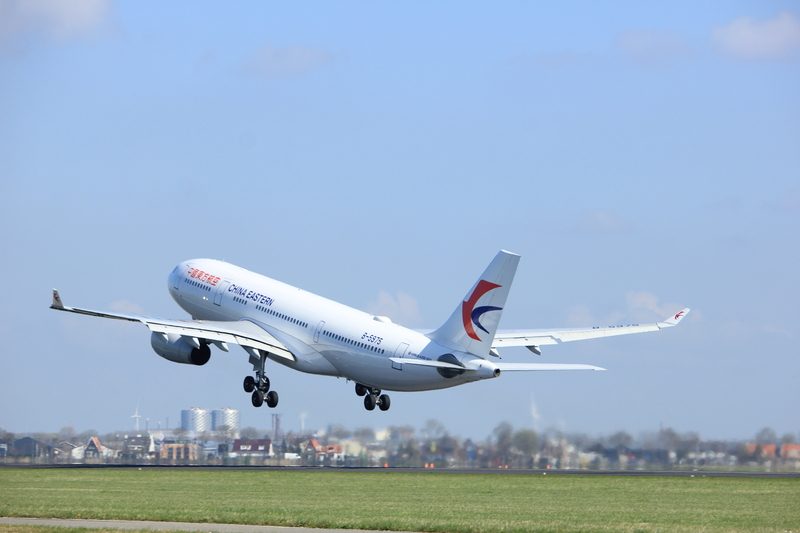
The partnership angle strengthens that logic further. All five routes will sit inside Etihad’s joint venture with China Eastern Airlines, which already gives the airline broader connectivity between the UAE and Chinese gateways beyond Etihad’s own metal. Etihad has also linked the announcement to its cargo joint venture with SF Airlines, which underscores that this expansion is designed to support freight flows as much as passenger growth.
More than a headline-grabbing expansion
The easiest version of this story is to call it a major capacity increase, and that is true. But the more useful reading is that Etihad is building structure, not just volume.
A single daily Beijing Daxing (PKX) service is a presence. A six-city mainland China network from Abu Dhabi (AUH) is something else entirely. It gives Etihad multiple entry points into the Chinese market, better schedule utility for connecting traffic, and a more credible position in one of the world’s most important trade and aviation corridors.
That is what makes the announcement more significant than the headline count of five new routes. The airline is broadening its exposure across several different Chinese economic regions at once, and it is doing so with a right-sized long-haul aircraft rather than a larger-gauge gamble.
Bottom Line
Etihad’s China push is not just bigger. It is smarter.
By March 2027, the airline will have turned Abu Dhabi Zayed International Airport (AUH) into a six-point mainland China gateway built around Beijing Daxing (PKX), Shanghai Pudong (PVG), Guangzhou (CAN), Chengdu Tianfu (TFU), Hangzhou Xiaoshan (HGH), and Shenzhen Bao’an (SZX). The decision to run the expansion on Boeing 787-9 aircraft gives Etihad product consistency and operational discipline, while the route mix shows clear attention to finance, manufacturing, technology, e-commerce and cargo flows.
For industry readers, the key takeaway is simple: this is not a scattershot network add. It is a strategic redesign of Etihad’s China footprint.
Keep reading FlyMag
Get the Daily Brief in the morning or the Route Watch weekly recap on Fridays. Or both.