Etihad Airways has officially launched nonstop service between Abu Dhabi International Airport (AUH) and Charlotte Douglas International Airport (CLT), giving the airline a sixth destination in the United States and marking the first scheduled Middle East link in Charlotte’s history.

The route is significant on its own, but it matters even more in strategic terms. For Etihad, Charlotte is not simply another dot on the U.S. map. It is a new southeastern gateway that strengthens the airline’s access to one of the fastest-growing regions in the United States while feeding traffic into Abu Dhabi and beyond.
That is what makes this launch important. Etihad is not just adding a city. It is widening the shape of its North American network.
Read our stories in your inbox
Two aviation newsletters. Zero fluff.
Charlotte Is An Unusual But Smart Choice
At first glance, Charlotte may not seem like the most obvious U.S. market for a Gulf carrier.
It does not have the global profile of New York JFK (JFK), Chicago O’Hare (ORD), or Washington Dulles (IAD). But that is also what makes it interesting. Etihad is clearly not relying only on local Abu Dhabi demand to make this route work. The airline is betting on Charlotte as a strong origin market with a broad catchment and useful onward appeal for passengers heading to India, the Gulf, and wider Asia.
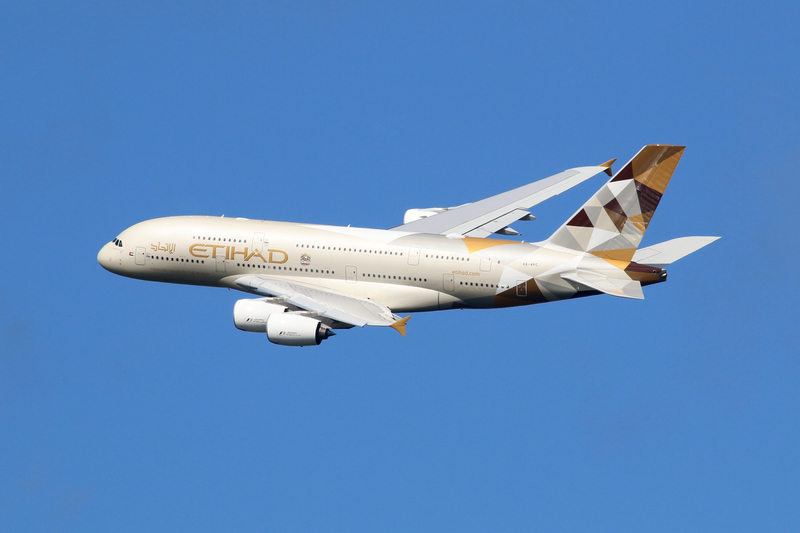
That fits the way Etihad’s network works. The airline’s U.S. services are not mainly about local United Arab Emirates traffic. They are built around transfers over Abu Dhabi. Charlotte’s value lies in how well it can feed that structure.
The Airbus A350-1000 Gives The Route Real Weight
One of the most notable details is the aircraft.
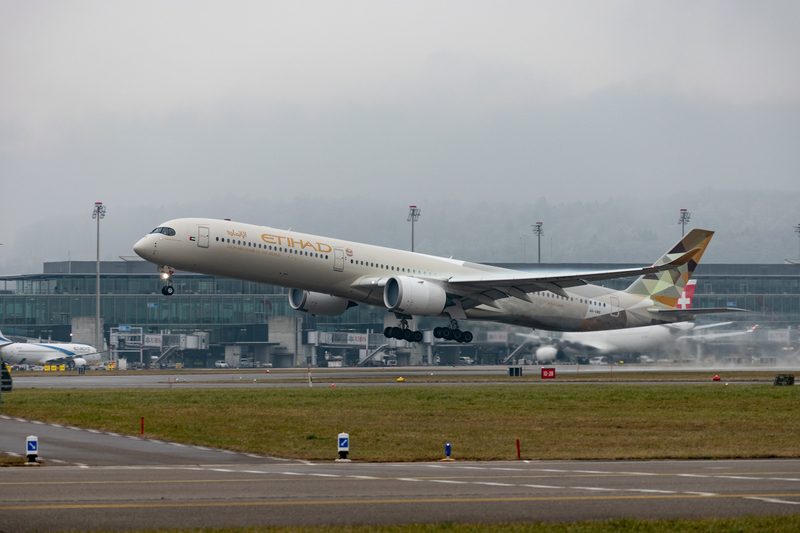
Etihad has launched the service with the Airbus A350-1000, a 371-seat widebody that gives Charlotte its first scheduled A350-1000 service. That is a meaningful upgrade in both product and scale. It also represents a much stronger opening statement than originally expected when the route was first discussed with smaller Boeing 787 planning.

The A350-1000 is one of the most advanced long-haul aircraft in Etihad’s fleet. It brings stronger fuel efficiency, quieter operation, and a much more modern onboard product than older-generation widebodies. For a market like Charlotte, that matters because the first impression of a new international route is shaped heavily by the aircraft experience.
In the front of the cabin, Etihad is offering lie-flat Business Class suites with direct aisle access. In Economy, the A350-1000 brings a more contemporary cabin, improved connectivity, and the sort of long-haul comfort passengers increasingly expect on a 13-to-15-hour flight.
This Route Is Also About Cargo
The passenger side naturally gets the headlines, but the cargo angle is important too.
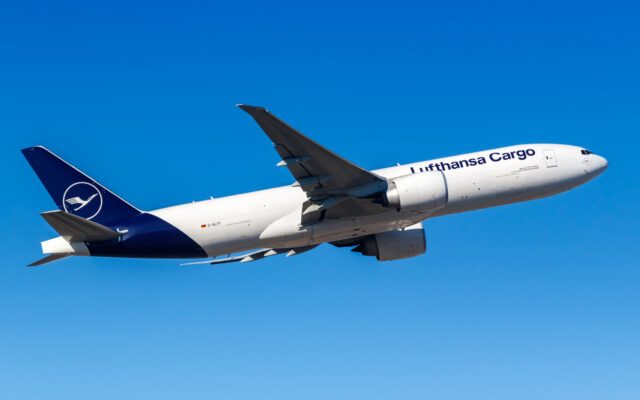
Charlotte Douglas International Airport (CLT) is a major commercial gateway in the southeastern United States, and nonstop service to Abu Dhabi (AUH) opens up another channel for freight as well as travelers. That is especially relevant for a long-haul route operated by a large twinjet like the A350-1000, which gives the airline room not just for passengers and baggage, but also for meaningful belly cargo.
For Etihad, cargo has always been part of the network equation. On a route like Charlotte, that gives the service more depth than a simple leisure or business passenger market alone.
The Southeast Finally Gets A More Direct Etihad Link
The regional angle matters.
Etihad has had a U.S. presence for years, but its network has historically leaned toward the Northeast, Midwest, and key coastal gateways. Charlotte changes that. It gives the airline a much firmer foothold in the Southeast, where the combination of business activity, global supply chains, and growing population makes the market increasingly attractive for long-haul carriers.
That is why the route matters beyond North Carolina itself. CLT is not only a local destination. It is a large regional gateway, and Etihad now has a way to tap into that geography more directly.
This Fits Etihad’s Rebuilt U.S. Strategy
The Charlotte launch also says something broader about the airline itself.
A decade ago, Etihad’s U.S. expansion story was often associated with overreach. Today, the approach looks more deliberate. The airline is still growing, but it is doing so in a way that appears more selective and more closely tied to where Abu Dhabi’s connecting flows are strongest.
Charlotte fits that newer pattern. It is ambitious, but it is not random. It adds another U.S. market with strong onward potential into India and Asia, and it does so with an aircraft that allows Etihad to present a premium product while still keeping modern operating economics on its side.
Bottom Line
Etihad’s launch of nonstop Abu Dhabi (AUH)–Charlotte (CLT) service is a notable development not just because it adds another U.S. route, but because of what it says about the airline’s current strategy.
Charlotte becomes Etihad’s sixth U.S. destination and the carrier’s first in North Carolina, while the Airbus A350-1000 gives the route a premium, high-capacity platform from day one. More importantly, the service strengthens the airline’s access to the southeastern United States and gives passengers and cargo another direct bridge into Etihad’s broader network across the Middle East, India, and Asia.
For aviation readers, the key takeaway is straightforward: this is not just a new long-haul route. It is a carefully chosen expansion step that shows Etihad still sees room to grow in the United States, but now with much sharper discipline than before.
Keep reading FlyMag
Get the Daily Brief in the morning or the Route Watch weekly recap on Fridays. Or both.