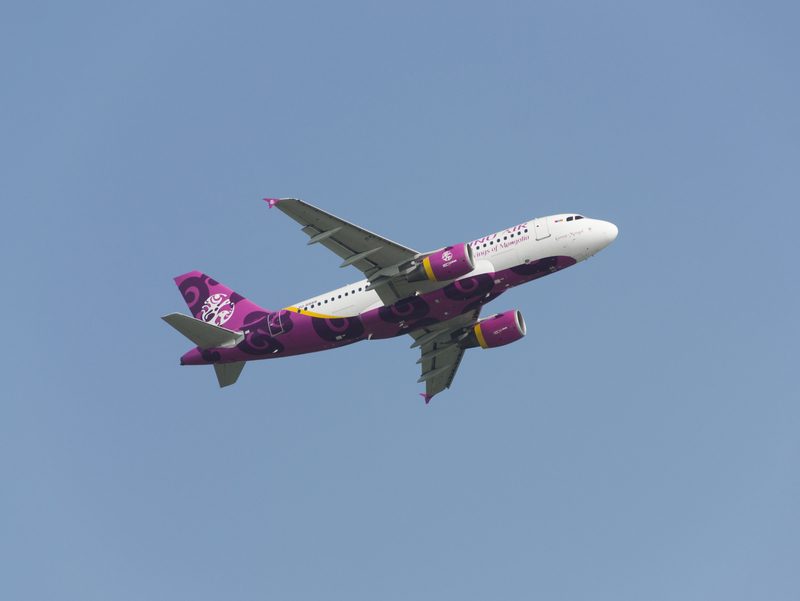
Mongolia’s fast-growing carrier Hunnu Air is looking to add another Embraer jet via lease as it pushes beyond the limits of its current fleet and tests longer regional markets from **Chinggis Khaan International Airport (UBN).

Key Takeaways:
-
Hunnu Air is in talks with aircraft lessors to lease one more Embraer jet later in 2026.
Read our stories in your inbox
Two aviation newsletters. Zero fluff.
-
The airline currently flies two Embraer E190s and two Embraer E195-E2s, with the newer E2s delivered recently.
-
Next on the route map: scheduled flights to New Delhi (DEL) and Tashkent (TAS) in 2026, building demand first through charters.
What’s changing
Hunnu Air’s leadership says the carrier has outgrown a “make-do” approach to capacity. The airline has already added the E195-E2 to stretch range and improve economics, and it now wants a fifth Embraer jet to increase frequency and open up additional city pairs.
While the carrier’s current international flying includes service to Beijing (PKX) and Almaty (ALA), it has also been using charter flying as a low-risk way to prove demand before committing to a scheduled launch.
Why it matters
For a smaller airline in a market dominated by foreign carriers, one additional jet can be meaningful: more reliable coverage on core routes, room to try new destinations, and better resilience when maintenance or operational disruptions hit.
Hunnu Air says its share of Mongolia’s international market has grown notably in the past few years—momentum it’s trying to protect by expanding cautiously, route by route.
What’s next
Beyond jets, Hunnu Air is also planning to add four Cessna aircraft in 2026 (two 208Bs and two 408 SkyCouriers) to support shorter domestic and regional needs, while it phases out an ATR turboprop that’s reportedly grounded due to spare-parts constraints.
Bottom Line
Hunnu Air’s plan is simple: add one more Embraer to stabilize the network and turn “tested-by-charter” markets like DEL and TAS into scheduled routes—without overextending a still-small fleet.

Keep reading FlyMag
Get the Daily Brief in the morning or the Route Watch weekly recap on Fridays. Or both.