Mongolia’s Hunnu Air is studying a much more ambitious fleet strategy as it looks beyond its current Northeast and Central Asian network and begins laying the groundwork for Europe. The airline is now considering leasing two Airbus A321LRs and two Airbus A330-200s, a potential combination that would mark a major shift for a carrier that today operates Embraer regional jets out of Ulaanbaatar.

For an airline of Hunnu’s size, this is not a minor fleet discussion. It is the kind of decision that would fundamentally change the scale, range, and commercial positioning of the business. More importantly, it would determine whether the airline’s long-discussed European aspirations become a practical next step or remain a future possibility.
What makes the story especially interesting is that Hunnu is not simply talking about adding bigger aircraft. It is weighing two very different tools for two very different types of expansion: the long-range Airbus A321LR for thinner long-haul routes, and the Airbus A330-200 for markets that would require more seats, more cargo capacity, and greater operational flexibility.
Read our stories in your inbox
Two aviation newsletters. Zero fluff.
The Fleet Plan Would Transform Hunnu Air’s Network Reach
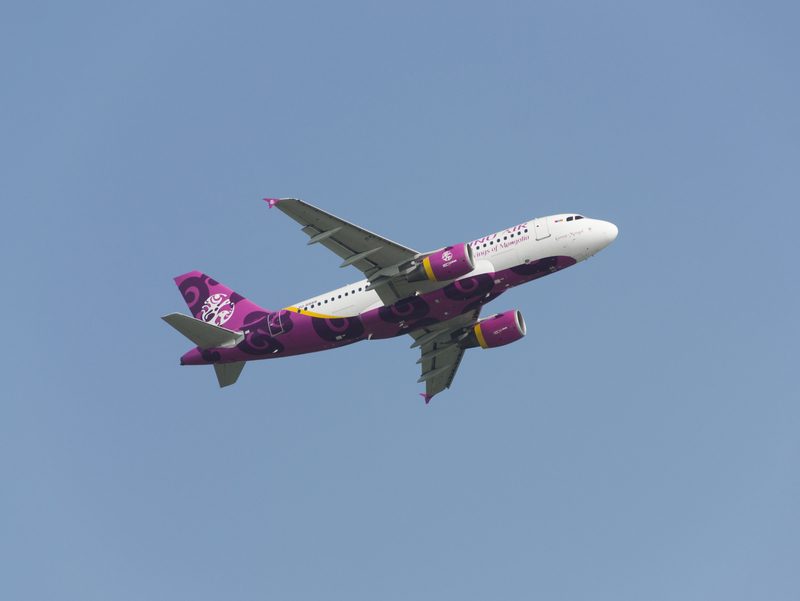
At present, Hunnu Air is a regional operator centered on Chinggis Khaan International Airport (UBN) in Ulaanbaatar. Its current fleet consists primarily of Embraer E190s and E190-E2s, aircraft well suited to short- and medium-haul flying into markets such as Beijing Daxing International Airport (PKX), Tokyo Haneda Airport (HND), and Almaty International Airport (ALA).
That is a very different operating model from one built around Airbus long-haul jets.

The Embraer E190-E2 is a modern regional aircraft with efficient economics on thinner routes, but it is not a Europe aircraft in the way an A321LR is. Likewise, an A330-200 would represent an even bigger step, moving Hunnu into widebody territory with a completely different set of demands around crew training, maintenance support, route economics, and commercial risk.
In simple terms, this would not just be a fleet expansion. It would be a new chapter in the airline’s development.
Why The Airbus A321LR Makes Sense For A Small Carrier With Big Ambitions
If Hunnu Air does move into Europe, the Airbus A321LR is the most logical place to start.
The A321LR is one of the most important aircraft in long-thin route development today. It combines the economics of a narrowbody with true long-range capability, allowing airlines to open intercontinental routes that would be difficult to justify with a larger twin-aisle jet. For a carrier based in Ulaanbaatar, that matters enormously.
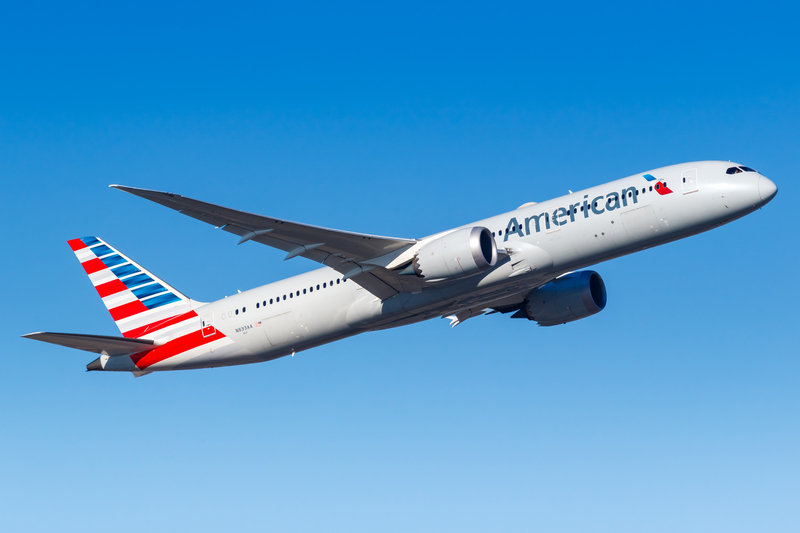
An A321LR would give Hunnu a way to test European markets from Chinggis Khaan International Airport (UBN) without taking on the full risk of a widebody operation. That is especially relevant if the airline is considering cities such as Berlin Brandenburg Airport (BER) and Budapest Ferenc Liszt International Airport (BUD), both of which have been identified as possible future destinations.
These are not obvious high-volume trunk routes in the way that London Heathrow Airport (LHR), Frankfurt Airport (FRA), or Paris Charles de Gaulle Airport (CDG) might be. They are more targeted opportunities, the kind of markets where a long-range narrowbody can succeed if demand is strong enough but not yet widebody-deep.
For a relatively small airline, that is precisely where the A321LR can be most powerful.
The A330-200 Would Be A Bigger Statement And A Bigger Risk
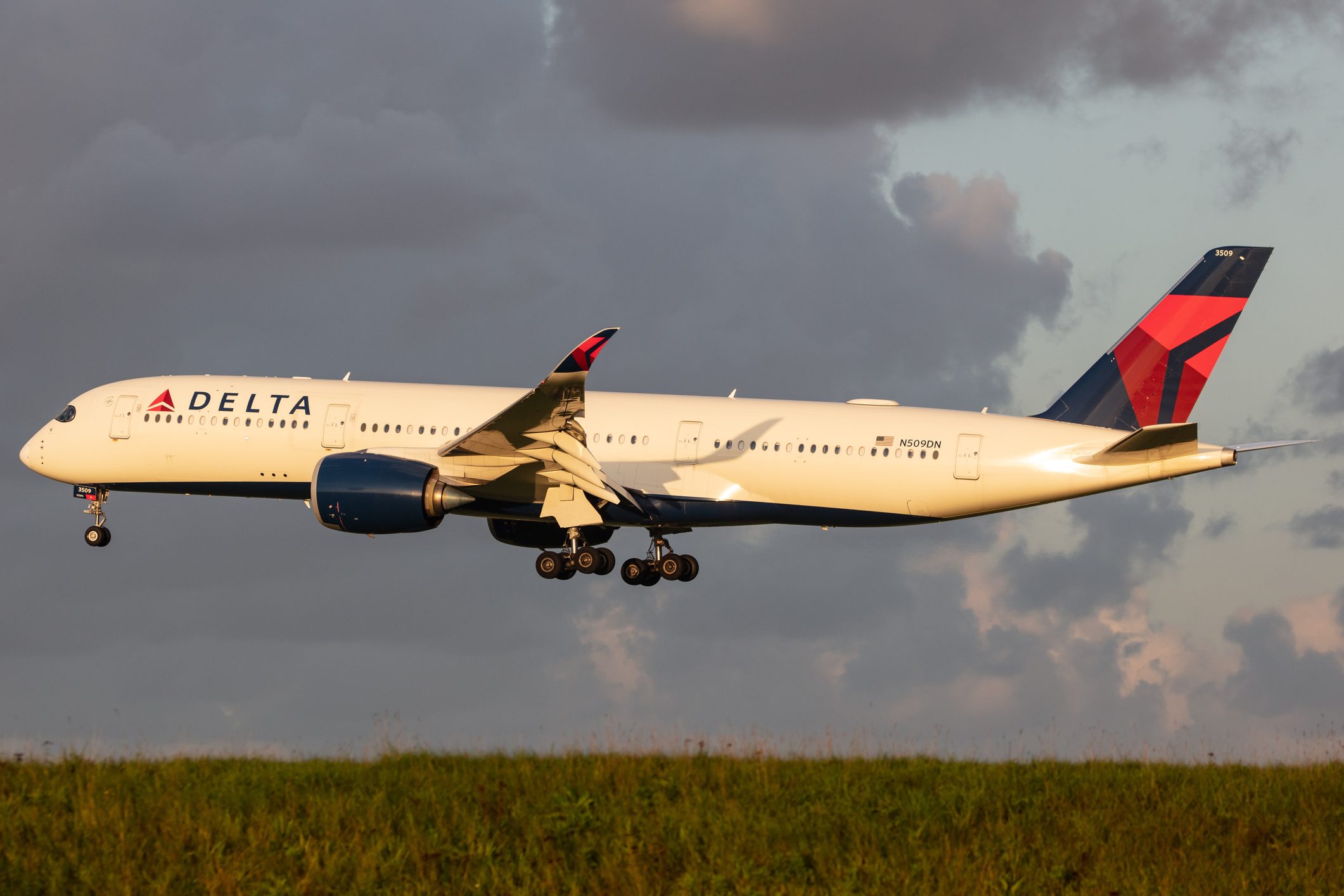
The Airbus A330-200 is a very different proposition.
Where the A321LR is about opening thinner long-haul routes efficiently, the A330-200 is about scale. It offers far greater seat capacity, stronger cargo capability, and the operational profile of a true long-haul widebody. For Hunnu Air, adding two A330-200s would send a clear signal that the airline is not merely experimenting with Europe, but seriously considering a broader long-haul presence.
That said, the economics become far more demanding.
A widebody needs more traffic, stronger yields, and deeper financial resilience than a long-range narrowbody. It also requires much more infrastructure around it, from engineering support to spares planning to long-haul crew capability. For a carrier whose current operation is built around small regional jets, the step up to an A330-200 would be substantial.
There is also the question of route fit. An A330-200 could make sense on higher-volume Europe sectors, or potentially on future services beyond Europe, but it introduces a much greater threshold for success. If the market is not there year-round, the risk becomes obvious very quickly.
That is why the A330 side of the plan is the more consequential part of the story.
Berlin And Budapest Reveal The Shape Of Hunnu’s Thinking
The mention of Berlin Brandenburg Airport (BER) and Budapest Airport (BUD) is revealing.
Neither airport is the first city most observers would name for a Mongolian airline’s initial European push, which is exactly why they stand out. They suggest Hunnu is not necessarily chasing the most obvious mega-hub strategy, but rather looking for markets where competition may be manageable and traffic flows may be more specialized.
That could include tourism, visiting-friends-and-relatives demand, business travel tied to investment links, and potentially traffic flows that are underserved by nonstop service today. For an airline based at Ulaanbaatar (UBN), that kind of route selection can make sense. Competing head-on in the most crowded Western European long-haul markets would be far more difficult than identifying cities where nonstop service itself becomes the differentiator.
Berlin and Budapest also fit the logic of an A321LR-led opening phase better than a large-scale widebody rollout. They are the type of routes where an airline might prefer to build cautiously rather than arrive oversized.
Hunnu Air Is Still Being Careful Not To Overcommit
For all the intrigue around the Airbus discussions, one point should be emphasized: no final leasing decisions have been made.
That is important. Hunnu Air’s commercial leadership has reportedly stressed that any fleet additions will depend on market demand, financial sustainability, and broader strategic priorities. That language matters because it shows the airline is still in an evaluation phase rather than a committed growth phase.
In other words, this is not a done deal. It is a serious study.
That caution is sensible. For a smaller airline, the wrong fleet move can reshape the company just as dramatically as the right one. Long-haul aircraft do not just create opportunity. They also create fixed costs, execution risk, and pressure to build a commercial platform quickly enough to support them.
Hunnu appears to understand that.
The Shift From A320 Thinking To A321LR And A330-200 Thinking Is Significant
What makes this latest development even more interesting is that earlier in 2026, Hunnu Air had spoken more modestly about studying two narrowbodies, most likely Airbus A320-200s, for delivery in late 2027 or early 2028.
That earlier plan suggested a more conservative upgauge from the Embraer E190-E2, with the airline looking for at least 180 seats rather than jumping immediately into long-haul range capability. Moving from that line of thinking to potentially considering A321LRs and A330-200s shows that Hunnu’s planning horizon may now be extending much further than simple regional growth.
The difference is substantial. An A320 would mainly support larger-capacity medium-haul flying. An A321LR signals long-haul intent. An A330-200 signals an airline that is at least exploring widebody international relevance.
That progression alone is worth paying attention to.
Wet-Lease Strategy And IOSA Certification Are Not Minor Details
Two other pieces of the puzzle matter here: wet-leasing and IOSA certification.
Hunnu has reiterated that it is looking at wet-lease partnerships to help manage seasonal demand. That is a pragmatic move. For an airline with a highly seasonal traffic profile, wet-leasing can provide flexibility without forcing the carrier to own or lease too much capacity year-round.
That becomes especially important if the airline enters Europe, where seasonality can be sharp and demand patterns less predictable for a new entrant.
At the same time, the airline is working toward IATA Operational Safety Audit certification. For any airline with international ambitions, and especially for one aiming at Europe, IOSA is more than a box-ticking exercise. It is a credibility marker. It matters for commercial partnerships, wet-lease relationships, and broader acceptance in the international market.
Together, those two elements suggest Hunnu is not just thinking about aircraft. It is also thinking about the institutional groundwork needed to support a more international operating profile.
There Is Even A Cargo Angle Emerging
One of the more overlooked details in the discussion is Hunnu’s reported consideration of an Airbus A330-200P2F around 2028.
That would move the airline toward dedicated freighter operations, which is a meaningful expansion of scope. Passenger growth into Europe would already be a major undertaking. Adding cargo would suggest Hunnu sees broader strategic value in larger Airbus aircraft beyond passenger flying alone.
For Mongolia, that is not insignificant. The country’s geography and trade profile create obvious interest in air freight connectivity, especially if the airline believes it can carve out a role in niche cargo flows across Asia and beyond.
It is still an early-stage idea, but it shows Hunnu may be thinking in wider network terms than passenger service alone.
Bottom Line
Hunnu Air’s consideration of two Airbus A321LRs and two Airbus A330-200s is one of the clearest signs yet that the Mongolian carrier is thinking seriously about Europe. The A321LR would give it a lower-risk path into long, thinner markets from Chinggis Khaan International Airport (UBN), while the A330-200 would offer the scale and range for a much more ambitious long-haul step.
But the key word remains “consideration.” The airline has not finalized any leases, and management is still tying any fleet move to demand, financial sustainability, and strategic fit. That is the right posture for a carrier of this size.
For now, the story is not that Hunnu Air is definitely heading to Berlin Brandenburg Airport (BER) or Budapest Airport (BUD). It is that the airline is studying aircraft capable of making that leap possible, and that alone makes it a carrier worth watching over the next two years.
Keep reading FlyMag
Get the Daily Brief in the morning or the Route Watch weekly recap on Fridays. Or both.