Delta Air Lines will remove four daily domestic routes from its schedule late in 2026, cutting two New York links and two short-haul services from Las Vegas.

The changes affect New York LaGuardia (LGA)–Tulsa (TUL), Las Vegas (LAS)–Orange County (SNA), LAS–San Diego (SAN) and New York Kennedy (JFK)–Milwaukee (MKE). All four are Delta Connection routes flown with 70- or 76-seat regional jets.
A review of Delta’s current published schedule shows the following final operating dates:
Read our stories in your inbox
Two aviation newsletters. Zero fluff.
- New York LaGuardia–Tulsa: November 6, 2026
- Las Vegas–Orange County: November 8, 2026
- Las Vegas–San Diego: November 8, 2026
- New York Kennedy–Milwaukee: December 18, 2026
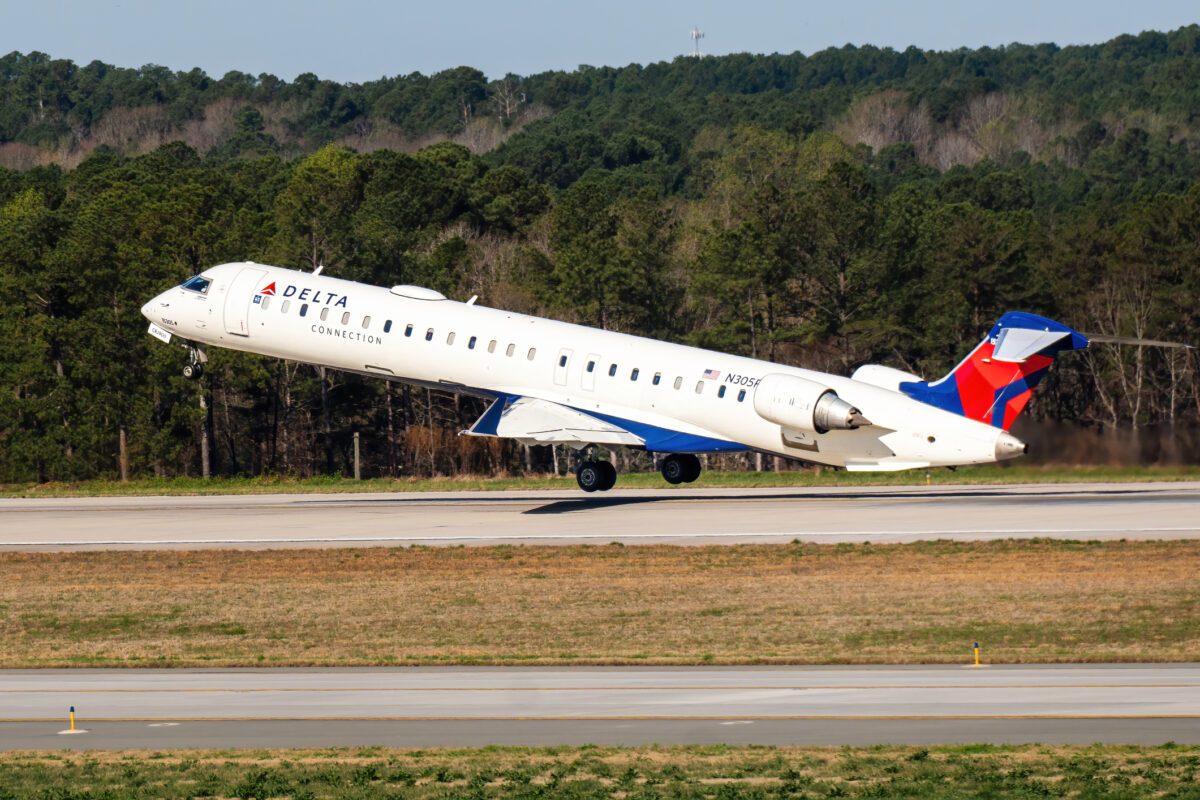
Each market is currently scheduled at one daily round trip. The Tulsa route uses the Embraer E175, as do the two Las Vegas services operated by SkyWest Airlines. JFK–MKE is assigned the Bombardier CRJ900.
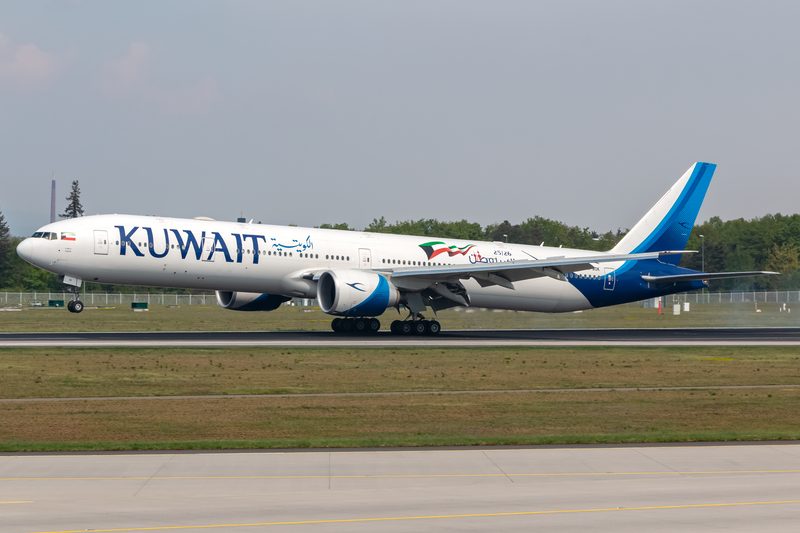
Tulsa Route Lasted Just Over Two Years
Delta launched LGA–TUL on September 4, 2024, presenting it as a year-round addition to its New York network. At the time, Tulsa International Airport said an average of 116 passengers traveled in each direction between Tulsa and New York every day, including connecting itineraries.
The nonstop was introduced as a once-daily service using a 76-seat E175. Its withdrawal means Delta’s operation will have lasted about 26 months.
The route’s removal does not leave Tulsa without a nonstop to New York. American Airlines also serves LGA–TUL, and the airport continues to list LaGuardia among its nonstop destinations. Delta customers, however, will lose the direct access to the carrier’s LGA network that the airline emphasized when it opened the route.
The E175 is among Delta Connection’s largest regional aircraft. Delta’s published E175 layouts seat either 70 or 76 passengers, including 12 First Class seats and 20 Delta Comfort seats. Its two-by-two cabin and three-class configuration make it better suited to a roughly three-hour sector such as Tulsa–New York than the smaller regional jets that once dominated comparable spoke routes.
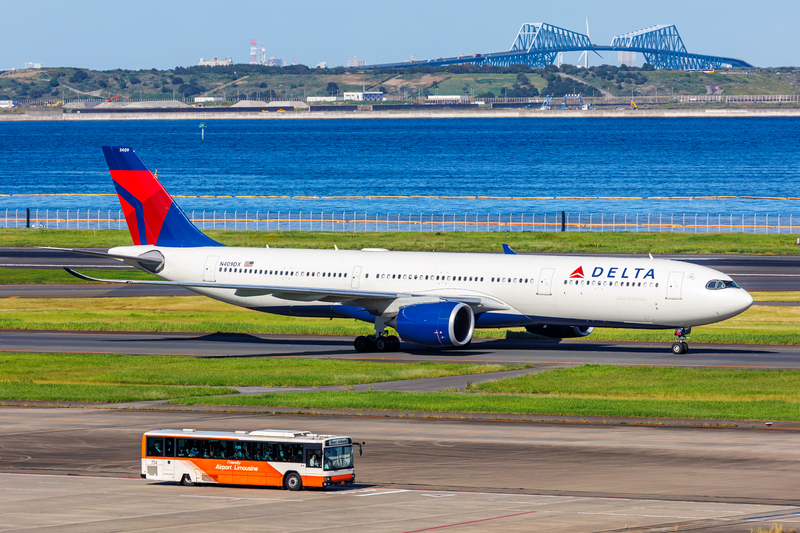
Delta Pulls Back From Short-Haul Las Vegas Flying
The Orange County and San Diego cuts remove two unusual point-to-point routes from Delta’s Las Vegas operation. Neither Southern California airport is a Delta hub, while both markets are short enough to face competition from driving as well as dense airline schedules.
LAS–SNA covers approximately 226 miles, with scheduled block times of about 75 minutes. The Orange County airport currently lists six airlines in the Las Vegas market, including Delta, on its nonstop destination page. LAS–SAN is only slightly longer, and Las Vegas was among San Diego’s five most popular destinations during the 2026 Independence Day period, according to the airport authority.
Both Delta routes use SkyWest-operated E175s. Although the aircraft offers a competitive premium cabin, a 70- or 76-seat regional jet has a higher seat cost than the mainline narrowbodies used extensively by other operators in these high-volume markets. Delta also has limited connecting utility at LAS compared with the feed available at its core hubs.
The November withdrawal does not amount to a complete disappearance from either market. Delta has already included San Diego and Orange County in its CES 2027 Las Vegas flying program. Additional SAN service is scheduled around the event’s principal travel dates in early January, while Delta also identifies SNA among the point-to-point markets supporting the conference schedule.
That distinction indicates Delta sees value in the routes when Las Vegas demand is concentrated around a major event, even as it removes the cost of operating them every day through the rest of the winter.
Milwaukee Keeps Delta Service to LaGuardia
JFK–MKE will remain in the schedule longer than the other three routes, ending on December 18. Delta currently flies the route with a CRJ900, generally offering 70 or 76 seats across First Class, Delta Comfort and Main Cabin.
Delta introduced the JFK service in June 2022. The route initially used a 69-seat Bombardier CRJ700 and was intended to complement the carrier’s established Milwaukee–LaGuardia operation. In its announcement, Milwaukee Mitchell International Airport highlighted JFK’s domestic and international connecting opportunities as a principal benefit of the new flight.
The move therefore reduces Delta’s New York schedule from Milwaukee without removing it. MKE continues to receive Delta service to LGA, and the airport’s nonstop destination list shows the carrier serving both New York airports before the December change.
LaGuardia is the more convenient endpoint for many local New York trips and supports Delta’s dense domestic network. JFK, however, provides a broader set of long-haul connections. Removing the JFK flight narrows the number of one-stop international itineraries that Delta can offer from Milwaukee without routing passengers through Atlanta, Boston, Detroit or Minneapolis.
The CRJ900 now assigned to the route is a larger derivative of the aircraft used when the service began. Delta’s CRJ900 configurations have up to 76 seats, including 12 in First Class and 20 in Delta Comfort. With a published range of 1,784 miles, the aircraft has ample performance for the roughly 750-mile trip between Milwaukee and New York.
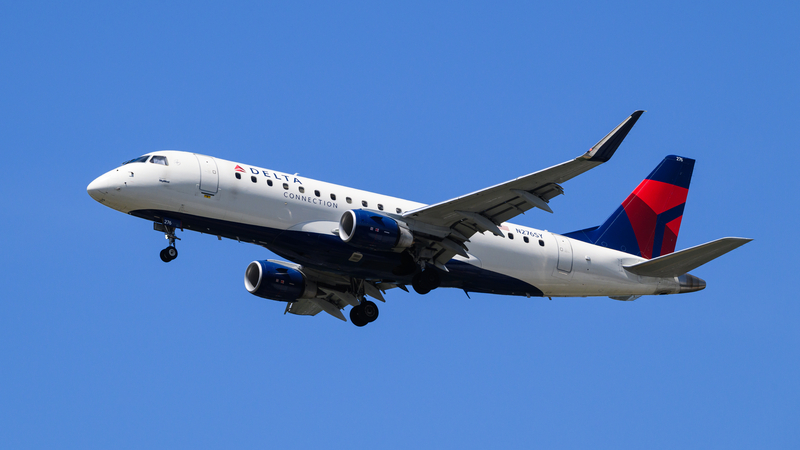
Four Regional Aircraft Rotations Leave the Schedule
The changes collectively remove four daily round trips operated with large regional jets. They affect different types of markets: a relatively new hub spoke at LaGuardia, two short Las Vegas point-to-point routes and one of Delta’s two New York links from Milwaukee.
They do not represent a broad retreat from either New York or Las Vegas. Delta continues to operate substantial networks at LGA and JFK, while its Las Vegas schedule expands sharply around major events. For CES 2027, the airline plans more than 120 peak-day LAS flights, including long-haul additions from Hong Kong and Taipei and extra domestic capacity from its principal hubs.
The cuts instead concentrate on routes where Delta either duplicates another New York gateway or lacks the connecting depth that normally supports regional-jet flying. The E175 and CRJ900 capacity released by the changes can be returned to markets where a Delta hub supplies stronger connecting flows or where event demand supports higher fares.
Bottom Line
The Las Vegas decisions show Delta treating selected nonhub routes as demand-responsive flying rather than permanent network commitments. San Diego and Orange County can support extra service when CES produces a concentrated surge of corporate traffic, but their everyday economics are more difficult when Delta must compete in dense, short-haul markets without a large LAS connecting bank. Watch whether the carrier repeats that model around future conventions and major sporting events instead of restoring year-round service.
In New York, the implications differ by market. Tulsa retains a nonstop to LaGuardia through American Airlines, while Milwaukee keeps Delta’s LGA service after JFK ends. Delta is therefore giving up frequencies and some connectivity rather than abandoning either city. The broader signal is that even 70- and 76-seat aircraft are being allocated selectively: a premium regional jet can open a thinner market, but it does not guarantee that a route will survive when the same aircraft and crew can produce more value elsewhere in the network.
Keep reading FlyMag
Get the Daily Brief in the morning or the Route Watch weekly recap on Fridays. Or both.