ITA Airways will launch nonstop flights between Rome Fiumicino (FCO) and Caracas (CCS) on March 30, 2027, restoring a direct air link between Italy and Venezuela.
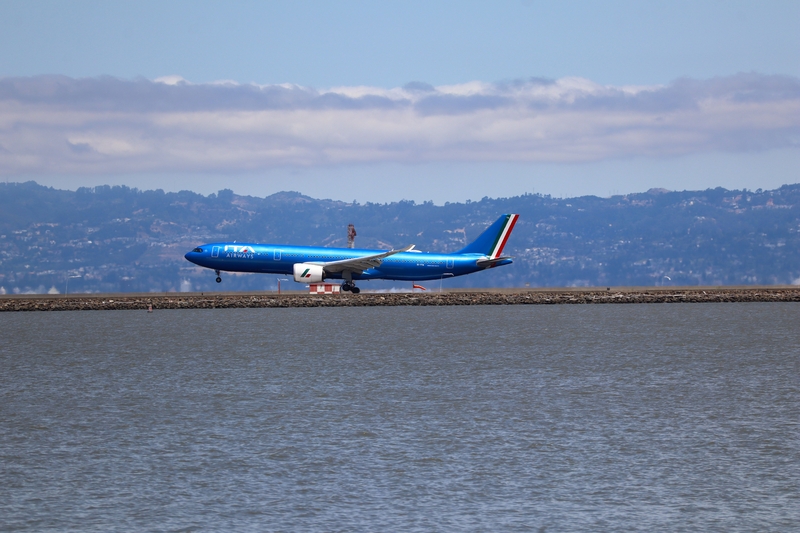
The airline will operate the route three times weekly on Tuesdays, Thursdays and Sundays with an Airbus A330-900. Caracas has already appeared in ITA Airways’ official press release directory and on the carrier’s Rome-Caracas booking page.
The launch will give ITA Airways a fourth online city in South America, joining Buenos Aires, São Paulo and Rio de Janeiro. The carrier’s existing South American operation is concentrated on markets with substantial traffic flows linked to Italy, a profile Caracas also fits because of Venezuela’s large Italian and Italian-descendant community.
Read our stories in your inbox
Two aviation newsletters. Zero fluff.
Three Weekly Flights With the A330-900
ITA Airways has not yet published flight numbers or departure and arrival times, but the Tuesday, Thursday and Sunday pattern will spread the service relatively evenly across the week. That should support both local Rome-Caracas demand and connections over FCO from ITA’s domestic and European network.

The airline lists the direct distance between FCO and CCS at approximately 8,335 kilometers, or 5,179 miles. ITA’s Airbus A330-900 specification gives the aircraft a range of 12,000 kilometers at full load, putting Caracas comfortably within the twinjet’s published capability.
ITA configures the A330-900 with 291 seats across three cabins: 30 in Business, 24 in Premium Economy and 237 in Economy. The Economy total includes 36 Comfort Economy seats, while the Business cabin uses fully flat Thompson Vantage XL seats with direct aisle access.
That cabin mix gives ITA a useful balance for the route. The substantial Economy cabin addresses visiting-friends-and-relatives and leisure traffic, while Business and Premium Economy provide higher-yield inventory for corporate travel, institutional traffic and passengers making longer journeys through Rome.
At 291 seats, three weekly round trips would provide about 90,800 one-way seats across both directions over a full 52-week period. That closely matches the Venezuelan government’s statement that the service would make more than 90,000 seats available.
Agreement Signed in Rome
The route follows a memorandum of understanding signed on October 13, 2026, by ITA Airways Chief Executive and General Manager Joerg Eberhart and Venezuela’s ambassador to Italy, María Elena Uzzo Giannattasio. The agreement was signed at the Venezuelan Embassy in Rome following discussions involving aviation authorities and diplomatic representatives.
Venezuela’s Ministry of Foreign Affairs and International Trade described the agreement as the restoration of air connectivity between the two countries. First Vice Minister Oliver Blanco said the route would support tourism, commerce and links between the Italian and Venezuelan communities.
Eberhart said ITA was pleased to return to Venezuela with three weekly frequencies from March 30. Uzzo characterized the flight as a bridge between the two countries, pointing to demand among Italian-Venezuelan families that have been waiting for a direct service.
The agreement is the result of a longer bilateral effort. In April 2026, Venezuelan and Italian officials discussed restoring Rome-Caracas flights as part of a broader agenda covering transport, infrastructure and commercial cooperation. The two sides subsequently established a coordination process intended to turn that objective into an operating route.

Another Step in ITA’s Long-Haul Development
Caracas expands an intercontinental network that has become increasingly important to ITA’s financial performance. In its 2025 commercial results, the airline said intercontinental revenue increased 9.1% as capacity grew 6.1%. Long-haul load factor reached 85.2%, with revenue per available seat-kilometer up 2.9%.
The carrier has consequently continued to add selective long-haul markets from FCO rather than building a broad network without regard to connecting demand. Caracas complements ITA’s established services to Argentina and Brazil and follows the addition of Santo Domingo for the 2026-2027 winter season.
Unlike a predominantly seasonal resort route, Caracas brings together several traffic segments: travel between families, corporate and government demand, Italian companies active in Venezuela, tourism and cargo. FCO also broadens the catchment beyond Rome by feeding passengers from across Italy and other European markets into the three weekly departures.
The A330-900 is central to that strategy. It offers ITA a lower-capacity alternative to the Airbus A350-900 while retaining a full three-cabin long-haul product and significant cargo capability. On a market being rebuilt after a lengthy absence of nonstop service, the 291-seat aircraft allows the airline to establish the route without committing the capacity of its larger widebody.
Bottom Line
The main beneficiaries will be passengers traveling between Venezuela and Italy who currently rely on an intermediate stop. A nonstop service to FCO also gives Venezuelan travelers access to ITA’s domestic network, making cities beyond Rome reachable through a single hub rather than a combination of separate itineraries.
For ITA Airways, Caracas is a measured long-haul expansion rather than a volume play. Three weekly frequencies and the 291-seat A330-900 create enough capacity to rebuild the market while preserving flexibility. The route’s mix of family, corporate, institutional and cargo demand may also make it less dependent on a single seasonal travel pattern.
The next details to watch are the flight timings, connectivity banks at FCO and whether the initial three-weekly schedule is maintained throughout the year. Those elements will determine how effectively ITA can draw traffic from outside Rome and whether Caracas develops into a stable addition to the airline’s South American portfolio.
Keep reading FlyMag
Get the Daily Brief in the morning or the Route Watch weekly recap on Fridays. Or both.