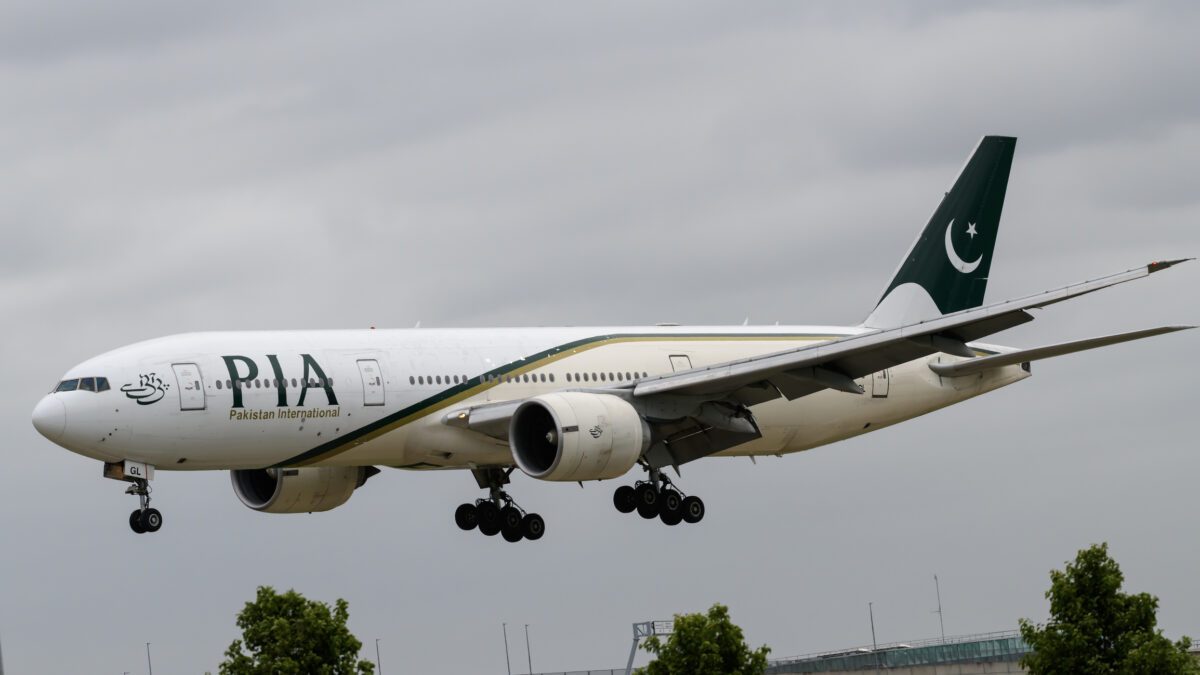
Pakistan International Airlines has resumed scheduled service between Islamabad (ISB) and Beijing Capital (PEK), restoring its nonstop link between the Pakistani and Chinese capitals after a seven-week interruption.
Flight PK854 operated on Friday, October 30, using Boeing 777-200ER AP-BMH. Flight-tracking records show that the aircraft left ISB at 9:51 a.m. local time, four minutes ahead of schedule, and arrived at PEK at 6:04 p.m., 26 minutes early.
The return flight, PK855, departed Beijing at 8:15 p.m., 20 minutes behind schedule, and reached Islamabad at 11:35 p.m. local time. The aircraft completed the round trip on October 30.
Read our stories in your inbox
Two aviation newsletters. Zero fluff.
PIA Schedules One Friday Round Trip
PIA is selling the route as a once-weekly Friday operation. The current timetable has PK854 departing Islamabad at 9:55 a.m. and arriving in Beijing at 6:30 p.m. The westbound PK855 is scheduled to leave PEK at 7:55 p.m. and arrive at ISB at 11:25 p.m.
The service covers about 2,440 miles, or 3,930 kilometers. Its weekly frequency makes it a limited-capacity operation, but the Friday timing gives PIA a consistent place in a market also served nonstop by Air China.
PIA last operated the route in early September before removing it from the schedule from September 12. The October 30 flight therefore marked a resumption after a relatively short seasonal break rather than the opening of a new station. Beijing remains listed among the airline’s international destinations.
The route links two government and commercial centers, with demand spread across official travel, education, business, family visits and organized tourism. A single weekly rotation will not provide the flexibility of a high-frequency business route, but it allows PIA to retain direct access to northern China without committing multiple aircraft days each week.
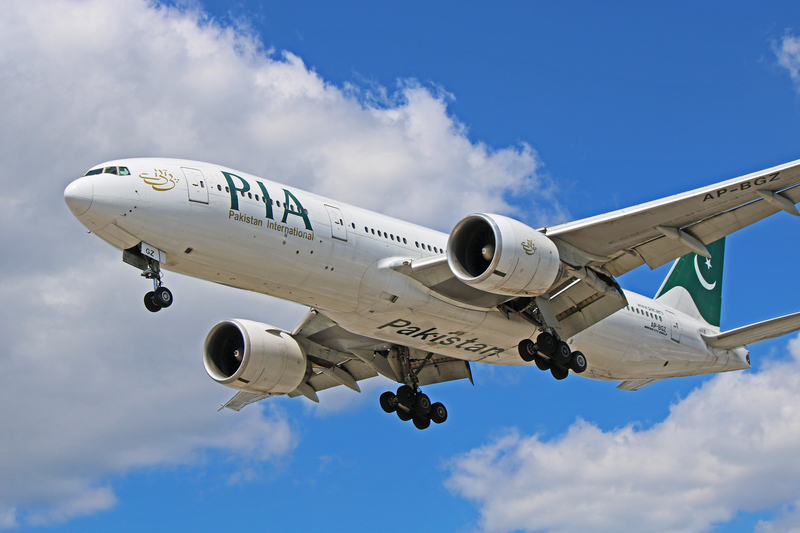
Boeing 777-200ER Handles the First Rotation
PIA used AP-BMH, one of its six Boeing 777-200ERs, for the first resumed service. The airline’s published fleet list also includes two 777-200LRs and four 777-300ERs, giving it three variants of the original 777 family.
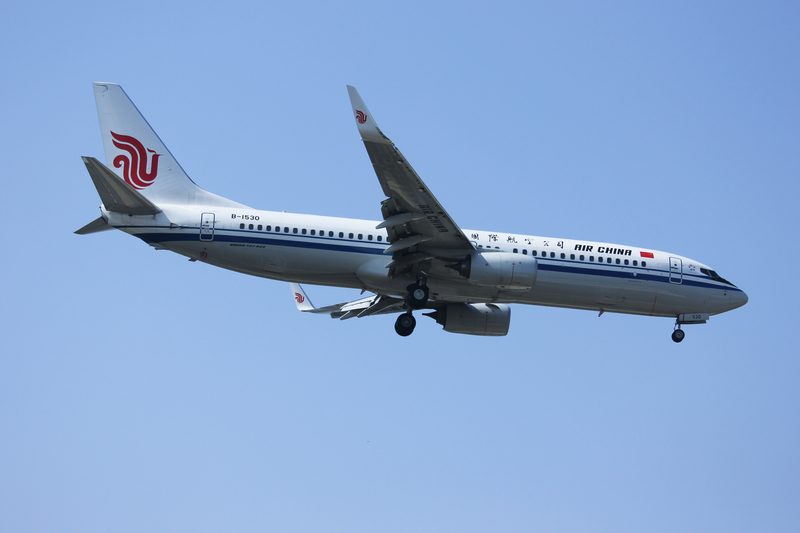
Air China’s Beijing-Pyongyang Return Reopens One Of Asia’s Most Unusual Air Corridors
PIA documentation lists AP-BMH with 25 business-class and 282 economy-class seats, for a total of 307 passengers. That is below the capacity of the airline’s larger 777-300ERs, making the -200ER a more measured choice for a route operating only once a week.
The aircraft has considerably more range than required for the Islamabad-Beijing sector. Boeing lists the 777-200ER with a range of up to 7,500 nautical miles, while the direct distance between ISB and PEK is about 2,120 nautical miles. On this route, the 777’s value lies less in range than in its combination of passenger capacity and lower-deck cargo volume.
PIA’s cargo division lists an indicative nine tons of available freight capacity for each 777-200ER in its fleet. The actual payload available on an individual flight depends on passenger bags, weather and operational requirements, but the widebody gives the airline meaningful space for commercial shipments alongside passenger traffic.
Equipment may vary during the winter timetable. PIA has both the 777-200ER and higher-capacity 777-300ER available for the route, allowing it to adjust capacity on selected dates without introducing another fleet type at Beijing.
Beijing Connections Extend the Route’s Reach
The nonstop sector is only part of PIA’s Beijing proposition. The airline’s published interline network identifies Air China and Shenzhen Airlines as partners offering onward access from Beijing to points elsewhere in China.
Air China is particularly relevant because PEK is its principal base. That gives PIA access to a much larger domestic distribution network than the Pakistani airline could support with its own aircraft, improving the commercial reach of a flight that arrives only once each week.
The connection process is not fully seamless for passengers continuing within China. PIA’s China travel advisory tells transfer passengers arriving from Pakistan to collect their checked baggage in Beijing and then travel to Terminal 3 for their domestic connection. PK854 arrives at Terminal 2, so passengers must allow time for entry formalities, baggage collection and the terminal transfer.
That requirement makes connection scheduling important, particularly with only one PIA flight available each week. A missed onward sector can be recovered through the partners’ larger domestic schedules, but disruption to the Islamabad flight itself cannot be absorbed by another PIA departure the following day.
Bottom Line
The restored flight gives PIA a small but strategically useful position in China. A weekly 777 rotation limits the airline’s exposure while preserving a direct link for traffic that values a nonstop itinerary more than schedule flexibility. The widebody also gives PIA a cargo opportunity that would be harder to capture with a narrowbody, particularly for shipments moving between Pakistan and northern China.
The route’s longer-term performance will depend on more than local Islamabad-Beijing demand. PIA needs its interline arrangements to convert PEK into a practical gateway to the rest of China, while keeping connection times and the Terminal 2-to-Terminal 3 transfer manageable. Strong partner feed could eventually justify additional frequency; without it, the route is likely to remain a specialized weekly operation shaped around group, student, government and visiting-friends-and-relatives traffic.
Aircraft assignment will be the clearest near-term indicator of demand. Regular use of the 307-seat Boeing 777-200ER would point to a cautious capacity strategy, while repeated deployment of the larger 777-300ER would suggest that passenger bookings or belly-cargo volumes are supporting an upgauge. Frequency growth would be the more significant step, because a second weekly rotation would materially improve the route’s usefulness for both local and connecting passengers.