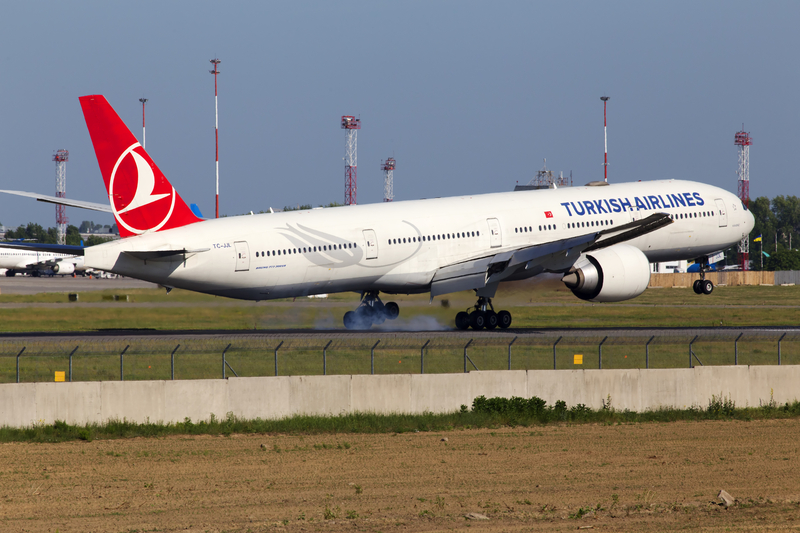
Turkish Airlines is moving to protect—and in some markets expand—its mainland China footprint for the Northern Hemisphere summer 2026 timetable, with higher weekly frequencies filed from its hub at Istanbul Airport (IST) to three of China’s most strategically important gateways: Beijing Capital International Airport (PEK), Guangzhou Baiyun International Airport (CAN), and Shanghai Pudong International Airport (PVG).
Operationally, the timing matters. March 29, 2026 aligns with the industry’s summer schedule changeover, when airlines “reset” long-haul patterns around demand peaks, slot availability, and aircraft rotation efficiency. For Turkish, the China strategy is also a connectivity play: IST is built around banked waves that pull traffic from Europe, the Middle East, North Africa, and Central Asia and redistribute it long-haul—an architecture that tends to reward higher frequency more than pure gauge.
What’s Actually Changing: Frequency, Not Just Headlines
The key takeaway for 2026 is that Turkish isn’t simply “adding flights”—it’s maintaining (and in one case stepping up again) a higher China cadence than earlier schedule filings suggested.
Read our stories in your inbox
Two aviation newsletters. Zero fluff.
On paper, the summer build looks like this:
From IST to PEK: 10 weekly
From IST to CAN: 10 weekly
From IST to PVG: 10 weekly from March 29, rising to 11 weekly from May 11, 2026
That last detail is the one professionals will care about. PVG isn’t just getting “more flying,” it’s getting a mid-season frequency bump—exactly the kind of tweak airlines use to match May/June demand ramps, corporate travel rebound patterns, and summer leisure peaks without overcommitting from day one.
Aircraft Strategy: Why the 777-300ER and 787-9 Pairing Makes Sense
Turkish’s filings show a familiar long-haul mix: the Boeing 777-300ER and Boeing 787-9.
That combination is doing two different jobs:
Boeing 777-300ER (77W): capacity and payload muscle
The 777-300ER remains one of the industry’s most proven high-capacity twins, prized for strong cargo economics and resilience on long stage lengths. On routes like IST–PEK (PEK) and IST–PVG (PVG), the 77W gives Turkish the ability to push volume when demand spikes—particularly valuable when premium demand and belly cargo don’t peak on the same curve. For network planners, that’s a margin-protection tool as much as it is a seat-count play.
Boeing 787-9 (789): frequency efficiency and right-sized risk
The 787-9 is about long-range efficiency and flexibility. Turkish can deploy it to hold frequency without forcing the same capacity commitment as the 77W on every rotation. In practical terms, the 789 helps sustain schedule breadth (and connection utility via IST) while keeping unit costs and trip costs aligned with shoulder-day demand.
Put simply: the 77W builds the ceiling; the 789 protects the floor. That’s a smart way to operate a market where demand can swing hard by day-of-week and season, and where schedule connectivity via IST is often the product—not just the seat.
Why This Matters Beyond China: Bilateral Rights and Competitive Positioning
This move also lands in a broader context: Turkey–China aviation liberalization has been trending toward higher permitted frequencies and broader access, giving carriers more room to scale schedules and add city pairs over time. For Turkish, that’s strategically aligned with how it competes: not by owning the biggest local China market, but by turning IST into the preferred transfer gateway for a wide catchment area.
There’s also an alliance angle. As a core member of Star Alliance, Turkish benefits when long-haul frequencies are dependable enough to support interline/codeshare logic, missed-connection recovery, and consistent itinerary construction for corporate travel buyers. Higher weekly frequency also reduces “schedule penalty,” especially on itineraries where travelers don’t want a two- or three-day wait for the next nonstop.
The Professional Read: What to Watch Next
If you’re tracking this like an airline ops or network team, three things are worth monitoring as summer 2026 approaches:
First, slot and timing refinement. China schedules often see time tweaks closer to operation as carriers optimize arrival/departure banks, curfew constraints, and aircraft utilization.
Second, gauge stability. The 77W/789 split can shift depending on cargo demand, premium cabin performance, and fleet availability. Even a modest substitution pattern can materially change weekly seat totals.
Third, downline connectivity at IST. Turkish’s real advantage is how well it can “feed” PEK/CAN/PVG from Europe, the Balkans, North Africa, and secondary Middle East markets. If bank connectivity improves (or degrades), loads and yields can move quickly—even with the same headline frequency.
Bottom Line
For summer 2026, Turkish Airlines is positioning IST as an even stronger bridge into mainland China by keeping 10-weekly service to PEK and CAN and building PVG to 10 weekly, then 11 weekly from May 11, 2026. The aircraft mix tells you this isn’t a vanity expansion: the 777-300ER is there for high-demand, high-cargo days, while the 787-9 protects frequency and economics. In a market where connectivity and reliability are often the differentiators, Turkish is leaning into exactly what IST does best.
Keep reading FlyMag
Get the Daily Brief in the morning or the Route Watch weekly recap on Fridays. Or both.