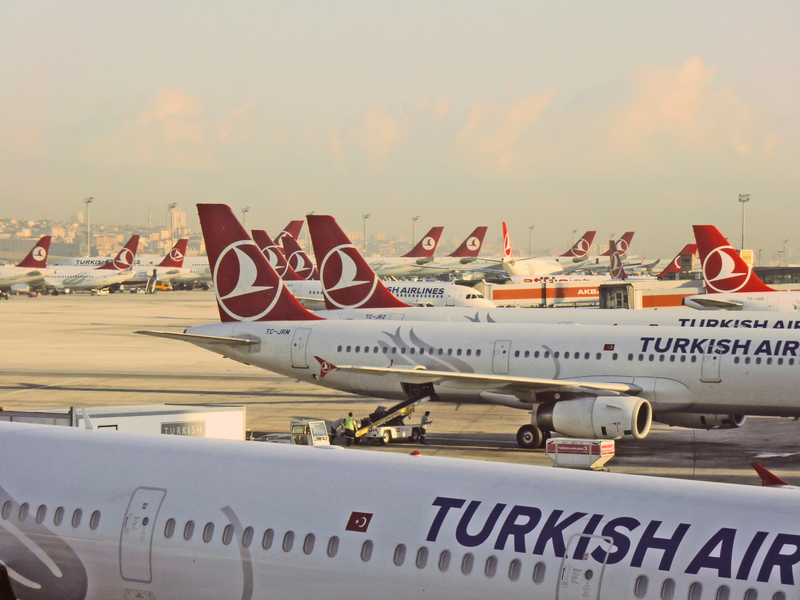
Turkish Airlines just unveiled a sweeping Boeing commitment designed to power its “2033 Vision” growth plan:
-
50 firm Boeing 787s split as 35× 787-9 and 15× 787-10, with options for 25 more 787s (variant TBD).
-
Delivery window: 2029–2034 for the firm Dreamliners.
Read our stories in your inbox
Two aviation newsletters. Zero fluff.
-
Statement of intent to buy up to 150 additional 737 MAXs (not yet a firm order).
If the narrow-body intent is finalized, it would be Turkish’s largest single-aisle order from Boeing and would effectively double the carrier’s Boeing narrow-body fleet over time.
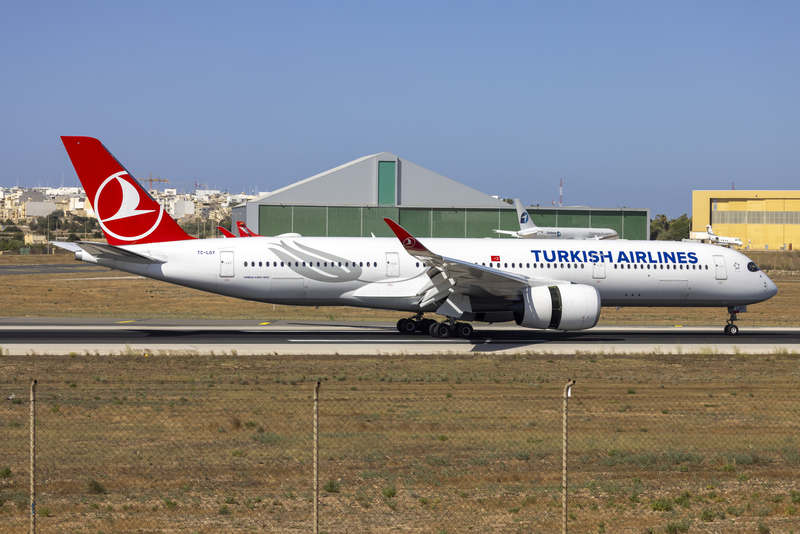
Why this matters (beyond the big number)
-
Dual-OEM strategy stays intact. Turkish already has large Airbus orders (A321neo family; A350-900/-1000). Locking in Boeing slots hedges supply risk and preserves leverage on pricing, support, and delivery cadence.
-
Wide-body flexibility. The 787-9 is a proven “long and thin” mission machine; the 787-10 adds high-density lift on trunk routes within the Dreamliner family (crew/commonality benefits).
-
Network runway. More 787s align with Turkish’s stated goal to expand long-haul depth and breadth—especially to secondary cities in North America, Asia, and Africa—while keeping trip costs in check.
Where the new jets likely fit
-
787-9: Long-range, year-round viability to secondary cities; ideal for opening/maintaining routes where A350-1000 capacity would be too much.
-
787-10: Higher-gauge wide-body for mid-to-long sectors with strong demand (e.g., peak North America/Asia banks) and for daytime Europe–IST–India/Gulf flows.
-
737 MAX (if firmed): Feeds the Istanbul hub from Europe, Middle East, Central Asia, North Africa, and supports frequency-led connectivity—a core Turkish differentiator.
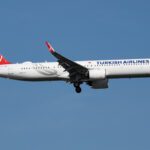
Fleet plan snapshot (big picture)
Today Turkish operates ~370 passenger aircraft and holds ~320+ on order across Airbus and Boeing. Add 50 firm 787s (+25 options) and a potential 150 MAXs, and the airline keeps pace with a roadmap to ~800 aircraft by 2033 (including replacements).
Dreamliner status: Turkish already flies 24× 787-9. With the new commitment, the wide-body backbone becomes a balanced A350 + 787 mix, giving scheduling flexibility by market and season.
Cabin & product implications (what flyers will notice)
-
Consistency push: Large same-family batches usually bring more standardized cabins (seats, IFE, power, galleys), smoother maintenance, and reliable spares pools.
-
Premium growth: Expect wider premium footprints (business and premium economy) on high-yield corridors—critical as Turkish chases more corporate and high-spend leisure.
-
Cargo belly lift: 787-10s in particular help add belly capacity on dense lanes—useful for Istanbul’s role as a Eurasian cargo bridge.
Risks & execution watch-outs
-
Production slots and supply chain. 2029–2034 is sensible, but the industry still faces supplier bottlenecks and rate stability questions at both OEMs.
-
Engine MRO capacity. Dreamliner engine shop time and spares pipeline will need careful planning as fleets scale.
-
Macro & geopolitics. Turkish’s network advantage (flying to more countries than anyone) also creates exposure to regional shocks and regulatory flux.
-
Pilot/tech staffing. Doubling capacity requires aggressive recruiting and training pipelines to maintain on-time growth without operational strain.
Competitive context
-
Istanbul’s hub math: Perfectly placed between Europe, Asia, Africa, and the Americas, IST thrives on banked waves and dense connectivity. More 787s/737 MAXs help Turkish widen city-pair choice and reduce connection times, sharpening its appeal versus Gulf carriers and European legacies.
-
North America: Additional 787s likely fuel more U.S./Canada dots and upgauges—meeting strong O&D and one-stop demand to South Asia/Africa/Eastern Europe.
-
Africa & Central Asia: Expect continued first-mover or frequency-leader strategy where rivals are thin on service.
What to watch next
-
Final 737 MAX contract details: variant mix (-8 vs -9), delivery phasing, and cabin spec.
-
787 option exercise cadence: how fast the +25 options convert to firm orders.
-
Interior reveals: seat type (business/premium economy), IFE, and Wi-Fi standardization across future 787 batches.
-
Route announcements: new North America/Africa/Asia city pairs as delivery years near.
Bottom line
Turkish Airlines just bolted a major Boeing chapter onto its already huge Airbus commitments: 50 firm Dreamliners (+25 options) and a stated intent for up to 150 737 MAXs. It’s classic Turkish—high frequency, wide reach, and smart gauge—all aimed at cementing Istanbul’s status as the go-to one-stop hub between continents. The prize is enormous; so are the execution demands between now and 2034.
Keep reading FlyMag
Get the Daily Brief in the morning or the Route Watch weekly recap on Fridays. Or both.