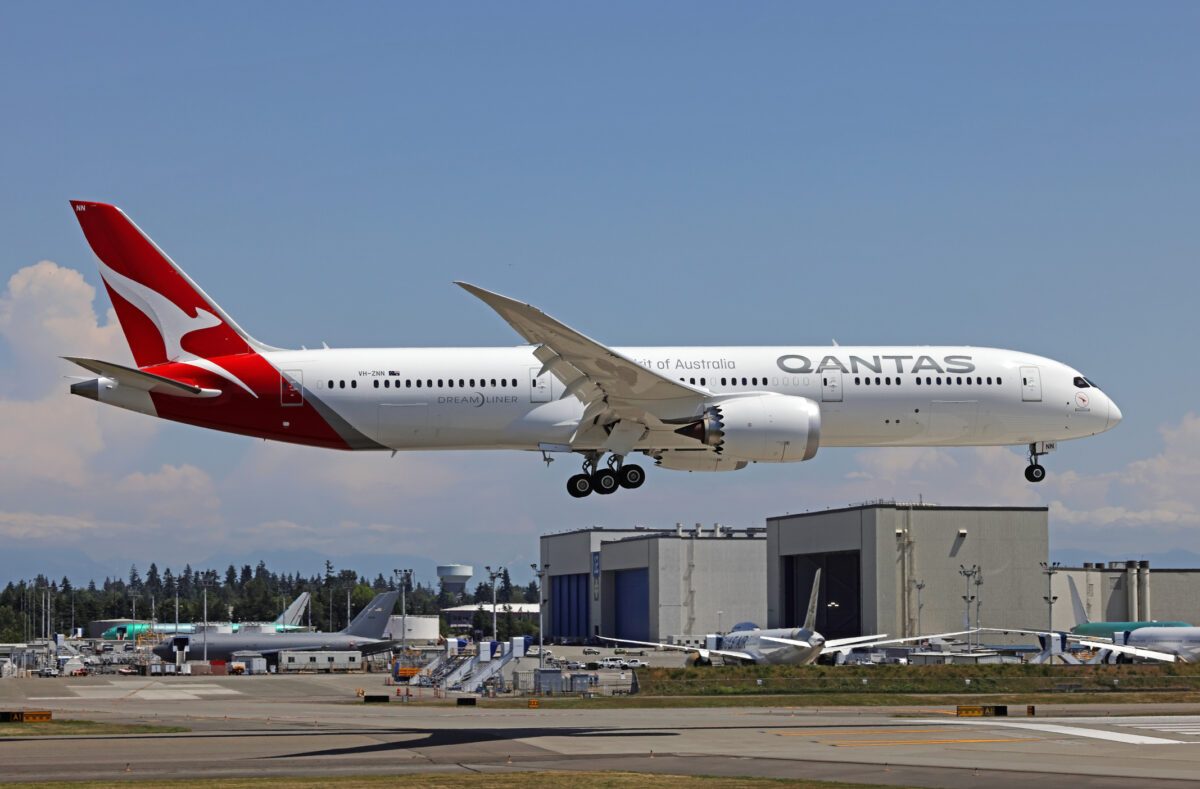
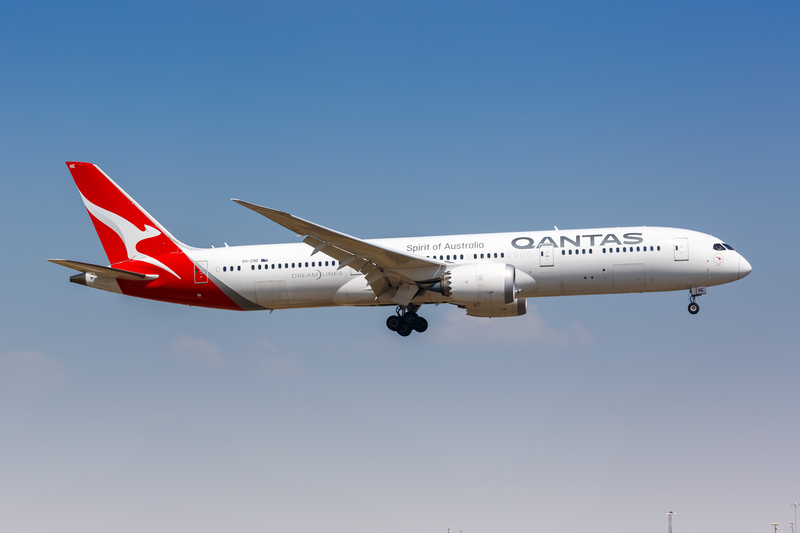
Qantas canceled flight QF6 from Rome Fiumicino (FCO) to Perth (PER) on Saturday, October 10, after passengers reported insect bites on the Boeing 787-9’s inbound journey from Australia.

The aircraft, VH-ZNI, had operated QF5 from Perth to Rome on October 9. Flight records show that it arrived at FCO the following morning, after which the scheduled return service was canceled and the Dreamliner was removed from passenger operations.
Qantas said the cancellation allowed its engineering and maintenance teams to deep-clean the aircraft following an issue involving a small number of economy seats. The airline apologized to affected customers, provided accommodations and moved them to alternative flights within 48 hours of the original departure.
Read our stories in your inbox
Two aviation newsletters. Zero fluff.
Although the disruption has been widely described as a bedbug incident, Qantas’ statement referred more generally to an issue identified on the seats. The airline was continuing to investigate how the insects reached the cabin.
Cancellation Took a Long-Haul Aircraft Out of Rotation
The cancellation affected one of Qantas’ longest nonstop sectors. The airline lists Perth–Rome at approximately 16 hours, while the reciprocal QF5 and QF6 services also operate as through flights connecting Rome and Sydney via Perth.
Removing the aircraft at FCO therefore disrupted more than a standalone Europe–Australia sector. QF6 normally continues from Perth to Sydney (SYD), meaning a cancellation in Rome also requires Qantas to reorganize the onward domestic operation, reposition passengers and restore the aircraft to the wider 787 schedule.
Qantas’ 2026 network update extended additional Perth–Rome flying through late October as part of a broader increase in European capacity. The route had been operating daily during part of the season, making each Dreamliner rotation important to maintaining the published schedule.
Flight tracking records identify VH-ZNI as the aircraft that operated QF5 on October 9 and was assigned to the canceled QF6 on October 10. It is one of the registrations shown on Qantas’ official 787-9 seat map.
Qantas Uses a Low-Density 787-9 Layout
Qantas configures its Boeing 787-9s with 236 seats: 42 in Business, 28 in Premium Economy and 166 in Economy. That is a relatively low-density layout for the type and reflects the aircraft’s role on long sectors where premium demand, range and passenger comfort carry more weight than maximum seat count.
The Qantas 787 cabin plan places economy in a 3-3-3 arrangement with 32 inches of pitch. The cabin occupies most of the rear portion of the aircraft, so even an issue confined to a few seats can require broader inspection and treatment before the airplane is released for another long-haul passenger service.
The decision to cancel rather than conduct a quick turnaround was operationally significant. A Rome–Perth departure commits the aircraft to roughly 16 hours in the air, with few practical recovery options once the flight has left Europe. Any uncertainty over whether the cabin treatment was complete would have been difficult to address until arrival in Australia.
Boeing gives the 787-9 a range of up to 8,300 nautical miles, making it suitable for routes such as Perth–Rome, whose great-circle distance is about 7,200 nautical miles. Qantas has made that capability central to its nonstop network from Western Australia, using the type to connect Perth with distant European and North American markets.
Bedbugs Present a Different Cabin-Control Problem
Bedbugs do not indicate an aircraft safety or airworthiness defect, but they can create a difficult cabin-maintenance problem. The insects can hide in seams, upholstery, luggage and folded clothing, allowing them to move between hotels, homes and transportation without being noticed.
The U.S. Centers for Disease Control and Prevention says bedbugs commonly spread by entering the seams and folds of luggage, bags and clothing. Bites can produce itching and swelling, although marks alone are not sufficient to determine when or where a passenger encountered the insects.
That uncertainty complicates an airline’s response. Cabin crews can relocate passengers and provide basic assistance during a flight, but confirmation and eradication require inspection on the ground. On an aircraft working a tightly planned long-haul rotation, the required downtime can quickly become more disruptive than the number of affected seats suggests.
For Qantas, the immediate response was to keep the 787 in Rome, cancel QF6 and carry out the deep clean before returning the aircraft to service. Subsequent Rome–Perth flights resumed, limiting the disruption to the affected rotation rather than triggering a wider suspension of the route.
Bottom Line
The incident illustrates the operational exposure attached to ultra-long-haul flying with a relatively small subfleet. A problem confined to several seats can remove a 236-seat aircraft from a route stretching halfway around the world, while the lack of nearby Qantas bases in continental Europe limits the airline’s recovery options. Hotel rooms, rebooking and aircraft repositioning can rapidly make a cabin-maintenance event expensive even when it has no bearing on flight safety.
Passengers benefit from Qantas choosing a full inspection and deep clean over preserving the schedule, particularly on a sector where the aircraft would remain airborne for about 16 hours. The more important test is whether the treatment proves durable and whether the airline identifies any additional affected areas or related reports from earlier rotations.
The cancellation does not alter the strategic case for Perth–Rome. Qantas’ own annual reporting describes the 787-9 as the aircraft that enabled routes including Perth–London, Perth–Paris and Perth–Rome. The episode instead underscores the need for resilient ground support at distant outstations as the airline places more of its international network on long nonstop sectors with limited substitution options.
Keep reading FlyMag
Get the Daily Brief in the morning or the Route Watch weekly recap on Fridays. Or both.