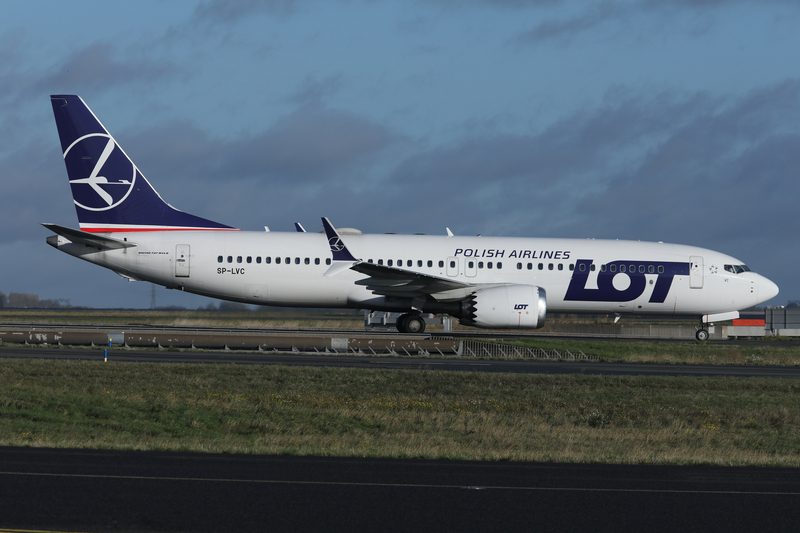
LOT Polish Airlines has expanded its operation at Kraków John Paul II International Airport (KRK) with three new year-round routes to Rome Fiumicino Airport (FCO), Barcelona-El Prat Airport (BCN), and Adolfo Suárez Madrid-Barajas Airport (MAD), all launched on March 30, 2026.

This is more than a routine summer schedule update. For LOT, the move is a clear statement that KRK is becoming a more meaningful part of its regional strategy rather than simply a secondary spoke behind Warsaw Chopin Airport (WAW). Adding Rome, Barcelona, and Madrid gives the Małopolska market stronger nonstop access to three of Southern Europe’s most commercially and culturally important cities, while also broadening LOT’s point-to-point relevance outside its main hub.
That matters because Kraków is not just a leisure market. It is one of Poland’s strongest mixed-demand airports, with tourism, corporate activity, and inbound international traffic all feeding the same catchment. Routes that work there need to appeal to more than one passenger segment, and these three do exactly that.
Read our stories in your inbox
Two aviation newsletters. Zero fluff.
Rome, Barcelona, and Madrid Bring Different Types of Demand
The route mix is well judged. Rome Fiumicino (FCO) adds one of Europe’s strongest all-round markets, balancing city-break demand, VFR traffic, and business travel. Barcelona (BCN) gives KRK a year-round Mediterranean link with both leisure and corporate appeal, while Madrid (MAD) adds a major European capital with stronger business relevance and a wider institutional profile.
LOT is not treating these as token launches. The airline is flying KRK-FCO up to five times weekly in summer and four weekly in winter, KRK-BCN up to four weekly year-round, and KRK-MAD up to six weekly throughout the year. Those are meaningful frequencies for a regional airport operation. They suggest LOT sees these routes as part of a durable network build rather than purely opportunistic seasonal flying.
For airline readers, that is the more important signal. Frequency tells you how seriously a carrier views a market. In this case, LOT is giving all three routes enough scale to become embedded in the airport’s schedule rather than simply appearing on it.
The Boeing 737 MAX 8 Sits at the Center of the Expansion
Aircraft choice is a major part of the story. LOT is operating all three routes with the Boeing 737 MAX 8, the narrowbody type that is increasingly central to its short- and medium-haul strategy.
That makes sense operationally. The 737 MAX 8 gives LOT the range to cover sectors such as KRK-MAD and KRK-BCN comfortably, while still offering narrowbody economics that work in a market where both yield discipline and frequency matter. It is the right aircraft for developing regional international routes that are too important for smaller-capacity equipment, but not large enough to justify anything more.

LOT has also been using the MAX 8 to refresh its onboard proposition. The carrier’s newest examples feature updated cabin interiors, ergonomic seating, USB-C power, mobile-device holders, and quieter, more efficient engines. For passengers, that improves the short-haul experience. For the airline, the bigger gains are lower emissions, better fuel efficiency, and a fleet platform that can be deployed flexibly across both regional airport growth and mainline European flying.
Kraków’s Role Inside LOT’s Network Is Clearly Expanding
The wider network implications are just as important as the three new city pairs themselves. LOT says KRK will see as many as 11 destinations in its Summer 2026 network, supported by the addition of another Boeing 737 MAX 8 at the airport. That increase in local based capacity is what turns these launches into a structural expansion rather than a simple timetable adjustment.
Kraków’s importance has been building for some time, but this latest step makes the strategy more visible. The airline is no longer relying only on Warsaw feed or a narrow list of legacy regional services. Instead, it is giving KRK a broader portfolio of direct flying that mixes domestic, European, and long-haul relevance.
That is exactly how a regional airport begins to move toward mini-hub status without pretending to be a full hub in the classic sense. It offers more nonstop options, gains enough aircraft scale to support schedule depth, and becomes more useful to both the local market and the wider airline network.

The Business Angle Should Not Be Overlooked
There is also a strong commercial-development case behind the expansion. Southern European business ties matter for Kraków and for the wider Małopolska region, especially as the city continues to grow as a center for investment, services, and international corporate activity.
That is one reason Madrid (MAD) stands out in particular. Rome (FCO) and Barcelona (BCN) will naturally attract strong leisure demand, but Madrid gives LOT a route with broader institutional and business potential. When an airline launches three Southern European routes at once and keeps them year-round, it is usually because it sees a wider traffic base than tourism alone.
That is also why the move benefits inbound travel, not just outbound Polish demand. More nonstop access from Italy and Spain should support tourism into Kraków while also strengthening the city’s visibility as a destination in its own right.
Bottom Line
LOT’s launch of Rome Fiumicino (FCO), Barcelona-El Prat (BCN), and Madrid-Barajas (MAD) from Kraków (KRK) is a well-judged regional expansion with more strategic weight than the headline might suggest.
The frequencies are meaningful, the Boeing 737 MAX 8 is the right aircraft for the job, and the additional based capacity shows LOT is investing in Kraków as a larger part of its network architecture. For the airport, this means more than three new dots on a route map. It means a stronger role in Southern European connectivity and a clearer place inside LOT’s broader regional growth strategy.
Keep reading FlyMag
Get the Daily Brief in the morning or the Route Watch weekly recap on Fridays. Or both.