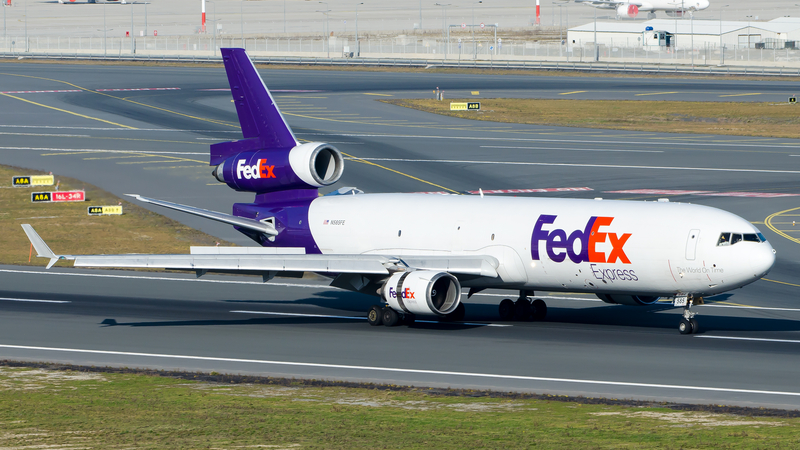
FedEx is preparing to bring its McDonnell Douglas MD-11 freighters back into service in May, a move that says as much about today’s cargo-market pressure as it does about the continuing usefulness of one of the industry’s most recognizable widebody freighters.
The return follows months of grounding and inspection work after the fatal UPS Airlines MD-11 crash near Louisville Muhammad Ali International Airport (SDF) in November 2025. That accident triggered intense regulatory scrutiny of the type, with the FAA grounding U.S.-registered MD-11s pending inspection and Boeing-backed review of the relevant structural area. FedEx has now indicated that its aircraft are ready to resume flying, with company leadership making clear that the fleet still has an operational role to play.
For cargo aviation professionals, that is the key point. FedEx is not bringing the MD-11 back out of nostalgia. It is bringing the aircraft back because it still needs the lift.
Read our stories in your inbox
Two aviation newsletters. Zero fluff.
The MD-11 Return Comes At A Useful Time For FedEx
The timing is not accidental.
FedEx has been working through a period in which cargo demand has remained uneven but strategically important on certain long-haul sectors, while fleet transition remains a multi-year process rather than something that can be completed overnight. The airline has newer freighters in the system and continues to favor more modern aircraft over the long term, but that does not eliminate the immediate value of a large, available freighter fleet.
That is where the MD-11 still matters.
Even as the type moves closer to the end of its career, it remains a capable long-haul cargo platform with valuable payload-range characteristics. In a constrained capacity environment, a parked MD-11 is not just an old airplane. It is dormant lift.
Richard Smith’s Comment Signals FedEx Thinks The Technical Work Is Behind It
The phrase getting the most attention is simple: “They’re ready to go.”
That line, delivered by FedEx executive Richard W. Smith during a Wings Club presentation in New York, matters because it suggests the carrier believes the required inspection and corrective work has reached a point where scheduled reactivation is now realistic. Earlier this year, FedEx had already pointed to May 31 as the target for returning its grounded MD-11s to service. The latest comments reinforce that timeline rather than merely hinting at it.
For an operator in this position, that kind of public confidence is important. It signals that the airline does not view the aircraft as provisionally usable or politically difficult to defend. It views them as operational assets ready to be brought back in a controlled way.
This Was Not Really A “Global” Grounding
One part of the broader narrative does need tightening.
The grounding that followed the UPS crash was not best described as a global MD-11 shutdown in the literal sense. The FAA grounded U.S.-registered MD-11s, and the major U.S. operators, UPS and FedEx, halted operations of the type while inspections and reviews took place. That was highly significant because those carriers account for much of the active MD-11 freighter world, but it was still a U.S.-driven regulatory and operational response rather than a universally imposed worldwide ban.
That distinction matters because it affects how the return is understood. This is not the reopening of a fully global fleet after total worldwide prohibition. It is the reactivation of a heavily affected U.S. operator fleet after the central technical concern was inspected and addressed.
The Louisville Crash Changed The Future Of The Type
The accident that triggered all this remains the defining context.
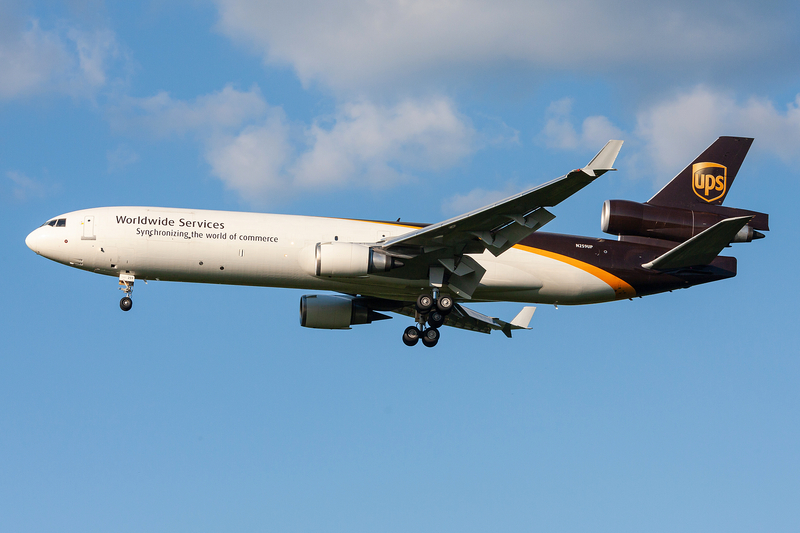
UPS Airlines Flight 2976 crashed shortly after takeoff from Louisville in November 2025 after the aircraft’s left engine separated, killing all three crew members and multiple people on the ground. Early investigative findings focused on fatigue cracking and structural failure in the pylon mount area rather than on a generic indictment of the MD-11’s entire design philosophy.
That technical distinction became crucial for operators.
If the issue had been interpreted as a broad, irredeemable design flaw, the type’s future would likely have ended far more quickly. Instead, the focus turned to inspection, structural review, and whether the affected components could be checked and managed in a way that supported continued airworthiness.
FedEx is now acting as though the answer to that question is yes.
UPS And FedEx Reached Different Conclusions
What makes the story more interesting is that the two biggest MD-11 operators did not respond in the same way.
UPS chose to retire its entire MD-11 fleet, accelerating an exit from the type after the crash. FedEx, by contrast, chose to keep the door open, work with Boeing and regulators, and return its aircraft once the required checks were complete.
That divergence says a lot about fleet strategy.
UPS had already been moving toward other freighter types and decided the accident created the right moment to end MD-11 operations entirely. FedEx looked at the same event and came to a different conclusion: the aircraft still had enough operational value to justify the work needed to bring it back.
Neither approach is irrational. They simply reflect different fleet needs and different strategic timing.
The MD-11 Still Fills A Real Role In FedEx’s System
FedEx has spent years modernizing and refining its fleet, but the MD-11 still occupies a specific niche.
It is a large tri-jet freighter with meaningful payload capability and enough range to remain useful on long sectors. It is also an aircraft that FedEx knows extremely well. That matters more than it may seem. In cargo aviation, familiarity, internal support capability, and network fit can extend the useful life of an older aircraft far longer than outside observers expect.
FedEx is not betting that the MD-11 is the future. It is betting that the MD-11 is still useful in the present.
That is a very different proposition, and often a very rational one.
The Return Does Not Reverse The Type’s Long-Term Decline
None of this changes the broader trajectory of the MD-11.
The aircraft is no longer in production, twin-engine freighters are generally more efficient, and both economics and regulation continue to push the market toward newer equipment. FedEx itself has not hidden its preference for more modern fleet types over time.
But fleet transitions do not happen all at once. Airlines and cargo operators often rely on older aircraft longer than expected when market conditions, delivery constraints, and capacity requirements line up in the right way. The MD-11’s return fits that pattern perfectly.
It is less a comeback story than a reminder that older freighters can still be commercially useful when the network needs them.
This Is Also A Test Of Trust In Aging Freighters
The return is not just operational. It is symbolic.
Bringing the MD-11 back means FedEx is effectively telling the market, regulators, employees, and customers that the aircraft remains safe to operate once the inspection and remediation work is complete. In that sense, May will be about more than adding freighter capacity. It will also be about restoring confidence in a type whose reputation took another hard hit after the Louisville crash.
That is not a small thing for any aging aircraft family, especially one already living in the later stages of its cargo career.
Bottom Line
FedEx’s MD-11 restart is best understood as a practical capacity move shaped by recent safety scrutiny, not a sentimental return of a beloved old freighter. The carrier still sees value in the aircraft, and after months of FAA-mandated grounding, inspections, and technical review, it now believes the fleet is ready to fly again.
The bigger significance lies in what the decision says about the cargo market and the aircraft itself. Demand, fleet constraints, and operational familiarity have kept the MD-11 relevant longer than many expected. May’s return to service will not change the type’s long-term decline, but it will confirm that FedEx still thinks the old trijet has useful work left to do.
Keep reading FlyMag
Get the Daily Brief in the morning or the Route Watch weekly recap on Fridays. Or both.