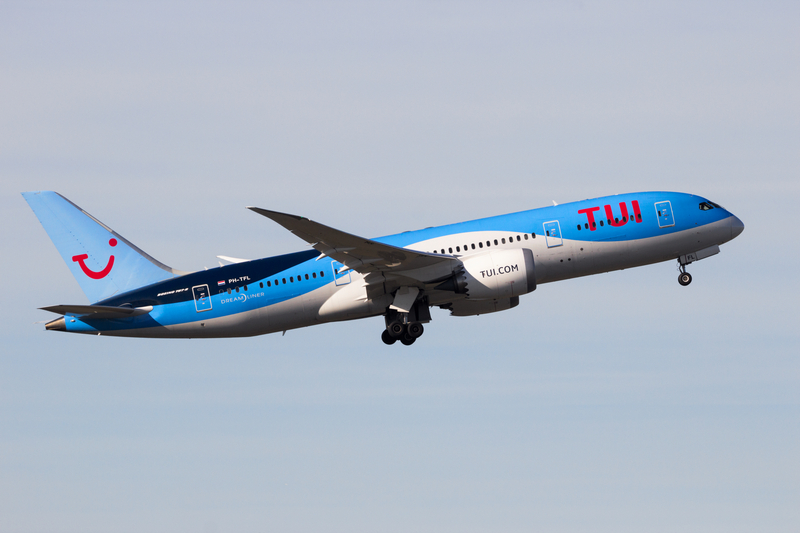
A TUI fly Netherlands Boeing 787-8 Dreamliner diverted to Rhodes after the crew reported a possible technical issue during a long-haul flight from Kenya to the Netherlands.
The aircraft, registered PH-TFM, was operating flight OR191 from Moi International Airport (MBA) in Mombasa to Amsterdam Airport Schiphol (AMS). The flight diverted to Rhodes International Airport “Diagoras” (RHO) on June 22, 2026.
The Boeing 787 landed safely at Rhodes (RHO). No injuries were reported among passengers or crew.
Read our stories in your inbox
Two aviation newsletters. Zero fluff.
Airport emergency services were placed on alert before landing, which is standard procedure when an aircraft diverts with a reported technical problem. After landing, the aircraft was moved to an isolated parking area for inspection.
Flight OR191 Was Operating From Mombasa To Amsterdam
Flight OR191 was operating a scheduled long-haul leisure service from Mombasa (MBA) to Amsterdam (AMS).
The route links Kenya’s Indian Ocean coast with the Netherlands, one of TUI’s most important source markets. Mombasa is a major gateway for beach resorts and safari itineraries, while Amsterdam Schiphol (AMS) is TUI fly Netherlands’ home base.
During the flight, the crew elected to leave the planned routing and divert to Rhodes (RHO). The aircraft landed safely in Greece, where emergency vehicles were waiting as a precaution.
That response does not automatically mean the aircraft was in immediate danger. Airports often position fire and rescue equipment for an aircraft reporting a technical issue, especially when the exact nature of the problem is still being assessed.
In this case, the landing was completed without incident.
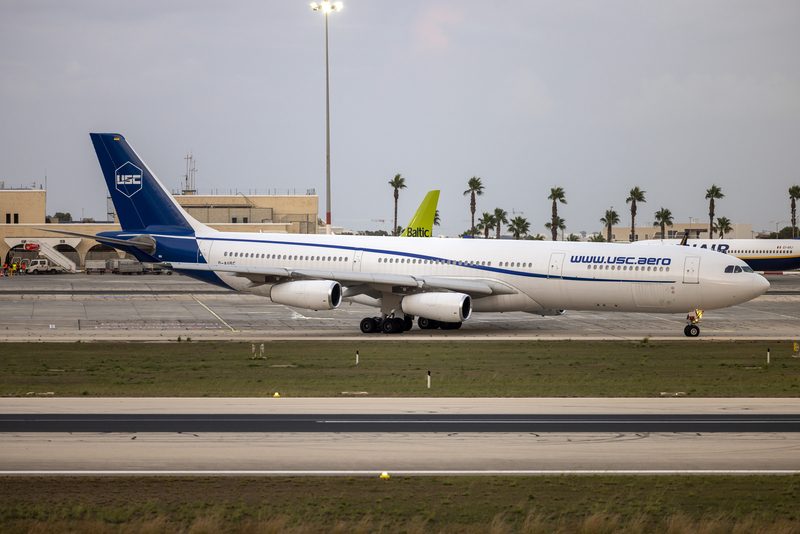
The Aircraft: Boeing 787-8 PH-TFM
The aircraft involved was PH-TFM, a Boeing 787-8 Dreamliner operated by TUI fly Netherlands.
Flight-tracking data identifies PH-TFM as a Boeing 787-8, type code B788. TUI also lists PH-TFM among its Boeing 787-8 aircraft.
The 787-8 is the original and smallest member of the Dreamliner family. Boeing lists the type with a range of up to 8,000 nautical miles, depending on configuration. That gives it more than enough capability for a Mombasa (MBA)–Amsterdam (AMS) sector.
TUI’s 787-8 aircraft are configured for long-haul leisure flying. TUI lists the aircraft with around 300 seats, while detailed seat-map sources for TUI fly Netherlands show a layout of 25 premium-economy seats and 280 economy seats.
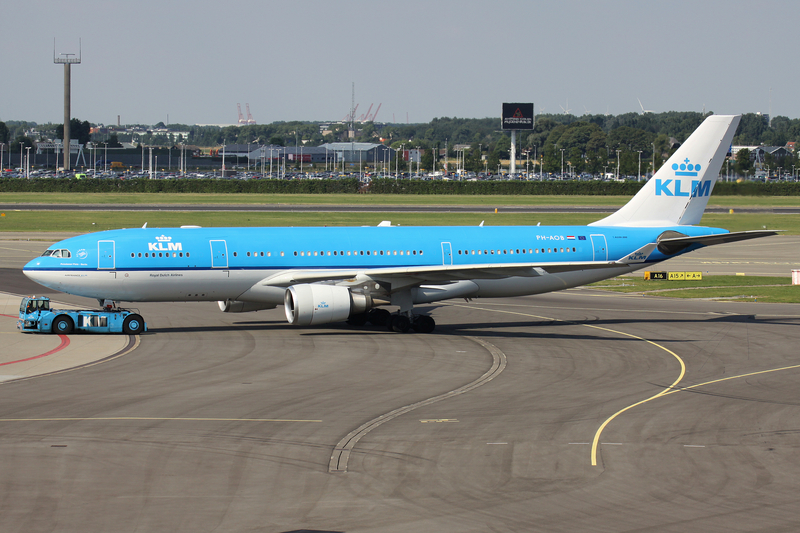
That makes the aircraft well suited to high-demand holiday routes. It gives TUI widebody capacity without the size of a larger aircraft such as a 787-9 or Boeing 777.
Why Rhodes Was A Practical Diversion Point
Rhodes (RHO) was a logical diversion airport for this flight.
The aircraft was operating northbound from East Africa toward Western Europe. Rhodes sits in the eastern Mediterranean, along a broad corridor used by many flights between Africa, the Middle East, Greece and Western Europe.
Rhodes International Airport “Diagoras” (RHO) is also a major leisure airport with regular international traffic, a 24-hour operating profile and the infrastructure needed to handle widebody diversions.
For a Boeing 787, a diversion airport must offer more than a runway.
The airline and crew need to consider weather, runway length, rescue and firefighting capability, ground handling, passenger support, technical assistance, fuel availability and immigration procedures.
A safe landing is only the first part of a diversion. The aircraft then needs inspection, passengers need support, and the airline must decide whether the same aircraft can continue or whether a recovery plan is needed.
The Nature Of The Technical Issue Is Still Undisclosed
The exact technical issue has not been publicly confirmed.
That is important.
Some early reports used broad language such as “technical problem” or “mechanical failure.” However, no detailed statement has identified the affected aircraft system.
Until TUI or the relevant authorities publish more information, the safest description is that the crew made a precautionary diversion after reporting a possible technical issue.
That wording matters in aviation reporting.
A diversion does not necessarily mean a serious failure occurred. It means the crew made a safety-based decision that the flight should not continue to the planned destination without inspection or support.
That is how the system is designed to work.
Emergency Vehicles On Standby Are Normal In These Cases
The deployment of fire vehicles at Rhodes (RHO) should be understood in context.
When a crew reports a technical issue, the receiving airport may place emergency services on standby. This gives the aircraft the highest level of support if anything changes during approach, landing or rollout.
That does not mean passengers were necessarily at immediate risk.
It means the airport was prepared.
For a widebody aircraft such as the 787-8, that preparation is especially important. The aircraft is large, carries a significant number of passengers and may land at a diversion airport where the airline does not have the same support base it has at Amsterdam (AMS).
Having airport rescue and firefighting equipment ready is a normal safety step.
The Aircraft Later Continued To Amsterdam
Initial reports said the aircraft remained at Rhodes (RHO) for inspection after landing.
Flight-tracking history later showed PH-TFM operating a Rhodes (RHO)–Amsterdam (AMS) sector as OR191 on June 23. The aircraft departed Rhodes in the evening and landed at Amsterdam shortly after midnight.
That suggests the aircraft was later cleared to continue after inspection or after the airline completed its recovery process.
This is common after precautionary diversions.
If engineers can identify and resolve the issue, or if the aircraft is cleared for onward flight, the airline may continue the aircraft to its original destination. If not, the airline may send a replacement aircraft or make other arrangements.
In this case, the aircraft’s later movement to Amsterdam is a useful update because it shows the diversion did not result in a prolonged grounding at Rhodes.
Why Technical Diversions Matter
Technical diversions are disruptive, but they are part of normal airline safety management.
Crews are trained to make conservative decisions when an aircraft system requires attention. Dispatchers, engineers and operations control teams then help determine the safest option.
Sometimes that means continuing to the destination. Sometimes it means turning back. Sometimes it means landing at the nearest suitable airport.
For passengers, a diversion can be frustrating. It may cause missed connections, long delays and an unexpected stop in another country.
For airline professionals, the priorities are different.
The first goal is to put the aircraft safely on the ground. The second is to inspect the issue. The third is to recover the operation with the least additional disruption possible.
That sequence is exactly what appears to have happened here.
The 787’s Role In TUI’s Long-Haul Network
The Boeing 787 is central to TUI’s long-haul leisure operation.
TUI fly Netherlands uses the type from Amsterdam (AMS) to long-haul holiday destinations. Across the wider TUI airline group, the 787 supports routes to the Caribbean, Africa, Asia and other leisure markets that require widebody range.
The Dreamliner is well suited to this role.
It offers long range, efficient twin-engine performance and a cabin designed for long-haul flights. Boeing designed the 787 family to help airlines open nonstop routes and operate long sectors more efficiently than previous-generation widebodies.
For TUI, that matters because leisure routes can be highly seasonal and price-sensitive.
The aircraft must offer enough seats to keep unit costs competitive, while also providing the range needed for flights such as Mombasa (MBA)–Amsterdam (AMS).
A Safe Outcome, But Still Worth Watching
The most important point is that the aircraft landed safely and no injuries were reported.
Still, the incident is worth following.
If TUI or aviation authorities later identify the technical issue, that information may provide a clearer view of why the crew diverted. It may also show whether the issue was minor, maintenance-related, or connected to a system that required more detailed inspection.
For now, there is no public evidence of a broader fleet issue.
This appears to be an isolated operational event involving one aircraft on one flight.
That is an important distinction. Aircraft diversions happen across the industry every day. Most are handled safely and never become larger safety events.
Bottom Line
A TUI fly Netherlands Boeing 787-8, registered PH-TFM, diverted to Rhodes (RHO) while operating flight OR191 from Mombasa (MBA) to Amsterdam (AMS) on June 22, 2026.
The crew reported a possible technical issue and elected to land at Rhodes International Airport “Diagoras” (RHO). The aircraft landed safely, with emergency services standing by as a precaution. No injuries were reported.
The exact nature of the technical issue has not been publicly disclosed.
Flight-tracking data later showed PH-TFM continuing from Rhodes (RHO) to Amsterdam (AMS) on June 23, indicating the aircraft was later able to leave the Greek island after inspection or operational recovery.
For passengers, the diversion was disruptive. For the airline and crew, it was a safety decision.
That is the key takeaway. A precautionary diversion may be inconvenient, but it shows the system working as intended: identify a possible issue, land safely, inspect the aircraft, and only continue when the operation can do so safely.