Etihad Airways (EY) is reshaping its Abu Dhabi–Frankfurt corridor in 2026 in a way that will look familiar to anyone tracking how airlines are managing widebody availability, seasonality, and partnership-driven growth.


Starting May 1, 2026, Etihad will reduce its own metal on the Zayed International Airport (AUH) – Frankfurt Airport (FRA) route from two daily flights to one, while keeping a second daily option in the market via a Condor (DE) operation under codeshare. The move aligns with Etihad’s broader push to deepen commercial partnerships while freeing up scarce long-haul lift for higher-yielding or higher-growth opportunities elsewhere in the network.
Frankfurt (FRA) is not just a high-volume corporate market—it’s also consistently recognized in top-tier quality-of-life rankings, a factor that quietly supports premium demand beyond pure banking traffic. For Etihad, maintaining competitive connectivity to FRA matters, even if the aircraft mix changes by season.
Read our stories in your inbox
Two aviation newsletters. Zero fluff.
What changes in Summer 2026: Etihad stays daily on the 787-9, Condor fills the second rotation on A330neo
For the Northern Summer 2026 schedule, the AUH–FRA market becomes a two-operator, two-aircraft-type story:
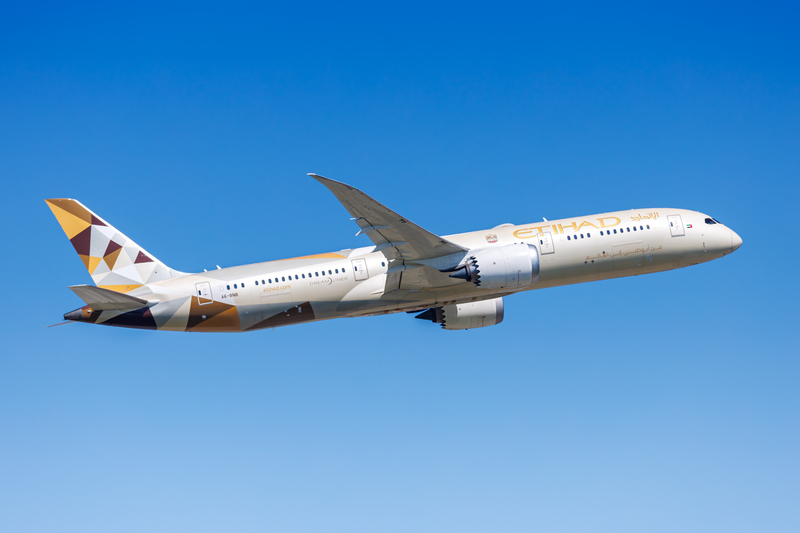
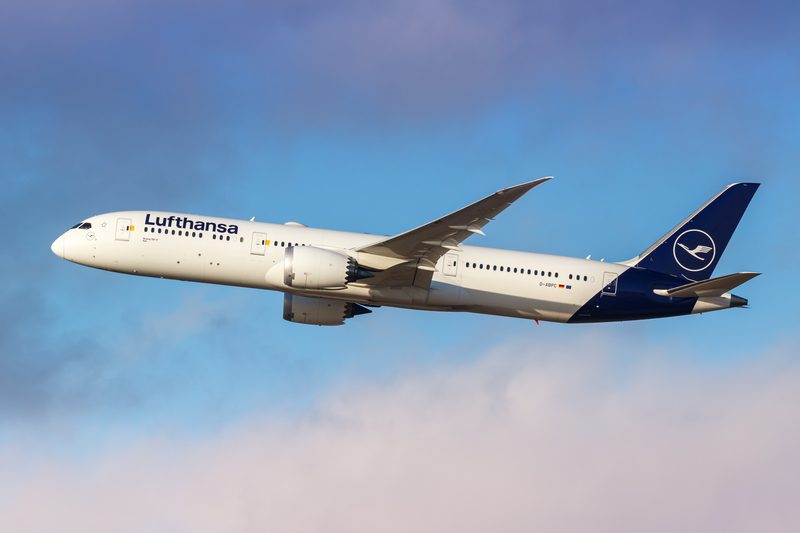
Etihad retains one daily rotation with the Boeing 787-9 Dreamliner, while Condor launches a daily Airbus A330-900neo flight that carries both DE and EY codeshare numbers. Operationally, this matters because it preserves a “two-a-day” offering in both directions—useful for connection banking at AUH and for schedule spread at FRA—while letting Etihad redeploy a widebody that would otherwise be locked into a second daily.
Here’s the filed Summer 2026 pattern (times shown local, as currently scheduled):
-
Etihad (EY)
EY121 AUH 02:10 → FRA 06:55 | Boeing 787-9 | Daily
EY122 FRA 11:05 → AUH 19:20 | Boeing 787-9 | Daily -
Condor-operated, Etihad codeshare (DE/EY)
DE2549 / EY1040 AUH 14:00 → FRA 18:45 | Airbus A330-900neo | Daily
DE2548 / EY1041 FRA 21:55 → AUH 06:15+1 | Airbus A330-900neo | Daily
For airline professionals, the big takeaway is that Etihad is effectively shifting from “two daily widebodies” to “one widebody plus one partner widebody,” which can be a materially different proposition depending on the customer segment and contract structures in play.
Aircraft and product implications: 787-9 vs. Condor’s A330-900neo
This isn’t just a flight-number change—equipment and onboard product will matter to frequent flyers and managed-travel programs.
Etihad’s Boeing 787-9 (789)
The 787-9 is a long-haul workhorse built around composite structure and efficiency, typically delivering strong economics on routes in the 3,000–7,000nm band. It’s also a cabin platform many premium customers actively seek out, thanks to ride quality and modern long-haul layouts that support Etihad’s brand standards.
Condor’s Airbus A330-900neo (339)
Condor’s A330neo fleet is the cornerstone of its long-haul refresh, powered by Rolls-Royce Trent 7000 engines and designed to compete on comfort and efficiency versus older A330ceo and 767-era lift. Condor’s A330-900neo is generally configured with a meaningful premium mix (Business + Premium Economy), which helps explain why it’s a strong partner aircraft for a market like FRA–AUH where leisure, VFR, and connecting traffic all coexist.
From a passenger-experience standpoint, the key is expectation management: a codeshare flight number may still mean a different lounge flow, seat, IFE ecosystem, or service style on the day—especially important for corporates booking EY flight numbers while caring deeply about the metal.
Winter 2026/27: Etihad restores its second daily—this time with an A321LR
The more interesting shift comes in the Northern Winter 2026/27 schedule. From October 25, 2026, Etihad plans to restore a second daily AUH–FRA frequency, but instead of returning to a second 787-9, it files the route with the Airbus A321LR.
This is a clear signal of Etihad’s narrowbody long-range strategy: add frequency and schedule utility while right-sizing gauge to seasonal demand. The A321LR also changes the timetable logic—narrowbody long-haul works best when it creates “new” departure options rather than duplicating existing banks.
Filed Winter 2026/27 pattern (local times, as currently scheduled):
-
Etihad (EY)
EY121 AUH 02:10 → FRA 06:05 | Boeing 787-9 | Daily
EY119 AUH 08:30 → FRA 12:40 | Airbus A321LR | Daily
EY122 FRA 09:50 → AUH 19:05 | Boeing 787-9 | Daily
EY120 FRA 14:35 → AUH 00:05+1 | Airbus A321LR | Daily -
Condor-operated, Etihad codeshare (DE/EY)
DE2549 / EY1040 AUH 14:30 → FRA 18:30 | Airbus A330-900neo | Daily
DE2548 / EY1041 FRA 21:20 → AUH 06:25+1 | Airbus A330-900neo | Daily
That’s a lot of capacity and a lot of optionality—particularly because the A321LR enables a premium-heavy, right-sized second wave without committing a widebody.
Why the A321LR move is more than just “smaller aircraft”
Etihad’s A321LR is not a typical short-haul narrowbody proposition. In Etihad configuration it’s designed to feel closer to a long-haul product, including a premium-forward layout and long-range performance that supports thinner intercontinental markets with better frequency economics.
Operationally, the A321LR on FRA helps Etihad do three things:
-
Protect frequency and connectivity at AUH with a second daily wave that can be banked into onward flows.
-
Match gauge to winter demand without sacrificing premium inventory entirely.
-
Reduce widebody opportunity cost, keeping 787 lift available for markets where belly cargo, premium density, or slot value demands it.
For FRA specifically, it also gives Etihad more flexibility to defend schedule positioning against competitors without “buying” that defense with a second daily 787 year-round.
What this means for the AUH–FRA market and for passengers
For the market, the headline is simple: AUH–FRA remains effectively a two-a-day proposition through Summer 2026, but with more partnership complexity.
For passengers, the practical implications are worth spelling out:
-
Booking an EY flight number may still put you on Condor metal for one of the daily options in Summer 2026.
-
Corporate travel managers will likely scrutinize whether the codeshare rotation satisfies policy requirements around product, lounge eligibility, and disruption handling.
-
Winter introduces a more nuanced schedule: Etihad adds an A321LR frequency that may appeal to travelers who value timing and a premium cabin, while Condor continues to provide widebody capacity.
Bottom Line
Etihad’s AUH–FRA changes from May 1, 2026 are a textbook example of modern network management: preserve market presence and schedule spread, but shift one daily rotation onto a strategic partner to unlock fleet flexibility. The Summer 2026 pattern becomes one daily Etihad 787-9 plus one daily Condor A330-900neo under codeshare, and then Winter 2026/27 brings Etihad back to “two a day” using the A321LR to right-size capacity while keeping frequency strong.
For FlyMag readers, the real story isn’t a simple cut—it’s how Etihad is using partnerships and next-generation narrowbody long-range aircraft to defend key European gateways like Frankfurt (FRA) without tying up widebodies where they may be better deployed.
Keep reading FlyMag
Get the Daily Brief in the morning or the Route Watch weekly recap on Fridays. Or both.