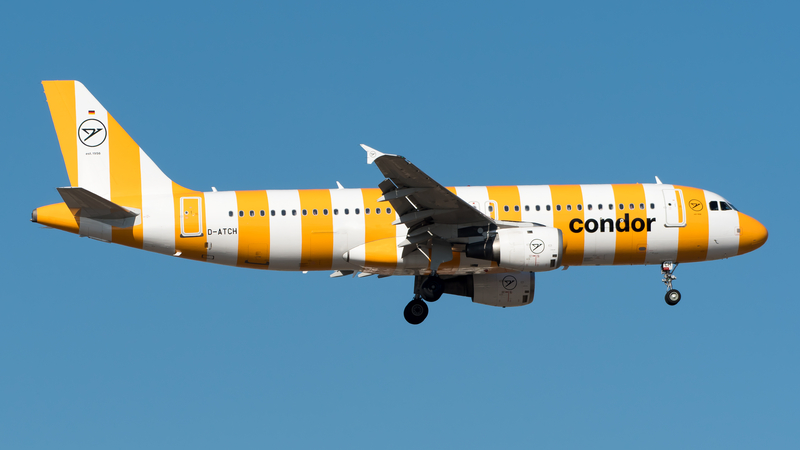
Condor is bringing Windhoek back to its long-haul network, restoring nonstop service between Frankfurt and Namibia in summer 2027.

The German leisure carrier will launch flights between Frankfurt Airport (FRA) and Hosea Kutako International Airport (WDH) at the end of June 2027.
The route will operate three times per week with Condor’s Airbus A330neo fleet. Flights from Frankfurt (FRA) will depart on Tuesdays, Thursdays and Saturdays. Return flights from Windhoek (WDH) will operate the following day on Wednesdays, Fridays and Sundays.
Read our stories in your inbox
Two aviation newsletters. Zero fluff.
For Condor, the route marks a return to a market it previously served for several years from late 2014. For Namibia, it adds another major nonstop link to Germany, one of the country’s most important tourism source markets.
Windhoek Returns To The Condor Map
Windhoek is a logical addition to Condor’s long-haul leisure network.
Namibia is one of Southern Africa’s most distinctive tourism markets. The country offers national parks, desert landscapes, safari lodges, self-drive routes and remote wilderness experiences that are especially popular with German travelers.
Condor CEO Peter Gerber said Namibia has long been one of the most sought-after long-haul destinations for German holidaymakers. He also described the returning Windhoek service as an attractive offer for leisure travelers and tour operators.
That tour-operator angle matters.
Condor is not only selling point-to-point seats. It is also supporting package holidays, safari itineraries and fly-drive programs that depend on reliable nonstop capacity from Germany.
The Route: Frankfurt To Windhoek
The Frankfurt (FRA)–Windhoek (WDH) route is a long leisure sector, but it sits comfortably inside modern widebody range.
It connects Germany’s largest aviation hub with Namibia’s main international gateway. Most international visitors to Namibia arrive through Windhoek (WDH), then continue by road or domestic air links to areas such as Etosha National Park, Sossusvlei, Swakopmund, Damaraland and the Skeleton Coast.
That makes Windhoek a true gateway route.
Passengers are not only flying to the city itself. They are using WDH as the starting point for wider travel across Namibia and, in some cases, the broader Southern African region.
For Condor, the route gives the airline another long-haul leisure destination with strong outbound demand from Germany.
The Aircraft: Airbus A330neo
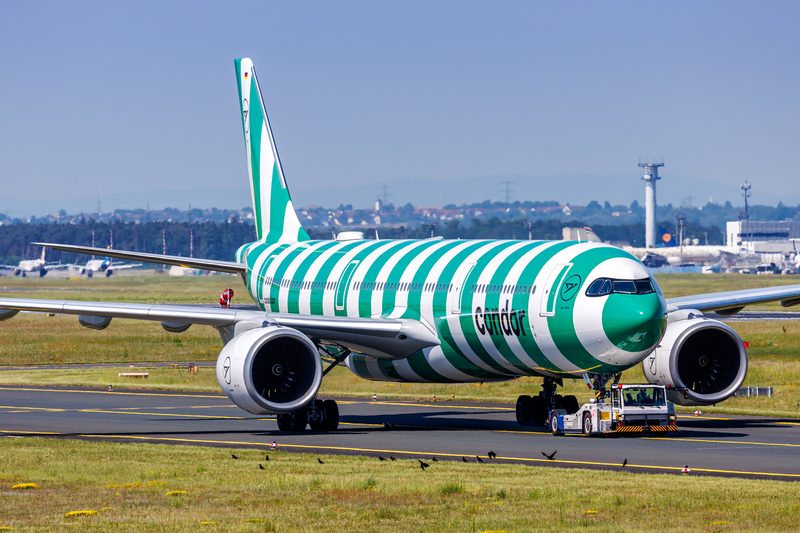
Condor will use its Airbus A330neo on the route.
That aircraft is now the backbone of Condor’s long-haul operation. The airline completed its long-haul fleet renewal in 2024, replacing older widebodies with modern Airbus A330-900neo aircraft.
Condor’s A330neo has 310 seats across three cabins. That includes 30 Business Class seats, 64 Premium Economy seats and 216 Economy seats.
The aircraft has a listed range of 12,600 kilometers and is powered by Rolls-Royce Trent 7000 engines.
For a route like Frankfurt–Windhoek, the A330neo is a strong fit. It offers enough range and capacity for a long leisure market while giving Condor a modern cabin and lower fuel burn than previous-generation aircraft.
Why The A330neo Matters For Namibia
Aircraft choice is important here.
Germany–Namibia is a leisure-heavy market, but it is not a simple short-haul sun route. Flights are long, demand can be seasonal, and the route needs a good mix of economy volume and premium leisure revenue.
The A330neo gives Condor that balance.
Business Class and Premium Economy help capture higher-yield passengers on safari, cruise, luxury lodge and specialist tour itineraries. Economy gives tour operators and independent travelers the seat volume needed to support package pricing.
The aircraft’s efficiency also matters. A long-haul leisure route needs competitive unit costs, especially when multiple German airlines are now adding Windhoek capacity.
That is where Condor’s fleet renewal becomes strategically useful.
Germany–Namibia Competition Is Heating Up
Condor’s return comes just as German airline capacity to Namibia is increasing sharply.
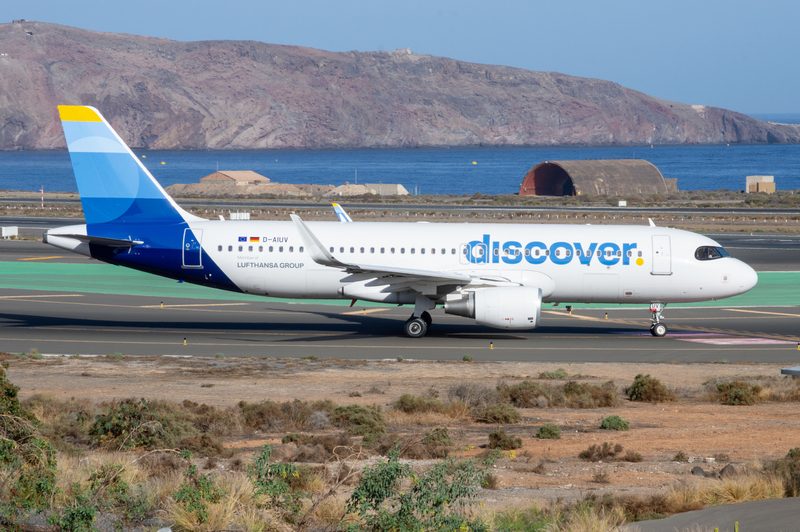
Discover Airlines has announced a major Windhoek expansion for summer 2027. The Lufthansa Group leisure carrier will increase Munich Airport (MUC)–Windhoek (WDH) service from three to five weekly flights starting in April 2027.
Discover will also continue daily Frankfurt (FRA)–Windhoek (WDH) service.
That gives Discover 12 weekly flights from Germany to Windhoek during summer 2027: seven from Frankfurt and five from Munich.
With Condor adding three weekly Frankfurt flights of its own, the Germany–Namibia market will become much more competitive.
Discover Adds Scale From Frankfurt And Munich
Discover’s expansion is significant because it gives the Lufthansa Group a two-hub Namibia strategy.
Frankfurt provides the largest German long-haul hub. Munich adds another strong premium and leisure catchment area in southern Germany.
Discover says its Munich–Windhoek flights will operate on Mondays, Wednesdays, Thursdays, Fridays and Sundays from summer 2027. The route will use Airbus A330-300 aircraft.
The airline says Windhoek has been one of its most popular destinations and has posted consistently strong booking numbers.
That is important context for Condor.
Condor is returning to Windhoek in a market where demand is already strong enough for Discover to add capacity. But it is also entering a market where the Lufthansa Group will have a large presence.
Namibia Is Becoming A Larger Long-Haul Leisure Market
Namibia is not a mass-market beach destination like Spain, Greece or Turkey.
It is a high-value long-haul leisure market built around nature, wildlife, desert landscapes and adventure travel. That gives it a different traffic profile.
German travelers are especially important.
Namibia has historic ties with Germany, a strong German-speaking tourism sector and a well-developed safari and lodge market. Many German visitors travel on longer itineraries, often combining national parks, private reserves and coastal destinations.
That makes nonstop flights from Germany valuable.
They reduce travel time, make tour packaging easier and support a smoother arrival experience for visitors who may then drive long distances inside Namibia.
Windhoek Is A Gateway, Not Just A Destination
Hosea Kutako International Airport (WDH) is located east of Windhoek and is Namibia’s primary international airport.
Its importance extends far beyond the capital. For most overseas visitors, WDH is the entry point to the entire country.
That gives airlines a clear tourism role.
A flight to Windhoek supports the lodge industry, car-rental operators, tour companies, domestic air charter providers and regional tourism suppliers.
This is why added airline capacity can have a large local effect.
More nonstop seats from Germany do not only benefit the airport. They can support the entire tourism chain, from arrival transfers to safari camps.
Condor Returns With A Stronger Product
Condor is returning to Windhoek with a very different long-haul product than it had in earlier years.
The airline’s A330neo fleet gives it a modern cabin, updated inflight entertainment, Wi-Fi availability and a three-class layout. That is a major step up from older-generation leisure widebodies.
This matters because Namibia attracts a wide range of passengers.
Some travelers are price-sensitive and book economy packages. Others are high-spending safari or lodge guests who may prefer Premium Economy or Business Class.
Condor can now serve all of those segments on one aircraft.
That gives the airline a better chance of competing with Discover’s Lufthansa Group distribution strength.
Tour Operators Gain More Flexibility
The added capacity should be especially useful for tour operators.
Namibia is a destination where many passengers book structured itineraries. A traveler may fly to Windhoek, pick up a vehicle, spend several nights in the desert, continue to Etosha, visit the coast, and return to Windhoek for the flight home.
That kind of travel depends on predictable air service.
Three weekly Condor flights give tour companies more departure-day options. Combined with Discover’s 12 weekly Germany–Windhoek services, the market will have much more flexibility than before.
That could support longer itineraries, different length-of-stay patterns and more competitive package pricing.
Seat Capacity Will Rise Substantially
Condor’s A330neo has 310 seats.
Three weekly flights therefore add roughly 930 one-way weekly seats between Frankfurt and Windhoek. Over a full operating season, that becomes a meaningful amount of new capacity.
When added to Discover’s daily Frankfurt service and five weekly Munich flights, Germany–Namibia capacity will increase sharply.
That can be good for travelers. More seats often mean more fare options and better availability during peak periods.
It can also create pressure.
If airlines add more capacity than the market can absorb, fares may weaken. That would be good for consumers but more challenging for airline yields.
The key question is whether Namibia’s tourism demand can grow fast enough to support the new supply.
Why Airlines Like Namibia
Namibia has several qualities airlines like.
It has strong leisure appeal. It has long average trip lengths. It attracts travelers who often book well in advance. It also has a clear seasonality pattern, which helps airlines plan capacity.
The market is also less dependent on pure city traffic.
Windhoek itself is not the only draw. The entire country helps fill the aircraft.
That is useful for leisure airlines such as Condor and Discover. Their networks are designed around vacation flows, not just business demand.
Namibia fits that model well.
It is a destination where direct flights can stimulate demand because they make the trip easier to sell.
Competition Could Help Namibia
The increased competition may benefit Namibia’s tourism industry.
More airline choice can make the destination more visible in Germany. It can also support marketing campaigns, travel-agent sales and package-holiday growth.
Condor’s return gives tour operators another airline partner. Discover’s expansion gives the Lufthansa Group more schedule depth. Edelweiss’ Zurich service adds another European gateway for the summer season.
Together, these services improve Namibia’s access from German-speaking Europe.
That is important for a country where tourism is a major source of income and employment.
Air connectivity is not only about passenger convenience. It directly supports the destination economy.
Frankfurt Becomes A Two-Airline Namibia Market
Frankfurt (FRA) will become the key battleground.
Discover already operates daily Frankfurt–Windhoek service. Condor will now add three weekly flights from the same airport.
That puts two German leisure carriers on the same long-haul route.
The two airlines are different, though.
Discover is part of the Lufthansa Group and benefits from hub connectivity, Miles & More and Lufthansa sales channels. Condor has its own leisure brand, tour-operator relationships and modern A330neo product.
That should make the market more competitive.
Passengers will have more choice by schedule, fare, cabin product and loyalty program.
Bottom Line
Condor’s return to Windhoek is a major development for Germany–Namibia air travel.
The airline will resume Frankfurt (FRA)–Windhoek (WDH) service at the end of June 2027, operating three weekly flights with Airbus A330neo aircraft. Departures from Frankfurt will run on Tuesdays, Thursdays and Saturdays, with return flights from Windhoek the following day.
The route brings Namibia back into Condor’s long-haul network after a multi-year absence and gives German travelers another nonstop option to one of Southern Africa’s most distinctive leisure destinations.
It also arrives at a competitive moment.
Discover Airlines is expanding Munich–Windhoek to five weekly flights and will continue daily Frankfurt–Windhoek service, giving the Lufthansa Group 12 weekly Germany–Namibia flights in summer 2027.
With Condor back in the market, German capacity to Windhoek is set to rise sharply.
For travelers and tour operators, that means more choice. For Namibia, it means stronger access from one of its most important tourism markets. For the airlines, the test will be whether demand can keep pace with the new capacity.