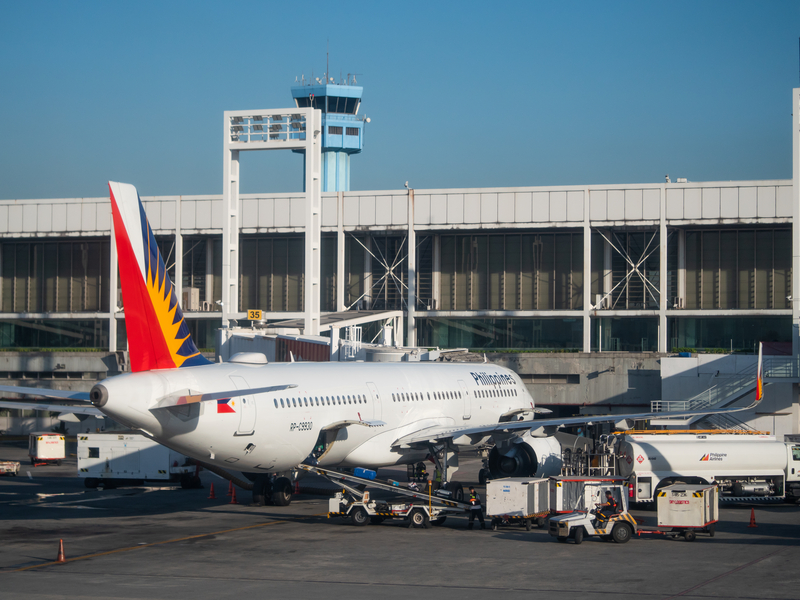
Philippine Airlines is preparing to join oneworld, giving the Philippine flag carrier its first full global alliance home and handing oneworld a much-needed boost in Southeast Asia.

The decision was announced at the International Air Transport Association’s 82nd Annual General Meeting in Rio de Janeiro on June 6, 2026, where Philippine Airlines signed a Memorandum of Understanding to become the alliance’s 16th member airline. Full integration is expected in 2027, after the technical, loyalty, reservations, airport, and customer-service work required for membership is completed.
For passengers, the headline is simple: Mabuhay Miles members will eventually gain reciprocal earning and redemption across oneworld carriers, while eligible elite members will receive alliance-wide benefits such as priority services and lounge access. For the airline industry, however, the bigger story is strategic.
Read our stories in your inbox
Two aviation newsletters. Zero fluff.
PAL did not simply choose a logo to place next to its own. It chose the alliance where its network relationships, long-haul ambitions, and Southeast Asian position already made the most sense.
Why oneworld Was The Natural Fit
The clearest reason Philippine Airlines is joining oneworld is that many of its most important global relationships already sit inside the alliance.
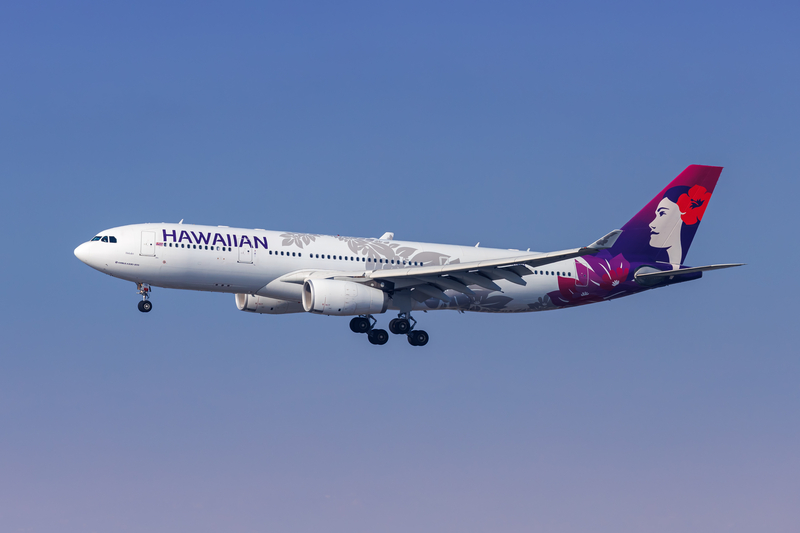
PAL has built cooperation with American Airlines, Qatar Airways, Malaysia Airlines, Cathay Pacific, Qantas, Alaska Airlines, and Hawaiian Airlines. That group is not random. It gives PAL access to key parts of the global map: North America through American and Alaska, the Middle East and onward global connections through Qatar Airways, Southeast Asia through Malaysia Airlines, Hong Kong through Cathay Pacific, and Australia through Qantas.
That is a much stronger foundation than starting fresh inside an alliance where PAL would need to build most of its commercial relationships from the ground up.
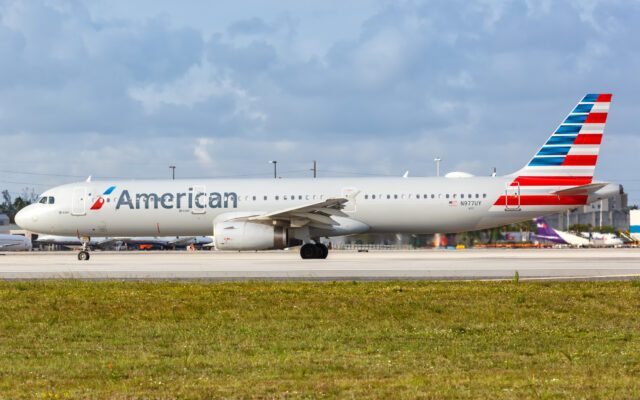
The American Airlines relationship is particularly important. The two carriers launched a codeshare partnership in 2023, giving American customers access to Philippine Airlines-operated services to Manila and Cebu, including routings through Tokyo and selected Pacific gateways. For PAL, American is the most important oneworld anchor in the United States, where the Philippine carrier has long relied on transpacific traffic, visiting-friends-and-relatives demand, and a large Filipino diaspora.
Qatar Airways adds another layer. Through Doha’s Hamad International Airport (DOH), Qatar gives PAL passengers access to an enormous onward network across Europe, Africa, the Middle East, and beyond. That matters because Philippine Airlines does not currently have the same European footprint it once aspired to build. A strong Doha (DOH) partnership gives PAL global reach without needing to operate every long-haul market itself.
Malaysia Airlines also gives oneworld an important Southeast Asian bridge. Kuala Lumpur International Airport (KUL) is not Manila (MNL), but Malaysia Airlines is the alliance’s only existing full member based in Southeast Asia. Adding Philippine Airlines strengthens the alliance’s coverage in a region where oneworld has historically been thinner than Star Alliance and SkyTeam.
Star Alliance Already Had A Crowded Regional Map
Star Alliance would have been an awkward fit for Philippine Airlines, not because it lacks strength, but because it already has substantial coverage across the region.
Singapore Airlines at Singapore Changi Airport (SIN) is one of the most powerful carriers in Southeast Asia and one of Star Alliance’s most premium global members. Thai Airways at Bangkok Suvarnabhumi Airport (BKK) gives Star another major Southeast Asian flag carrier. EVA Air at Taipei Taoyuan International Airport (TPE), ANA at Tokyo Haneda (HND) and Tokyo Narita (NRT), Air China at Beijing Capital (PEK), and United Airlines across the Pacific already provide Star with a dense Asia-Pacific platform.
For PAL, joining Star would have meant entering an alliance where several nearby members already hold strong positions across Southeast Asia, North Asia, and transpacific flying. It may have delivered scale, but not necessarily the same strategic visibility.
There is also a network overlap issue. Singapore Airlines is one of the world’s strongest premium long-haul carriers, and Thai Airways is rebuilding its position from Bangkok (BKK). Both can connect Southeast Asia to Europe, North America, Australia, and the Middle East through well-established hubs. PAL’s Manila (MNL) hub would have had to compete for attention inside an already crowded regional structure.
In oneworld, the equation is different. PAL becomes a much more important piece of the alliance map. Rather than being one of several Southeast Asian options, it gives oneworld a direct flag-carrier presence in the Philippines, one of the largest air travel markets in the region.
SkyTeam Was Also Less Compelling
SkyTeam would have offered different advantages, especially through Delta Air Lines, Air France-KLM, Korean Air, China Airlines, China Eastern, Vietnam Airlines, and Garuda Indonesia. But the strategic fit was not as clean.
SkyTeam already has Vietnam Airlines in Vietnam and Garuda Indonesia in Indonesia, giving it Southeast Asian representation. It also has Korean Air at Seoul Incheon (ICN), China Airlines at Taipei Taoyuan (TPE), and China Eastern at Shanghai Pudong (PVG), all of which provide strong North and East Asian connectivity.
For PAL, SkyTeam may have offered useful reach, but not the same existing partnership momentum. The airline’s most visible and recent commercial cooperation had increasingly pointed toward oneworld members. Moving into SkyTeam would have required a different partnership architecture and may have left PAL with less immediate integration value.
The U.S. side is also important. Delta Air Lines is a powerful SkyTeam carrier, but PAL’s existing U.S. cooperation had been moving through American Airlines and, more recently, the Alaska-Hawaiian ecosystem. That matters because the United States is one of PAL’s most important long-haul markets. A global alliance decision has to support where the airline actually flies, where its passengers connect, and where its partners can feed traffic.
By that measure, oneworld offered the more coherent path.
A Major Win For oneworld In Southeast Asia
For oneworld, Philippine Airlines fills a long-standing gap.
The alliance has strong members in North Asia, including Cathay Pacific, Japan Airlines, and now a deeper set of partners through the broader Alaska-Hawaiian group across the Pacific. It has Qantas in Australia, Qatar Airways in the Middle East, and Malaysia Airlines in Southeast Asia. But compared with Star Alliance and SkyTeam, oneworld’s Southeast Asian footprint has been relatively limited.
PAL changes that. The airline brings direct access to the Philippines, an archipelago market where domestic connectivity matters enormously. Its network includes major Philippine points such as Manila (MNL), Cebu (CEB), Davao (DVO), Iloilo (ILO), Bacolod (BCD), Caticlan/Boracay (MPH), Puerto Princesa (PPS), and many other destinations that are difficult for foreign alliance carriers to serve directly.
That domestic reach is strategically valuable. A passenger flying from Dallas/Fort Worth (DFW), New York (JFK), London Heathrow (LHR), Doha (DOH), Sydney (SYD), Tokyo Haneda (HND), or Hong Kong (HKG) into Manila (MNL) can potentially continue deeper into the Philippines on a single alliance platform once integration is complete.
For oneworld, that is the point. PAL is not just another airline added to a roster. It brings local distribution, domestic feed, and national-market access in a country with strong outbound, inbound, leisure, business, and diaspora demand.
PAL’s Long-Haul Fleet Makes The Timing Important
The alliance move also comes as Philippine Airlines is renewing and strengthening its long-haul fleet.
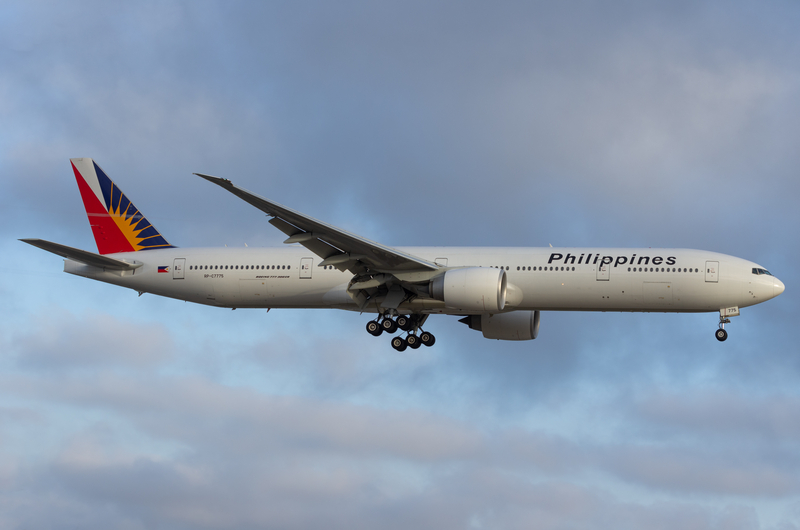
PAL’s widebody operation includes the Airbus A350 family, Boeing 777-300ERs, and Airbus A330s. The most important development is the arrival of the Airbus A350-1000, the largest member of the A350 family and a key aircraft for future long-haul growth. PAL’s first A350-1000 was delivered in late 2025 in a three-class, 382-seat configuration, joining the carrier’s existing A350-900 fleet and supporting plans for additional transpacific capacity.
That matters because alliance membership is most valuable when paired with a credible long-haul network. PAL is not joining oneworld as a purely regional airline. It operates long-haul services from Manila Ninoy Aquino International Airport (MNL) to key markets in North America, Australia, Asia, and the Middle East, while also using narrowbody aircraft such as the Airbus A321neo on thinner regional and medium-haul routes.
The A350-1000 gives PAL a more competitive tool for long sectors across the Pacific. Its range, efficiency, and cabin size make it well suited for routes where the airline needs both passenger capacity and a stronger premium product. For oneworld, that helps make PAL more than a feed partner. It becomes a long-haul operator capable of supporting alliance connectivity across the Pacific.
This is where the alliance logic becomes more obvious. PAL’s aircraft strategy, North American focus, and oneworld partnerships are beginning to align at the same time.
What Mabuhay Miles Members Can Expect
The passenger-facing benefits will not appear overnight. Alliance entry requires extensive back-end work, including frequent flyer integration, airport signage, through-check processes, loyalty recognition, lounge access rules, interline coordination, and booking-system compatibility.
Once PAL is fully integrated, Mabuhay Miles members should be able to earn and redeem miles across oneworld member airlines. Elite members should also gain recognition across the alliance, including priority check-in, priority boarding, additional baggage benefits where applicable, and lounge access based on oneworld status tier and itinerary rules.
That will be a major shift for Philippine Airlines customers. Today, PAL has partnerships, but they are fragmented. A global alliance turns those individual relationships into a more consistent network proposition. A Mabuhay Miles member flying on American Airlines, British Airways, Cathay Pacific, Japan Airlines, Qatar Airways, Qantas, Malaysia Airlines, or another oneworld member will eventually have a clearer path to earning, redeeming, and receiving status recognition.
For frequent flyers in the Philippines, that is a meaningful improvement. It gives PAL a stronger loyalty proposition against foreign airlines that already belong to global alliances and have long offered reciprocal benefits to their elite customers.
Why This Matters For Manila And Cebu
The move also strengthens the role of Manila (MNL) and Cebu (CEB) within global alliance flows.
Manila Ninoy Aquino International Airport (MNL) is PAL’s primary hub and the center of the airline’s long-haul network. It is also one of Southeast Asia’s most capacity-constrained major airports, which makes efficient connectivity and partner feed especially important. Alliance membership can help PAL capture more value from each long-haul arrival and departure by linking MNL more tightly to oneworld’s global distribution system.
Cebu’s Mactan-Cebu International Airport (CEB) is also significant. Cebu is not just a secondary city; it is a major Philippine gateway with domestic, regional, and tourism demand. For oneworld passengers, stronger access to Cebu (CEB) gives the alliance another entry point into the central Philippines and the Visayas region.
PAL’s domestic network is the real differentiator. Foreign alliance carriers can fly to Manila (MNL), and some may serve Cebu (CEB), but they cannot replicate PAL’s local network across the archipelago. That makes PAL valuable in a way that goes beyond long-haul flying.
A Better Alliance Position After A Difficult Decade
Philippine Airlines has gone through a challenging period over the past decade, including restructuring during the pandemic and a long-running effort to improve fleet efficiency, reliability, and profitability. Joining oneworld suggests the airline is now viewed as a more stable and strategically useful partner.
That is important. Global alliances do not simply add carriers because they want more logos on a map. New members have to bring network value, operational credibility, loyalty integration potential, and a commercial case that benefits existing members.
PAL appears to meet those requirements now. It gives oneworld a stronger Southeast Asian presence, adds unique Philippine domestic destinations, supports transpacific connectivity, and already has working relationships with several members. The airline’s improved long-haul fleet strategy also gives the alliance confidence that PAL can support premium and connecting traffic in a meaningful way.
The move also gives PAL a stronger global identity. For years, the carrier has occupied an unusual position: a historic flag carrier, Asia’s oldest commercial airline, and a long-haul operator, but one without a full global alliance. That gap is now closing.
Bottom Line
Philippine Airlines’ decision to join oneworld is a logical strategic move rather than a surprise alliance pick. PAL’s strongest recent partnerships already leaned heavily toward oneworld, especially through American Airlines, Qatar Airways, Malaysia Airlines, Cathay Pacific, Qantas, Alaska Airlines, and Hawaiian Airlines.
Star Alliance and SkyTeam both have strong Asia-Pacific networks, but each already has substantial regional coverage. oneworld had the clearest gap in Southeast Asia, and PAL had the clearest opportunity to fill it.
For oneworld, the addition brings 31 unique destinations and a stronger position in the Philippines. For PAL, it brings global recognition, a broader loyalty proposition, stronger international feed, and a more competitive position for Mabuhay Miles members.
The timing is also important. With the Airbus A350-1000 joining PAL’s long-haul fleet and the airline continuing to rebuild its international profile, oneworld membership gives Philippine Airlines a stronger platform for the next phase of its growth. This is not simply an alliance announcement. It is a sign that PAL wants to be treated as a more serious global network carrier again.
Keep reading FlyMag
Get the Daily Brief in the morning or the Route Watch weekly recap on Fridays. Or both.