If oneworld wants to fill one of its most obvious remaining gaps, Canada is the place to look. And if it wants a Canadian airline that already behaves like a partial alliance partner, Porter Airlines is the clearest candidate.

That does not mean a deal is imminent.
What it does mean is that Porter now sits in an unusually strong strategic position. It already partners with multiple oneworld carriers, it has expanded well beyond its old regional niche, and its leadership has openly acknowledged that oneworld has no Canadian member and that Porter would be an “obvious answer” if it chose to join.
Read our stories in your inbox
Two aviation newsletters. Zero fluff.
For aviation readers, that makes this less a rumor than a live strategic possibility.
oneworld Still Has A Clear Hole In Canada
The competitive picture is straightforward.
Star Alliance has Air Canada. SkyTeam does not have a formal Canadian member, but WestJet’s deep ties with Delta and Korean Air give it a strong indirect relationship with that alliance world. oneworld, by contrast, has no Canadian airline at all.
That gap matters because Canada is a major aviation market with strong transborder flows, substantial international demand, and a large premium and business-travel base. For a global alliance, being absent from a market like that is not ideal, especially when rivals already have clearer coverage.
Porter is the one airline that most neatly addresses that weakness.
Porter Already Has The Right Kind Of Partnerships
What makes Porter more credible than a generic alliance candidate is how much groundwork is already in place.
Porter Adds Austin and Levels Up Chicago to O’Hare as Toronto Flying Gets More Choice
The airline has bilateral relationships with several oneworld carriers, including American Airlines, Alaska Airlines, British Airways, Qatar Airways, and Japan Airlines. Those partnerships already give Porter practical experience in codesharing, mileage reciprocity, one-ticket itineraries, baggage through-check logic, and network cooperation.
That matters because alliance membership is not just about signing a ceremonial agreement. It is about whether an airline can actually integrate operationally, commercially, and technologically with existing members.
Porter already looks like it is testing that environment.
American And Alaska Are Especially Important
The two most important Porter relationships inside the oneworld orbit are probably American and Alaska.
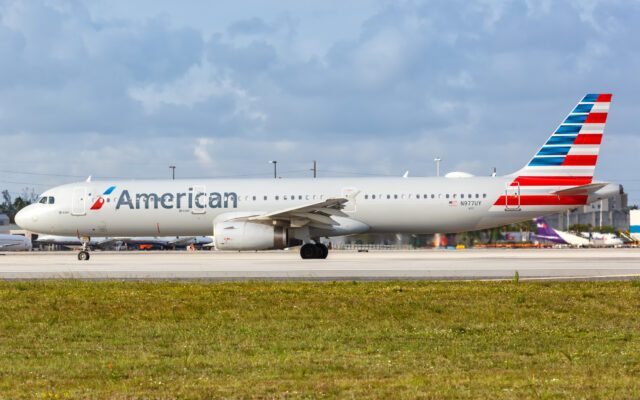
American gives Porter a strong U.S. transborder bridge and a loyalty hook through AAdvantage. Alaska adds West Coast reach and another deep frequent-flyer relationship. Together, those two partnerships already place Porter inside a meaningful North American oneworld ecosystem before any full membership discussion has formally advanced.
That is a strong foundation for something bigger, if Porter decides the economics of alliance entry are worth it.
Porter Now Looks More Like A National Competitor Than A Boutique Airline
This question would have looked very different a few years ago.
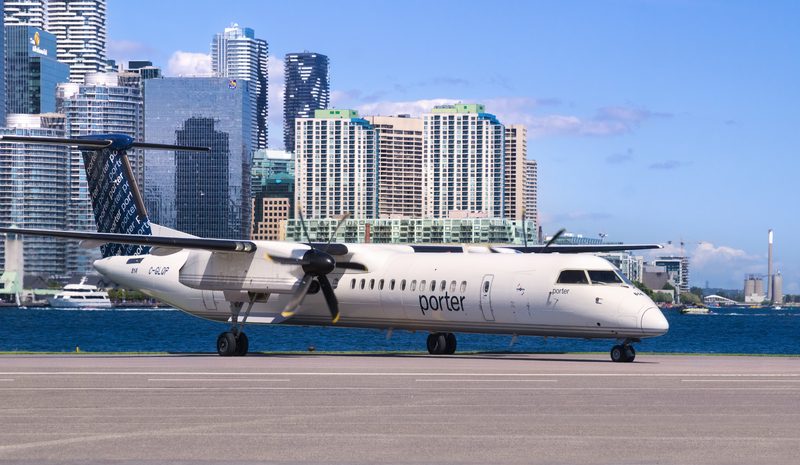
Porter was once largely defined by Billy Bishop Toronto City Airport (YTZ), turboprops, and short-haul eastern Canadian flying. That version of Porter would have been interesting, but too limited to truly solve a Canada-sized alliance gap.
The airline today is different.
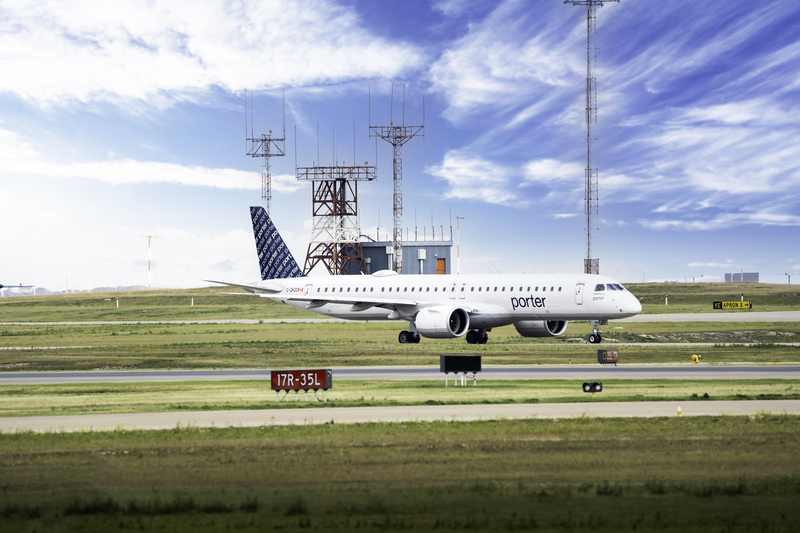
Its rapid Embraer E195-E2 expansion has turned it into a much broader North American operator with a much more serious presence at Toronto Pearson International Airport (YYZ) and a much larger national footprint. That growth is exactly why the alliance question now feels plausible rather than fanciful.
Porter is no longer just a niche Canadian airline. It is increasingly a real competitive force.
The Fleet Change Is A Big Part Of Why This Conversation Exists
The fleet story is central here.
Porter’s growth has been powered by the Embraer E195-E2, which has transformed the airline from a short-haul regional player into a carrier capable of flying farther, serving larger markets, and building a more serious transborder and North American network. The Dash 8 operation still matters, but the E2 fleet is what has changed the airline’s strategic relevance.
That matters because alliances do not need symbolic members. They need carriers with enough scale and reach to add real network value.
The E2 fleet helps Porter look much more like that kind of airline.
Porter’s Product Is Also Closer To oneworld’s Style Than It Used To Be
There is also a softer but important point: Porter’s onboard proposition fits oneworld’s brand direction better than many people might expect.
The airline has invested in a more elevated economy experience, with free Wi-Fi, complimentary beer and wine, and a more premium-feeling cabin environment than many North American short-haul competitors offer. That does not make Porter a luxury airline, but it does make it easier to imagine inside an alliance that generally prefers quality-focused members over purely stripped-down low-cost operators.
In other words, Porter’s brand is not a mismatch.
Membership Is Still Far From Automatic
All that said, there is an important reason this remains speculative.
Porter itself has acknowledged that it is still evaluating whether full alliance membership makes financial and strategic sense compared with maintaining bilateral partnerships. That is a real question. Joining a global alliance is expensive, operationally demanding, and time-consuming. It requires systems integration, loyalty alignment, service consistency, and a long list of process upgrades and audits.
For some airlines, partnerships deliver most of the value without the cost and complexity of full membership.
Porter may still decide that is enough.
WestJet Is Not The Better Fit For oneworld
If oneworld were looking elsewhere in Canada, WestJet is the only other name that naturally enters the conversation. But in strategic terms, WestJet looks far less likely.
Its ownership and partnership structure already leans more naturally toward SkyTeam-linked relationships, and its long-haul network overlaps more heavily with airlines that oneworld already has in place. Porter, by contrast, fills a cleaner gap. It offers strong Canadian domestic and transborder value without bringing the same strategic baggage.
That is one reason Porter remains the more intriguing alliance candidate.
The Timeline Would Be Long Even If Everyone Agreed
Even if Porter and oneworld both decided tomorrow that they wanted this to happen, it would still take time.
Alliance membership is not a quick press release. It typically involves a sponsor airline, technical integration work, loyalty coordination, audits across operational and commercial functions, and a staged certification process that can take 12 to 24 months or more.
That is worth remembering because airline-alliance speculation often makes things sound more immediate than they really are. Porter may be the most logical candidate. That does not mean Porter is about to join next quarter.
Bottom Line
Porter Airlines is arguably oneworld’s most logical missing Canadian partner. It already has meaningful ties with multiple oneworld carriers, it has grown into a much more serious national and transborder airline, and its leadership has openly acknowledged the strategic logic of filling oneworld’s Canada gap.
But logic is not the same thing as membership.
For now, Porter looks like a very plausible future oneworld entrant — perhaps the most plausible in Canada — but the airline still has to decide whether the cost, complexity, and strategic obligations of full alliance membership are worth more than the flexibility it currently enjoys through bilateral partnerships.
Keep reading FlyMag
Get the Daily Brief in the morning or the Route Watch weekly recap on Fridays. Or both.