Air Koryo occupies a strange niche in global aviation: a flag carrier with Cold War roots, a tightly constrained route map, and a fleet that spans everything from relatively modern Russian-built jets to turboprops and classic Soviet-era airliners that have virtually disappeared elsewhere. To understand the airline, you have to zoom out beyond timetables and tail numbers. Air Koryo has always been less a conventional commercial enterprise than a state instrument—shaped by geopolitics, sanctions, and the simple reality that North Korea’s international connectivity is deliberately narrow.

What follows is a historical look at how Air Koryo got here: its origins, fleet development, route strategy, safety and regulatory pressure, and how it operates today.
Roots in a Soviet Partnership (1950–1955)
Air Koryo’s lineage is typically traced back to the early Cold War era, when the newly established DPRK needed air links to its principal patron and security partner: the Soviet Union. Early reporting and later historical summaries describe an initial Soviet–North Korean joint venture created to connect Pyongyang with Moscow, with operations disrupted by the Korean War and then restarted in the war’s aftermath.
Read our stories in your inbox
Two aviation newsletters. Zero fluff.
By the mid-1950s, the carrier had re-emerged in a more formal state-airline shape, operating under names that reflected the DPRK’s civil aviation bureaucracy of the time. The commonly cited “birthdate” of the airline as a state carrier is 21 September 1955, when operations began as Korean Airways with a starter fleet built around rugged Soviet types suited to a young airline operating in a heavily centralized system: the Lisunov Li-2 (a DC-3 derivative), the Antonov An-2, and the Ilyushin Il-12.
In those early years, North Korea’s civil aviation priorities were straightforward: basic domestic connectivity, limited regional links (especially into China), and a strategic long-haul connection to the Soviet sphere when equipment and politics permitted it.
Building a Cold War Network (1960s–1980s)
As the airline matured, its fleet followed a pattern common across many Soviet-aligned carriers: incremental modernization through Moscow’s supply chain.
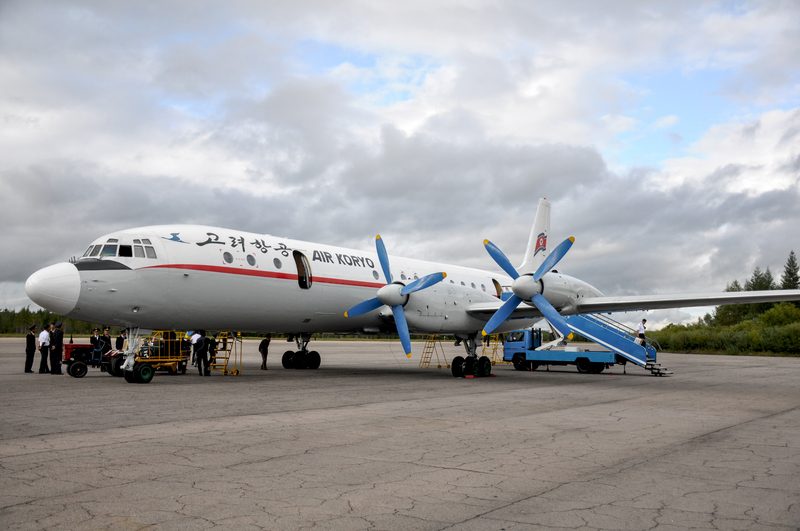
In the 1960s, the airline added Ilyushin Il-14 aircraft and later Il-18 turboprops—workhorses that could handle relatively austere infrastructure while extending range and payload. The Il-18 became particularly important because it could serve both domestic sectors and longer regional international flights with reasonable economics and robust performance.
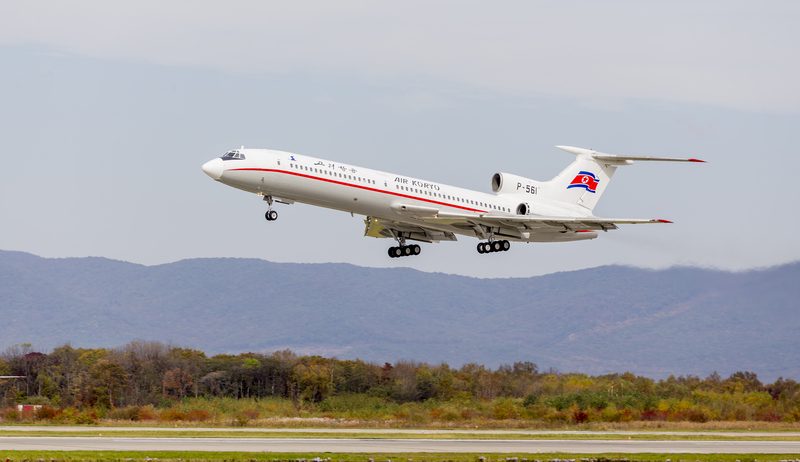
By the 1970s, the carrier stepped into the jet age with aircraft that defined much of its identity for decades. A pivotal delivery was the Tupolev Tu-154 tri-jet, introduced to handle longer international routes. In the Cold War context, those routes were not about competing for discretionary leisure demand; they were a function of political geography. The airline’s international network historically connected Pyongyang with a string of friendly or aligned capitals and hubs across the Soviet Union and Eastern Europe.
Contemporary accounts and later retrospectives frequently mention services reaching as far as Moscow and Central/Eastern European destinations. In practical terms, early Tu-154 variants imposed operational constraints—range and performance limits often meant intermediate stops on the longest sectors, and route planning was shaped as much by overflight politics as by aircraft capability.
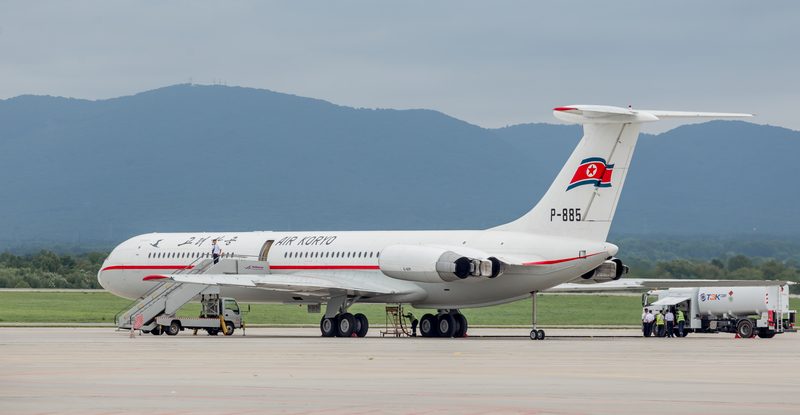
The long-range Ilyushin Il-62—another classic Soviet type—also featured in the airline’s story, enabling more credible long-haul operations and eventually becoming closely associated with government transport duties. Even today, Il-62s remain among the most recognizable Air Koryo aircraft globally, because so few are still operated anywhere.
From CAAK to Air Koryo (1990s): A Post-Soviet Contraction
The end of the Cold War was a structural shock for many state airlines, but Air Koryo faced an unusually sharp version of the problem: the loss of Eastern Bloc demand, reduced political support networks, and the collapse of the Soviet system that had underpinned aircraft acquisition and technical support.
In 1992, Korean Airways was rebranded as Air Koryo, adopting a name deliberately tied to Korean historical identity. The rebrand did not signal liberalization in the commercial sense; rather, it was a state carrier adapting to a dramatically narrower external environment.
Route reality in the 1990s became increasingly concentrated in the DPRK’s limited set of viable international corridors—most importantly China and, when possible, Russia. Air Koryo also sought cargo capability to support trade flows where permitted, adding large freighters such as the Ilyushin Il-76 to its orbit.
This era is crucial to understanding why Air Koryo’s fleet today looks the way it does. Most global airlines in the 1990s and 2000s followed a high-frequency replacement cycle toward Western narrowbodies and standardized support ecosystems. Air Koryo did not have that option at scale. The airline instead preserved and extended the service life of aircraft that could be supported within its political and technical constraints.
A Brief Window of Inter-Korean Charters (2002–2003)
One of the most historically interesting chapters is the short-lived period when North–South rapprochement created limited air connections.
In the early 2000s, a mix of political events and special projects produced inter-Korean charter activity. A notable milestone came in September 2003, when regular charter flights were launched between North and South Korea and an Air Koryo Tu-154 landed at Incheon. While this did not represent normal route liberalization—services were tightly controlled and politically contingent—it remains one of the rare moments in which Air Koryo operated into South Korea in a structured way.
For aviation observers, these charters were a reminder that Air Koryo’s network has always been less about market logic than about diplomatic temperature. When the politics cooled, the flying stopped.
Safety Scrutiny and the EU Ban (2006 onward)
No history of Air Koryo is complete without addressing safety oversight and the regulatory limits that shaped where the airline could operate.
In 2006, Air Koryo was placed on the European Union’s Air Safety List, which restricts or bans airlines that do not meet required international safety standards for EU operations. This did two things at once: it removed any realistic pathway back to the European markets the carrier once served during the Cold War era, and it publicly framed Air Koryo as an airline operating under serious external scrutiny.
Importantly, EU restrictions have been updated over time as regulations evolved. In practice, the result has been enduring: Air Koryo has not operated regular commercial service into the EU, and the airline’s operational “center of gravity” has remained in Northeast Asia.
For industry readers, the larger point is that regulatory confidence is not just a paperwork issue—it affects leasing channels, insurance, technical partnerships, and the ability to rotate aircraft through global MRO ecosystems. For Air Koryo, those constraints layered on top of sanctions and financial isolation.
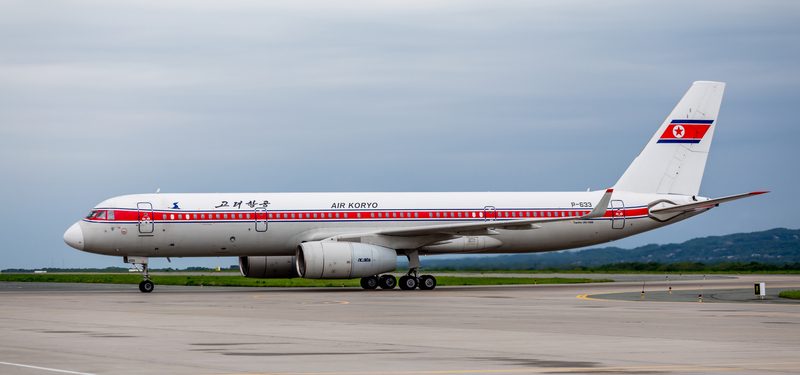
Modernization on a Tight Leash: Tu-204 and An-148 (2007–2015)
Air Koryo’s most visible modernization push came via Russian-built aircraft acquired in small numbers.
The Tupolev Tu-204 became the flagship for international services. Deliveries of Tu-204 variants in the late 2000s and early 2010s gave the airline a jet that—at least on paper—aligned better with modern navigation and compliance expectations than its older Soviet-era types. While Air Koryo never became a “Tu-204 airline” in the way that some carriers become synonymous with a type, the aircraft did provide a credible backbone for key international links.
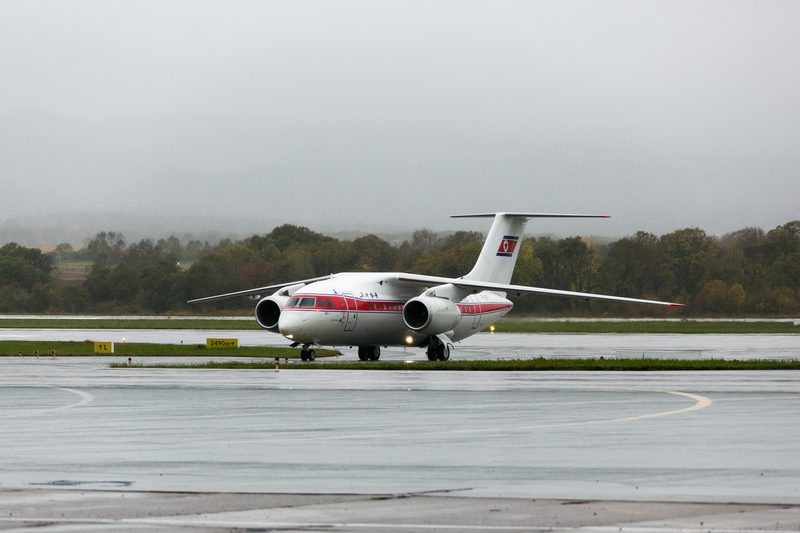
In the 2010s, Air Koryo also introduced the Antonov An-148 regional jet. For an airline whose scheduled network is short-to-medium haul and heavily concentrated in a few city pairs, the An-148’s capacity and range profile made sense—particularly for China and Russia routes where demand can be variable and political conditions matter. The presence of the An-148 also signaled something else: Air Koryo was not merely keeping museum pieces alive; it was selectively acquiring aircraft that could operate “normally” in the regional system when permitted.
That said, modernization remained limited in scale. Small fleets create their own operational problems: spares provisioning, crew rostering, and dispatch reliability become harder when you can’t substitute easily across a larger standardized subfleet.
Routes and Networks: From Eurasian Reach to a Narrow Corridor
The Cold War footprint
Historically, Air Koryo (and its predecessor structures) operated far beyond today’s modest map, linking Pyongyang with the Soviet Union and Eastern Europe. The airline’s route strategy matched North Korea’s political geography: service to friendly capitals, carried by Soviet equipment, with schedules that reflected diplomatic and state needs as much as passenger demand.
The modern scheduled network
In the contemporary era, scheduled international services have typically centered on:
-
Beijing (a critical diplomatic and economic link)
-
Shenyang (strategic for Northeast China connectivity)
-
Vladivostok (Russia’s Far East gateway)
Frequency has fluctuated significantly over time—affected by sanctions pressure, border controls, and shifts in DPRK policy. What looks like a small route map is, in reality, the airline operating within one of the narrowest feasible international corridors in global commercial aviation.
Expansion attempts: Kuala Lumpur, Kuwait, and charters
Air Koryo has periodically attempted to broaden its network through special arrangements and politically viable markets. Notable examples include:
-
Kuala Lumpur: service launched in the early 2010s and later discontinued.
-
Kuwait City: seasonal operations linked to labor travel patterns and state-approved movements.
In addition, the airline has operated tourism-linked charters from various Chinese cities at different times, reflecting the role of controlled inbound tourism in North Korea’s limited engagement with international passenger travel.
Domestic Flying and the “Heritage Fleet” Reality
Domestic flying is where Air Koryo’s reputation among aviation enthusiasts is most distinctive. When conditions allow, the airline operates internal sectors linking Pyongyang with airports such as Samjiyon, Orang/Chongjin, and other regional fields, often using older equipment that has largely vanished from commercial passenger service elsewhere.
Aircraft types associated with domestic operations and special flights have included:
-
Ilyushin Il-18 turboprops
-
Tupolev Tu-134 jets
-
Antonov An-24 turboprops
-
Antonov An-2 biplanes for niche missions
-
Helicopter types for specific state or logistical roles (reported in enthusiast-tour contexts)
For a professional aviation audience, the key operational takeaway is that this is not “heritage flying” in the Western marketing sense—it’s long-life asset utilization under constraints. The aircraft are kept operational because replacements are hard to procure, and because domestic operations can be tailored to what the state wants to move and when.
Charter, State, and VIP Roles
Air Koryo also functions as a transport arm for state requirements—especially for delegations and special events.
A high-profile example was the airline’s participation in moving North Korean teams and officials for the 2014 Incheon Asian Games, when Air Koryo aircraft operated into Incheon as part of the official delegation movement. These operations underscore the airline’s hybrid identity: it is simultaneously a commercial carrier (in form) and a state transport capability (in function).
The continued presence of long-range Il-62 aircraft in the broader Air Koryo ecosystem is often discussed in the context of government transport. Even when not operating on scheduled commercial services, these aircraft remain symbolically and operationally significant.
Passenger Experience: Product, Cabin Culture, and Onboard Media
Air Koryo is often described in extremes—either as an aviation curiosity or as a “worst airline” punchline. The reality, based on repeated traveler accounts, is more specific:
-
Cabins on older aircraft frequently retain vintage layouts and fittings, while Tu-204 and An-148 cabins present a more modern baseline (though not comparable to major global carriers).
-
Onboard media has historically included state-produced content and locally curated programming.
-
Service routines are typically formal, consistent, and shaped by the airline’s controlled environment rather than by competitive customer experience design.
Because outside observation is limited and the airline operates under unusual constraints, cabin-product claims should always be framed carefully: what is true on one aircraft at one time may not generalize across the fleet.
Accidents, Incidents, and the Problem of Limited Transparency
Air Koryo’s accident history is not easily discussed with the same confidence as that of airlines operating under transparent regulatory regimes. The combination of limited public reporting, restricted access, and political information control means that Western accident databases may not capture every event, especially domestic incidents.
That said, major international reporting has long cited a fatal Il-62 accident in 1983 outside North Korea as the most prominent deadly event associated with the airline’s broader operational history. Beyond that, the publicly documented incident profile is relatively sparse—though “sparse” in this context can reflect information scarcity as much as operational reality.
For aviation professionals, the more meaningful safety story has been the airline’s standing with international regulators, especially in Europe, and the way those restrictions shaped fleet and route strategy.
COVID, Border Closure, and the Slow Return (2020–2026)
North Korea’s pandemic-era border closure was among the most stringent in the world, and it effectively froze much of Air Koryo’s international activity for an extended period.
By 2023, signs emerged that the DPRK was cautiously reopening limited connectivity, including commercial Air Koryo movements involving Beijing. Since then, schedules and announced intentions have shifted as Pyongyang recalibrated border policy, tourism ambitions, and diplomatic posture.
As of early 2026, reporting and schedule data indicated continued emphasis on the core Northeast Asia links and exploratory signals about additional routes (including discussion of Shanghai), though any announced service should be treated as provisional until it demonstrates sustained operations.
What Air Koryo Tells Us About Aviation Under Constraint
Air Koryo’s history is, in many ways, the story of aviation operating without the normal tools airlines use to modernize:
-
Limited aircraft procurement channels
-
Restricted financing and leasing options
-
Narrow overflight and market access
-
High regulatory friction in many jurisdictions
-
Political volatility directly affecting route rights and demand
Yet the airline persists. It does so by keeping a small set of politically essential routes alive, maintaining a mixed fleet that can serve both state and limited commercial needs, and adapting tactically when openings appear—whether that’s a new aircraft type, a new charter opportunity, or a thaw in border policy.
For aviation experts, Air Koryo is less an “oddity” than a case study: what an airline becomes when geopolitics—rather than competition—sets the boundaries of the network plan.
Keep reading FlyMag
Get the Daily Brief in the morning or the Route Watch weekly recap on Fridays. Or both.