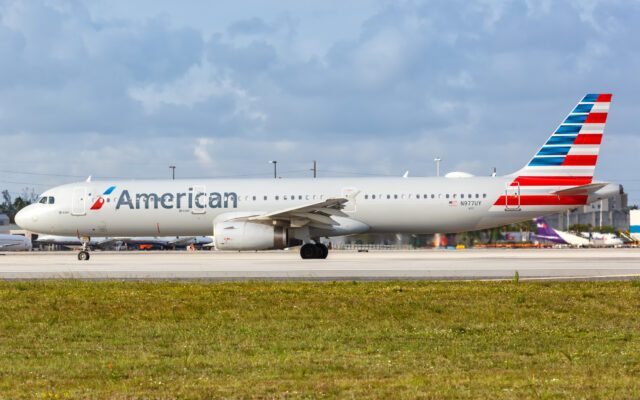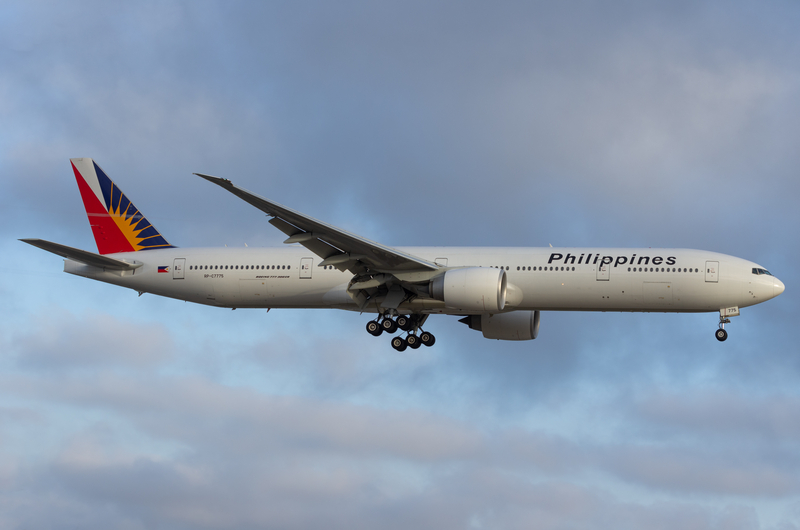
Philippine Airlines is joining the oneworld alliance, a major strategic move that will bring the Philippines’ flag carrier into the same global airline group as American Airlines, British Airways, Cathay Pacific, Japan Airlines, Malaysia Airlines, Qantas, Qatar Airways, and other major international carriers.

The announcement was made in Rio de Janeiro during the International Air Transport Association’s 82nd Annual General Meeting, where Philippine Airlines signed a Memorandum of Understanding to begin the alliance accession process.
For now, PAL is a member-designate. That distinction matters. The airline has not yet formally entered oneworld, and reciprocal customer benefits will not begin until the accession process is completed. But the direction is now clear: Philippine Airlines is moving from being an independent full-service carrier with bilateral partnerships into one of the world’s three major global airline alliances.
Read our stories in your inbox
Two aviation newsletters. Zero fluff.
For oneworld, the move fills a meaningful gap in Southeast Asia. Malaysia Airlines is already a member, while Cathay Pacific gives the alliance a powerful presence in Hong Kong and southern China. Philippine Airlines adds something different: direct access to the Philippine domestic market, a large Filipino diaspora, and long-haul connectivity between Manila, North America, Australia, the Middle East, and Asia.
PAL Becomes A oneworld Member-Designate
Philippine Airlines was invited to join oneworld as a member-designate by the oneworld Governing Board, which is made up of the chief executives of the alliance’s member airlines.
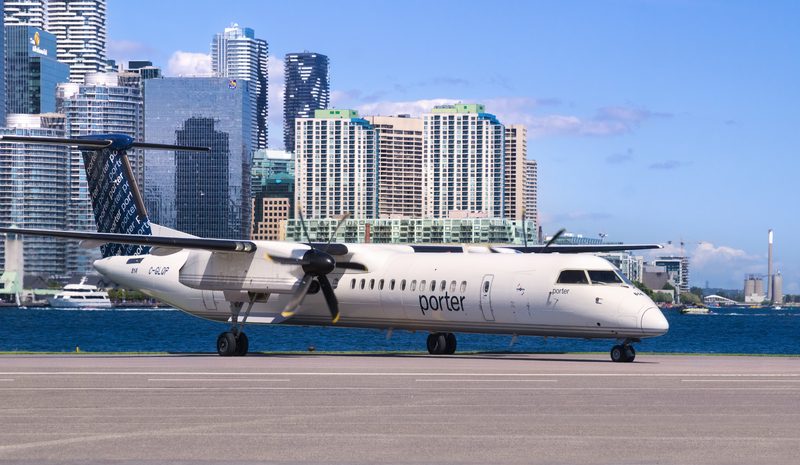
That is the formal first step. PAL now enters the detailed work required to become a full member, including systems integration, loyalty-program alignment, airport-service coordination, reciprocal benefits, lounge access, customer-service standards, and interline/codeshare processes across the alliance.
This work is not instant. Alliance entry is complicated, especially for a full-service airline with a large domestic network, long-haul routes, and an established loyalty program. PAL must make sure Mabuhay Miles, airport handling, check-in systems, through-baggage processes, elite recognition, lounge access, and irregular-operations handling work consistently with oneworld carriers.
Once that process is complete, PAL will become oneworld’s 16th member airline.
For passengers, the biggest changes will come later. The announcement is important today, but the practical benefits will begin only when PAL formally enters the alliance.
Why oneworld Wants Philippine Airlines
The strategic logic is straightforward: the Philippines is one of the largest aviation markets in Southeast Asia, and oneworld has lacked a Philippine member.
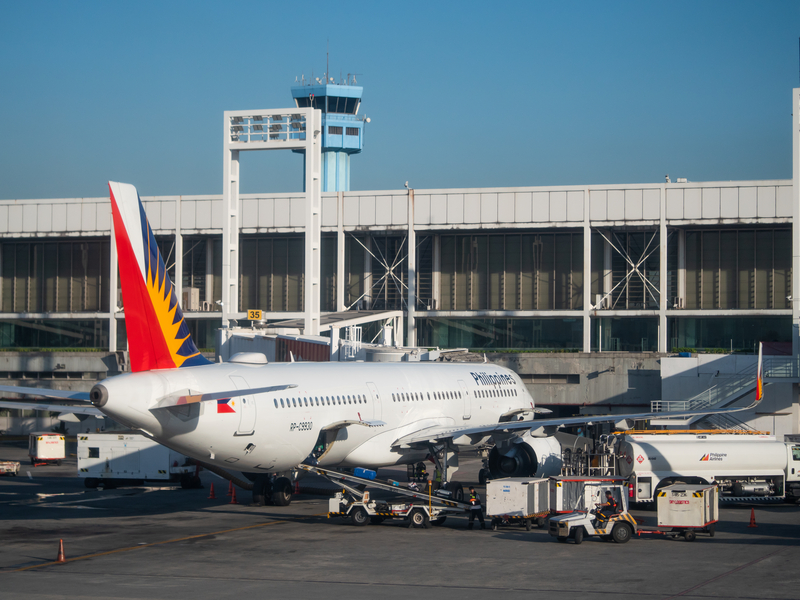
PAL brings a domestic network that is difficult for foreign carriers to replicate. From its hubs in Manila Ninoy Aquino International Airport (MNL) and Mactan-Cebu International Airport (CEB), the airline serves 29 destinations across the Philippines and 40 international destinations across Asia, North America, Australia, and the Middle East.
That gives oneworld something valuable: a local network inside an archipelagic country where air travel is essential. The Philippines has more than 7,000 islands, and domestic aviation plays a central role in connecting Manila, Cebu, Davao, Iloilo, Bacolod, Cagayan de Oro, Puerto Princesa, Zamboanga, General Santos, and other important cities.
For alliance passengers arriving in Manila (MNL) or Cebu (CEB), PAL can provide domestic onward access that oneworld previously lacked in a fully integrated way.
That is why the “31 unique destinations” figure is important. These are not just incremental points on a map. They are destinations that strengthen oneworld’s reach in a country where local airline access matters.
A Stronger Southeast Asia Map
PAL’s entry gives oneworld a second Southeast Asian full member after Malaysia Airlines.
That matters because Southeast Asia is one of the world’s most competitive and fragmented aviation regions. Star Alliance has Singapore Airlines and Thai Airways, while SkyTeam has Vietnam Airlines and Garuda Indonesia. oneworld has historically relied on Malaysia Airlines, Cathay Pacific, and partners outside the region for much of its Southeast Asia connectivity.
Philippine Airlines changes that balance.
The Philippines sits in a useful geographic position between Northeast Asia, Southeast Asia, Australia, and the transpacific market. Manila (MNL) is not as large a connecting hub as Singapore (SIN), Bangkok (BKK), Kuala Lumpur (KUL), or Hong Kong (HKG), but it has a large local market, strong diaspora demand, and nonstop long-haul links that are strategically useful to oneworld carriers.
PAL is not joining as a small regional airline. It brings long-haul flying, domestic scale, and a strong national brand in a country with a large population and deep international travel demand.
That is exactly the kind of network gap global alliances try to fill.
What Passengers Will Eventually Gain
The most obvious passenger-facing changes will come through Mabuhay Miles.
Once PAL formally joins oneworld, Mabuhay Miles members will be able to earn and redeem miles across oneworld member airlines. That means PAL customers could eventually use their loyalty currency on airlines such as American Airlines, British Airways, Cathay Pacific, Japan Airlines, Malaysia Airlines, Qantas, Qatar Airways, Iberia, Finnair, Alaska Airlines/Hawaiian Airlines, Royal Air Maroc, Royal Jordanian, SriLankan Airlines, Oman Air, and Fiji Airways.
The benefits also work in reverse. Frequent flyers from those airlines will gain access to Philippine Airlines earning and redemption opportunities, including PAL’s domestic Philippine network and long-haul services from Manila and Cebu.
Eligible top-tier PAL customers will also gain oneworld status recognition, including priority check-in, priority boarding, additional baggage privileges, and lounge access depending on their tier. oneworld’s top-tier travelers can access more than 700 premium airport lounges, including branded oneworld lounges at Amsterdam Schiphol (AMS) and Seoul Incheon (ICN), as well as First Class lounges and priority facilities where eligible.
For PAL’s most loyal customers, that is a major upgrade. Mabuhay Miles has been useful within PAL’s own system and select partnerships, but alliance membership makes it far more globally relevant.
Why This Matters For Long-Haul Flying
Philippine Airlines has been rebuilding and modernizing its long-haul network, and oneworld membership should support that effort.
PAL already operates some of the longest nonstop routes in the world from Manila (MNL), including services to North America. The airline’s long-haul fleet includes Boeing 777-300ERs, Airbus A350-900s, and newer Airbus A350-1000s, along with Airbus A330-300s on regional and medium-haul routes. It also uses Airbus A321neo aircraft on selected longer narrowbody missions.
The A350-1000 is especially important. PAL took delivery of its first A350-1000 in late 2025, giving the airline a new flagship aircraft for long-haul transpacific flying. Airbus describes the aircraft as configured with 382 seats and designed to support PAL’s long-haul operations across the Pacific.
That fleet renewal matters because alliance membership increases the value of long-haul routes. A passenger flying PAL from Los Angeles (LAX), San Francisco (SFO), Seattle (SEA), Honolulu (HNL), Vancouver (YVR), Toronto (YYZ), Sydney (SYD), or Melbourne (MEL) into Manila (MNL) can become part of a broader oneworld itinerary rather than a standalone PAL journey.
For oneworld carriers, PAL’s long-haul flights create new options for customers heading to the Philippines and beyond. For PAL, the alliance adds feed and recognition in markets where it competes against much larger global airlines.
A Boost For North America–Philippines Traffic
The North America–Philippines market is one of PAL’s most important strengths.
The Filipino diaspora in the United States and Canada is large, and visiting-friends-and-relatives traffic is a core part of PAL’s long-haul business. The airline has a strong brand among Filipino travelers because it offers nonstop service, Filipino onboard hospitality, and direct access to Manila.
oneworld membership should strengthen that position.
American Airlines is one of oneworld’s largest members and has major hubs across the United States, including Dallas/Fort Worth (DFW), Los Angeles (LAX), Chicago O’Hare (ORD), New York JFK (JFK), Philadelphia (PHL), Charlotte (CLT), Miami (MIA), Phoenix (PHX), and Washington Reagan (DCA). Alaska Airlines and Hawaiian Airlines also bring powerful West Coast, Hawaii, and Pacific connectivity.
That creates meaningful potential for PAL.
A traveler in a U.S. city without PAL nonstop service could connect through a oneworld partner to a PAL gateway. A Mabuhay Miles member could eventually earn or redeem on partner flights within North America. American and Alaska frequent flyers could find PAL more attractive for Philippines trips because of alliance earning and benefits.
That is where alliance membership becomes commercially powerful. It does not just add a logo. It adds distribution, loyalty relevance, and customer trust.
Japan Airlines And Cathay Pacific Are Key Regional Partners
The regional angle is just as important as the long-haul one.
Japan Airlines and Cathay Pacific are both major oneworld carriers with strong networks in Northeast Asia. PAL already competes and cooperates in a region where Japan, Hong Kong, Taiwan, South Korea, and mainland China are all important markets for the Philippines.
With PAL in oneworld, the alliance gains more flexibility in how it connects passengers across Asia.
Japan Airlines can support flows through Tokyo Haneda (HND), Tokyo Narita (NRT), Osaka Kansai (KIX), and other Japanese markets. Cathay Pacific remains a major player through Hong Kong (HKG), even as the competitive dynamics around Hong Kong have changed in recent years. Malaysia Airlines adds Kuala Lumpur (KUL), while SriLankan Airlines adds Colombo (CMB), and Qantas provides Australia connectivity.
PAL gives oneworld a direct Philippine anchor in that network.
That is particularly useful because many travelers to the Philippines are not traveling only to Manila. They may be heading to Cebu, Davao, Iloilo, Bacolod, Cagayan de Oro, Puerto Princesa, or resort destinations. PAL’s domestic network gives the alliance a stronger way to finish those journeys.
A Competitive Move Against Star Alliance And SkyTeam
PAL joining oneworld also changes the competitive landscape in the Philippines.
The Philippines has long been served by major alliance carriers, but its flag carrier remained outside the three global alliances. That meant passengers often had to rely on bilateral partnerships or choose foreign carriers for full alliance benefits.
Now, oneworld will have the country’s full-service network airline.
That gives oneworld a stronger position against Star Alliance carriers such as Singapore Airlines, ANA, EVA Air, Thai Airways, and United Airlines, as well as SkyTeam carriers such as Korean Air, Delta Air Lines, China Airlines, Vietnam Airlines, and Garuda Indonesia.
The competitive effect will be most visible among frequent flyers, corporate travel buyers, and premium passengers. Travelers who value lounge access, priority services, and mileage earning may now have a stronger reason to choose PAL, especially once alliance benefits go live.
That could be especially important in Manila (MNL), where competition is intense and many passengers have multiple one-stop options through regional hubs.
PAL’s Full-Service Identity Gets Stronger
Philippine Airlines is the Philippines’ only full-service network airline.
That matters because the country’s aviation market is heavily shaped by low-cost competition, especially from Cebu Pacific. PAL has to compete on more than price. It needs to justify its full-service positioning through network breadth, long-haul capability, premium cabins, loyalty benefits, and customer service.
oneworld membership supports that strategy.
It gives PAL a stronger global identity and makes its loyalty program more valuable. It also gives the airline more credibility with corporate accounts and premium travelers, especially those who already fly oneworld carriers.
For a full-service airline, alliance membership can be a major differentiator. It signals that the carrier is part of a global network, not just a national airline operating international flights.
That is particularly useful as PAL modernizes its long-haul fleet and rebuilds competitiveness in premium markets.
Manila And Cebu Both Matter
The oneworld release highlights PAL’s hubs in Manila (MNL) and Cebu (CEB), and that is important.
Manila remains PAL’s primary hub and the center of the airline’s long-haul and domestic network. It is the Philippines’ largest aviation gateway and the country’s main international entry point.
Cebu, however, is strategically important in a different way. Mactan-Cebu International Airport (CEB) serves the central Philippines and provides a gateway to the Visayas, resort destinations, and secondary international flows. Cebu allows PAL to serve passengers who do not want to connect through congested Manila.
For oneworld, having access to both hubs improves the alliance’s Philippine reach. Manila provides scale. Cebu provides geographic balance.
That could matter for inbound tourism, especially for travelers heading to beaches, islands, dive destinations, and regional cities. The Philippines is not a one-airport country, and alliance connectivity needs to reflect that.
The Alliance Process Still Has Work Ahead
It is important to keep the timing clear.
PAL has signed an MoU and has been named a member-designate. It is not yet a full oneworld member, and customers should not expect alliance benefits immediately.
Before full entry, PAL must complete technical, commercial, and operational integration with the alliance. That includes frequent flyer reciprocity, lounge-access systems, airport signage, customer-service coordination, interline support, through-check procedures, elite-tier mapping, and digital systems alignment.
Only after that process is complete will Mabuhay Miles members earn and redeem across oneworld, and only then will oneworld elite travelers receive consistent benefits on PAL flights.
For passengers, the correct takeaway is: the benefits are coming, but not overnight.
A Big Moment For Philippine Aviation
This is one of the most important global-network developments for Philippine aviation in years.
PAL has a long history. Founded in 1941, it is Asia’s first commercial airline and remains the Philippines’ flag carrier. It has gone through restructurings, fleet changes, competitive pressure, pandemic disruption, and long-haul rebuilding. Joining oneworld gives the airline a new platform at a time when it is trying to strengthen both its premium and international position.
For the Philippines, the move improves global connectivity. A national carrier inside a major alliance can make the country easier to reach for business travelers, tourists, investors, students, overseas Filipinos, and connecting passengers.
For oneworld, it fills a real network gap.
The alliance already has powerful carriers across North America, Europe, the Middle East, Australia, and parts of Asia. What it lacked was a Philippine member with a domestic network and long-haul reach. PAL solves that.
Bottom Line
Philippine Airlines is joining the oneworld alliance, becoming a member-designate after signing an MoU during the IATA AGM in Rio de Janeiro.
Once the accession process is complete, PAL will become oneworld’s 16th member airline and the alliance’s second Southeast Asian full member after Malaysia Airlines. The move adds 31 unique destinations to the oneworld map and gives the alliance direct access to PAL’s domestic Philippine network from Manila (MNL) and Cebu (CEB).
For passengers, the biggest benefits will come through loyalty and airport privileges. Mabuhay Miles members will eventually be able to earn and redeem across oneworld carriers, while eligible PAL elite members will gain access to oneworld priority benefits and more than 700 premium lounges.
For PAL, joining oneworld strengthens its full-service position, supports long-haul growth, and gives the airline more global relevance as it modernizes its fleet with aircraft such as the Airbus A350-1000. For oneworld, the move fills a major Southeast Asia gap and gives the alliance a stronger presence in one of the region’s most important aviation markets.
The deal is not fully active yet. But once Philippine Airlines completes the process, oneworld will gain something it has never had before: a full Philippine member airline with domestic reach, long-haul capability, and a natural bridge between Southeast Asia, North America, Australia, and the wider alliance network.
Keep reading FlyMag
Get the Daily Brief in the morning or the Route Watch weekly recap on Fridays. Or both.