Philippine Airlines is evaluating another major widebody aircraft order as the carrier looks beyond its current Airbus A350-1000 delivery stream and prepares for the eventual replacement of older Airbus A330-300s and Boeing 777-300ERs.

According to ch-aviation, citing Bloomberg reporting, the Philippine flag carrier is studying a potential order for up to 20 widebody aircraft. The aircraft under consideration reportedly include the Boeing 787 Dreamliner, the Airbus A330neo, and the Airbus A350 family.
No final decision has been made, and there is no confirmed order at this stage. Still, the evaluation is significant because it comes at a time when PAL is trying to modernize its long-haul fleet, manage capacity constraints at Manila Ninoy Aquino International Airport, and prepare for a larger role in global connectivity after its planned entry into the oneworld alliance by 2027.
Read our stories in your inbox
Two aviation newsletters. Zero fluff.
The aircraft decision is not simply about replacing older jets. It is about right-sizing the airline’s intercontinental network around a constrained home airport, a geographically complex domestic market, and long-haul demand that is heavily focused on North America, the Middle East, Australia, and regional Asia.
A Widebody Decision With Long-Term Implications
PAL’s reported widebody study focuses on aircraft that could eventually replace or supplement its Airbus A330-300 and Boeing 777-300ER fleets.
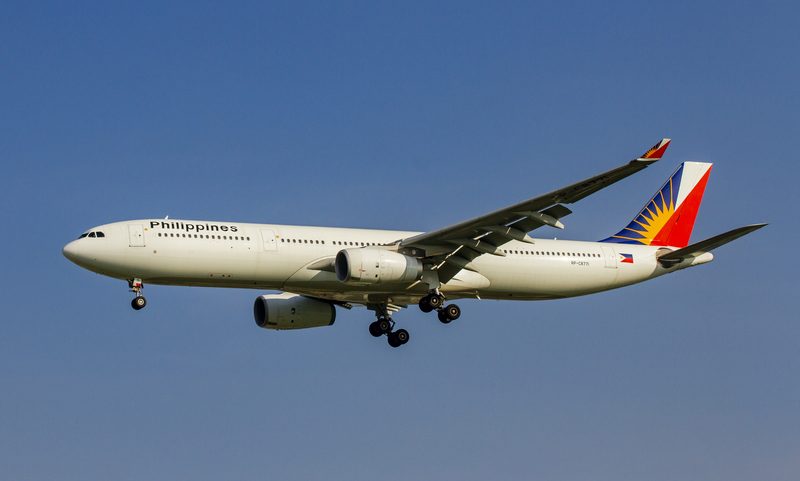
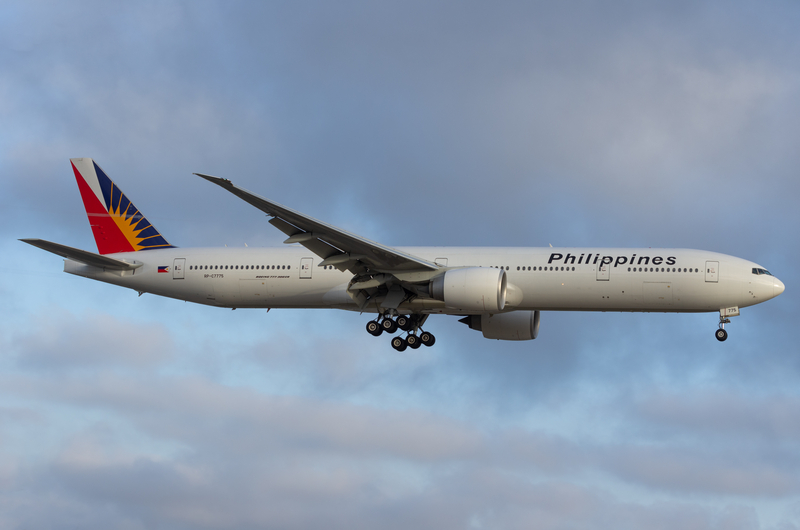
Those two types have been central to the airline’s widebody operation for years. The Airbus A330-300 has supported regional, Middle Eastern, Australian, and some high-density Asian flying, while the Boeing 777-300ER has been PAL’s main long-haul workhorse on many of its heaviest intercontinental routes.
But both aircraft families come from an earlier generation of long-haul economics. The A330-300 remains a capable medium- to long-haul widebody, and the 777-300ER is still one of the most important long-range aircraft ever built. Yet airlines across the world are increasingly moving toward newer-generation twinjets that offer lower fuel burn, improved maintenance economics, better cargo efficiency, and more modern cabins.
That is why PAL’s candidate list makes sense. The 787, A330neo, and A350 all offer different solutions to the same problem: how to add or replace widebody capacity without overcommitting to aircraft that are too large, too expensive to operate, or poorly matched to Manila’s operational environment.
Why The 777X Appears To Be Out
One notable part of the report is that Philippine Airlines is not expected to order the Boeing 777X, with the aircraft considered too large for the airline’s requirements at Manila (MNL).
That is a key point. The 777X is Boeing’s largest new-generation twin-engine widebody, and the 777-9 in particular is aimed at airlines that need very high capacity on dense long-haul routes. For carriers such as Emirates, Qatar Airways, Lufthansa, and Singapore Airlines, the aircraft can work because their hub structures support large long-haul flows and significant premium traffic.
PAL’s situation is different. Manila (MNL) is heavily constrained, but that does not automatically mean the airline should choose the largest aircraft available. Larger aircraft can help overcome slot pressure, but only if the airline can reliably fill them with the right balance of premium, economy, and cargo revenue. Oversizing the fleet can create problems on thinner long-haul routes, reduce schedule flexibility, and make seasonal demand swings harder to manage.
In PAL’s case, the better answer may be a fleet of efficient, right-sized widebodies rather than a smaller number of very large aircraft.
That is why the 787, A330neo, and A350 families are more relevant. They give PAL a wider range of capacity and range options, allowing the airline to match aircraft to markets more precisely.
The 787 Would Give PAL Route Flexibility
The Boeing 787 Dreamliner would be an important strategic option for Philippine Airlines if the airline wants a smaller, highly efficient long-haul aircraft.
Boeing lists the 787-8 with a range of 7,305 nautical miles, the 787-9 with 7,565 nautical miles, and the larger 787-10 with 6,330 nautical miles. For PAL, the 787-9 would likely be the most relevant variant for long-haul flying because it offers a strong balance of range, payload, and seat count.
A 787-9 could be useful on routes where a 777-300ER is too much aircraft but a smaller widebody still needs true intercontinental range. That could include thinner North American routes, long-haul services to secondary markets, and potential future flying where PAL wants frequency and efficiency rather than maximum gauge.
The aircraft’s composite structure, efficient engines, and smaller widebody size have made it attractive to airlines trying to open or sustain long-haul routes that might not support larger aircraft. For PAL, that flexibility could be valuable if it wants to grow beyond its largest trunk markets without taking on the risk of deploying too many seats.
The tradeoff is fleet complexity. PAL is already invested in Airbus widebodies, particularly the A350. Adding the 787 would create a new widebody pilot, maintenance, spares, and training platform. That can be justified if the aircraft provides the right network benefits, but it would still be a major strategic commitment.
The A330neo Would Be The Natural A330-300 Replacement
The Airbus A330neo may be the cleanest replacement candidate for PAL’s A330-300 fleet.
The A330neo builds on the same widebody platform as the earlier A330, but with new-generation Rolls-Royce Trent 7000 engines, updated aerodynamics, and improved range. Airbus lists the A330-900 with up to 7,350 nautical miles of range and a maximum seating capacity of 465, although airline configurations are typically far below that maximum.
For PAL, the A330neo would offer continuity. It would sit naturally between the airline’s narrowbody Airbus A321neo operation and its larger A350 long-haul fleet. It could replace older A330-300s on routes where PAL needs widebody capacity but not the full range or cost structure of an A350-1000.
That matters because not every PAL widebody mission is a 14- or 16-hour transpacific sector. The airline also needs aircraft for Australia, the Middle East, parts of Asia, and high-density regional routes where a widebody provides cargo and passenger capacity but ultra-long-haul range is not the main requirement.
The A330neo could also be attractive if PAL wants to preserve commonality with Airbus systems and training while improving fuel efficiency. It would not replace the A350-1000 at the top end of the fleet, but it could become the airline’s mid-size widebody workhorse.
ID 240491625 © Ajdibilio | Dreamstime.com
The A350 Family Remains The Premium Long-Haul Anchor
PAL already has a major commitment to the Airbus A350-1000.
In 2023, Airbus announced that Philippine Airlines had finalized an order for nine A350-1000 aircraft under the carrier’s Ultra Long Haul Fleet project. Airbus said the aircraft were selected for nonstop services from Manila to North America, including the U.S. East Coast and Canada, and would join PAL’s existing A350-900 fleet.
That order remains central to PAL’s long-haul future. The A350-1000 gives the airline a modern, efficient aircraft for its longest and most demanding routes. Airbus lists the A350-1000 with a range of up to 8,000 nautical miles, and PAL’s version is designed as a three-class long-haul flagship with Business Class, Premium Economy, and Economy.
The A350 is particularly important for routes from Manila (MNL) to North America. PAL’s geography creates some very long missions, including flights to the U.S. and Canada that require strong range, payload, and fuel efficiency. The A350-1000 gives the airline a better long-term tool than older-generation widebodies for those routes.
The question now is whether PAL wants more A350s beyond its existing order, or whether it wants a second widebody type to cover missions below the A350-1000.
An additional A350 order would simplify fleet planning and deepen the airline’s commitment to a modern Airbus long-haul platform. But it may not be the most efficient answer for every route. The A350-1000 is a large and capable aircraft, and PAL may need something smaller for thinner long-haul markets.
Manila Constraints Are Driving Fleet Thinking
PAL President Richard Nuttall’s comments at the IATA Annual General Meeting in Rio de Janeiro point to the larger issue: Manila (MNL) capacity constraints are shaping the airline’s strategy.
When an airport is slot-constrained or operationally congested, airlines have limited ways to grow. They can add flights only if additional slots are available. They can shift flying to secondary airports, although that may weaken connectivity. Or they can increase the size of aircraft on existing services.
PAL appears to be leaning toward the third option, especially for long-haul flying.
That strategy makes sense at Manila (MNL), where the airport’s congestion has long limited the ability of Philippine carriers to expand freely. If PAL cannot add as many frequencies as it wants, larger and more efficient aircraft become a way to increase capacity without adding more movements.
But this is a delicate balance. Upgauging can improve seat capacity and unit costs, but it also increases risk if demand is uneven. PAL needs aircraft large enough to overcome Manila’s constraints, but not so large that they become difficult to fill profitably.
That is the central logic behind the reported widebody study. The airline is not just shopping for new aircraft. It is trying to find the right fleet architecture for a constrained hub.
Fuel Prices Add Urgency
The timing also reflects a more difficult operating environment.
PAL has been managing elevated fuel prices and has temporarily reduced capacity by around 15%, according to comments from Nuttall reported by Aviation Week. The airline has also deferred roughly $100 million in planned capital expenditure, although Nuttall described the deferral as temporary rather than structural.
That context matters because widebody aircraft decisions are long-term commitments made during short-term uncertainty.
High fuel prices make older widebodies more expensive to operate. They also strengthen the argument for new-generation aircraft. A modern A350, 787, or A330neo can reduce fuel burn and maintenance exposure compared with older aircraft, but new aircraft also require capital and financing at a time when airlines are watching cash carefully.
PAL’s challenge is to avoid underinvesting in fleet renewal while still protecting liquidity. Deferring capital expenditure may make sense in the near term, but the airline cannot defer widebody renewal indefinitely if it wants to remain competitive on long-haul routes.
oneworld Raises The Stakes
PAL’s planned entry into oneworld also makes the fleet decision more important.
The alliance announced on June 6, 2026, that Philippine Airlines would become its 16th member airline following the signing of a Memorandum of Understanding at the IATA AGM in Rio de Janeiro. Once fully integrated, PAL will add 31 destinations to the alliance network and give oneworld a stronger position in Southeast Asia.
That creates new opportunities for PAL, but also new expectations. Alliance membership can improve feed, loyalty appeal, corporate relevance, and global visibility. It can also place more pressure on product consistency, operational reliability, premium cabin quality, and network connectivity.
A modern widebody fleet is part of that picture. PAL will be connecting with carriers such as American Airlines, Cathay Pacific, Qatar Airways, Qantas, Japan Airlines, Malaysia Airlines, British Airways, and Alaska Airlines. To fully benefit from those relationships, PAL needs aircraft that support a competitive long-haul product and reliable intercontinental operations.
The A350-1000 already moves PAL in that direction. A new widebody order would define how far the airline wants to go.
The Fleet Today Is Diverse
PAL and regional subsidiary PAL Express operate a mixed fleet across domestic, regional, and long-haul markets.
The combined operation includes Airbus A320-family aircraft, Airbus A330-300s, Airbus A350-900s, Airbus A350-1000s, Boeing 777-300ERs, and De Havilland Canada Dash 8-Q400 turboprops. That fleet reflects the complexity of the Philippine market: dense domestic routes, island operations, regional Asian flying, Middle Eastern services, Australian routes, and very long transpacific sectors.
The widebody side is where the next major strategic shift appears likely.
PAL’s A330-300s and 777-300ERs remain useful aircraft, but they represent the older side of the fleet. The A350-1000 is the new long-haul flagship. The reported question is what aircraft fills the rest of the widebody plan over the next decade.
If PAL chooses the A330neo, it would likely emphasize Airbus commonality and medium-widebody replacement. If it chooses the 787, it would add a highly flexible long-haul aircraft but introduce a new platform. If it chooses more A350s, it would deepen its premium long-haul strategy and simplify around Airbus, but potentially leave a gap below the A350-1000.
There is no obvious wrong answer. The right choice depends on route structure, financing, delivery availability, airport constraints, and how much fleet complexity PAL is willing to accept.
Delivery Timing May Be As Important As Aircraft Type
Aircraft availability is another major factor.
The global aircraft supply chain remains tight, and both Airbus and Boeing have faced delivery backlogs across multiple programs. Airlines looking for widebodies are not only comparing performance and economics. They are also comparing delivery slots.
For PAL, that could be decisive. A technically ideal aircraft is less attractive if delivery timing does not match the airline’s replacement needs. Older A330-300s and 777-300ERs can be refurbished and kept in service for a period, but they cannot be the airline’s long-term answer indefinitely.
That may make near-term availability, leasing options, and conversion rights especially important in negotiations. PAL could choose a single manufacturer, split an order, or structure a deal around delivery timing rather than pure aircraft preference.
This is also where the existing A350-1000 order matters. PAL already has a pipeline of new long-haul aircraft arriving. Any new order would need to complement those deliveries rather than duplicate them inefficiently.
Bottom Line
Philippine Airlines is reportedly studying an order for up to 20 additional widebody aircraft as it plans the next stage of its long-haul fleet renewal.
The reported candidate list — Boeing 787, Airbus A330neo, and Airbus A350 family aircraft — reflects the airline’s need for efficient, right-sized widebodies rather than simply the largest possible aircraft. The Boeing 777X appears unlikely because it is considered too large for PAL’s needs at slot-constrained Manila (MNL).
The decision will be shaped by several forces at once: older A330-300 and 777-300ER replacement needs, Manila airport constraints, elevated fuel prices, widebody delivery availability, and PAL’s upcoming entry into oneworld.
The A350-1000 is already becoming PAL’s flagship long-haul aircraft, especially for North America. The next order will determine what sits below and around it. Whether PAL chooses the 787, A330neo, more A350s, or a combination, the goal is clear: build a long-haul fleet that can grow capacity from Manila without sacrificing efficiency, flexibility, or route economics.
Keep reading FlyMag
Get the Daily Brief in the morning or the Route Watch weekly recap on Fridays. Or both.