A Surinam Airways flight from Amsterdam Airport Schiphol (AMS) to Johan Adolf Pengel International Airport (PBM) was forced to return to the Netherlands shortly after departure after a technical problem prevented the aircraft’s landing gear doors from closing properly.
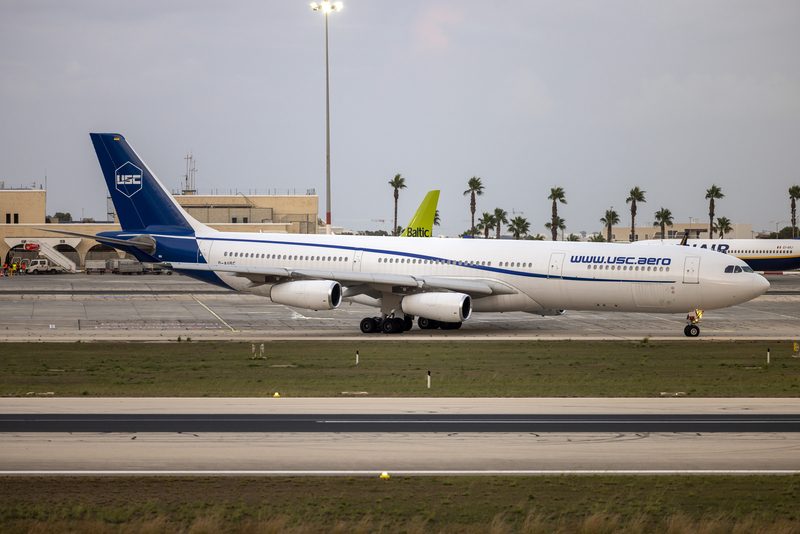
The flight, PY993, was being operated for Surinam Airways by Universal Sky Carrier using an Airbus A340-600, one of the ex-Lufthansa widebodies now flying the carrier’s Amsterdam–Paramaribo route. The aircraft landed safely back at Schiphol, but the incident still carried significant operational consequences because the problem directly affected the aircraft’s efficiency on a long transatlantic sector.
For aviation readers, that is the key point. This was not a dramatic emergency in the usual sense. It was a systems issue that made the planned long-haul flight commercially and operationally impractical to continue.
Read our stories in your inbox
Two aviation newsletters. Zero fluff.
The Problem Was Not The Landing Gear Itself, But The Doors Around It
According to operational reporting, the issue involved the landing gear hatches, or gear doors, failing to close correctly after takeoff.
That distinction matters. The landing gear may have retracted normally, but if the associated doors do not close properly, the aircraft is left with a major aerodynamic penalty. On any aircraft, that is undesirable. On a four-engine Airbus A340-600 beginning a transatlantic flight, it becomes much more consequential.
An aircraft can often still fly safely with that kind of problem, but it may no longer be able to do so efficiently or within the margins originally planned for the route.
Why A Gear Door Malfunction Matters So Much On A Long Flight
The core issue is drag.
If the landing gear doors remain partially open or fail to seal properly, the aircraft experiences significantly more aerodynamic resistance than intended. That means higher fuel burn, altered performance, and a less efficient climb and cruise profile. On a short flight, a crew might be able to continue depending on the exact severity of the malfunction. On a long-haul route from Amsterdam (AMS) to Paramaribo (PBM), the fuel penalty becomes much more serious.
That is why this kind of malfunction, while not always a direct emergency, can still force a return to origin. The aircraft may be perfectly flyable, but no longer economically or operationally sensible for the mission ahead.
Returning To Schiphol Was The Logical Decision
Once the crew understood that the aircraft’s drag and fuel consumption were abnormally high, the safest and most practical option was to discontinue the sector and return to Amsterdam Schiphol Airport (AMS).
That decision makes sense for several reasons. First, AMS had the technical support and infrastructure needed to inspect the aircraft properly. Second, the aircraft would have had to cross the Atlantic with a degraded performance profile if it continued. Third, a return early in the flight allowed the crew to resolve the situation before the combination of fuel burn, flight time, and alternates became more restrictive.
For long-haul operations, these decisions are often less about whether the aircraft can continue and more about whether it should.
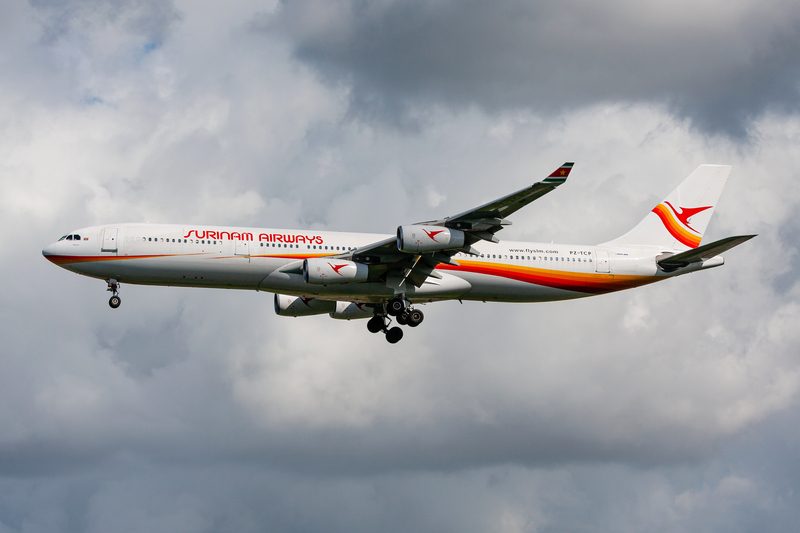
The A340-600 Is A Powerful Aircraft, But Efficiency Matters
The Airbus A340-600 remains a capable long-haul aircraft with substantial payload and range, but it is also a type where efficiency matters greatly because of its four-engine design and higher fuel use relative to newer twin-engine widebodies.
That means a drag-related problem hurts the A340-600 especially hard from an economic standpoint. A newer twinjet might also have returned in the same situation, but an A340-600 already begins with a less forgiving fuel profile than a modern long-haul twin. Add unexpected aerodynamic drag and the case for turning back becomes even stronger.
That is one reason the decision to return looks entirely rational from an operational perspective.
The Flight Could Not Be Restarted Immediately
Although the aircraft landed safely, the service could not simply be turned around and flown again the same day.
Two factors prevented that. The first was the obvious need for a technical inspection and maintenance action on the aircraft. The second was crew rest regulation. Once a long-haul crew has gone through a departure, a technical turnback, and the associated delays and procedures, legal duty-time limits often make a same-day restart impossible.
That is why the flight was reportedly moved to Sunday, May 10, rather than restarted immediately after the aircraft returned to Schiphol.
This Also Highlights Surinam Airways’ Current Long-Haul Dependence
The incident is also a reminder of how dependent Surinam Airways currently is on this wet-lease arrangement for its long-haul Amsterdam operation.
The carrier has been relying on Universal Sky Carrier’s Airbus A340-600 for its flagship intercontinental route, and that means any technical issue on the leased aircraft can have an outsized impact on the network. A larger long-haul airline may have more fleet flexibility or standby options. A smaller carrier operating a narrow long-haul program usually has much less room to absorb a disruption like this.
That makes incidents such as this more operationally significant than they might appear at first glance.
This Was A Precautionary Return, Not A Crisis Landing
It is important to frame the event properly.
The aircraft did not crash, suffer a landing gear collapse, or declare a catastrophic emergency. It returned safely and landed without further incident. The reason this story matters is not because the return itself was dramatic, but because it illustrates how a seemingly narrow systems problem can make a long-haul flight untenable even when the aircraft remains controllable and structurally sound.
For airline operations teams, these are exactly the kinds of events that demonstrate why technical caution matters.
Bottom Line
Surinam Airways flight PY993 from Amsterdam Schiphol (AMS) to Paramaribo (PBM) returned to the Netherlands shortly after departure because the Airbus A340-600’s landing gear doors failed to close properly, creating enough drag and fuel-burn penalty to make the transatlantic sector impractical to continue.
The aircraft landed safely, but the event still disrupted the airline’s flagship long-haul route and underlined how dependent Surinam Airways remains on its wet-leased A340-600 operation. In the end, this was not a crisis brought on by loss of control. It was a technically manageable but operationally decisive problem, the kind that often defines long-haul reliability more than passengers ever see.
Keep reading FlyMag
Get the Daily Brief in the morning or the Route Watch weekly recap on Fridays. Or both.