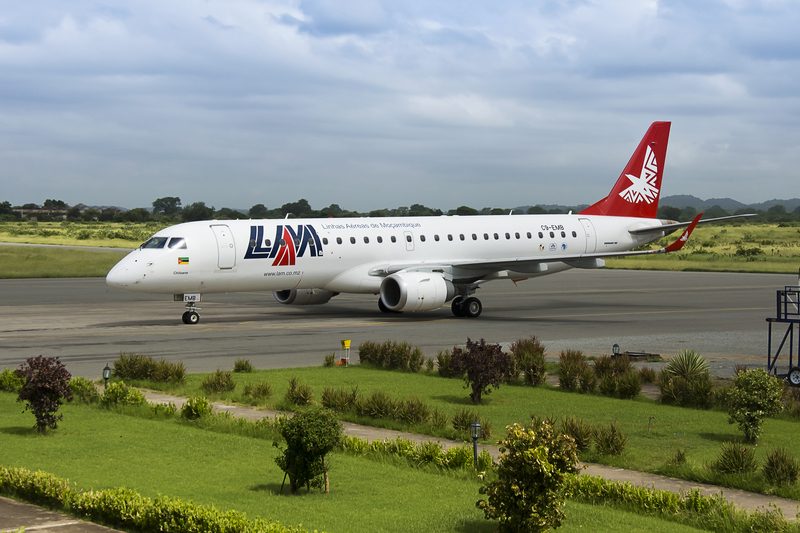
LAM – Linhas Aéreas de Moçambique (TM) is facing a new level of scrutiny after Mozambique’s Central Office for Combating Corruption (Gabinete Central de Combate à Corrupção, GCCC) confirmed five separate criminal proceedings into suspected misconduct at the state airline.

Speaking at a press conference in Maputo (MPM) on February 24, 2026, GCCC spokesperson Romualdo Johnam said the cases are at different procedural stages and are aimed at determining whether criminal offences were committed and whether public funds were abused. The alleged conduct spans what prosecutors described as potential mismanagement, corruption, embezzlement, and abuse of office/functions, with the caveat that additional offences could be identified as investigations progress.
For airline professionals, the key point isn’t just the number of cases—it’s the breadth. These investigations touch the airline’s most sensitive pressure points: fleet transactions, high-value recurring vendor contracts, and the integrity of payments tied to ticket sales and services.
Read our stories in your inbox
Two aviation newsletters. Zero fluff.
What the five cases focus on
While investigators have not published full case files, officials have outlined the core areas under review. In simple terms, the probes center on whether LAM’s contracting and fleet decisions followed lawful procurement practice and whether money moved with adequate contractual justification.

The allegations fall into three operational buckets:
First, commercial procurement and payments
Authorities are looking at suspected irregularities in contracting for uniforms, catering, and fuel, along with other payments allegedly made without proper contractual support. These are classic high-risk categories because they are high-frequency, high-value, and often handled through layers of subcontracting.
Second, aircraft sale/acquisition and the risk of “paperwork before metal”
One investigation covers alleged irregularities in the sale and acquisition of aircraft. That language matters in aviation: any aircraft transaction has two realities—what’s on the ramp and what’s in the documentation chain. If those don’t match, the airline doesn’t just face reputational risk; it faces operational grounding risk.
Third, fund flows tied to passengers and internal services
Two additional strands involve alleged misappropriation of ticket-payment funds and payments for translation services that were allegedly not delivered or billed at inflated values. These may sound smaller than fleet deals, but they speak directly to financial controls—where leakage can become systemic if not contained.

Johnam said some cases already have formally identified defendants, while others remain investigative with suspects not yet formally charged. Authorities say they are collecting documentary, expert, and testimonial evidence alongside other oversight bodies.
The Fly Modern Ark (FMA) MoU and a freighter that never flew
Two elements stand out for aviation insiders because they are uniquely “airline problems”: restructuring agreements and aircraft certification.
One probe is examining the legality of a Memorandum of Understanding (MoU) linked to South African aviation consultancy Fly Modern Ark (FMA) and Mozambique’s state-holdings management institute IGEPE. FMA was appointed in April 2023 to work with LAM’s management on restructuring and preparing the airline for a potential strategic equity partnership.
The other major focus is far more concrete: the FMA-arranged lease of a Boeing 737-300 Freighter (B737-300F) registered C9-BAX (msn 28567) from ACN AeroLeasing.
Authorities say the freighter never entered operation because it was not certified for service in Mozambique, creating financial losses. For any carrier—especially one in restructuring—an aircraft that arrives without the documentation needed for approval by the Mozambican civil aviation authority (IACM) is a costly failure mode. Even when the metal is sound, certification and operational approval depend on the paper trail: airworthiness status, conformity and maintenance records, approved maintenance programs, and the operator’s ability to incorporate the aircraft under its regulatory approvals. If any of those links are missing or incomplete, the aircraft becomes an expensive static asset.
The takeaway for carriers across the region is straightforward: in distressed situations, the temptation is to secure lift quickly. But “speed” in acquisition is meaningless if certification and compliance aren’t locked in from the start.
Restructuring continues—but the IMF is warning about how it’s funded
LAM’s investigations are unfolding in parallel with Mozambique’s broader restructuring effort—and with a sharper message from the International Monetary Fund (IMF).
In its February 2026 country report on Mozambique, the IMF warned that planned investments in LAM by three profitable state-owned entities risk diverting resources from critical infrastructure needs. The IMF’s guidance is very specific: transactions between the government and state-owned enterprises should flow through the budget, investments should be backed by rigorous cost-benefit analysis, persistently loss-making SOEs should be restructured, and state guarantees should only be extended under tighter oversight.
That warning lands against a concrete policy path already in motion. In November, Mozambique’s transport minister said three state-owned companies would inject USD 130 million to recapitalize LAM and restore the fleet as part of ongoing restructuring. This followed the transfer of 91% of the airline’s share capital to three state entities: HCB (hydroelectric operator), CFM (national rail company), and EMOSE (national insurer).
In airline terms, this is the fundamental tension: recapitalization can stabilize operations and restore fleet availability, but it must be paired with governance improvements—or it risks becoming repeated rescue spending with limited operational transformation.
What happens next: governance is now an operational variable
For LAM, these investigations will likely shape more than reputational outcomes. They can influence:
-
access to leasing markets (lessor risk perception matters),
-
vendor contracting and payment terms,
-
regulatory confidence and oversight intensity,
-
and the airline’s ability to attract a strategic partner with clean due diligence.
Most importantly, they will test whether LAM can continue restructuring while demonstrating improved internal controls—because in aviation, governance failures don’t stay in boardrooms. They show up as schedule fragility, constrained fleet availability, and higher cost of operations.
Bottom Line
LAM (TM) is now under five criminal investigations tied to alleged irregularities ranging from aircraft transactions and major vendor contracting to ticket-payment flows and service billing. The probes include scrutiny of a restructuring-era MoU linked to Fly Modern Ark (FMA) and the failed operational rollout of a leased B737-300F (C9-BAX) that reportedly never flew due to certification shortcomings with Mozambique’s civil aviation authority.
At the same time, Mozambique’s plan to inject USD 130 million via state-owned shareholders comes with a clear caution from the IMF: improving LAM’s efficiency and governance—and funding it transparently—will be essential if recapitalization is going to strengthen the airline rather than simply extend its problems.
Keep reading FlyMag
Get the Daily Brief in the morning or the Route Watch weekly recap on Fridays. Or both.