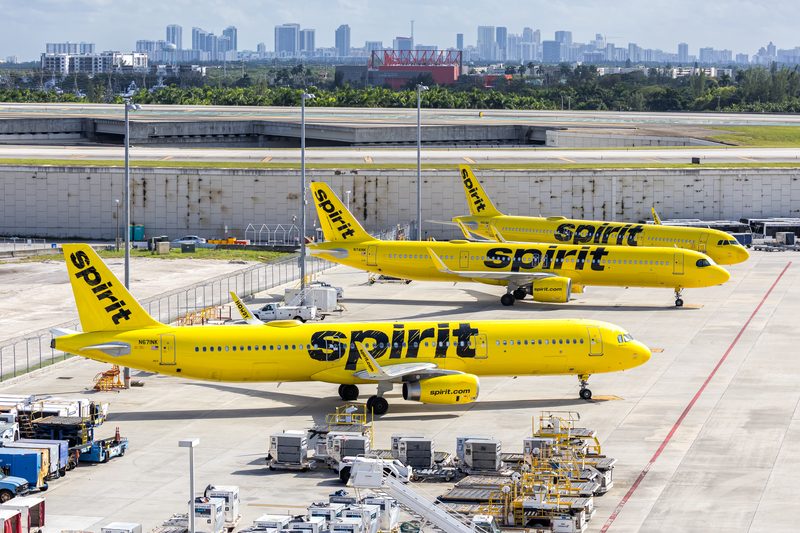
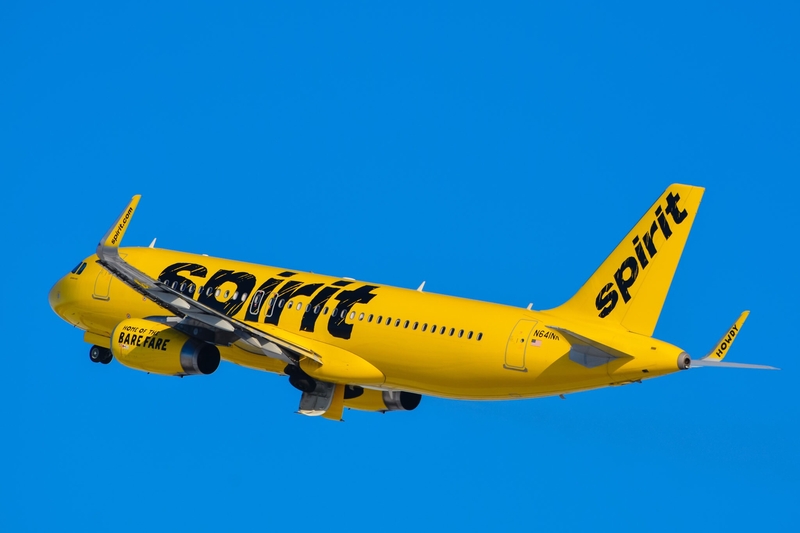
Spirit Airlines appears to be approaching the end of the line after last-minute rescue negotiations failed to produce a deal, leaving the ultra-low-cost carrier facing a possible shutdown within hours unless something changes quickly.
That is the key point. This is no longer just a bankruptcy story, or even a restructuring story. It is now a survival story in the narrowest sense, with reports indicating Spirit was preparing to cease operations around 3 a.m. Eastern time on Saturday after rescue talks with the federal government and creditors broke down. At the same time, the airline was still publicly telling customers late Friday that flights were operating as scheduled.
For aviation readers, that contradiction is the story. Spirit is effectively caught between public-facing continuity and a backroom reality that appears far more severe.
Read our stories in your inbox
Two aviation newsletters. Zero fluff.
The Rescue Package Seems To Have Broken Down At The Last Minute
The center of the crisis is the collapse of the proposed federal rescue package.
The administration had been discussing a support plan worth roughly $500 million, and President Donald Trump publicly acknowledged that a final proposal had been put forward. But the structure of the rescue became the problem. Reports indicated the government wanted warrants or an equity-linked position that could have left Washington with an enormous ownership stake in Spirit, while some bondholders objected that such a deal would damage the value of their claims.
That made the rescue hard to close. It was not simply a matter of finding cash. It was a matter of who would own what, who would be diluted, and who would bear the downside if the airline still failed later.
For a distressed carrier, those issues can kill a deal just as easily as a lack of money.
Spirit Is Still Flying — But That Does Not Mean It Is Stable
One of the most important things to get right is that Spirit was still operating late Friday.
The airline posted publicly that flights were running as scheduled, and there was no formal public announcement from Spirit itself confirming an immediate shutdown at the time these reports spread. That matters, because airline collapses can move quickly, but they also often pass through a short period where bookings and operations continue even as internal shutdown plans are being prepared.
So the current reality appears to be this: Spirit is still functioning outwardly, but behind the scenes it is reportedly preparing for the possibility that operations could stop almost immediately.
That is an extraordinarily fragile place for any airline to be.
This Crisis Did Not Come Out Of Nowhere
Spirit’s problems are not the result of one bad week or one failed negotiation.
The carrier has been struggling for years with a business model that became much harder to defend after the pandemic. Spirit’s ultra-low-cost structure worked best in an environment where fuel, labor, maintenance, and financing costs stayed low enough for the airline to stimulate demand with very cheap base fares and heavy ancillary revenue. That environment deteriorated.
The blocked JetBlue merger removed one possible escape route. The carrier then went through bankruptcy, emerged, and still failed to fix the deeper structural problems that had left it vulnerable. That forced another bankruptcy filing and another attempt to get smaller, leaner, and more premium in its revenue mix.
In other words, Spirit has not suddenly failed. It has been trying to outrun its own economics for some time.
The Fuel Shock May Have Been The Final Blow
If there was one outside event that seems to have pushed the airline from weak to potentially terminal, it was fuel.
The sharp rise in oil and jet fuel prices after the Iran conflict and the closure of the Strait of Hormuz hit the whole airline industry. But it hit Spirit harder than most. Ultra-low-cost carriers are uniquely vulnerable when fuel rises because their entire model depends on a low-cost operating environment. They do not have the same premium-cabin cushion, network diversity, or pricing power that larger carriers can sometimes rely on.
That appears to have broken the timeline. Spirit may have had a narrow chance to survive in a calmer fuel environment. In this one, the math seems to have collapsed faster than the restructuring could keep up.
The Consequences Would Reach Well Beyond Spirit
If Spirit shuts down, the impact will not be limited to its own employees and customers.
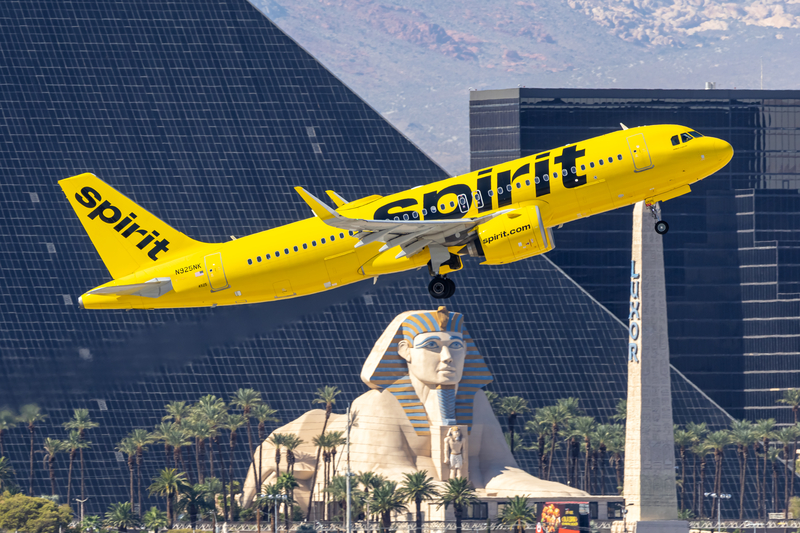
Tens of thousands of jobs are tied directly or indirectly to the airline. Travelers with bookings would likely face immediate cancellations and disruption. Airports where Spirit has a significant presence, especially in Florida, Las Vegas, and other major leisure markets, would feel the effect quickly. And the wider U.S. airline market would lose one of its most important low-fare disruptors.
That last point matters a great deal. Spirit’s presence has long helped hold fares down, even for travelers who never flew it. When an ultra-low-cost carrier exits a market, the pricing effect can linger well beyond the airline itself.
So this is not just a bankruptcy headline. It is a competition story too.
The Industry Is Already Preparing For The Fallout
Another telling sign of how serious this has become is that rival airlines are already responding.
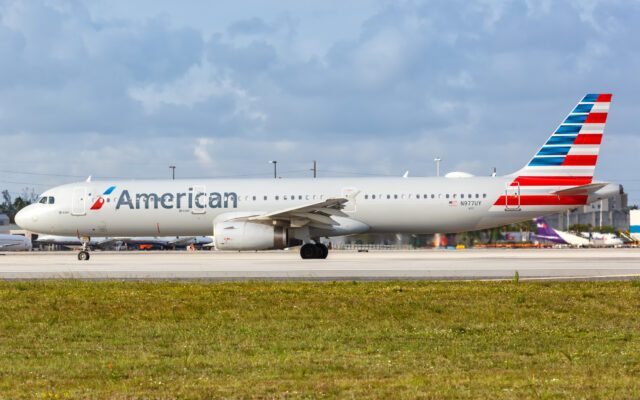
American Airlines has said it is capping fares on some nonstop routes where it competes directly with Spirit. Frontier has said it is ready to help affected customers with low-cost options. Other carriers have made clear they are monitoring the situation closely.
That behavior is important because airlines do not usually make those kinds of public contingency moves unless they think a competitor’s shutdown risk is real.
In other words, the market is acting as though Spirit’s collapse is no longer theoretical.
Trump Still Left The Door Slightly Open
Even as the talks appeared to fail, Trump publicly said he would still like to save Spirit if the deal made sense and suggested there could still be an announcement.
That leaves a narrow possibility that negotiations could revive. But the tone of the late-Friday reporting suggests the path is now extremely tight. Once an airline board begins preparing to cease operations, the burden of proof shifts heavily toward those who still believe a rescue can happen in time.
At that point, the question is not whether a deal would be useful. It is whether one can still be executed before the operation falls apart.
Bottom Line
Spirit Airlines now appears closer than ever to shutting down after failing to secure a federal rescue package that was supposed to keep it alive through its latest restructuring. The airline was still publicly saying flights were operating as scheduled late Friday, but reporting from Reuters, AP, and The Wall Street Journal indicated preparations were underway for a possible operational end within hours.
If that happens, it will mark the collapse of one of the most consequential ultra-low-cost carriers in modern U.S. aviation. Spirit did not just sell cheap seats. It reshaped domestic pricing. If it disappears, the immediate damage will fall on employees and ticket holders, but the longer-term impact will be felt across the wider market as well.
Keep reading FlyMag
Get the Daily Brief in the morning or the Route Watch weekly recap on Fridays. Or both.