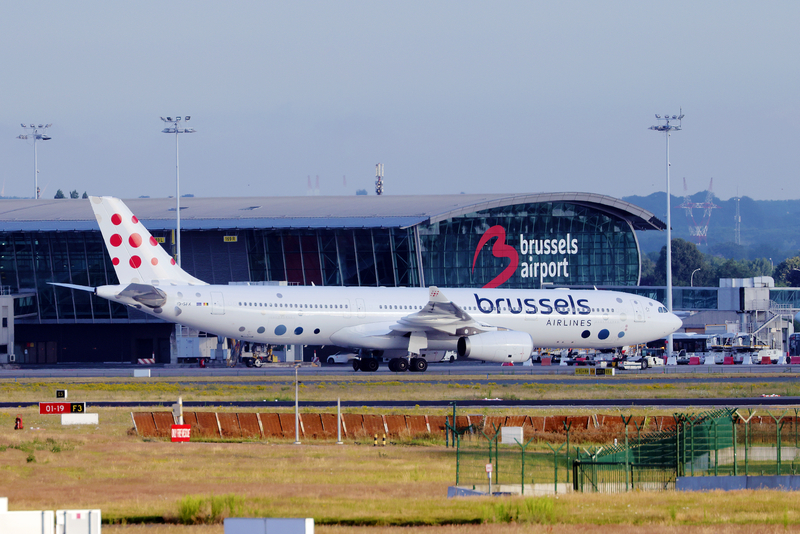
Brussels Airlines has launched service to Kilimanjaro International Airport (JRO), giving northern Tanzania a new direct link to Europe and adding another important African destination to the Belgian carrier’s long-haul network.

The new route began on June 3, 2026, and operates twice weekly from Brussels Airport (BRU) using Airbus A330-300 aircraft. The outbound flight operates nonstop from Brussels (BRU) to Kilimanjaro (JRO), while the return service continues from Kilimanjaro (JRO) to Nairobi (NBO) before heading back to Brussels (BRU).
For Tanzania, the route is a significant boost to inbound tourism and cargo connectivity. For Brussels Airlines, it reinforces the carrier’s role as Lufthansa Group’s specialist airline for sub-Saharan Africa. Kilimanjaro becomes Brussels Airlines’ 18th destination in sub-Saharan Africa and its fifth in East Africa, joining Entebbe (EBB), Kigali (KGL), Bujumbura (BJM), and Nairobi (NBO).
Read our stories in your inbox
Two aviation newsletters. Zero fluff.
The route also gives European travelers a more direct path into one of Africa’s most important tourism corridors, with Kilimanjaro International Airport (JRO) serving Mount Kilimanjaro, Arusha, the Serengeti, the Ngorongoro Conservation Area, and onward safari and beach itineraries across Tanzania.
A New Brussels–Kilimanjaro Link
Brussels Airlines is operating the new route twice weekly, on Wednesdays and Saturdays.

The schedule is built as a triangular rotation. Flight SN487 departs Brussels (BRU) at 10:20 a.m. and arrives at Kilimanjaro (JRO) at 8:35 p.m. local time. The aircraft then continues from Kilimanjaro (JRO) to Nairobi (NBO), departing JRO at 9:35 p.m. and arriving in Kenya at 10:25 p.m. The final leg departs Nairobi (NBO) at 11:40 p.m. and arrives back in Brussels (BRU) at 7:40 a.m. the following morning.
That routing is important. For travelers heading from Europe to northern Tanzania, the Brussels–Kilimanjaro sector is nonstop. For the return journey to Belgium, passengers travel via Nairobi (NBO), allowing Brussels Airlines to combine a new Tanzania service with its established East Africa network.
This is a practical way to launch a long-haul destination that is tourism-driven and initially low-frequency. It gives Kilimanjaro (JRO) direct access from Europe while improving aircraft utilization and maintaining network support through Nairobi (NBO).
The Airbus A330-300 Is The Workhorse
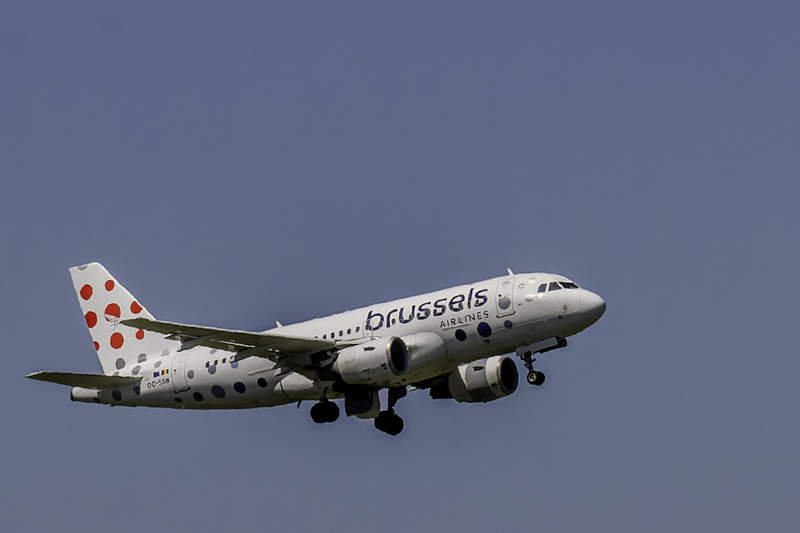
Brussels Airlines is flying the route with the Airbus A330-300, the largest aircraft type in its fleet.

The A330-300 is well suited to the mission. It gives the airline long-haul range, meaningful belly cargo capacity, and a three-class cabin that can serve a mix of leisure travelers, tour groups, premium passengers, business travelers, and connecting traffic. Brussels Airlines’ A330-300 used for the route offers 288 seats across Business Class, Premium Economy, and Economy.
The aircraft choice also reflects the nature of the market. Kilimanjaro (JRO) is not a high-frequency business trunk route like Brussels (BRU) to New York (JFK) or Washington Dulles (IAD). It is a leisure-heavy, tourism-oriented long-haul route where twice-weekly widebody service can work if the aircraft is filled with a combination of Belgian, European, and connecting passengers.
The A330-300 also brings cargo value. On routes into East Africa, belly freight can be an important revenue contributor, particularly for agricultural exports and time-sensitive goods. For Tanzania, direct European widebody capacity can support exports such as flowers, fresh produce, fish, and other perishables that benefit from faster access to European markets.
A Major Boost For Northern Tanzania Tourism
Kilimanjaro International Airport (JRO) is one of East Africa’s most strategically placed tourism airports.
The airport sits between Moshi and Arusha and serves as a gateway to some of Africa’s best-known attractions. Mount Kilimanjaro is the most obvious draw, but it is only one part of the region’s tourism value. Travelers also use JRO for safari itineraries to Serengeti National Park, the Ngorongoro Conservation Area, Tarangire National Park, Lake Manyara, and luxury lodges across northern Tanzania.
The new Brussels Airlines route improves access to that tourism corridor from Belgium and the wider European Union.
That matters because safari travel is often high-value and itinerary-sensitive. Many travelers book through tour operators, combine multiple parks, and connect onward to Zanzibar (ZNZ) or other beach destinations after a safari. A direct long-haul arrival into Kilimanjaro (JRO) reduces travel friction compared with routings through Dar es Salaam (DAR), Nairobi (NBO), Addis Ababa (ADD), Doha (DOH), Istanbul (IST), or other hubs.
Local reporting said the inaugural arrival carried 248 passengers, many of them tourists. That is exactly the traffic profile Tanzania wants: high-spending visitors arriving directly into the northern tourism circuit.
Brussels Becomes A Useful European Gateway
Brussels Airport (BRU) is also a useful European gateway for this route.
Brussels Airlines can feed the Kilimanjaro flight from Belgium and from across its European network. Passengers from cities such as Paris, Amsterdam, Copenhagen, Berlin, Manchester, Prague, Geneva, Milan, Madrid, and other European points can connect through Brussels (BRU) onto the Tanzania service.
That connecting feed matters because Belgium alone may not be large enough to sustain the route at scale. Brussels Airlines’ advantage is that it can combine Belgian demand, European leisure traffic, tour operator flows, and passengers connecting through Lufthansa Group and Star Alliance networks.
Brussels is also politically and commercially relevant. As the seat of major European Union institutions and a major diplomatic center, it has a natural role in linking Europe with African capitals and regional markets. While Kilimanjaro (JRO) is primarily tourism-driven, Tanzania–Belgium and Tanzania–EU links also include trade, development, government, education, and investment traffic.
The route therefore strengthens both tourism and institutional connectivity.
A Return To A Historic Market
There is also a historical angle.
The Brussels–Kilimanjaro market has roots in the old Sabena network. Sabena, Belgium’s former flag carrier and the predecessor in spirit to modern Brussels Airlines, previously served Kilimanjaro until the late 1980s.
The return of Belgian carrier service to Kilimanjaro after that long absence gives the route added symbolic value. Brussels Airlines has built much of its long-haul identity around Africa, and Kilimanjaro fits naturally into that strategy.
Unlike some European carriers that treat Africa as a limited set of capital-city routes, Brussels Airlines has maintained a broad sub-Saharan Africa footprint. Its network includes West Africa, Central Africa, and East Africa, and Kilimanjaro adds a destination with a different demand profile: less corporate and government traffic, more premium leisure and tourism.
That diversity helps the airline. A balanced Africa network is not only about business capitals. It also needs destinations with strong tourism flows and seasonal resilience.
Strong Demand Pushes Route Into Winter
Brussels Airlines initially planned Kilimanjaro as a summer route, but demand was strong enough for the airline to extend the service into the winter season.
The carrier plans one weekly flight between October 28 and December 16, then two weekly flights between December 19 and February 21. That extension is notable because it shows the route is not being treated as a short promotional experiment.
Winter service makes sense for Tanzania. The country’s tourism demand is not limited to European summer holidays. Mount Kilimanjaro climbing, safari travel, Christmas and New Year vacations, and warm-weather escapes can all support demand during the northern winter.
For Brussels Airlines, continuing into winter also gives tour operators more confidence. A route that operates beyond the summer season is easier to package, sell, and promote. It also gives the airline more time to build awareness in Belgium and other European markets.
Kilimanjaro Airport Gains More International Activity
The launch increases international flight movements at Kilimanjaro International Airport from 148 to 152 weekly movements, according to local reporting.
That is a modest numerical increase, but the strategic effect is larger. A new European widebody route gives JRO more global visibility and strengthens its position as a direct-access airport for northern Tanzania.
Tanzanian officials have emphasized the economic importance of the flight, particularly for the Kilimanjaro and Arusha regions. The route supports hotels, tour operators, ground handlers, safari companies, transport providers, restaurants, guides, cargo shippers, and airport service providers.
In aviation terms, this is exactly the type of route that can have an impact beyond passenger numbers. A twice-weekly A330 does not simply carry tourists. It supports a broader visitor economy and gives local exporters more direct access to Europe.
Airport Upgrades Are Part Of The Bigger Picture
Tanzania is also planning to modernize Kilimanjaro International Airport.
Local officials have outlined a major infrastructure program that includes a second passenger terminal, expanded aircraft parking aprons, and upgraded runway lighting systems. Those improvements are expected to increase the airport’s annual capacity to more than 2.5 million passengers.
That investment matters because the airport is being asked to support more international demand. Long-haul airlines need reliable airfield infrastructure, adequate parking, efficient immigration processing, capable baggage systems, and dependable night operations. Tourism airports also face peak-time pressure when international arrivals, safari departures, domestic connections, and road transfers converge.
Improved runway lighting is particularly important for long-haul reliability. The Brussels Airlines flight arrives in the evening, and international operations at tourism airports often depend on safe, efficient night or low-light procedures. Expanded apron space also helps when multiple international aircraft, regional flights, and private or charter operations overlap.
If Tanzania wants Kilimanjaro (JRO) to grow as a long-haul gateway, airport infrastructure must keep pace.
Cargo Could Be A Quiet Winner
The cargo opportunity should not be overlooked.
The A330-300 provides belly freight capacity that can support exports from northern Tanzania and the surrounding region. Products such as flowers, fresh produce, fish, and other perishables benefit from direct or more efficient access to European markets.
That is particularly relevant because tourism routes can sometimes be directionally imbalanced. European leisure travelers may fill seats inbound to Tanzania, while cargo can help improve the return economics. Even if passenger demand is seasonal, freight can provide a useful revenue stream and strengthen the route’s overall business case.
Brussels (BRU) is also a strong cargo and logistics airport, particularly for temperature-sensitive and high-value shipments. That makes it a logical European entry point for products that need reliable cold-chain or time-sensitive handling.
For Brussels Airlines, cargo revenue can help support a route that is otherwise heavily leisure-oriented.
Tanzania’s Event Calendar Adds Momentum
The new route also arrives as Tanzania prepares to host several major international events, including the 2027 Africa Cup of Nations, which will be co-hosted by Tanzania, Kenya, and Uganda.
Improved air access matters for events of that scale. Delegates, teams, sponsors, media, officials, tourists, and support staff all depend on reliable international connectivity. While Dar es Salaam (DAR) will remain central to many large-event movements, Kilimanjaro (JRO) plays a key role for northern Tanzania and the Arusha tourism corridor.
The route also supports Tanzania’s broader ambition to increase visitor arrivals and strengthen its profile as a high-value tourism destination. Direct European access is one of the most important tools in that strategy.
A Smart Addition For Brussels Airlines
For Brussels Airlines, Kilimanjaro is a natural extension of its Africa strategy.
The route reinforces the carrier’s identity as Lufthansa Group’s Africa specialist and gives it another long-haul destination that is not easily replicated by every competitor. Many airlines fly to capital cities and large business markets. Fewer operate directly to tourism gateways such as Kilimanjaro (JRO).
The twice-weekly frequency is also sensible. It gives the market enough service to be bookable for safari itineraries while limiting capacity risk. The triangular return via Nairobi (NBO) further improves route economics by combining Kilimanjaro with an established East Africa station.
That is disciplined network planning. Brussels Airlines is not adding daily service or flooding the market. It is using the A330-300 in a targeted way, connecting a high-value tourism destination with Europe through a hub that already has African-network strength.
Bottom Line
Brussels Airlines’ new Brussels (BRU)–Kilimanjaro (JRO) service is a meaningful addition for both Tanzania and the Belgian carrier.
The route launched on June 3, 2026, and operates twice weekly with Airbus A330-300 aircraft. The outbound flight operates nonstop from Brussels to Kilimanjaro, while the return continues via Nairobi (NBO) before heading back to Brussels.
For Tanzania, the route gives the northern tourism corridor a new direct link to Europe, supporting access to Mount Kilimanjaro, the Serengeti, Ngorongoro, Arusha, and onward safari and beach itineraries. It also adds cargo capacity for exports and strengthens Kilimanjaro International Airport’s role as a long-haul gateway.
For Brussels Airlines, Kilimanjaro becomes its 18th sub-Saharan African destination and fifth in East Africa, reinforcing its position as Lufthansa Group’s Africa specialist. The decision to extend the route into winter also suggests early demand is strong enough to support more than a short seasonal trial.
This is not just a new leisure route. It is a strategic bridge between Europe and one of Africa’s most important tourism regions, operated with the right aircraft, the right frequency, and a network structure that gives the service a realistic path to long-term success.
Keep reading FlyMag
Get the Daily Brief in the morning or the Route Watch weekly recap on Fridays. Or both.