The Dallas–Fort Worth metroplex has never lacked aviation scale. Between Dallas/Fort Worth International (DFW)—American’s megahub—and Dallas Love Field (DAL)—Southwest’s near-monopoly stronghold—the region already moves traffic like a nation-state. But North Texas growth is increasingly concentrated well north of the traditional airport catchments, and that’s where the next big development is taking shape.
McKinney National Airport (TKI), long a general aviation reliever on the northern edge of the metroplex, is in the middle of a conversion that will make it the area’s third commercial passenger airport. The current construction schedule still targets a late-2026 opening, with a November 2026 commercial start remaining the planning benchmark—timed to capture the Thanksgiving travel surge if the remaining regulatory and staffing pieces fall into place.
Read our stories in your inbox
Two aviation newsletters. Zero fluff.
Why a third airport now makes sense in the DFW–DAL ecosystem
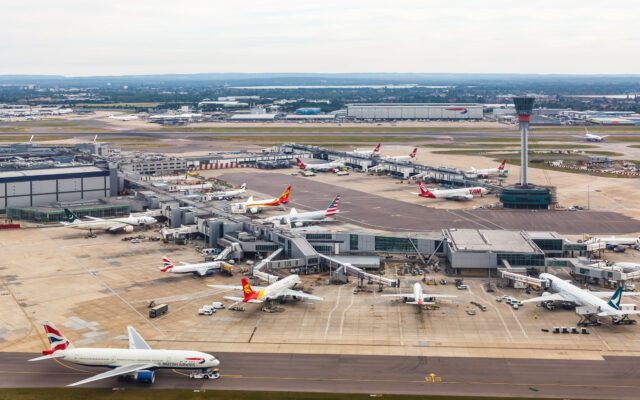
DFW is built for global scale, but scale can come with cost and congestion—especially for airlines trying to enter or grow without paying “megahub pricing.” DAL offers a premium location close to downtown Dallas, but it’s also capacity-constrained and structurally dominated by one carrier.
That creates a familiar opening for a third airport: a fast-growing suburban catchment that doesn’t want a 45–90 minute drive, paired with airlines that want lower operating costs and more control over gates, schedules, and brand presence.
Collin County—home to cities like Plano, Frisco, Allen, and McKinney—has become one of the metroplex’s economic engines. A commercial airport sitting on that northern edge has a simple value proposition: less drive time, lower friction, and a local alternative to the DFW/DAL duopoly.
The airfield: a runway that supports real airline flying
TKI’s primary runway is Runway 18/36, published at 7,002 feet (2,134 m). For airline planning, that length is meaningful: it is sufficient for the sort of narrowbody operations you’d expect at launch—Boeing 737-family flying, including 737-800 and 737-700 variants—while still leaving room for operational decision-making around hot days, performance margins, and payload.
The airport’s commercial-side buildout includes a new Taxiway C segment intended to reduce ground congestion and improve runway access efficiency—one of those changes passengers never notice, but dispatchers and ramp leads absolutely do.
The terminal build: small on purpose, scalable by design
TKI’s new passenger terminal is deliberately modest at the start, which is exactly what makes it plausible.
The project centers on a roughly 46,000-square-foot terminal on the east side of the field, initially set up for four gates, with interior planning that supports an easier expansion to six as demand and airline interest grow. That’s the right playbook for a third-airport launch: open with a footprint you can operate efficiently, then scale once real, repeatable demand is proven.
On the landside, the airport is developing:
-
A new public parking inventory designed to open around the ~1,000-space level, with expansion capability to roughly 1,450+ spaces
-
Rental car facilities to support leisure travel and visiting friends-and-relatives traffic
-
Site infrastructure designed to keep operating costs down—an important point if TKI wants to win airlines on economics, not just geography
Avelo is the first airline—and a logical one
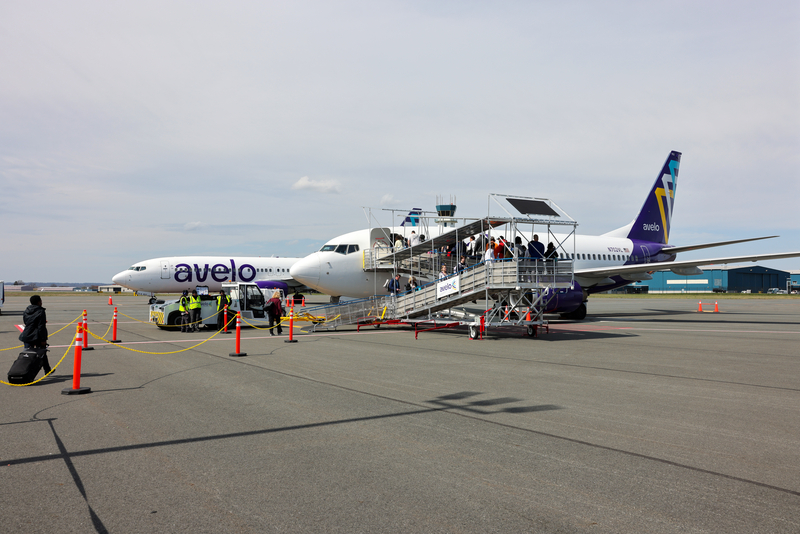
The most important milestone is already in place: Avelo Airlines has signed on as TKI’s first commercial tenant under a multi-year agreement, positioning McKinney (TKI) as the carrier’s fifth base once service begins.
Avelo is a natural fit for a new commercial airport for two reasons:
-
Aircraft and cost structure match the market. Avelo’s fleet is built around Boeing 737 Next Generation aircraft. Its 737-800s commonly seat 189 passengers in an all-economy layout, while its 737-700s are typically configured around 149 seats. That gives Avelo flexibility to right-size demand without needing the higher breakeven thresholds that come with larger-gauge aircraft.
-
Avelo’s network model likes uncongested airports. The airline has repeatedly shown it prefers airports where it can keep turns predictable and costs low—two things new terminals can often deliver better than legacy-constrained facilities.
Initial flying is expected to start modestly—think a handful of departures per day—then scale as the base proves out, aircraft are stationed locally, and the airport demonstrates it can deliver reliable operations.
The real finish line: TSA staffing and FAA Part 139 certification
Construction alone doesn’t open an airport to scheduled passenger service. Two operational milestones matter more than ribbon-cuttings:
FAA Part 139 certification: To host scheduled airline operations, TKI must meet the safety and emergency response standards that come with Part 139—everything from airfield markings and lighting to Aircraft Rescue and Firefighting (ARFF) capability, wildlife hazard planning, and inspection programs.
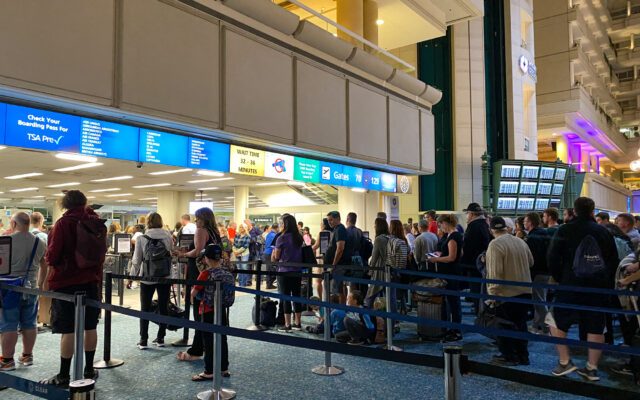
TSA screening and security programs: Commercial service requires a fully staffed TSA checkpoint operation and the corresponding airport security framework (including credentialing, access control, and compliance). For new airports, TSA staffing can be the gating item—especially when multiple airports across the country are competing for the same resources.
The more candid airport-side planning acknowledges what airlines already know: if those pieces slip, the “late 2026” target can slide into an early 2027 launch window.
What comes next: a second airline and a bigger footprint
TKI’s early success will be judged by two metrics: whether the first carrier can build consistent load factors without relying on promo fares forever, and whether a second airline follows quickly enough to diversify demand.
Airport leadership has indicated active discussions with additional carriers, and TKI has the one thing airlines always ask about once a concept works: space. The east-side development area leaves room for future concourse additions, more apron, and potentially even airline-specific facilities if a carrier ever wants to build a dedicated presence.
That may sound ambitious today, but it’s how modern U.S. airport growth often starts: prove the model with a small terminal, scale with demand, then let airline economics do the rest.
Bottom Line
McKinney National Airport (TKI) is on track to become the Dallas–Fort Worth region’s third commercial airport by late 2026, bringing scheduled airline service closer to the fast-growing Collin County side of the metroplex. With a new four-gate terminal, a runway system suitable for 737-family operations, and Avelo lined up as the first tenant and base operator, the pieces are largely in place.
The remaining variables are the ones that truly decide opening day: TSA staffing, FAA Part 139 certification, and the ability to deliver smooth, repeatable operations from day one. If those land on schedule, North Dallas won’t just get a new terminal—it’ll get a new competitive lever in the DFW/DAL aviation landscape.
Keep reading FlyMag
Get the Daily Brief in the morning or the Route Watch weekly recap on Fridays. Or both.