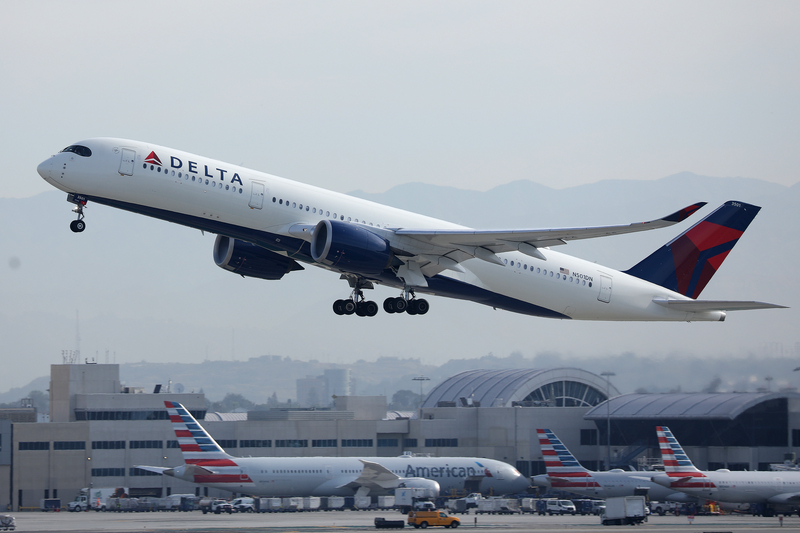
Delta Air Lines appears set to take another meaningful step into the ultra-long-haul Pacific market, with the carrier stating in a Department of Transportation filing that it plans to launch daily nonstop service between Los Angeles International Airport (LAX) and Manila’s Ninoy Aquino International Airport (MNL) in summer 2027 using the Airbus A350-900. That filing is the clearest signal yet that Delta is serious about adding the Philippines to its long-haul map, even if the strategic logic still invites questions.

On the surface, Los Angeles–Manila is easy to understand. Southern California is one of the largest Philippines-linked air travel markets in the United States, and Los Angeles is the most obvious place for a U.S. airline to try to challenge Philippine Airlines on a nonstop basis. But when the route is examined through the lens of Delta’s broader Pacific network, fleet economics, hub structure, and premium positioning, the move becomes much more complicated.
That is where the story gets interesting.
Read our stories in your inbox
Two aviation newsletters. Zero fluff.
Delta Is Clearly Becoming More Comfortable With Ultra-Long-Haul Flying
For years, Delta was noticeably more selective than some of its U.S. peers when it came to ultra-long-haul flying. The airline has preferred markets where it could combine strong local demand, premium traffic, and network leverage rather than simply planting a flag on very long sectors for strategic visibility.
That posture is changing.
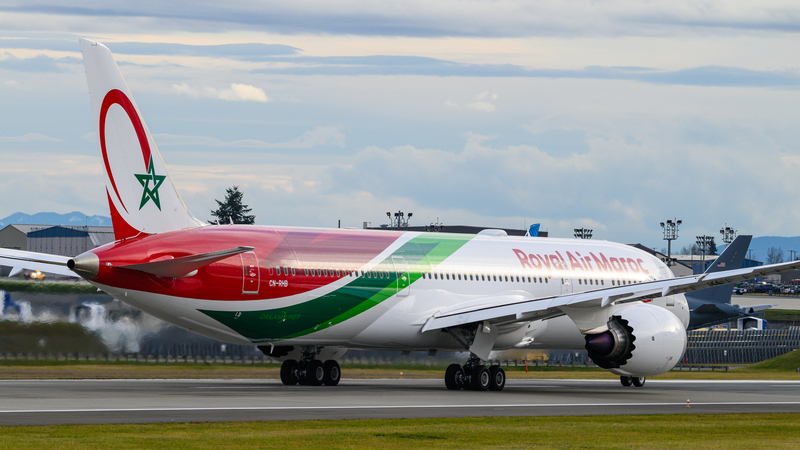
Delta has already confirmed Los Angeles–Hong Kong (LAX–HKG) for June 2026 and Atlanta–Riyadh (ATL–RUH) for October 2026, both operated by the Airbus A350-900. In that context, Los Angeles–Manila (LAX–MNL) no longer looks like an isolated move. It looks like part of a broader shift. Delta is becoming more willing to deploy the A350 on long, strategically important routes where schedule quality, premium product, and network relevance may matter as much as the local fare environment.
The aircraft itself is central to the discussion. Delta’s Airbus A350-900 is the airline’s flagship long-haul type and one of the few aircraft in its fleet that can make a route like LAX–MNL operationally and commercially realistic. The A350 combines long range with strong fuel efficiency, a lower unit cost than older-generation large widebodies, and a premium-heavy onboard product that fits Delta’s brand strategy. It is also the aircraft Delta tends to use when it wants to make a statement in a market.
That said, the A350 does not magically change route economics. It improves the odds. It does not eliminate the challenge.
Los Angeles Makes Sense On A Local Market Basis
If Delta is going to launch Manila, Los Angeles is the obvious U.S. gateway.
LAX is one of the strongest U.S. points for Philippines demand, supported by a large Filipino American population, substantial visiting-friends-and-relatives traffic, business ties, and a deep pool of origin-and-destination demand that does not depend entirely on connecting feed. That matters because Manila is not the kind of market a U.S. carrier can build only with domestic connections. Local traffic is critical.
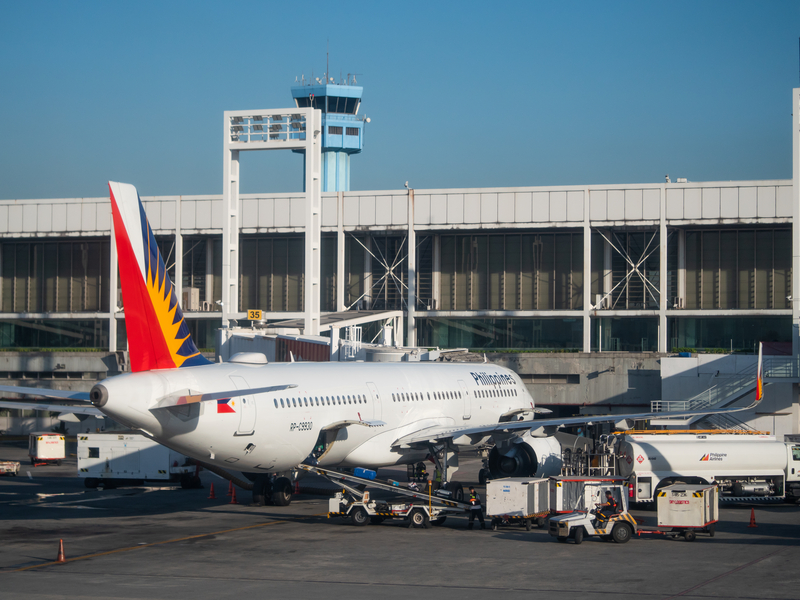
There is also a competitive logic here. Philippine Airlines already knows the California–Philippines market well, and any U.S. airline entering Manila nonstop needs a gateway where it has at least a credible local proposition. Los Angeles gives Delta that. It also gives the airline broad domestic feed from across the western and southwestern United States, even if LAX is not a fortress hub in the same way San Francisco (SFO) is for United or Dallas/Fort Worth (DFW) is for American.
From a pure market-size standpoint, LAX–MNL is much easier to defend than, say, Seattle–Manila or Atlanta–Manila would be. The issue is not whether Los Angeles is the right endpoint. It probably is. The issue is whether Delta can make Los Angeles work well enough, consistently enough, against the backdrop of its broader Pacific strategy.
That Is Where The Confusion Starts
The bigger question is not Manila itself. It is why Delta increasingly appears to be building these marquee Pacific routes around Los Angeles rather than Seattle-Tacoma International Airport (SEA).
For much of the past decade, Seattle looked like Delta’s most logical Pacific growth platform. The airline invested heavily there, pushed into transpacific flying, and positioned SEA as a key West Coast gateway where it could build more durable competitive strength. Seattle offered advantages Los Angeles does not. It is a more manageable hub, Delta’s relative position there became stronger over time, and the airport is structurally better suited to connecting traffic than the fragmented, hypercompetitive environment at LAX.
Yet the pattern now points in another direction. Delta chose LAX for Hong Kong. It now says it wants LAX for Manila. That does not necessarily mean Seattle is losing relevance, but it does suggest Delta sees more value in using Los Angeles for large, nonstop Asia markets with heavy local demand.
There is logic to that view. Los Angeles is the larger local market. It produces more premium demand in absolute terms, more point-to-point traffic, and more visibility for a flagship international route. If Delta wants to be seen as a major player across the Pacific rather than simply a participant, LAX offers a bigger stage.
But there is a tradeoff. Los Angeles is also one of the most difficult major airline markets in the world to dominate. Delta has invested heavily there, but so have American, United, Alaska, Southwest, and a long list of foreign carriers. Winning at LAX is rarely straightforward. Building prestige routes there is one thing. Building a durable long-haul system there is another.
That is why this Manila plan feels both understandable and slightly hard to pin down strategically.
Manila Is A Big Market, But Not An Easy One
Even with strong demand, Manila remains a difficult route for a U.S. airline.
The sector length is substantial, the market is heavily VFR-driven, and yields are generally not associated with the sort of premium-heavy demand profile Delta prefers. This is not Tokyo Haneda (HND), London Heathrow (LHR), or even Seoul Incheon (ICN), where premium corporate demand can support a stronger fare structure across the cabin. Manila is a large market, but volume and yield are not the same thing.
That is the heart of the skepticism.
Delta has spent years emphasizing premium revenue, loyalty economics, and disciplined network planning. LAX–MNL is a route where traffic should be there, but fare quality is much less certain. Philippine Airlines can compete aggressively, knows the market intimately, and is structurally comfortable in a route environment shaped by diaspora travel and price sensitivity. Delta may well believe it can command a premium as the U.S. network carrier option with an A350 product, but that premium is unlikely to be limitless.
There is also the issue of operating costs. Ultra-long-haul flying magnifies everything: crew costs, aircraft utilization pressure, recovery complexity during irregular operations, and the commercial risk of seasonal softness. Even with an efficient aircraft like the A350-900, a daily LAX–MNL service is a serious commitment.
That does not mean the route is a bad idea. It means it is a more demanding route than the headline alone suggests.
Delta May Be Thinking Beyond The Route Itself
One reason the move could still make sense is that modern airline economics are no longer judged only by the nonstop route’s standalone margin.
For Delta, a route like Los Angeles–Manila can create value in several ways. It can support SkyMiles engagement in a large ethnic and transpacific market. It can strengthen Delta’s relevance at LAX. It can improve customer retention among Los Angeles-based flyers who want a broader Asia network. And it can add a high-profile destination that makes the airline’s long-haul strategy look more credible to both consumers and corporate accounts.
In other words, Delta may not need LAX–MNL to behave like a classic high-yield business route in order to justify it. It may be enough for the route to be strategically useful, commercially respectable, and supportive of the broader network and loyalty ecosystem.
That line of thinking has become more common in the post-pandemic airline environment. Network decisions are increasingly shaped by premium branding, co-branded card economics, competitive positioning, and the halo effect of having the right destinations in the system. Manila may fit that framework better than it fits a traditional yield-first model.
Still, this argument only goes so far. Prestige does not cover weak fundamentals indefinitely. If the route underperforms materially, even broader strategic benefits will have limits.
The Timing Is Also Worth Watching
Delta says it is targeting summer 2027, but the filing language is important. This is a plan, not a fully loaded schedule launch. Manila access is not just about aircraft and demand; it also involves bilateral rights, airport access, and competitive conditions. Ninoy Aquino International Airport (MNL) remains constrained, and regulatory timing can influence whether an airline’s preferred launch date actually holds.
That makes the route notable, but not yet inevitable.
It also means Delta is signaling intent while still leaving room for the many operational and commercial details that have to fall into place before tickets are sold and aircraft rotations are published.
Bottom Line
Delta’s plan to launch daily Airbus A350-900 service between Los Angeles (LAX) and Manila (MNL) in summer 2027 is credible, significant, and strategically revealing.
On one level, the route makes obvious sense. Los Angeles is the strongest U.S. gateway for the Philippines, and the A350-900 is exactly the kind of aircraft Delta should use for a mission this long. On another level, the move raises larger questions about where Delta really sees its Pacific future. The airline once looked intent on building Seattle (SEA) into its primary transpacific growth platform, yet some of its most prominent new long-haul Asia flying is now being tied to Los Angeles instead.
That is why this announcement feels both logical and puzzling.
The market is there. The aircraft is right. The branding fit is understandable. But Manila is a long, demanding, relatively low-yield route in one of the world’s most competitive long-haul geographies. Delta may be betting that scale at LAX, premium product, and broader loyalty economics make the equation work.
Maybe it will. But this is not the kind of route that answers questions about Delta’s Pacific strategy. It creates more of them.
Keep reading FlyMag
Get the Daily Brief in the morning or the Route Watch weekly recap on Fridays. Or both.