Delta Air Lines is adding another California link from Austin, but the move also shows how carefully the carrier is now pruning its fast-growing Central Texas network.

Beginning October 6, 2026, Delta Air Lines will launch daily nonstop service between Austin-Bergstrom International Airport (AUS) and San José Mineta International Airport (SJC). The route will be operated with an Airbus A319, giving Delta a mainline aircraft on a market that connects two of the country’s most important technology regions.
The new Austin (AUS)–San Jose (SJC) flight comes as Delta trims two smaller Austin routes. The carrier is discontinuing nonstop service from Austin (AUS) to New Orleans (MSY), while its Austin (AUS)–Memphis (MEM) schedule appears to be winding down as well, though published schedule data and carrier statements differ slightly on the exact final date.
Read our stories in your inbox
Two aviation newsletters. Zero fluff.
Taken together, the moves suggest Delta is not retreating from Austin. It is refining the network around routes where premium demand, business traffic, and aircraft economics are more attractive.
Delta’s New Austin (AUS)–San Jose (SJC) Schedule
Delta’s new Austin (AUS)–San Jose (SJC) service is scheduled as DL3128. The westbound flight departs Austin-Bergstrom International Airport (AUS) at 9:45 a.m. and arrives at San José Mineta International Airport (SJC) at 11:35 a.m. local time.
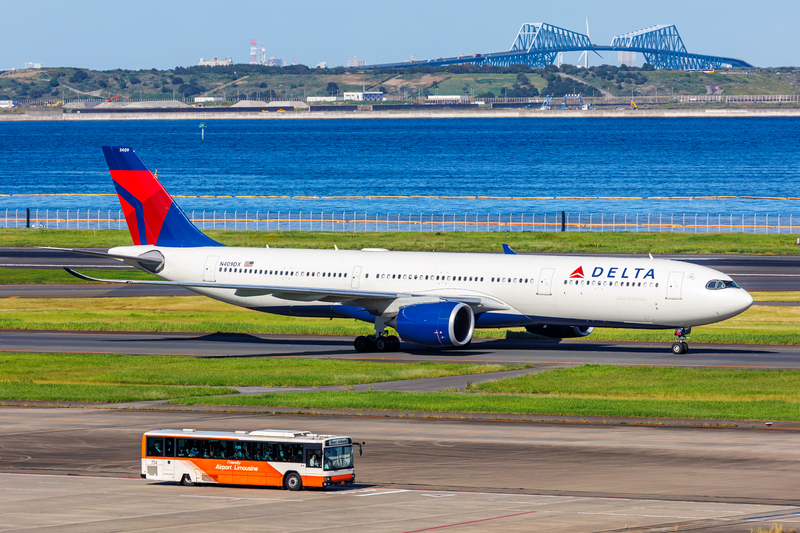
The return flight leaves San Jose (SJC) at 12:30 p.m. and reaches Austin (AUS) at 6:00 p.m. local time. The scheduled block time is about three and a half hours westbound and just under that eastbound, depending on winds and operating conditions.
The timing is practical. Delta is not trying to run an early-morning business shuttle or a late-night utilization play. Instead, the schedule gives Austin-originating passengers a morning departure into Silicon Valley, while San Jose-originating passengers get a midday departure that still arrives in Austin before the evening.
For a daily single-frequency route, that matters. The schedule is usable for business travelers, visiting-friends-and-relatives traffic, and leisure passengers heading between Central Texas and Northern California without forcing either side into an inconvenient red-eye-style pattern.
Why The Airbus A319 Makes Sense Here
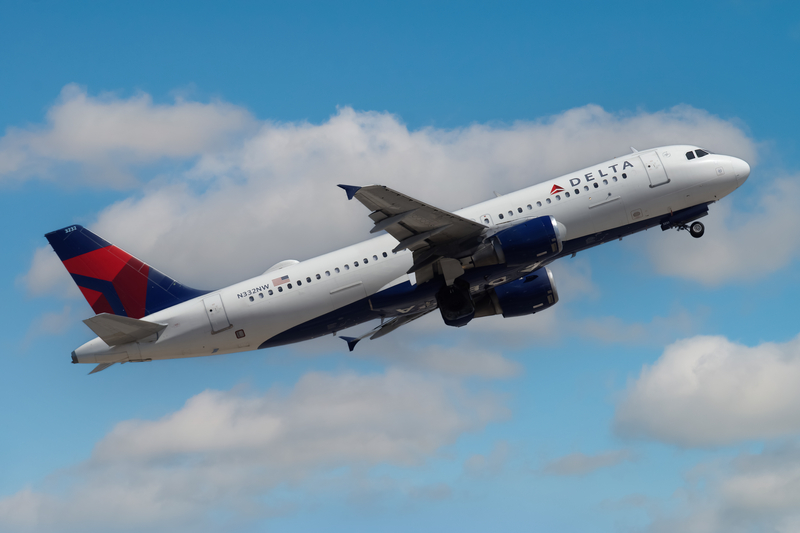
Delta will use the Airbus A319 on the Austin (AUS)–San Jose (SJC) route. That is a notable aircraft choice because it gives the route mainline economics and a premium cabin without putting too many seats into the market too quickly.

Delta’s A319 is configured with 132 seats: 12 in First Class, 24 in Delta Comfort+, and 96 in Main Cabin. The aircraft has a published range of 2,835 miles and a cruising speed of 525 mph, making the roughly 1,476-mile Austin (AUS)–San Jose (SJC) sector well within its capabilities.
The A319 is not Delta’s newest narrowbody, but it remains useful for thinner business markets where a full-size Airbus A320 or Boeing 737-900ER may be more capacity than the route needs. It also gives Delta something Southwest cannot offer on the same city pair: a traditional premium cabin with assigned First Class seating.
That cabin mix is central to the route’s logic. Austin (AUS) and San Jose (SJC) are not just leisure markets. Both airports sit in regions with deep technology, venture capital, semiconductor, university, and corporate travel links. If Delta can capture enough premium and corporate traffic, a daily A319 is a defensible way to enter the market.
San Jose (SJC) Gives Delta A More Targeted Bay Area Play
Delta already serves San Francisco International Airport (SFO) from Austin (AUS), but San Jose (SJC) gives the airline a different Bay Area proposition.
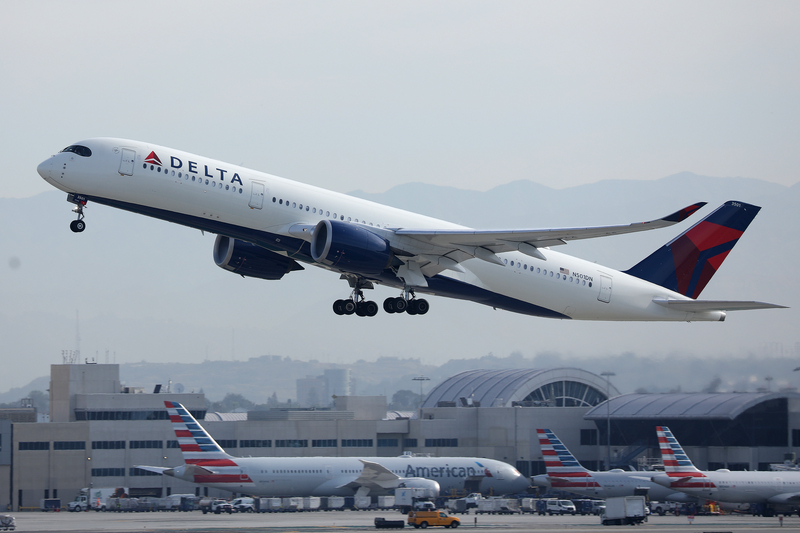
San Francisco (SFO) is the region’s global long-haul gateway and a major United Airlines hub. San Jose (SJC), by contrast, is closer to much of Silicon Valley and often more convenient for travelers headed to companies and communities in Santa Clara County, the South Bay, and parts of the Peninsula.
For passengers whose actual destination is San Jose, Santa Clara, Cupertino, Sunnyvale, Mountain View, or nearby tech corridors, arriving at San Jose (SJC) can be materially more efficient than landing at San Francisco (SFO) and driving south. That convenience is part of the route’s value.
San José Mineta International Airport (SJC) said the new Delta service will bring the airline to 23 daily departures at SJC, with nonstop service from San Jose (SJC) to Atlanta (ATL), Austin (AUS), Los Angeles (LAX), Minneapolis/St. Paul (MSP), Salt Lake City (SLC), and Seattle-Tacoma (SEA).
That is a useful West Coast pattern. Delta is not building San Jose (SJC) into a hub, but it is creating enough presence to be relevant to Bay Area travelers who do not want to use San Francisco (SFO) or Oakland (OAK) for every trip.
Southwest Will Not Give Up The Route Easily
Delta will not be alone between Austin (AUS) and San Jose (SJC). Southwest Airlines already operates nonstop flights in the market, using its all-Boeing 737 fleet.
That makes the competitive setup especially interesting. Southwest has the frequency advantage and a strong Austin presence. Delta, however, will enter with an Airbus A319 that offers First Class, Delta Comfort+, Main Cabin, assigned seating, and the broader SkyMiles ecosystem.
For corporate travelers, that difference can matter. Southwest is highly competitive on schedule depth and price, but Delta can compete on premium product, corporate contracts, loyalty benefits, and connections over its network. On a route linking Austin’s tech economy with Silicon Valley, Delta is likely betting that enough travelers will pay for that structure.
The route also strengthens Delta’s Austin (AUS) map in a way that makes strategic sense. San Jose (SJC) is not just another dot. It complements Delta’s existing Austin (AUS) service to San Francisco (SFO), Los Angeles (LAX), Seattle-Tacoma (SEA), and Salt Lake City (SLC), giving the airline a stronger western footprint from Central Texas.
Austin Cuts Show A More Disciplined Network Approach
The San Jose (SJC) launch comes as Delta removes or reduces two other nonstop Austin routes: Memphis International Airport (MEM) and Louis Armstrong New Orleans International Airport (MSY).
AeroRoutes’ schedule filing shows Austin (AUS)–New Orleans (MSY) operating daily until October 5, 2026, with a brief four-weekly return between November 12 and November 16. The same filing lists Austin (AUS)–Memphis (MEM) operating daily until November 1, 2026. Separately, a Delta statement reported by MySA said the final routine Austin (AUS)–Memphis (MEM) and Austin (AUS)–New Orleans (MSY) flights would operate October 5, 2026.
Either way, the message is clear: Delta is removing lower-performing nonstop flying from Austin while adding a higher-profile West Coast business market.
Both Memphis (MEM) and New Orleans (MSY) have been operated with regional aircraft, including the Embraer E175 in Delta Connection service. The E175 is a strong premium regional jet, typically offering First Class and Comfort+ seating in Delta’s configuration, but it still needs enough local demand and fare strength to justify the route.
Memphis (MEM) is especially notable because it was once a Northwest Airlines hub before becoming part of Delta through the 2008 merger. Delta’s modern Memphis operation is far smaller and more focused, which makes point-to-point flying such as Austin (AUS)–Memphis (MEM) more vulnerable if traffic does not meet expectations.
New Orleans (MSY), meanwhile, is a strong leisure and event market, but Southwest has a major presence from Austin (AUS) and already serves the city pair. That makes it harder for Delta to sustain a daily regional-jet schedule unless the route can attract higher-yield local traffic.
Southwest Backfills Memphis And Remains Strong To New Orleans
Delta’s exit does not leave Austin (AUS) without nonstop options to either city.
Southwest is launching Memphis (MEM)–Austin (AUS) nonstop service on October 1, 2026, with six weekly flights scheduled Sunday through Friday. Southwest also already serves Austin (AUS)–New Orleans (MSY), preserving nonstop access between Central Texas and Louisiana’s largest air market.
That overlap likely made Delta’s decision easier. If Southwest is willing to carry the price-sensitive local traffic and offer enough frequency, Delta can redeploy aircraft and crews into markets where its premium product and network are more differentiated.
This is a common theme in post-pandemic U.S. network planning. Airlines are still willing to add routes, but they are less willing to carry marginal flying simply for map coverage. Aircraft, crews, gates, and maintenance resources are too valuable to leave on routes that do not produce the right mix of load factor and yield.
Delta Is Still Growing In Austin
The route cuts should not be mistaken for a broader pullback from Austin-Bergstrom International Airport (AUS). Delta has repeatedly described Austin (AUS) as an important focus city, and the carrier has been adding service from Central Texas across both business and leisure markets.
By December 2026, Delta expects to serve 30 destinations from Austin (AUS). The airline has also said it will operate 63 peak-day departures from Austin (AUS) in summer 2026, five more than the previous year.
That is still far smaller than a true Delta hub such as Atlanta (ATL), Minneapolis/St. Paul (MSP), Detroit (DTW), or Salt Lake City (SLC). But Austin (AUS) plays a different role. It is a high-growth focus city where Delta can build relevance with local travelers without needing a full connecting-hub structure.
The carrier’s Austin strategy now appears to be moving into a more mature phase. The first stage was expansion: add markets, test demand, build loyalty, and give Austin customers more nonstop options. The next stage is optimization: keep what works, remove what does not, and use aircraft where the revenue profile is strongest.
Bottom Line
Delta’s new Austin (AUS)–San Jose (SJC) route is more than a simple California add. It is a sign that Delta wants its Austin growth to lean toward premium, business-oriented markets where the airline’s product can stand apart.
The Airbus A319 is a sensible aircraft for the route. It gives Delta 132 seats, a real First Class cabin, Comfort+, and enough range and efficiency to serve the Austin (AUS)–San Jose (SJC) market without flooding it with capacity.
At the same time, the reductions to Memphis (MEM) and New Orleans (MSY) show that Delta is becoming more selective in Austin. The airline is not abandoning Central Texas. It is sharpening the network.
For Austin travelers, the tradeoff is clear: fewer Delta nonstops to some smaller and leisure-heavy markets, but a stronger link to Silicon Valley. For Delta, the bet is that Austin (AUS)–San Jose (SJC) can deliver the kind of premium demand that justifies mainline service in one of the most competitive focus-city markets in the country.