New details from the National Transportation Safety Board’s hearing into the crash of UPS Flight 2976 are putting sharper focus on three critical issues at once: the last-minute aircraft substitution before departure, the catastrophic failure of the left engine and pylon just after takeoff, and whether earlier warning signs about the same structural area were not treated seriously enough.
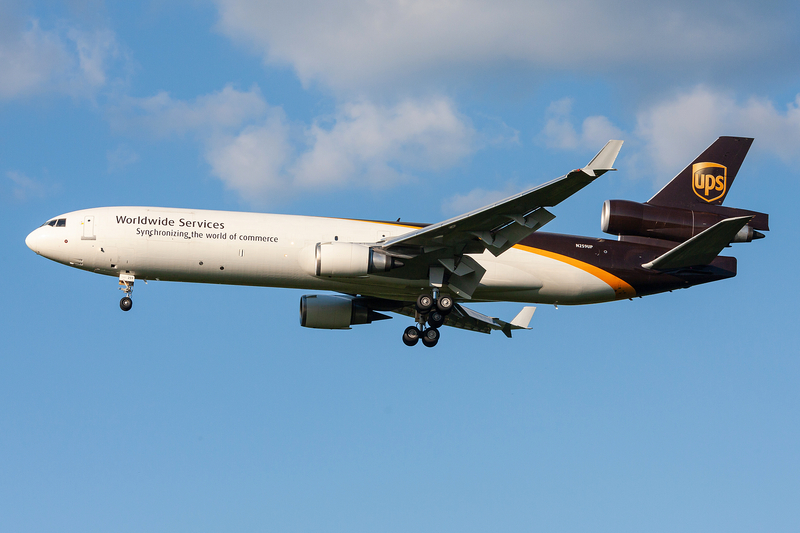
The crash happened in November 2025 shortly after departure from Louisville Muhammad Ali International Airport (SDF), when the McDonnell Douglas MD-11 operating the flight lost its left engine during takeoff and crashed, killing 15 people in total, including the three crew members onboard and 12 people on the ground.
For aviation readers, the significance of the hearing is not that it provides a final answer. It does not. The significance is that it reframes the accident less as an isolated mechanical disaster and more as a possible failure to act on evidence that may already have existed.
Read our stories in your inbox
Two aviation newsletters. Zero fluff.
The Aircraft Swap Is Now A Major Part Of The Story
One of the most important hearing revelations is that the airplane involved, N259UP, was not the aircraft originally intended to operate the Honolulu flight.
Investigators said the crew had first been assigned a different aircraft, but that plane was removed from service because of a fuel leak shortly before departure. The crew then switched to the substitute MD-11, which later crashed.
That matters because an aircraft substitution is never just a logistical footnote in an accident inquiry. It changes which maintenance history matters, which recent inspections become relevant, and which latent issues may have been carried into the departure. On its own, a substitution does not imply any error. But once the replacement aircraft becomes the one that crashes, the reason for the switch and the replacement aircraft’s technical history both become central.
The Left Engine Separated Almost Immediately After Rotation
The hearing has reinforced the core sequence of the crash.
The aircraft rotated from Louisville and, almost immediately after liftoff, suffered a catastrophic failure involving the left engine and pylon assembly. Investigators are focusing on fatigue cracking in a critical structural component of the pylon attachment system, particularly the bearing race area.
That is a crucial distinction. This was not just an engine failure in the everyday airline sense of thrust loss or contained damage. Once the engine and pylon separate from the wing, the event becomes vastly more serious, with consequences for aerodynamics, structural integrity, and controllability. At that point, the margin for crew recovery can collapse in seconds.
The Cockpit Evidence Shows How Fast Things Went Bad
Although cockpit voice recorder audio is not publicly released in full under U.S. law, the hearing has provided a clearer picture of what the crew encountered.
Investigators described a rapid sequence of warnings and urgent cockpit reactions in the moments after the failure. That matters because it confirms the event was sudden, violent, and essentially immediate in operational terms. The crew were not managing a slowly developing technical issue with time to diagnose and plan. They were dealing with a catastrophic structural event almost as soon as the aircraft became airborne.
For professionals in the field, that is one of the key elements of the case. It points to an accident sequence where the crew’s opportunity to intervene meaningfully may have been extremely limited from the outset.

Prior Cracking Warnings Are Now Under Heavy Scrutiny
The most troubling part of the hearing may be what investigators say was known before the crash.
The NTSB reviewed evidence suggesting that similar cracking issues had been seen previously in the same broader component family over many years. The question now is not simply whether those cases existed. It is whether they were escalated, documented, and acted upon in a way that should have led to stronger maintenance requirements or regulatory intervention before this aircraft ever departed Louisville.
That is where the hearing shifts from accident reconstruction to systemic accountability. If a pattern existed and did not produce decisive corrective action, then the safety problem was not only on the airplane. It may also have been in the system around it.
This Is Why The Hearing Matters So Much
Preliminary accident reporting often focuses on the visible event: an engine detaching, an aircraft crashing, or dramatic cockpit moments.
Hearings like this matter because they look behind the visible event and examine the chain that made it possible. In this case, that chain includes maintenance history, reporting discipline, structural fatigue, aircraft substitution, inspection intervals, and the question of whether prior evidence should have triggered stronger action.
That is why this hearing is so important. It does not just tell us what happened. It begins to explore whether it was preventable.
The Final Report Is Still A Long Way Off
It is important to stay disciplined in how the case is described.
The NTSB has not issued a final probable cause, and the investigation remains ongoing. There is still more work to be done on engineering analysis, maintenance review, and regulatory context before final conclusions are reached.
But even at this stage, the picture is sharper than it was before. The central issue is no longer just the catastrophic failure itself. It is whether the warning signs around that kind of failure had already appeared often enough that stronger action should have happened before the aircraft took off.
Bottom Line
The latest hearing on UPS Flight 2976 has made the case much more serious in one specific way: it suggests investigators are looking beyond the crash itself and into whether earlier warning signs, maintenance findings, and oversight decisions should have prevented the accident.
A last-minute aircraft swap put the crew onto a different MD-11, the left engine and pylon failed almost immediately after rotation, and the cockpit evidence indicates the event became unrecoverable within seconds. The final report is still to come, but the hearing has already made one thing clear: the hardest question in this case may not be how the aircraft failed, but whether the system had already seen enough to stop it from flying.
Keep reading FlyMag
Get the Daily Brief in the morning or the Route Watch weekly recap on Fridays. Or both.