Southwest Airlines has officially entered Alaska for the first time, adding Ted Stevens Anchorage International Airport (ANC) to its map and marking one of the most symbolically significant network moves in the carrier’s history.

The airline began service on May 15, 2026, launching daily seasonal flights to Anchorage from Denver International Airport (DEN) and Las Vegas Harry Reid International Airport (LAS). For a carrier that built its reputation in the Lower 48 and spent decades avoiding the more operationally difficult edges of the U.S. map, this is a genuine milestone.
For aviation readers, the significance is clear. This is not just one more route launch. It is Southwest finally reaching the 49th state and doing so with two meaningful western gateways rather than a token single-market entry.
Read our stories in your inbox
Two aviation newsletters. Zero fluff.
Anchorage Becomes Southwest’s 122nd Airport
With the launch of service to Anchorage, Southwest adds its 122nd airport and extends its network into Alaska for the first time.
That matters because Alaska has long stood outside Southwest’s network logic. The state is geographically distant, operationally distinct, highly seasonal in parts, and traditionally served by carriers with deeper local roots. By entering Anchorage now, Southwest is signaling that it sees enough demand and enough network utility to make the market work despite those challenges.

This is less about novelty than about confidence.
The Two Routes Are Both Daily And Seasonal
Southwest is launching two flights into Anchorage:
- Denver (DEN) – Anchorage (ANC), daily
- Las Vegas (LAS) – Anchorage (ANC), daily
Both are planned as seasonal summer services, which makes sense given Alaska’s strong peak-season tourism demand and the way airlines typically build northern leisure markets around the summer travel window.
That seasonal structure is important. Southwest is not trying to prove year-round dominance in Alaska from day one. It is entering at the moment when demand is strongest and the commercial case is clearest.
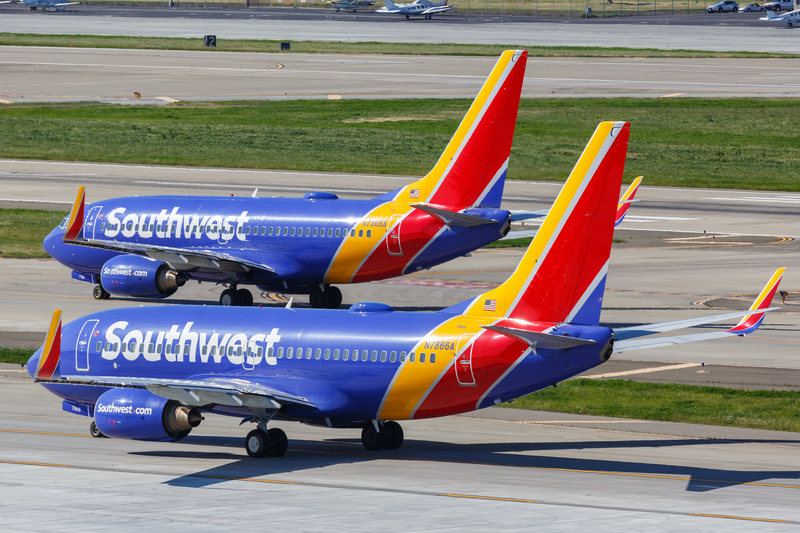
Denver–Anchorage Becomes Southwest’s Longest Domestic Route
One of the more notable details is that Denver–Anchorage becomes Southwest’s longest domestic route.
That matters because it shows how far the airline’s route philosophy has evolved. Southwest built its network on shorter-haul, high-frequency flying. Over time, it has moved steadily outward, but Anchorage still represents an important marker in that journey. This is no longer simply a short-haul domestic operator with a few near-international exceptions. It is a carrier willing to operate very long domestic sectors when the market makes sense.
That said, it still narrowly misses out on being Southwest’s longest route overall, because Denver–San José, Costa Rica remains slightly longer.
The Boeing 737 MAX 8 Is Doing The Work
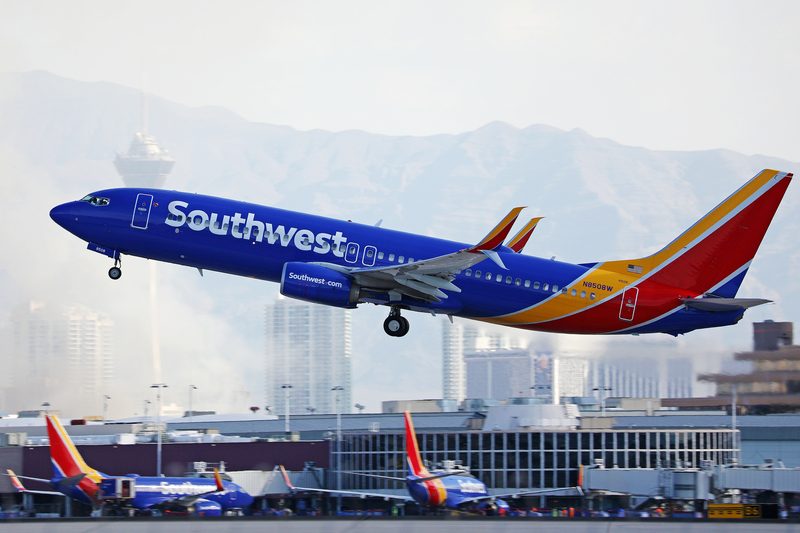
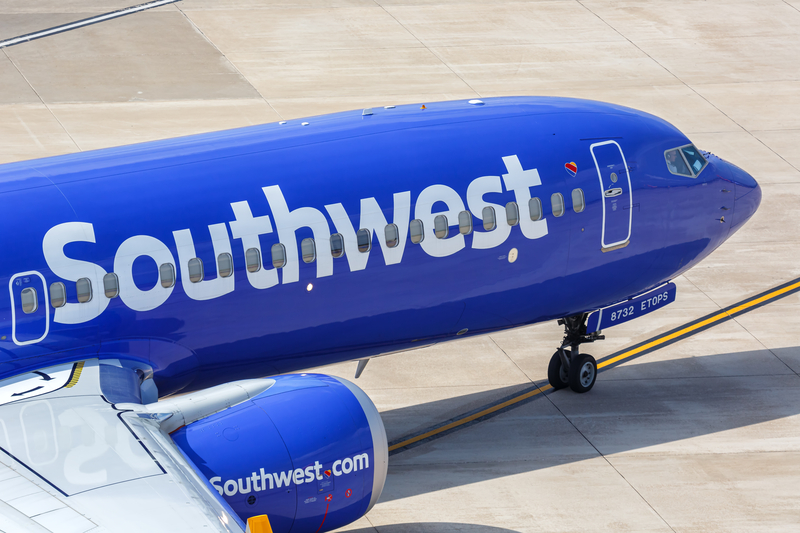
Southwest is using the Boeing 737 MAX 8 for both Anchorage routes.
That is exactly the aircraft you would expect. The MAX 8 gives the airline the range and efficiency needed to operate these long sectors while keeping fleet simplicity intact. It is also one of the strongest tools Southwest has for stretching its network into markets that would once have been much harder to justify with earlier 737 variants.
In that sense, Alaska is another example of how newer-generation narrowbody capability is reshaping what a “domestic” network can look like.
The Schedule Is Designed Around Connectivity
The timings matter almost as much as the routes.
Both flights arrive in Anchorage in the evening, with red-eye returns back to the contiguous United States overnight. That pattern is not accidental. It allows Southwest to maximize aircraft utilization while also plugging Anchorage into the airline’s broader domestic system at Denver and Las Vegas.
That means these services are not only for point-to-point travelers heading to Alaska. They are also for passengers connecting from across the Southwest network, especially through Denver, one of the carrier’s most important hubs.
Alaska Is Not Just A Destination — It Is A Network Statement
Anchorage is obviously a strong summer tourism market, but the significance of this move goes beyond vacation traffic.
By adding Alaska, Southwest is filling one of the last big geographic holes in its U.S. route map. That gives the airline a stronger national story and one more high-profile destination type in its network. It also puts the carrier into a market where air travel is particularly important to regional access, tourism, and broader economic connectivity.
Southwest is not trying to become Alaska’s defining airline. But it is making clear that it wants to be part of the market.
The Prices Show Demand May Already Be Strong
Early fare checks around the launch showed relatively high pricing, especially from Denver.
That is worth noting because it suggests Southwest is not entering Anchorage as a pure deep-discount play. If the fares hold at elevated levels during the opening period, it would reinforce the idea that the market can support strong seasonal yields, at least in the early phase of operation.
For a route this long, that matters more than simple load factor. Southwest needs not just passengers, but enough revenue per flight to justify one of the longest sectors it has ever flown domestically.
Bottom Line
Southwest’s launch of daily seasonal service from Denver and Las Vegas to Anchorage is a genuinely important network milestone. It gives the airline its first-ever presence in Alaska, adds Anchorage as the 122nd airport in the system, and creates Southwest’s longest domestic route in the form of Denver–Anchorage.
The use of the 737 MAX 8, the seasonal timing, and the connectivity-focused schedule all show that this was not a symbolic launch. It was a carefully planned entry into a market Southwest clearly believes can support both point-to-point and connecting demand. After decades of staying out of Alaska, the airline has finally arrived.
Keep reading FlyMag
Get the Daily Brief in the morning or the Route Watch weekly recap on Fridays. Or both.