Air Seychelles is expanding its European reach at exactly the moment Seychelles can least afford to lose it.
The airline is launching a new service to Rome Fiumicino Airport (FCO) from March 28 while also introducing a temporary three-times-weekly nonstop link to Paris Charles de Gaulle Airport (CDG) from March 20. Taken together, the two routes amount to more than a short-term schedule adjustment. They are a deliberate attempt to protect Seychelles International Airport (SEZ) from becoming overly dependent on disrupted Gulf connections at a time when Middle East instability is reshaping traffic flows across the Indian Ocean.
That is the real significance here. This is not just Air Seychelles adding Europe. It is Air Seychelles trying to build a more resilient path to Europe.
Read our stories in your inbox
Two aviation newsletters. Zero fluff.
Paris Is The Most Important Move
The Paris route is the more consequential of the two.
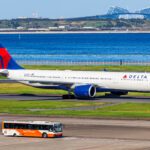
Air Seychelles is returning to long-haul widebody flying with a three-times-weekly nonstop service between SEZ and CDG using a Boeing 787-9 operated through a wet-lease arrangement with Etihad Airways. The aircraft has 290 seats, including a lie-flat Business Class cabin, which immediately changes the scale and quality of what Air Seychelles can offer into continental Europe.
That matters for several reasons.
First, it gives Seychelles a direct long-haul link into one of Europe’s largest and most strategically useful hubs. Second, it reduces reliance on intermediate Gulf transfer points at a time when those routings have become less predictable. Third, it gives Air Seychelles a premium-capable aircraft without having to rebuild a long-haul fleet of its own.
For an airline of Air Seychelles’ size, that is a highly pragmatic move. Wet-leasing a Boeing 787-9 is far faster and less risky than re-entering widebody flying independently.
Rome Adds Breadth, Not Just Back-Up
The Rome route plays a different role, but it is still important.
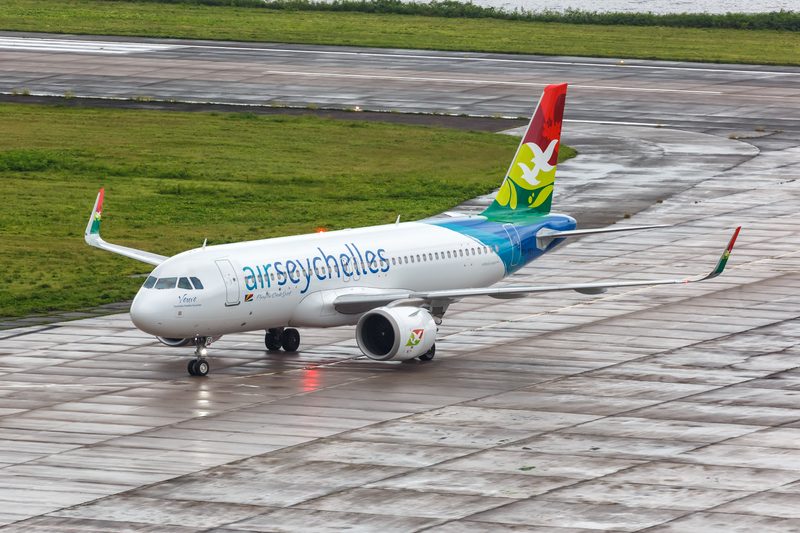
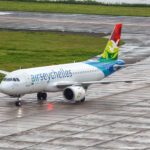
From March 28, Air Seychelles will begin twice-weekly service to Rome Fiumicino (FCO) using its Airbus A320neo, with a technical stop in Hurghada (HRG). That routing is operationally telling. The airline is clearly designing the service around current airspace realities rather than pretending the old operating map still exists.
Rome is not just a secondary add-on to Paris. Italy is a meaningful source market for Seychelles, and FCO gives the carrier another direct European access point without depending on Gulf hubs. The A320neo is also a sensible aircraft for the job. It allows Air Seychelles to open the market at lower risk and with a seat count more aligned to targeted leisure demand.
For a tourism-driven airline, that is smart capacity discipline.
This Is A Response To A Very Specific Problem
The wider context cannot be ignored.
Air Seychelles is acting because the normal Europe–Seychelles flow has been disrupted by instability in the Middle East and the operational consequences for Gulf carriers and Gulf airspace. Seychelles has long depended heavily on airlines such as Emirates, Qatar Airways, and Etihad Airways to channel European traffic into Mahé. When those routings become less reliable, the country’s tourism access becomes more fragile very quickly.
That is why these new European flights matter beyond the airline itself.
For Seychelles, connectivity is economic infrastructure. When inbound tourism is central to national performance, air service is not just a commercial product. It is part of the country’s economic resilience.
The Etihad Link Is Especially Interesting
The Paris operation also says something interesting about Air Seychelles’ ability to move quickly through partnerships.
Using an Etihad Boeing 787-9 on wet lease allows Air Seychelles to add widebody capacity almost immediately, without the lead times, training burden, or capital exposure that would come with sourcing and operating its own long-haul aircraft. In the current environment, that kind of flexibility is valuable.
It is also somewhat symbolic. Air Seychelles and Etihad have a long history, and while the relationship is no longer what it once was, this arrangement shows the partnership still has practical utility when the market demands it.
For aviation readers, that is one of the more important angles here. The airline is not simply launching routes. It is using partnership structure as a resilience tool.
Paris Could Become More Than Temporary
The Paris service appears to be planned initially for a limited period, but it would not be surprising if strong bookings led to an extension.
That is because CDG is not just a large European airport. It is also one of the most commercially useful destinations Air Seychelles could choose in this situation. It gives access to France, one of Seychelles’ most important tourism markets, while also providing onward options for passengers from elsewhere in Europe.
If demand holds up, the logic for extending or even increasing the operation becomes fairly straightforward. A temporary crisis-response route can sometimes reveal a more durable market opportunity.
Bottom Line
Air Seychelles’ new Europe strategy is small in scale but important in intent.
The airline is launching twice-weekly Mahé (SEZ)–Rome Fiumicino (FCO) service from March 28 using the Airbus A320neo with a technical stop in Hurghada (HRG), while also introducing a three-times-weekly nonstop Mahé–Paris Charles de Gaulle (CDG) service from March 20 using a wet-leased Etihad Boeing 787-9. The Paris flight, with 290 seats and a true long-haul premium product, is the bigger strategic signal. Rome adds additional resilience and market access.
For aviation professionals, the key takeaway is clear. Air Seychelles is not just plugging a temporary gap. It is testing a more diversified European access model at a moment when reliance on Gulf hubs looks riskier than it has in years.
Keep reading FlyMag
Get the Daily Brief in the morning or the Route Watch weekly recap on Fridays. Or both.